


Hip pain can gradually begin to affect every aspect of life. It can become difficult to walk, climb stairs, sit for long hours, or even sleep comfortably. In most cases, pain can be alleviated through medication, physiotherapy, and lifestyle modifications. However, doctors may recommend hip replacement surgery if arthritis, injury, or wear and tear severely damage the joint.
If you are looking for information on the “Hip Replacement Procedure Step by Step” and want to understand the entire process through simple and clear language, then the following guide will be of great help to you. It is normal for patients to be confused and nervous about undergoing a surgical procedure. However, if they understand the process of the procedure, they can alleviate their fears and make better decisions.
Before undergoing a surgical procedure, it is very important to understand whether it is absolutely necessary. Patients can use the Consult Grab free consultation service to find out if they need hip replacement surgery.
Understanding Hip Replacement Surgery
Table of Contents
ToggleHip replacement surgery, also known as total hip arthroplasty, is a type of surgery in which hip joints are replaced by artificial joints made of metal, ceramic, or plastic materials. The surgery is performed to reduce pain and improve mobility in patients suffering from severe hip problems.
The hip joint is classified as a ball and socket joint in which the ball of the femur fits perfectly in the socket of the pelvis. When this joint is damaged due to arthritis, fractures, or wear and tear, movement of the hip joints results in severe pain. Hip replacement surgery is performed by removing damaged portions of the hip joints and replacing them with artificial joints that mimic normal hip joints.
Hip replacement surgery takes between 1 to 2 hours, and patients experience considerable relief from pain and improve their mobility after recovery
When Do Doctors Recommend Hip Replacement?
Doctors usually suggest this when all other forms of treatment fail. Some of the conditions for which a hip replacement is recommended include:
- Severe osteoarthritis
- Rheumatoid arthritis
- Hip fractures
- Damage to the joint due to injury
- Avascular necrosis (loss of blood supply)
- Severe joint stiffness
Patients who cannot walk, sleep, or perform their daily activities comfortably can opt for this surgery.
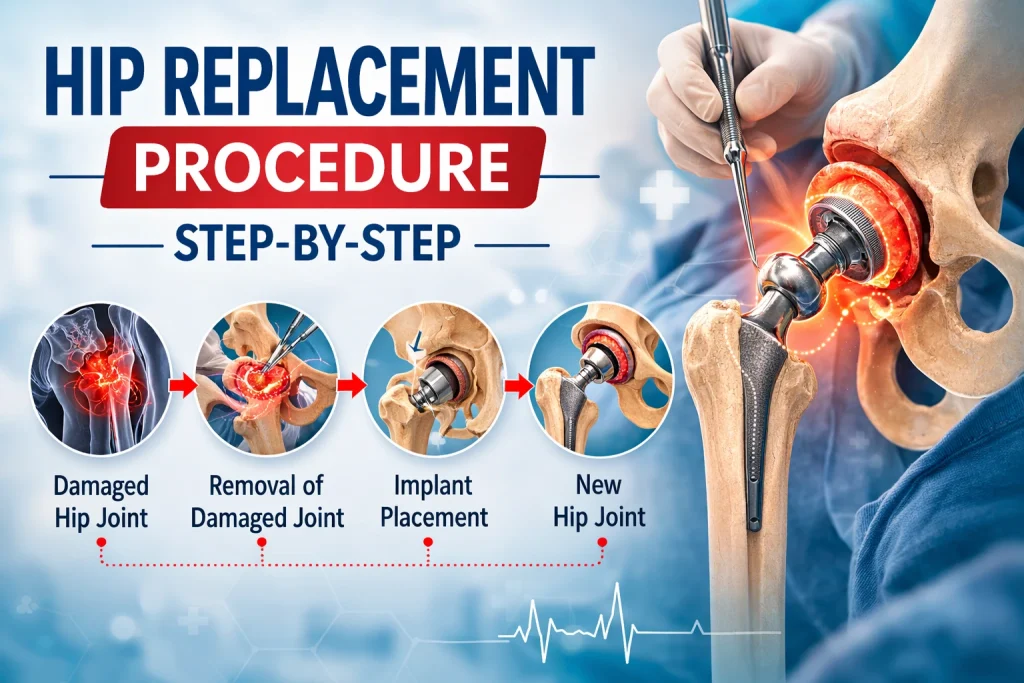
Hip Replacement Procedure Step-by-Step
Understanding the entire surgical process enables a patient to mentally and physically prepare for the operation. The detailed explanation of the surgical procedure for hip replacement is as follows:
1. Pre-Surgery Evaluation and Planning
In this stage, a patient undergoes a detailed medical examination before the actual surgical procedure takes place. The following medical procedures are performed on a patient at this stage:
- physical Examination by orthopaedic surgeons
- Blood Tests
- Urine Tests
- X-rays or MRI Scans
- Medical History
- Evaluation of Heart, Lungs, and General Health
The above medical procedures help surgeons assess the extent of damage to the joint and select the best replacement for the patient’s hip joint.
In addition, a patient is often advised to stop smoking, avoid certain medications, be at a healthy weight, and make arrangements for support at home during recovery from the operation.
2. Hospital Admission and Preparation
On the day of the surgery, the patient is admitted to the hospital. The patient is asked to wear a gown and prepare for the final procedure before entering the operating room.
Doctors will monitor:
- Blood pressure
- Heart rate
- Oxygen levels
- Physical condition
The surgical team will prepare the patient for anaesthesia.
3. Anesthesia Administration
Before the procedure starts, anaesthesia is administered to the patient. Anaesthesia ensures that the patient does not feel any pain during the surgery.
There are two kinds of anaesthesia:
- General Anaesthesia: The patient sleeps.
- Spinal Anaesthesia: The lower part of the body goes numb.
The type of anaesthesia depends on the patient’s condition and the surgeon’s recommendation.
4. Surgical Incision
The next step is the incision that the surgeon makes, which is close to the joint that connects the hip and the leg. This incision is essential because it gives the surgeon access to the damaged part.
The incision being referred to is the minimally invasive incision, not the traditional one.
The muscles and tissues that surround the joint are then moved apart to expose it.
5. Removal of Damaged Joint
After the hip joint has been exposed, the surgeon removes the damaged parts of it.
This step includes:
- Removal of the damaged femoral head
- Removal of damaged cartilage
- Cleaning of the hip socket
Removal of the damaged bone and cartilage allows space for the artificial joint parts.
6. Placement of the Artificial Socket
The surgeon then cleans the joint.
An artificial socket made of metal or ceramic is inserted into the pelvis. This is the socket for the hip joint.
Sometimes screws and cement are inserted in the socket so that it can be held in place.
7. Insertion of the Femoral Stem
Next, the surgeon prepares the thigh bone, also known as the femur.
The surgeon inserts a metal stem into the hollow part of the femur. This is the part that will hold the new joint.
The surgeon attaches a ball to the top of the metal stem, replacing the original femoral head.
8. Implant Alignment and Testing
The surgeon checks the following after implanting all the artificial parts:
- Joint stability
- Range of motion
- Correct alignment
The surgeon will move the hip joint gently to make sure it is functioning correctly.
Correct alignment is important for the success of the procedure and the proper movement of the hip joint.
9. Closing the Surgical Incision
Finally, the surgeon closes the incision site.
This includes:
- Reattaching the muscles and tissues
- Closing the skin through stitches and staples
- Finally, applying a dressing
The whole process takes between 1 and 2 hours depending on the complexity of the case.
Recovery After Hip Replacement Surgery
The recovery period is an integral part of the treatment.
Immediately after the surgery:
- The patient is taken to the recovery room.
- Doctors keep track of the vital signs and pain level.
- The hospital stay is usually short, about a few days.
It is encouraged that the patient starts moving as soon as possible to prevent complications such as blood clots. The patient is encouraged to walk with the help of someone the next day or two.
Physical therapy is an integral part of the recovery process.
It takes about 3 to 6 months to fully recover from the surgery.
How Consult Grab Helps Patients
Selecting the right hospital and surgeon can be very confusing for many patients, especially when considering factors such as the hospital’s reputation, the surgeon’s experience, and the specific procedures they specialise in. Consult Grab is here to help patients in this matter.
We assist patients in the following ways:
- Free Consultation to know if Hip Replacement is Required
- Information on Hip Replacement Surgery in various hospitals in India
- Information on Experienced Surgeons
- Comparison of Costs in various hospitals
- Arrangement of Appointments in hospitals
- Arrangement of Second Opinions
If you want to consult experts in the field, then book an appointment.
If you want to contact us directly,
You can also read our previous article on hip surgery.
Our mission is to assist patients in decision-making in the field of medicine without any confusion and to receive the best medical care at affordable prices.
Benefits of Hip Replacement Surgery
There are several long-term advantages of undergoing hip replacement surgery. These include:
- Significant reduction of pain in the hips
- Increased mobility and flexibility
- Enhanced quality of life
- Ability to carry out day-to-day activities with ease
- Long-term results can last up to 15-20 years
Most patients have reported a significant improvement in their ability to walk, sit, and climb stairs following the surgery.
Risks and Possible Complications
Despite hip replacement surgery being safe, some dangers may arise:
- Infection
- Blood clots
- Loosening of the implant
- Stiffness of joints
- Stiffness of muscles
- Risks of dislocation of the artificial joints
Adhering to doctor instructions and physiotherapy reduces these dangers.
Tips for Faster Recovery
Patients may recover quickly by observing these guidelines:
- Carry out physiotherapy exercises
- Avoid twisting movements
- Maintain a healthy body weight
- Use supports when walking
- Attend follow-up medical appointments
Good rehabilitation of the new hip joint ensures it works well for many years.
Conclusion
Understanding the Hip Replacement Procedure Step-by-Step helps patients feel more confident about the treatment process. From pre-surgery planning to implant placement and rehabilitation, every stage is designed to reduce pain and restore mobility.
Hip replacement surgery has transformed the lives of millions of patients who once struggled with severe joint pain. With proper medical guidance, choosing the right surgeon, and following rehabilitation instructions, most patients regain an active and comfortable lifestyle.
If you are considering hip replacement surgery, getting the right medical advice is essential. Consult Grab helps patients connect with experienced surgeons, compare hospital costs, and receive free consultation before making any decision.
Disclaimer
All medical information provided in this article is collected and summarised from publicly available sources on the internet for educational purposes. Patients should always consult qualified healthcare professionals before making any medical decisions.