

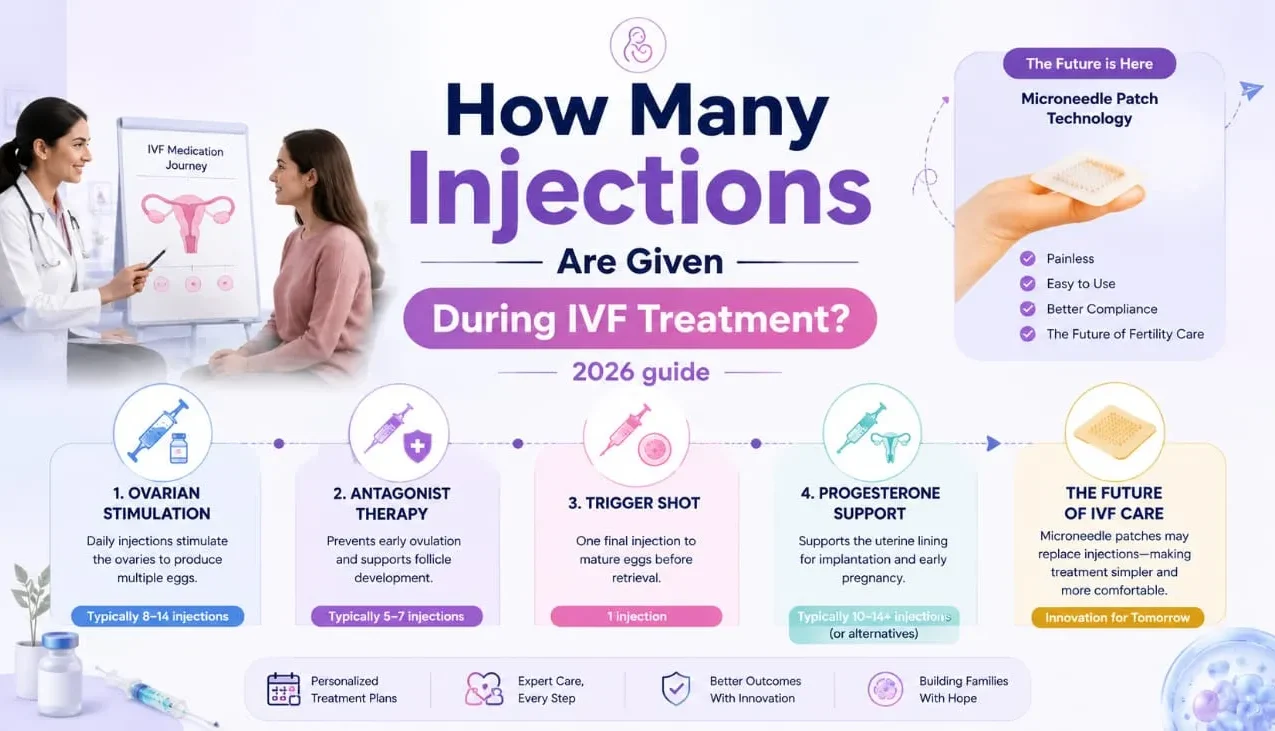
Starting IVF treatment can bring many questions, but one of the most common concerns patients have is:
“How many injections will I need during IVF?”
Since IVF involves multiple medications given at specific stages of treatment, many people feel anxious about the number of injections, their timing, and their purpose.
The good news is that while IVF injections are an important part of treatment, the exact number varies from person to person. Factors such as age, ovarian reserve, hormone levels, body weight, and the treatment protocol selected by the fertility specialist all influence how many injections may be required.
Because every IVF journey is unique, choosing an experienced fertility specialist is essential for creating the right treatment plan and medication schedule. If you are looking for expert fertility care, you can explore our guide to the Best Doctors for IVF – In Vitro Fertilization in Delhi to understand your options and make an informed decision.
This guide explains the different types of IVF injections, when they are given, why timing matters, and how future innovations may make IVF treatment easier for patients.
Why Are Injections Required During IVF?
In a natural menstrual cycle, a woman typically produces one mature egg. During IVF, fertility medications are used to stimulate the ovaries so that multiple follicles can develop simultaneously.
Producing multiple eggs increases the chances of retrieving healthy eggs for fertilization and creating viable embryos. While ovarian stimulation plays an important role, several other factors can also influence treatment outcomes. To learn more, explore our guide on 5 Important Tips to Increase IVF Success Rates, Latest Advancements, which covers practical strategies and recent developments that may support a successful IVF journey.
These medications are usually administered through injections because they allow precise hormone delivery and better control of ovarian stimulation.
When Do IVF Injections Usually Start?
In many IVF cycles, stimulation injections begin on the second day of the menstrual period.
A commonly used IVF approach involves administering fertility hormones that encourage follicle growth inside the ovaries. The objective is to help multiple eggs mature during a single treatment cycle.
The duration of stimulation depends on how the ovaries respond to medication and how quickly the follicles develop.
How Many IVF Injections Are Usually Needed?
There is no fixed number of injections that applies to every patient.
The total number depends on:
- Age
- Weight
- AMH (Anti-Müllerian Hormone) level
- Ovarian reserve
- Response to fertility medications
- IVF protocol chosen by the fertility specialist
Some patients may require injections for approximately 8 days, while others may need 12–13 days or more.
During the initial phase of stimulation, one injection per day may be sufficient. As treatment progresses, additional medications may be introduced depending on follicular growth.
Because every IVF cycle is individualized, the number of injections can vary significantly from one patient to another.
Where Are IVF Injections Given?
Depending on the medication prescribed, injections may be administered in different areas of the body, including:
- Abdomen (stomach area)
- Thigh
- Lower back or hip region
The injection site is determined by the specific medication being used and the treatment protocol.
Patients are generally taught how to administer these injections safely or may receive them at a fertility center.
Understanding the Antagonist Injection
As follicles continue growing, many patients receive an additional medication known as an antagonist injection.
The purpose of this injection is to prevent premature ovulation.
If ovulation occurs before egg retrieval, the eggs may be released naturally, making them unavailable for collection during the IVF procedure.
Why Timing Is Critical
One of the most important aspects of antagonist injections is timing.
These injections are usually required at the same time every day.
For example:
- If the injection is scheduled for 10:00 AM, it should continue to be taken at approximately 10:00 AM daily.
- Taking it slightly earlier is generally acceptable.
- Taking it significantly later may increase the risk of premature ovulation.
Following the schedule exactly as instructed is essential for a successful IVF cycle.

Calculate Cost Now
What Happens When Follicles Become Mature?
Throughout ovarian stimulation, ultrasound scans are used to monitor follicle development.
When the follicles reach maturity, the next step is a trigger injection.
This injection helps the eggs complete their final stage of maturation before egg retrieval.
What Is a Trigger Injection?
The trigger injection is one of the most important medications used during IVF treatment.
It is administered when the fertility team determines that the follicles have developed appropriately.
The purpose of the trigger shot is to prepare the eggs for retrieval and ensure they are mature enough for fertilization.
Timing of the Trigger Injection
The timing of this injection is extremely precise because egg retrieval is scheduled according to the trigger shot.
Typically, ovum pickup is performed approximately 34 to 35 hours after the trigger injection.
Taking the trigger shot too early or too late can affect retrieval timing and may impact treatment outcomes.
For this reason, fertility specialists emphasize strict adherence to the prescribed time.
Types of Trigger Injections
Depending on the treatment plan, patients may receive:
- Agonist trigger injection
- HCG trigger injection
The choice depends on individual treatment requirements and ovarian response.
Are More Injections Needed After Egg Retrieval?
After egg retrieval, the next phase of treatment depends on whether a fresh embryo transfer is planned.
Embryo transfer may occur:
- Three days after fertilization, or
- Five days after fertilization
A five-day embryo is commonly referred to as a blastocyst.
If a fresh embryo transfer is planned, additional hormonal support is often prescribed.
Why Is Progesterone Given After Egg Retrieval?
Progesterone plays an important role in preparing the uterine lining for embryo implantation.
Patients undergoing a fresh embryo transfer may receive progesterone support after egg retrieval.
These injections are commonly administered daily according to the treatment schedule provided by the fertility team.
Proper hormonal support during this stage is considered an important part of the IVF process.
How Should IVF Medications Be Stored?
Many IVF medications require refrigeration to maintain their effectiveness.
Patients are typically advised to:
- Store medications in a refrigerator
- Avoid freezing them
- Follow the temperature guidelines provided by the clinic
- Protect medications from prolonged exposure to room temperature
Improper storage can affect medication performance and may reduce treatment effectiveness.
This is one reason why some fertility centers prefer administering certain injections at the clinic itself.
Calculate Cost Now
Latest IVF Innovation: Could IVF Become Less Painful in the Future?
One of the biggest challenges many IVF patients face is the need for multiple injections administered at precise times throughout the treatment cycle.
Researchers are now exploring technologies that may reduce this burden in the future.
A recent scientific development introduced an experimental light-activated microneedle patch designed to deliver fertility hormones through the skin instead of traditional injections.
The patch contains microscopic needles and specialized hormone-loaded particles. When activated by near-infrared light, the system releases medication at a predetermined time.
Researchers believe this approach could offer several potential benefits:
Reduced discomfort from repeated injections
Improved treatment convenience
Better medication timing
Reduced risk of missed doses
Potential improvement in treatment consistency
Although the technology remains under development and is not currently part of standard IVF treatment, it highlights how fertility care continues to evolve. As new innovations emerge, many patients also want to understand the financial aspects of fertility treatment before starting their journey. If you’re planning IVF, our How Much Does IVF Cost in India? Full Patient Guide can help you understand the factors that influence treatment expenses and what to expect during the process.
For now, hormone injections remain a critical component of IVF treatment, but future innovations may make the process more comfortable and patient-friendly.
How ConsultGrab Supports Patients During Fertility Treatment
Understanding IVF medications, injection schedules, fertility procedures, and treatment options can feel overwhelming.
At ConsultGrab, we help patients connect with experienced fertility specialists and trusted healthcare providers. Our team offers guidance throughout the treatment journey, helping patients understand their options and make informed healthcare decisions.
Whether you are exploring IVF treatment, fertility preservation, or surrogacy options, our goal is to make the process more transparent, organized, and stress-free.
Our support includes:
- Specialist consultation assistance
- Appointment coordination
- Treatment guidance
- Hospital and fertility center support
- Transparent information throughout the care journey
Start Your Parenthood Journey Today
Conclusion
The number of injections required during IVF treatment varies from patient to patient. Some individuals may require stimulation injections for around 8 days, while others may need 12–13 days or longer depending on their ovarian response and treatment plan.
In addition to stimulation medications, patients may also receive antagonist injections, a trigger injection before egg retrieval, and progesterone support after retrieval when a fresh embryo transfer is planned. Because these medications involve multiple injections and procedures, many patients wonder how much discomfort they should expect during treatment. For a detailed explanation of common symptoms and ways to manage them, read our Is IVF Painful? IVF Discomfort & Pain Relief Guide 2026.
While IVF currently relies heavily on carefully timed hormone injections, new innovations such as hormone-delivery microneedle patches suggest that fertility treatment may become more convenient in the future.
The most important factor remains following the treatment schedule exactly as prescribed and maintaining close communication with the fertility team throughout the IVF journey.
Frequently asked Questions (FAQs)
The number of IVF injections varies depending on factors such as age, AMH level, ovarian reserve, body weight, and the IVF protocol used. Most patients require fertility injections for approximately 8 to 13 days during ovarian stimulation, although the exact duration differs for each individual treatment plan.
IVF hormone injections stimulate the ovaries to produce multiple mature follicles instead of a single egg. This increases the number of eggs available for retrieval and fertilization, improving the chances of creating healthy embryos and achieving a successful IVF pregnancy.
The trigger injection is administered when ovarian follicles have reached maturity. Its purpose is to help the eggs complete their final stage of development before egg retrieval. Ovum pickup is typically scheduled about 34 to 35 hours after the trigger injection to maximize egg maturity.
aking certain IVF medications late, particularly antagonist or trigger injections, may affect follicle development, ovulation timing, and egg retrieval outcomes. Fertility specialists usually recommend administering these injections at the exact prescribed time to ensure the IVF cycle progresses as planned.
Researchers are developing new fertility drug delivery technologies, including microneedle patches that may release IVF hormones through the skin without traditional injections. While these innovations show promise, hormone injections remain a standard and essential part of IVF treatment today.