
Understanding Stage 1 Liver Disease
Table of Contents
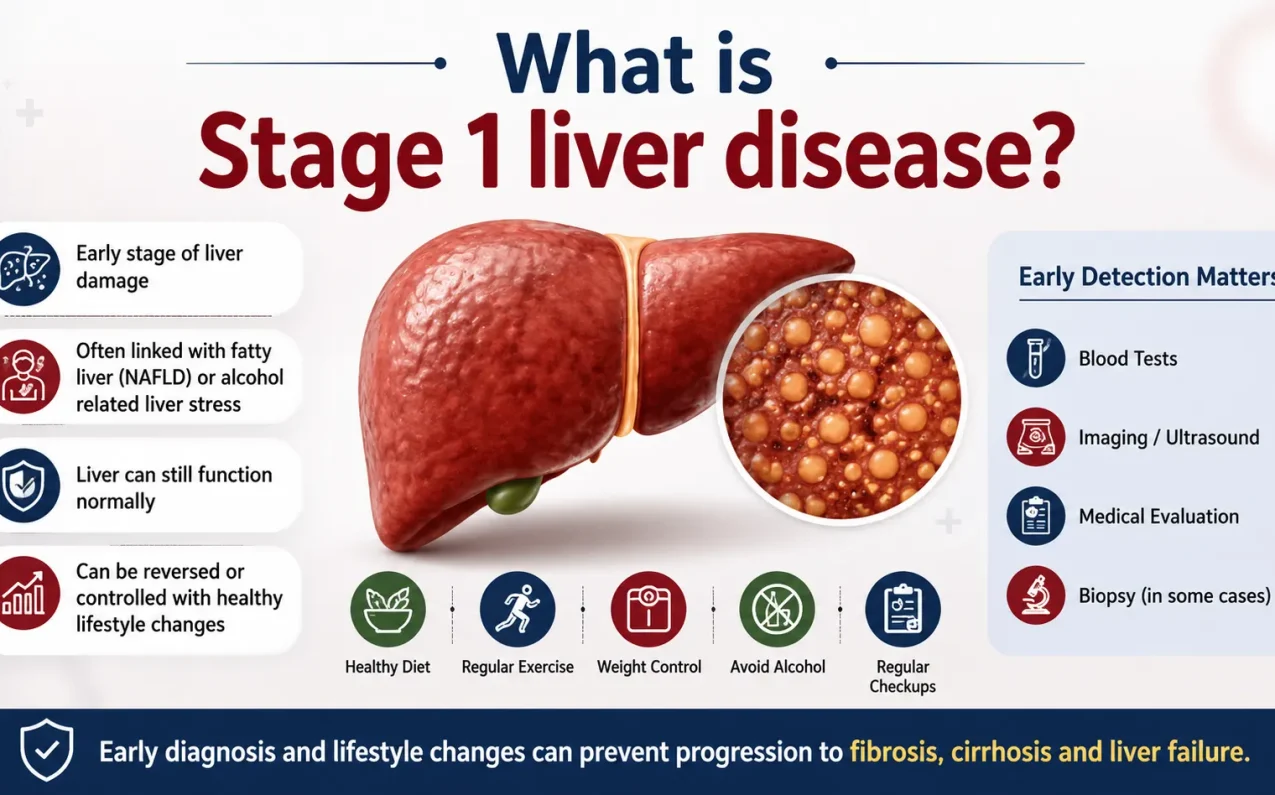
ToggleStage 1 liver disease is considered the earliest stage of liver damage where fat starts building up inside the liver cells. This condition is commonly linked with fatty liver disease, including non-alcoholic fatty liver disease (NAFLD), unhealthy lifestyle habits, obesity, or alcohol-related liver stress.
Recent medical discussions around liver health have highlighted that Stage 1 liver disease often begins with mild fat accumulation or early inflammation inside the liver, medically known as steatosis. At this stage, the liver can still function normally, which is why many people do not notice any major symptoms initially.
In cases where liver damage progresses or complications develop over time, patients may eventually require advanced medical care from specialists offering Best Doctors for Liver Transplant Treatment in Delhi.
In many early cases, fat accumulation in the liver may range from around 5% to 33%. However, it is important to understand that not every patient develops serious inflammation immediately. This is why early diagnosis becomes extremely important before the condition progresses further.
What Happens in Stage 1 Liver Disease?
The liver performs many important functions in the body, including digestion, metabolism, and removing harmful toxins. But when unhealthy eating habits, lack of exercise, excess oily food, sugar intake, or alcohol consumption continue for a long period, fat can slowly start accumulating inside liver cells.
Initially, this condition may appear mild, but if ignored, it can gradually lead to:
- Liver inflammation
- Fibrosis (liver scarring)
- Cirrhosis
- Liver failure in severe cases
This is why health experts are increasingly emphasizing early liver screening and preventive care.
Does Stage 1 Liver Disease Always Cause Inflammation?
No. In many patients, Stage 1 liver disease may involve fat accumulation without major inflammation.
Doctors usually evaluate inflammation through liver blood tests and imaging scans. These tests help determine whether the liver is under stress or whether the condition is still in the early manageable stage.
If inflammation is not severe, the condition can often be controlled through simple lifestyle modifications such as:
- Healthy diet changes
- Daily exercise
- Weight management
- Reducing oily foods
- Avoiding excess sweets and processed foods
Early action can significantly reduce the risk of long-term liver damage. However, in severe untreated cases, liver disease may gradually progress and require advanced medical procedures. Understanding the Types of Liver Transplant Surgery Explained can help patients learn about treatment options available in advanced stages of liver complications.
Common Symptoms of Early Liver Disease
One of the biggest challenges with Stage 1 liver disease is that symptoms are often absent or very mild. Many people continue living normally without realizing their liver health is being affected.
Some patients may experience:
- Constant tiredness
- Low energy levels
- Mild abdominal heaviness
- Digestive discomfort
- Difficulty managing body weight
Because symptoms can remain hidden for years, regular health checkups become extremely important.
How Is Stage 1 Liver Disease Diagnosed?
Recent liver health awareness discussions strongly recommend early diagnosis because timely treatment can help prevent serious complications later.
Doctors may suggest:
- Liver function blood tests
- Ultrasound or imaging scans
- Physical examination
- In some cases, liver biopsy
These tests help determine the amount of liver fat, inflammation level, and whether the disease is progressing.
Can Stage 1 Liver Disease Be Reversed?
In many cases, yes. Since this is an early stage of liver damage, the liver can often recover when proper lifestyle changes are followed consistently.
1. Regular Exercise
Daily physical activity helps reduce liver fat and improves metabolism.
2. Healthy Eating Habits
Reducing fried foods, sugary items, unhealthy fats, and processed snacks helps lower stress on the liver.
3. Weight Loss & Weight Control
Maintaining a healthy body weight is one of the most effective ways to improve fatty liver disease.
4. Limiting Alcohol Intake
For patients with alcohol-related liver stress, reducing or completely avoiding alcohol becomes very important.
5. Routine Monitoring
Regular follow-up tests help track improvement and prevent progression toward advanced liver disease.
Foods to Avoid for Better Liver Health
Patients with early liver disease are often advised to reduce:
- Excess oil and fried foods
- Heavy ghee and fatty meals
- Excess sugar and sweets
- Processed and packaged foods
- Sugary beverages
Balanced meals, proper hydration, and regular eating habits can help support liver recovery.
Why Early Treatment Matters
The biggest advantage of detecting liver disease in Stage 1 is that serious complications may still be preventable.
If ignored for years, fatty liver disease can silently progress into advanced liver damage. That is why experts now strongly recommend early screening, healthy lifestyle habits, and regular liver monitoring even if symptoms are absent.
When Should You Consult a Liver Specialist?
The biggest advantage of de
You should seek medical guidance if:
- Liver tests remain abnormal
- Fatty liver repeatedly appears in scans
- You experience ongoing fatigue
- You have obesity or metabolic conditions
- Symptoms continue despite lifestyle changes
Proper evaluation helps determine whether the condition is still mild or progressing toward more serious liver disease.
tecting liver disease in Stage 1 is that serious complications may still be preventable.
If ignored for years, fatty liver disease can silently progress into advanced liver damage. That is why experts now strongly recommend early screening, healthy lifestyle habits, and regular liver monitoring even if symptoms are absent.
How ConsultGrab Supports Liver Patients
ConsultGrab helps patients connect with experienced liver specialists and trusted hospitals in Delhi for proper diagnosis, treatment guidance, and advanced liver care support.
The platform assists patients with:
- Expert liver treatment guidance
- Doctor consultation support
- Quick appointment coordination
- Treatment planning assistance
- Access to trusted hepatologists and liver transplant specialists
For patients dealing with severe liver disease, cirrhosis, or liver failure, proper medical guidance and timely treatment planning can significantly improve outcomes and quality of life.
Final Thoughts
Stage 1 liver disease is often an early warning sign that should never be ignored. Even though symptoms may be mild or completely absent, fat accumulation inside the liver can gradually progress if proper care is not taken.
The positive aspect is that early-stage liver disease can often be managed or even reversed through healthy eating, regular exercise, weight management, and proper medical monitoring.
Early diagnosis and timely lifestyle changes remain the key to protecting long-term liver health.
Frequently Asked question
Stage 1 liver disease is the earliest phase of liver damage where fat starts accumulating inside liver cells. It is commonly linked with fatty liver disease, obesity, unhealthy eating habits, or alcohol-related liver stress. At this stage, the liver usually functions normally, and symptoms may be mild or completely absent.
right at the coast
Yes, Stage 1 liver disease can often be reversed or controlled through healthy lifestyle changes. Regular exercise, weight management, reducing oily and sugary foods, limiting alcohol intake, and following a balanced diet can help reduce liver fat and improve overall liver health before serious complications develop.
Many people with Stage 1 liver disease experience no symptoms initially. However, some may notice fatigue, low energy levels, mild abdominal discomfort, digestive issues, or heaviness in the upper abdomen. Regular liver function tests and medical checkups are important because early liver disease can remain silent for years.
Doctors usually diagnose Stage 1 liver disease through liver blood tests, ultrasound scans, physical examination, and medical history evaluation. In some cases, advanced imaging or liver biopsy may also be recommended to check liver inflammation, fat accumulation, and the risk of progression toward fibrosis or cirrhosis.
You should consult a liver specialist if liver tests remain abnormal, fatty liver repeatedly appears in scans, or symptoms like fatigue and digestive discomfort continue. Early consultation with a hepatologist helps prevent progression toward advanced liver disease, fibrosis, cirrhosis, or liver failure.