

Parenthood is one of the most emotional journeys in life, but for some couples, pregnancy is not medically possible. In such situations, surrogacy has become an important fertility option that allows intended parents to have a child through advanced reproductive treatment.
At the same time, surrogacy continues to generate global discussion around ethics, women’s health, legal protection, and reproductive rights. In recent years, international debates around surrogacy laws and surrogate protection have become stronger, especially as more public figures openly share their surrogacy journeys and more countries review their legal frameworks.
Along with understanding the medical and ethical aspects, many intended parents also seek clarity about financial planning and treatment expenses involved in the process. Reviewing a detailed Surrogacy Cost Breakdown in India for Intended Parents (2026) can help families better prepare for the journey ahead.
At ConsultGrab, we believe patients deserve transparent medical information, ethical fertility guidance, and access to experienced specialists who can help them understand every aspect of the surrogacy journey carefully and responsibly.
What Is Surrogacy?
Table of Contents
ToggleSurrogacy is a reproductive arrangement where another woman carries and delivers a baby for intended parents. The woman carrying the pregnancy is known as a surrogate mother.
This option is usually considered when:
- A woman cannot safely carry a pregnancy
- Repeated IVF failures occur
- Certain medical conditions prevent pregnancy
- Serious health risks make pregnancy unsafe
- There are uterine or fertility complications
Surrogacy generally works alongside IVF (In Vitro Fertilization), commonly known as the test tube baby process.
Since surrogacy involves medical, legal, and financial considerations, many intended parents also look for detailed information about eligibility, treatment procedures, and regulations. Reading a complete Surrogacy in India Guide Covering Costs, Legal Rules & Process (2026) can help families better understand the overall journey before starting treatment.
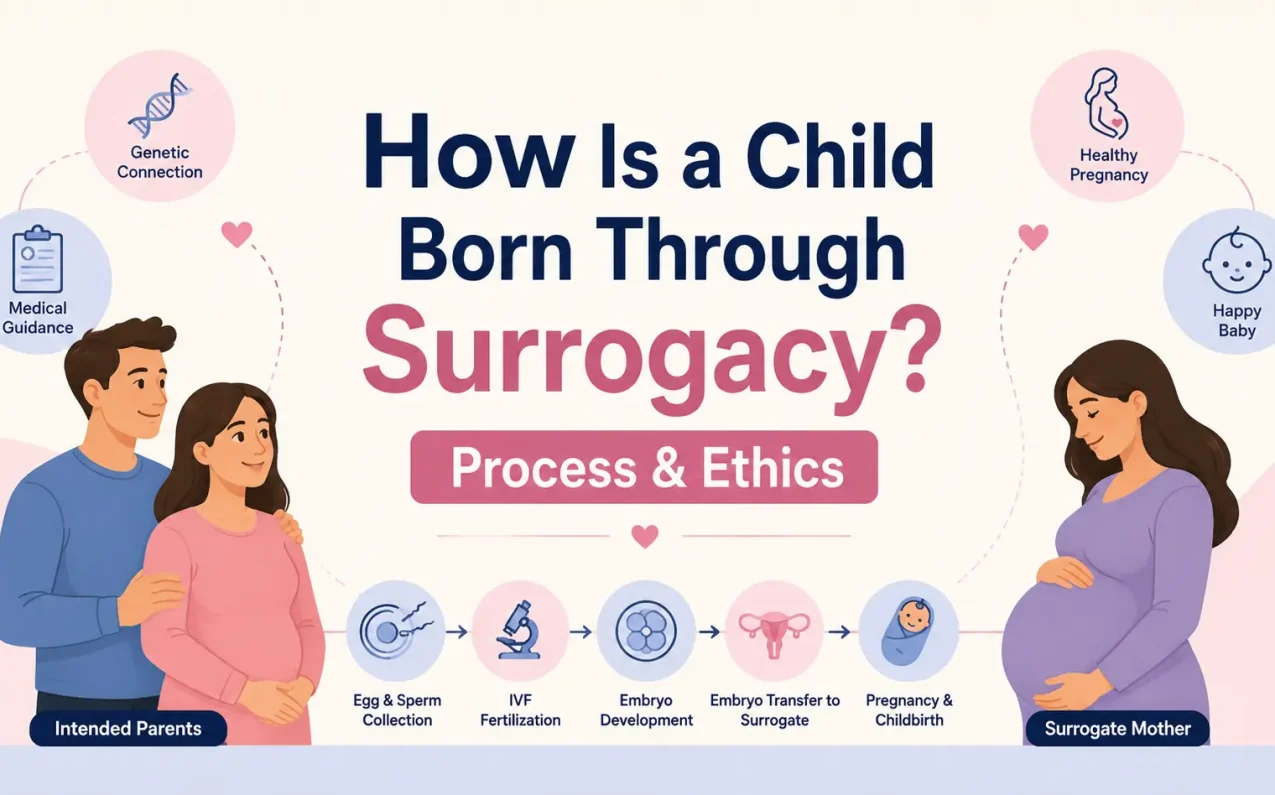
How Is a Child Born Through Surrogacy?
A child born through surrogacy is usually conceived through IVF treatment.
The process generally includes:
1. Egg and Sperm Collection
Eggs are collected from the intended mother or an egg donor, while sperm is collected from the intended father.
2. Fertilization in the Laboratory
Doctors fertilize the egg and sperm inside a laboratory using IVF techniques. Once fertilization happens, embryos begin developing under medical observation.
3. Embryo Transfer
The developed embryo is transferred into the surrogate mother’s uterus after careful medical preparation.
4. Pregnancy Development
If implantation succeeds, pregnancy begins. The surrogate mother carries the baby under continuous medical supervision throughout the pregnancy.
5. Childbirth
After approximately nine months, the baby is delivered and handed over to the intended parents according to medical and legal procedures.
For many families, the birth of a child through surrogacy becomes an emotional milestone filled with hope and new beginnings. Interestingly, some parents also enjoy exploring personality insights connected to birth months, including the unique qualities often associated with October babies and their personality traits.
Difference Between IVF and Surrogacy
Many people think IVF and surrogacy are the same, but they are different.
IVF
IVF is the fertility treatment where fertilization takes place outside the body in a laboratory.
Surrogacy
Surrogacy refers to another woman carrying the pregnancy when the intended mother cannot do so herself.
In simple terms:
- IVF creates the embryo
- Surrogacy helps carry the pregnancy
Types of Surrogacy
Traditional Surrogacy
In traditional surrogacy, the surrogate mother’s own egg is used for fertilization. This means the surrogate shares a biological connection with the child.
Gestational Surrogacy
In gestational surrogacy, the embryo is created using the intended parents’ egg and sperm or donor material, and the surrogate carries the pregnancy without a genetic connection to the baby.
Gestational surrogacy is more commonly used in modern fertility treatment.
Why Surrogacy Has Become a Global Discussion
Surrogacy is not only a medical topic anymore. It has also become part of larger global conversations involving:
- Women’s rights
- Reproductive ethics
- Medical regulation
- Child welfare
- Legal protection
- Cross-border fertility treatment
In 2025 and 2026, international discussions around surrogacy became especially visible after several public debates focused on whether surrogacy systems properly protect surrogate mothers and children.
Some activists and legal experts argued that poorly regulated surrogacy systems may create risks of exploitation, especially where economic inequality exists. Others defended surrogacy as an important reproductive option for families facing infertility and medical challenges.
These debates have increased awareness about the importance of ethical fertility care, legal clarity, and proper medical oversight.
Surrogacy Laws Differ Around the World
Different countries follow very different approaches toward surrogacy.
Some countries:
- Completely ban surrogacy
- Allow only altruistic surrogacy
- Restrict commercial compensation
- Permit regulated gestational surrogacy
Because laws vary internationally, intended parents must always seek proper legal and medical guidance before beginning treatment.
India has also introduced stricter regulations around surrogacy in recent years to improve oversight and reduce misuse of the system.
Understanding the latest Surrogacy Laws in India and New Rules for 2026 can help intended parents better understand eligibility, legal requirements, and important regulatory changes before starting the surrogacy process.
Ethical Concerns Around Surrogacy
Modern surrogacy discussions often focus on balancing two important realities:
Supporting Intended Parents
For many couples facing infertility, surrogacy may offer the only realistic path to biological parenthood.
Protecting Surrogate Mothers
At the same time, experts emphasize the need to protect surrogate mothers from:
- Financial exploitation
- Emotional pressure
- Unsafe medical practices
- Inadequate healthcare support
- Unclear legal agreements
This is why ethical medical supervision and transparent treatment planning are extremely important.
Importance of Proper Medical and Legal Guidance
Surrogacy should always involve experienced fertility specialists, legal professionals, and authorized medical centers.
Important areas include:
- Fertility evaluation
- IVF expertise
- Psychological counseling
- Surrogate screening
- Pregnancy monitoring
- Legal documentation
- Ethical medical practices
Careful planning helps improve safety and transparency for everyone involved.
Why Patients Need Trusted Fertility Consultation
The surrogacy process can feel emotionally overwhelming for intended parents. Many families struggle to understand:
- Which fertility treatment is appropriate
- What legal procedures are required
- How IVF and embryo transfer work
- What medical risks exist
- How to choose experienced specialists
At ConsultGrab, we help patients connect with trusted fertility experts, IVF specialists, and hospitals for surrogacy consultation and reproductive treatment guidance in Delhi.
Our support includes:
- Fertility consultation coordination
- IVF treatment guidance
- Specialist appointment assistance
- Transparent treatment information
- Hospital and doctor connection support
- Ongoing patient guidance
Our goal is to help families make informed and confident healthcare decisions during their parenthood journey.
The Future of Surrogacy
As fertility treatment continues to advance, surrogacy will likely remain an important option for families facing infertility and medical complications.
At the same time, global discussions are increasingly emphasizing:
- Stronger legal safeguards
- Better healthcare standards
- Ethical fertility practices
- Protection for surrogate mothers
- Child welfare and transparency
The future of surrogacy will likely depend on balancing reproductive opportunity with responsible medical and legal protection.
Conclusion
A child born through surrogacy is typically conceived through IVF and carried by a surrogate mother when the intended parents cannot safely achieve pregnancy themselves.
Surrogacy has helped many families experience parenthood, but it also requires careful ethical, legal, and medical consideration. With proper regulation, experienced fertility specialists, and transparent guidance, surrogacy can become a safer and more structured path for intended parents and surrogate mothers alike.
For patients seeking reliable fertility guidance and surrogacy consultation support, ConsultGrab helps connect families with experienced specialists and trusted treatment centers to make the process more informed, transparent, and supportive.
Frequently Asked Questions (FAQs)
A child born through surrogacy is usually conceived through IVF (In Vitro Fertilization). Doctors fertilize the egg and sperm in a laboratory to create an embryo, which is then transferred into the surrogate mother’s uterus. The surrogate carries the pregnancy and delivers the baby for the intended parents under medical supervision.
IVF is a fertility treatment where fertilization occurs outside the body in a laboratory. Surrogacy is an arrangement where another woman carries the pregnancy for intended parents. IVF creates the embryo, while surrogacy helps complete the pregnancy when the intended mother cannot safely carry a child herself.
Gestational surrogacy is a modern surrogacy process where the surrogate mother carries a baby without having a genetic connection to the child. The embryo is created using the intended parents’ egg and sperm, or donor material, through IVF treatment before being transferred to the surrogate’s uterus.
Couples may choose surrogacy due to infertility, repeated IVF failure, medical conditions, miscarriage history, or health risks related to pregnancy. Surrogacy offers an alternative path to parenthood for individuals who cannot safely conceive or carry a pregnancy naturally despite fertility treatment and medical support.
India has introduced stricter surrogacy regulations to improve ethical practices and patient safety. Surrogacy procedures must follow medical and legal guidelines related to fertility treatment, surrogate eligibility, and reproductive care. Intended parents should always consult experienced fertility specialists and authorized medical centers before starting the process.