

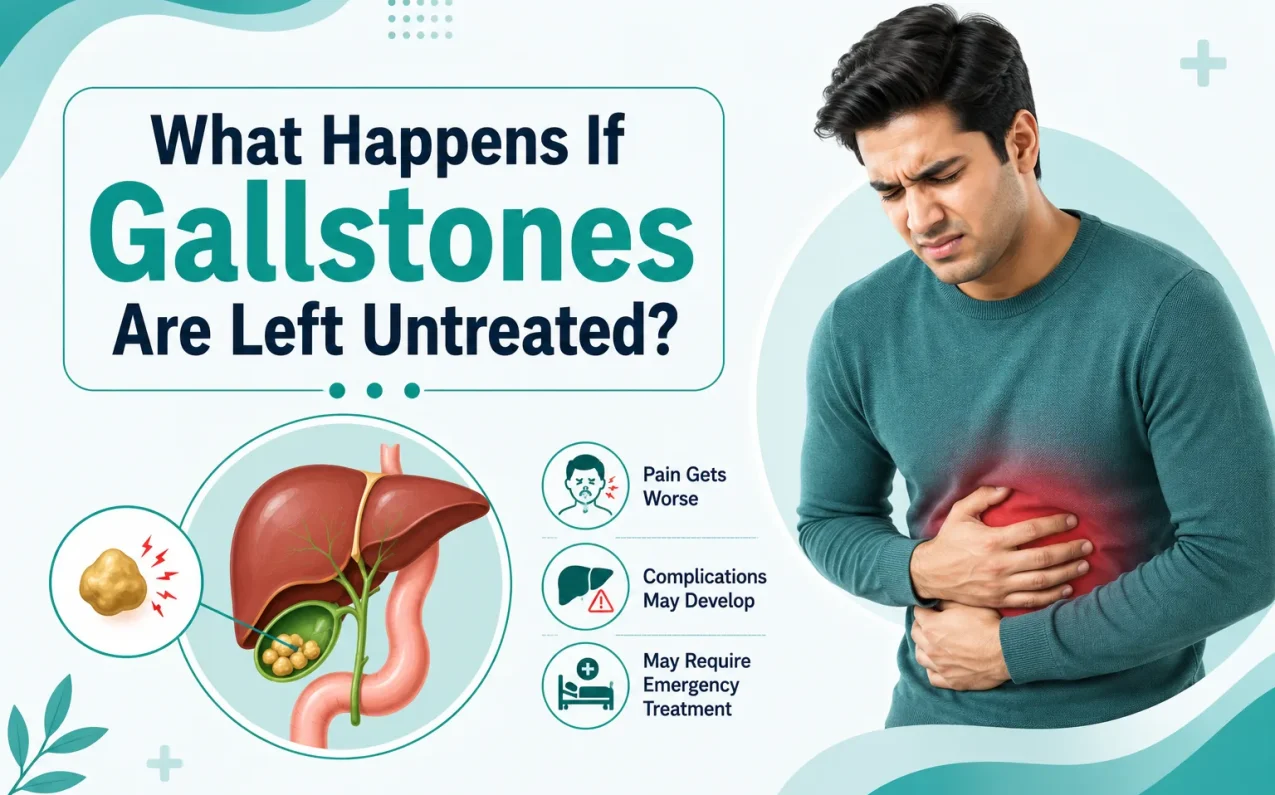
Leaving gallstones untreated may seem harmless, especially if pain is occasional or mild. However, recent medical discussions and patient case trends reported online highlight that untreated gallstones continue to be a major cause of emergency hospital admissions. Over time, these stones can silently progress and trigger serious, sometimes life-threatening complications.
If you are experiencing symptoms or have been diagnosed with gallstones, seeking guidance from specialists who provide the best gallbladder treatment in Delhi can help prevent complications and ensure timely care.
Below is a clear explanation of what can happen if gallstones are ignored.
Gallbladder Inflammation (Cholecystitis)
Table of Contents
ToggleOne of the most common complications of untreated gallstones is acute inflammation of the gallbladder, known as cholecystitis. This occurs when a stone blocks the gallbladder outlet, causing bile to build up.
Common symptoms include:
- Sudden, severe pain in the upper right abdomen
- Fever and chills
- Nausea and vomiting
If not treated in time, the gallbladder may become infected or even rupture, which is a medical emergency requiring urgent surgery.
Blocked Bile Duct (Choledocholithiasis)
Gallstones can sometimes move out of the gallbladder and block the bile ducts, preventing bile from flowing properly.
This may lead to:
- Severe abdominal pain
- Jaundice (yellowing of skin and eyes)
- Dark urine and pale stools
- High fever with chills
A prolonged bile duct blockage can damage the liver and may cause a serious infection of the bile ducts. This condition requires immediate hospitalization and treatment.
Pancreatitis
If a gallstone blocks the pancreatic duct, it can trigger acute pancreatitis, a dangerous inflammation of the pancreas.
Symptoms often include:
- Intense and persistent abdominal pain
- Vomiting and nausea
- High fever
- Swollen or tender abdomen
Gallstone-related pancreatitis is a life-threatening emergency and usually requires hospital care, close monitoring, and sometimes intensive treatment.
Gallbladder Gangrene or Abscess
Long-standing inflammation caused by untreated gallstones can reduce blood supply to the gallbladder. This may result in:
- Gangrene (death of gallbladder tissue)
- Abscess formation (pus-filled infection)
Both conditions can spread infection throughout the body and can be fatal if not treated urgently.
Gallbladder Cancer (Rare but Possible)
Although uncommon, long-term untreated gallstones increase the risk of gallbladder cancer, especially when stones remain for many years. This cancer is aggressive and often diagnosed at an advanced stage, making treatment more difficult.
Why Early Treatment Is Important
Recent clinical observations continue to show that many patients seek medical help only after complications develop. At that stage:
- Treatment becomes more complex
- Recovery time is longer
- Emergency surgery may be required
Early evaluation and planned treatment are safer, simpler, and associated with faster recovery. Understanding the first signs of gallbladder issues can help patients seek timely medical care before complications become severe or require emergency intervention.
How Gallstones Are Diagnosed
If gallstones are suspected, doctors commonly recommend:
- Ultrasound – the most reliable and widely used test
- Blood tests – to detect infection, liver issues, or pancreatitis
- CT scan or MRI – to identify duct blockages
- HIDA scan – to assess gallbladder function
What Is the Best Treatment for Gallstones?
The most effective and permanent treatment for symptomatic gallstones is surgical removal of the gallbladder (cholecystectomy). A person can live a normal, healthy life without a gallbladder.
In certain situations, non-surgical approaches such as medications or endoscopic procedures may be used to manage bile duct stones. However, these are often temporary solutions and do not prevent future gallstone problems. Understanding how to prevent gallbladder stones through healthy lifestyle and dietary habits can help reduce the risk of stone formation and related complications.
How ConsultGrab Helps Patients With Gallstone Treatment
At ConsultGrab, we understand that gallbladder problems can quickly turn serious if not handled properly. Our role is to ensure patients receive timely, accurate, and transparent medical guidance.
We support patients by:
- Connecting them with experienced specialists
- Explaining treatment options clearly
- Assisting with hospital and appointment coordination
- Offering guidance through every step of the treatment journey
With access to a verified multi-specialty hospital network in Delhi, our care team helps patients make informed decisions and avoid unnecessary delays.
Conclusion
Gallstones may not cause immediate symptoms, but leaving them untreated is risky. They can lead to gallbladder infection, liver damage, pancreatitis, and in rare cases, cancer. Current medical trends continue to reinforce one key message: early diagnosis and timely treatment prevent emergencies and save lives.
If you or someone you know has been diagnosed with gallstones or is experiencing related symptoms, seeking expert medical guidance early can make a critical difference.
Frequently Asked Questions (FAQs)
If gallstones are left untreated, they can block the gallbladder or bile ducts, leading to serious conditions such as gallbladder infection, jaundice, pancreatitis, or tissue damage. These complications may become life-threatening and often require emergency hospitalization or surgery.
Yes, gallstones can block the pancreatic duct, triggering acute pancreatitis. This causes severe abdominal pain, vomiting, fever, and inflammation of the pancreas. Gallstone-related pancreatitis is a medical emergency and usually requires immediate hospital treatment to prevent serious complications.
Gallbladder inflammation caused by gallstones can become dangerous if treatment is delayed. The gallbladder may become infected, develop gangrene, or rupture. Early treatment significantly reduces the risk of emergency surgery and serious infections spreading throughout the body.
Gallstones can block the bile duct, preventing bile from draining properly. This leads to jaundice, dark urine, pale stools, and liver stress. If untreated, bile duct blockage can cause serious infections and long-term liver damage requiring urgent medical care.
Even mild gallstone symptoms can worsen unexpectedly. Delaying treatment increases the risk of sudden emergencies like infection, bile duct blockage, or pancreatitis. Early diagnosis and planned treatment are safer, less complex, and allow faster recovery compared to emergency intervention.