
Gallbladder problems usually do not appear suddenly. In most cases, the body gives early signals that are often mistaken for routine digestion issues. Because these symptoms can slowly worsen over time, recognizing the early signs of gallbladder disease is important to avoid complications such as infection, bile duct blockage, or emergency treatment.
This blog explains the early warning signs, why they occur, and when seeking medical guidance becomes necessary.
Understanding the Role of the Gallbladder
Table of Contents
ToggleThe gallbladder is a small organ located beneath the liver. Its main function is to store bile, a digestive fluid produced by the liver. Bile helps break down fats from the food you eat and supports proper absorption of nutrients.
When you consume food—especially fatty meals—the gallbladder contracts and releases bile into the intestine. If bile flow is blocked or the gallbladder becomes inflamed, digestion is affected and symptoms begin to appear.
Early Signs of a Bad Gallbladder
Gallbladder issues often start with mild discomfort that gradually becomes more noticeable. Common early signs include:
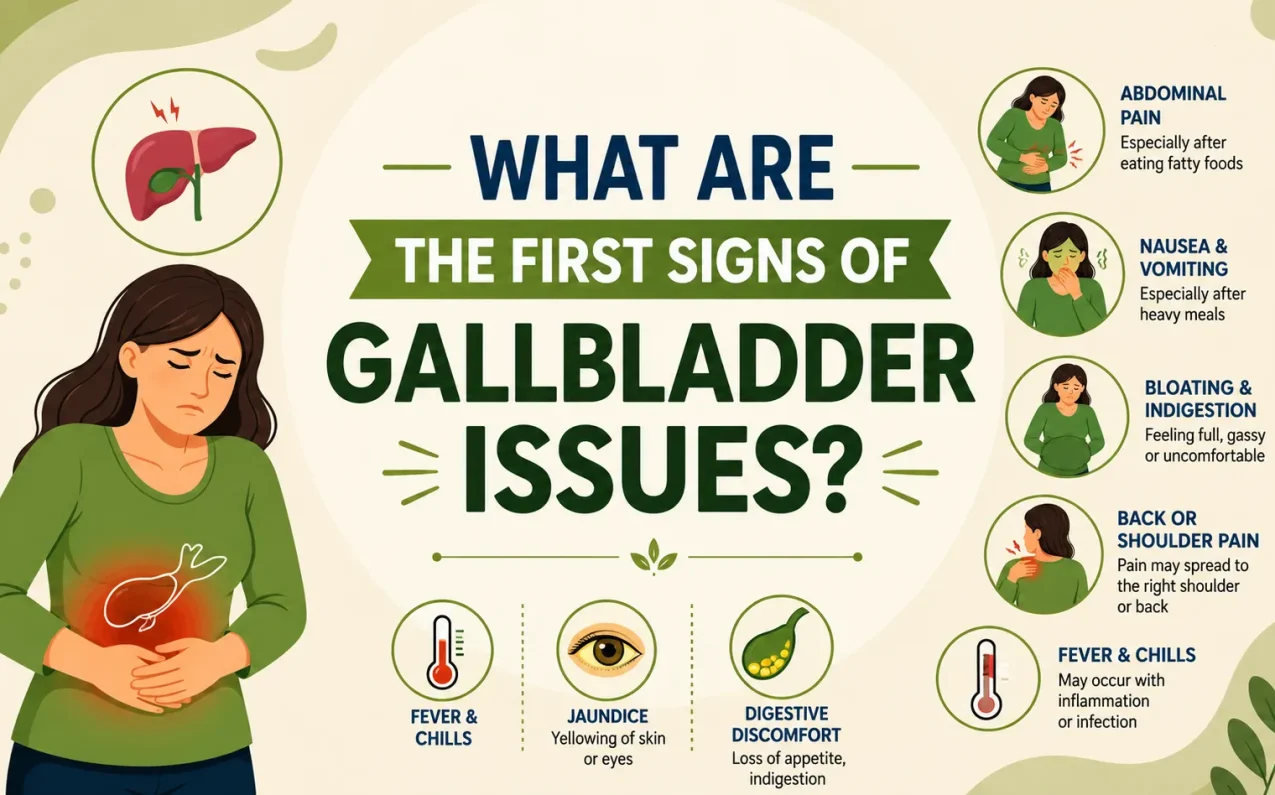
Abdominal Pain (Biliary Pain)
Pain in the upper right or middle part of the abdomen is one of the most common early symptoms.
- It often appears after eating, especially fatty or heavy meals
- The pain may last from a few minutes to several hours
- It can spread to the back or right shoulder
This pain occurs when bile flow is obstructed, causing pressure inside the gallbladder.
Nausea and Vomiting
When the gallbladder does not function properly, digestion slows down. This can lead to:
- Nausea after meals
- Vomiting
- A burning or uneasy feeling in the upper abdomen
These symptoms are frequently triggered by oily or spicy foods.
Bloating and Indigestion
Feeling unusually full, gassy, or bloated even after eating small portions can be an early sign of gallbladder dysfunction. Many people confuse this with acidity or general indigestion, which delays proper evaluation.
Back or Right Shoulder Pain
Gallbladder pain does not always stay confined to the abdomen. In some cases, it radiates to:
- The upper back
- The right shoulder blade
This makes the condition easy to misinterpret as muscle or posture-related pain.
Fever and Chills
A mild fever may occur when the gallbladder becomes inflamed or infected. This indicates that the condition may be progressing and should not be ignored.
Yellowing of Eyes or Skin (Jaundice)
If a stone blocks the bile duct, bile can enter the bloodstream instead of flowing into the intestine. This may cause:
- Yellowing of the skin or eyes
- Dark-colored urine
- Pale stools
- Itching across the body
This is a serious warning sign that requires prompt medical attention.
Why Gallbladder Problems Develop
Several factors can contribute to gallbladder issues, including:
- Gallstone formation
- Infection due to bile stagnation
- High-fat dietary habits
- Obesity and lifestyle-related factors
- Hormonal changes
- Family history
While symptoms may temporarily ease, the underlying problem often remains unless properly addressed, especially in people who are unsure how to identify gallbladder stone symptoms early.
Evaluation and Treatment Approach
Gallbladder problems are usually evaluated through imaging tests such as ultrasound and blood investigations to check for inflammation or bile blockage.
Treatment may involve:
- Medications to manage pain, nausea, or infection
- Dietary changes to reduce fat intake
- Surgical removal of the gallbladder in recurrent or severe cases
Modern minimally invasive techniques allow quicker recovery and minimal disruption to daily life when surgery is required. Patients can explore their options in detail on a dedicated gallbladder surgery treatment page.
How ConsultGrab Helps Patients Navigate Gallbladder Concerns
Understanding symptoms and choosing the right next step can feel overwhelming. This is where the ConsultGrab platform supports patients by connecting them with the right medical experts.
ConsultGrab works as a bridge between patients and experienced medical specialists by offering:
- Clear guidance based on symptoms
- Help in connecting with the right doctors and hospitals
- Transparent discussion of treatment options
- Appointment and treatment coordination support
The goal is to ensure patients feel informed, supported, and confident throughout their healthcare journey.
When Should You Seek Guidance?
You should consider professional guidance if you experience:
- Recurrent abdominal pain after meals
- Persistent nausea or vomiting
- Ongoing bloating or indigestion
- Fever with abdominal discomfort
- Yellowing of eyes or skin
Early evaluation can prevent complications and reduce the need for emergency treatment.
Conclusion
Gallbladder problems often begin with mild symptoms that are easy to overlook. However, ignoring early warning signs such as abdominal pain, digestive discomfort, nausea, or jaundice can lead to serious complications.
Recognizing the first signs of a bad gallbladder and seeking timely guidance can protect your digestive health and prevent unnecessary risks. With the right support, diagnosis and treatment decisions become clearer and less stressful.
Frequently Asked Question
The first signs of gallbladder issues often include pain in the upper right abdomen after meals, nausea, bloating, and indigestion. Some people may also experience back or right shoulder pain. These symptoms usually appear when bile flow is disrupted and should not be ignored.
Gallbladder pain is most commonly felt in the upper right or middle part of the abdomen. It may radiate to the back or the right shoulder blade. The pain often starts after eating fatty foods and can last from minutes to several hours.
Yes, gallbladder problems can cause nausea and vomiting, especially after heavy or oily meals. When bile flow is blocked or the gallbladder becomes inflamed, digestion is disturbed, leading to nausea, vomiting, and discomfort in the upper abdomen.
A low-grade fever can indicate gallbladder inflammation or infection. Jaundice, marked by yellowing of the eyes or skin, may occur if a bile duct becomes blocked. Both are warning signs that require prompt medical evaluation to prevent complications.
Medical guidance should be sought if abdominal pain after meals becomes frequent, or if symptoms like persistent nausea, fever, bloating, or jaundice appear. Early evaluation helps prevent complications and supports informed treatment decisions with guidance platforms like ConsultGrab.