

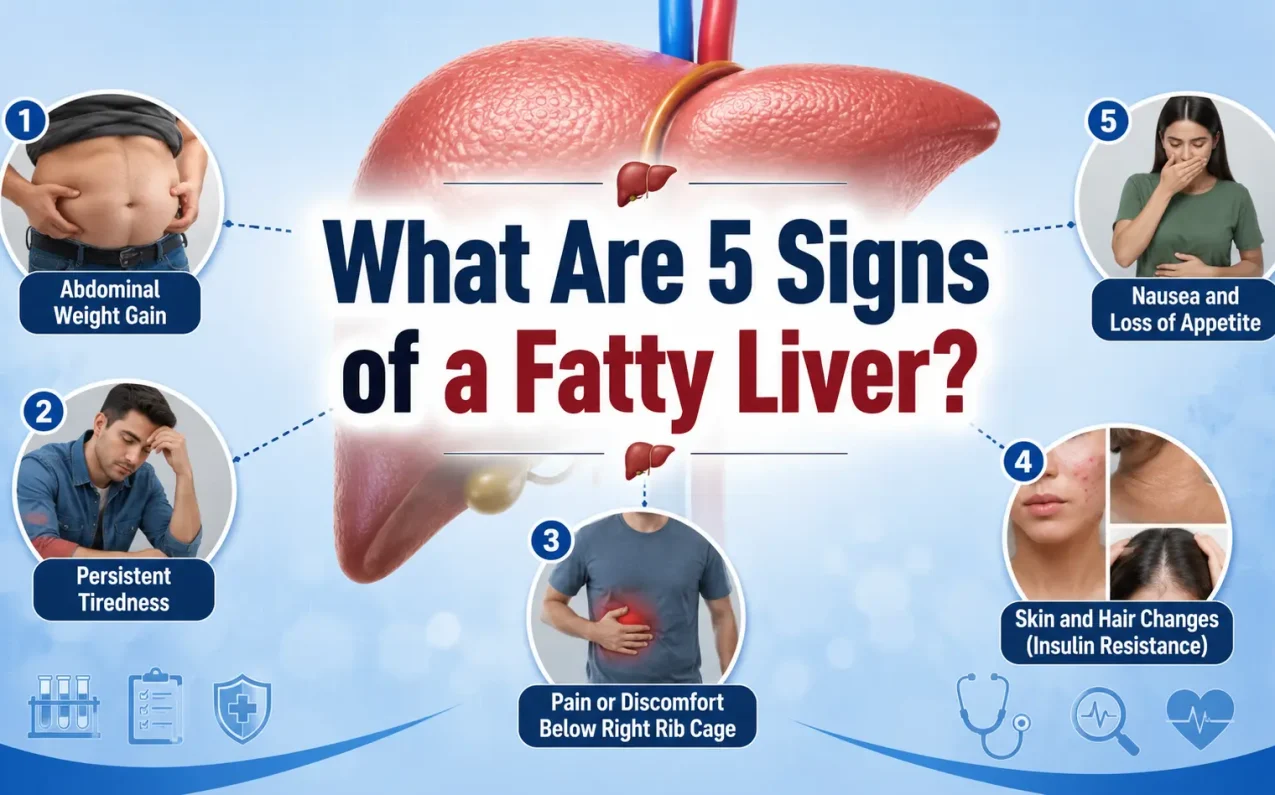
Fatty liver disease is becoming increasingly common and often develops silently without noticeable symptoms in its early stages. Many people remain unaware of the condition until signs begin affecting their daily life. Recognizing these warning signals early may help individuals seek timely medical guidance and prevent further liver complications.In some cases, untreated liver disease can progress to severe liver damage, making specialist evaluation increasingly important. Patients seeking advanced care options can learn more about Best Doctors for Liver Transplant Treatment in Delhi when exploring treatment pathways for complex liver conditions.
In this article, we discuss five common signs that may be associated with fatty liver disease, explore factors that can contribute to liver damage, and explain when professional medical evaluation should be considered.
Understanding Fatty Liver Disease
Table of Contents
ToggleFatty liver disease occurs when excess fat accumulates in the liver. Over time, this buildup may affect normal liver function and can lead to inflammation or more serious liver-related complications if left unmanaged.
Because the liver performs hundreds of essential functions in the body, even mild impairment can sometimes result in symptoms that affect overall health and well-being.Understanding the Best Liver Treatment & Liver-Friendly Diet for Health Guide can provide valuable insights into dietary habits and treatment approaches that may help protect long-term liver health.
1. Increased Abdominal Weight Gain
One of the common signs linked to fatty liver disease is weight gain around the abdominal area.
This symptom is often associated with insulin resistance, a condition in which the body’s cells become less responsive to insulin. As insulin resistance develops, fat accumulation around the waistline may increase, and excess fat can also begin to build up within the liver.
While abdominal weight gain alone does not confirm fatty liver disease, it may be an important warning sign when combined with other symptoms.
2. Persistent Tiredness and Fatigue
Feeling tired occasionally is normal, but constant fatigue without a clear reason may indicate that the liver is under stress.
The liver plays a vital role in processing nutrients, filtering toxins, and supporting metabolism. When liver function becomes compromised, some individuals may experience:
- Low energy levels
- Frequent exhaustion
- Reduced stamina
- Difficulty concentrating
Persistent fatigue should not be ignored, especially when accompanied by other symptoms associated with liver health concerns.
3. Pain or Discomfort Below the Right Rib Cage
The liver is located in the upper right side of the abdomen, beneath the rib cage.
Some individuals with fatty liver disease may experience discomfort, heaviness, or mild pain in this area. This symptom may occur when fat accumulation contributes to liver inflammation or enlargement.
Although many conditions can cause abdominal discomfort, recurring pain below the right ribs may warrant medical evaluation to identify the underlying cause.
4. Skin and Hair Changes Related to Insulin Resistance
Fatty liver disease is often linked with insulin resistance, which may also affect the skin and hair.
Possible signs include:
- Acne or frequent skin breakouts
- Darkened skin folds in areas such as the neck or underarms
- Hair thinning or hair loss
These changes may develop gradually and are sometimes overlooked. However, when they occur alongside abdominal weight gain or fatigue, they may indicate underlying metabolic and liver health concerns.
5. Nausea and Loss of Appetite
Another possible sign of fatty liver disease is ongoing nausea or a noticeable reduction in appetite.
As the liver becomes overwhelmed, some individuals may experience:
- Feeling nauseated after meals
- Reduced interest in food
- Early fullness
- Unexplained decrease in appetite
These symptoms can affect nutritional intake and overall health, making proper medical assessment important.
Other Causes of Liver Damage You Should Know
While fatty liver disease is one of the most common liver conditions, it is not the only reason liver function may decline. Several other factors can silently damage the liver and increase the risk of serious complications.
Viral Hepatitis Infections
Chronic viral infections such as Hepatitis B and Hepatitis C remain significant causes of liver damage worldwide. One of the biggest concerns is that these infections can affect the liver for years without producing noticeable symptoms.
Because the disease often progresses silently, many individuals do not realize they have a liver problem until advanced liver damage has already occurred. If left untreated, chronic hepatitis infections may increase the risk of cirrhosis, liver failure, and liver cancer.
Medications, Toxins, and Environmental Exposure
The liver processes everything that enters the body, including medications, supplements, and environmental substances.
Excessive use of certain pain-relieving medications, unnecessary self-medication, prolonged exposure to harmful chemicals, and even some herbal supplements may place additional stress on the liver. Environmental pollutants can also contribute to liver health concerns, particularly in highly urbanized settings where exposure to toxins may be greater.
Because many liver-damaging factors work silently, maintaining regular health screenings and discussing medication use with healthcare professionals can be beneficial.
When Should You Seek Medical Advice?
Experiencing one symptom does not necessarily mean you have fatty liver disease. However, if multiple symptoms occur together, persist for an extended period, or worsen over time, professional medical evaluation should be considered.
Early diagnosis can help identify the underlying cause of liver-related symptoms and may improve treatment outcomes.Along with appropriate medical care, dietary choices can play an important role in supporting liver function and overall recovery. Learning what foods help liver repair naturally and support health may help individuals make informed decisions that complement their treatment plan.Whether liver damage is caused by fatty liver disease, viral hepatitis, medication-related injury, or other factors, timely intervention often provides the best opportunity to prevent serious complications.
How ConsultGrab Can Help
Understanding liver-related symptoms can be challenging, especially when signs develop gradually or remain unnoticed for long periods.
At ConsultGrab, we help patients connect with experienced liver specialists and trusted healthcare institutions for proper diagnosis, treatment guidance, and advanced liver care support.
Our care team can assist with:
- Specialist consultation coordination
- Appointment booking support
- Treatment guidance and second-opinion assistance
- Hospital and treatment cost comparisons
- Access to advanced liver care services
- Liver transplant consultation support when required
Our goal is to ensure that patients receive accurate information, trusted medical guidance, and access to the right treatment options at the right time.
Final Thoughts
Fatty liver disease often develops silently, making it important to recognize early warning signs. Increased abdominal weight gain, persistent fatigue, discomfort below the right rib cage, skin and hair changes related to insulin resistance, and nausea with loss of appetite may all indicate that the liver needs attention.
At the same time, other factors such as chronic viral hepatitis infections, medication overuse, environmental toxins, and harmful substance exposure can also contribute to liver damage. Because many liver conditions progress without obvious symptoms, regular health monitoring and timely medical consultation remain essential for protecting long-term liver health.
If you have ongoing symptoms or concerns about your liver health, seeking professional guidance early may help prevent complications and support better treatment outcomes.
Frequently Asked Question (FAQs)
The five common signs of a fatty liver include abdominal weight gain, persistent fatigue, pain or discomfort below the right rib cage, skin and hair changes linked to insulin resistance, and nausea or loss of appetite. These symptoms may indicate that the liver is under stress and should be medically evaluated.
Yes, persistent tiredness or fatigue can be a symptom of fatty liver disease. Because the liver plays a key role in metabolism, energy production, and toxin processing, reduced liver function may contribute to low energy levels, exhaustion, and difficulty maintaining daily activities.
Fatty liver-related discomfort is commonly felt in the upper right side of the abdomen, just below the rib cage. This pain or heaviness may occur when fat accumulation causes liver inflammation or enlargement. Persistent abdominal discomfort should be assessed by a healthcare professional.
Yes, fatty liver disease is often associated with insulin resistance, which can cause skin and hair changes. Common signs include acne, darkened skin folds around the neck or underarms, and hair thinning or hair loss. These symptoms may occur alongside other fatty liver warning signs.
In addition to fatty liver disease, liver damage can result from chronic Hepatitis B or Hepatitis C infections, excessive use of certain medications, exposure to environmental toxins, and some herbal supplements. Early diagnosis and proper medical guidance are important to help prevent complications such as cirrhosis or liver cancer.