

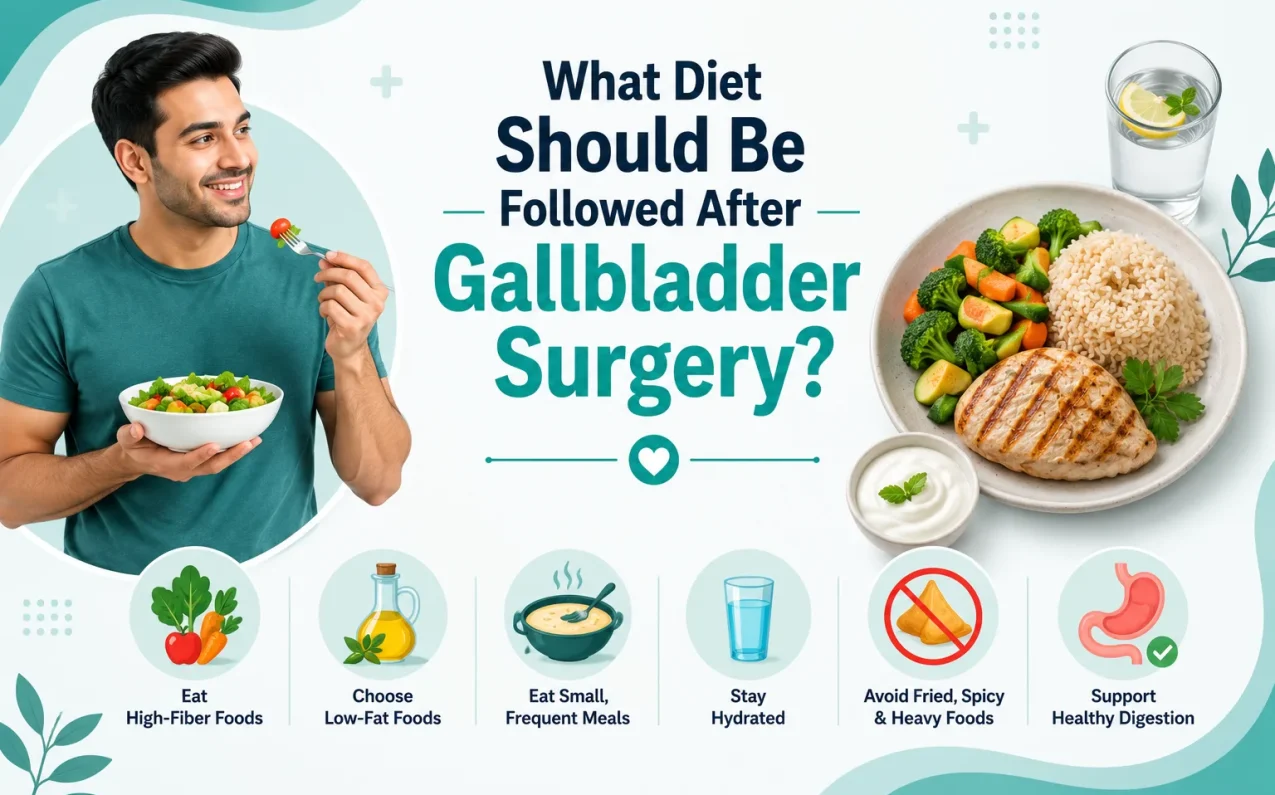
Gallbladder surgery helps relieve long-term digestive discomfort, but recovery continues well beyond the operation. One of the most important parts of healing is adjusting eating habits. After gallbladder removal, the digestive system needs time to adapt, and the right diet can help prevent issues such as diarrhea, bloating, gas, and abdominal pain. Patients recovering from surgery often benefit from guidance provided by specialists offering the best gallbladder treatment in Delhi, ensuring both proper treatment and effective post-operative care.
There is no single fixed diet after gallbladder surgery, but avoiding certain foods and prioritizing others can make recovery smoother and more comfortable.
Digestion
Table of Contents
ToggleThe gallbladder stores bile, which helps digest fats. After surgery, bile flows directly from the liver into the intestine instead of being released in a controlled way. Because of this change, fat digestion becomes less efficient, especially in the early weeks.
This direct bile flow can irritate the intestine and disturb digestion, leading to loose motions, gas, or bloating when fatty foods are consumed. Understanding what diet should be followed after gallbladder surgery can help patients manage these digestive changes and support a smoother recovery. That is why dietary modification becomes necessary after surgery.
After Surgery
In the first 24–48 hours after surgery, the digestive system needs rest.
- Start with clear liquids only
- Avoid coffee, soda, or heavy juices
- Take small sips at regular intervals
Once liquids are tolerated, a plain and soft diet should be followed for the next 1–2 weeks. Meals should be light, low in fat, low in fiber, and easy to digest. This allows the intestine time to adjust to the new digestive process.
Eating small and frequent meals (4–6 times a day) is strongly recommended. Large meals can overload digestion and worsen symptoms.
Foods to Avoid
After gallbladder surgery, certain foods commonly trigger digestive problems and should be limited or avoided:
- Fatty, greasy, or fried foods
- Spicy foods
- Sugary and sweet foods
- Caffeinated drinks
- Alcohol
- Carbonated beverages
High-fat food groups to avoid
- Processed foods like pastries, fast food, and sausages
- Fatty meats such as pork, lamb, bacon, and fatty beef cuts
- Full-fat dairy products including whole milk, butter, cream, ice cream, and creamy sauces
These foods increase digestive load and can cause diarrhea, gas, and abdominal discomfort.
Foods to Eat
A balanced, low-fat diet supports smoother digestion and recovery.
Lean protein
- Chicken or turkey breast
- Fish and seafood
- Legumes
- Small quantities of nuts and seeds
High-fiber foods (introduce slowly)
Fiber is important but should be added gradually:
- Whole grains
- Fruits and vegetables
- Beans and legumes
- Oatmeal and bran cereals
Too much fiber too soon can cause cramps, bloating, or loose stools.
Low-fat dairy and alternatives
- Low-fat milk and yogurt
- Calcium-rich plant alternatives
- Leafy green vegetables
- Tofu
- Canned fish with soft bones
Always check food labels, as some low-fat products contain added sugars.
Adverse Effects
Some people experience ongoing digestive symptoms after gallbladder surgery, including:
- Fat intolerance
- Nausea or vomiting
- Heartburn
- Gas and bloating
- Indigestion
- Diarrhea
- Yellowing of skin or eyes
- Intermittent abdominal pain
Learning how to prevent gallbladder stones through healthy dietary choices, weight management, and regular medical follow-up may help reduce the risk of future bile duct stone formation and related digestive complications.
These symptoms may be temporary but should not be ignored if persistent.
When to See a Doctor
Medical attention is needed if any of the following occur:
- Persistent vomiting
- Severe abdominal swelling
- High fever
- Yellowing of eyes or skin
- Ongoing diarrhea or pain
Early evaluation helps prevent complications and ensures proper recovery.
Summary
After gallbladder surgery, digestion changes and the body needs time to adapt. While there is no strict diet, avoiding fatty foods, eating small frequent meals, and focusing on lean proteins, low-fat foods, and gradually added fiber can significantly reduce discomfort.
For patients who need guidance during recovery, ConsultGrab provides trusted support. From understanding post-surgery diet changes to connecting with the right specialists, ConsultGrab ensures patients never feel alone in their recovery journey.
Frequently Asked Questions (FAQs)
After gallbladder surgery, a low-fat, light diet is recommended. Start with clear liquids, then move to soft foods. Eat small, frequent meals and avoid fatty or greasy foods to allow the digestive system to adapt to direct bile flow into the intestine.
After gallbladder removal, bile no longer gets stored and is released directly into the intestine. This reduces controlled fat digestion and may cause diarrhea, gas, or bloating. Dietary changes help the intestine adjust and reduce digestive discomfort during recovery.
People should avoid fatty, fried, greasy, and spicy foods after gallbladder surgery. Sugary foods, caffeine, alcohol, carbonated drinks, processed foods, fatty meats, and full-fat dairy can worsen digestion and increase the risk of diarrhea, bloating, and abdominal pain.
The best foods after gallbladder removal include lean proteins like chicken and fish, low-fat dairy, fruits, vegetables, and whole grains. Fiber should be added gradually. Eating small, frequent meals helps improve digestion and reduces stress on the intestine.
Medical attention is needed if symptoms such as persistent diarrhea, vomiting, abdominal swelling, fever, jaundice, or ongoing pain occur. If digestive symptoms continue or worsen, guidance from a trusted healthcare platform like ConsultGrab can help connect patients with appropriate specialists.