

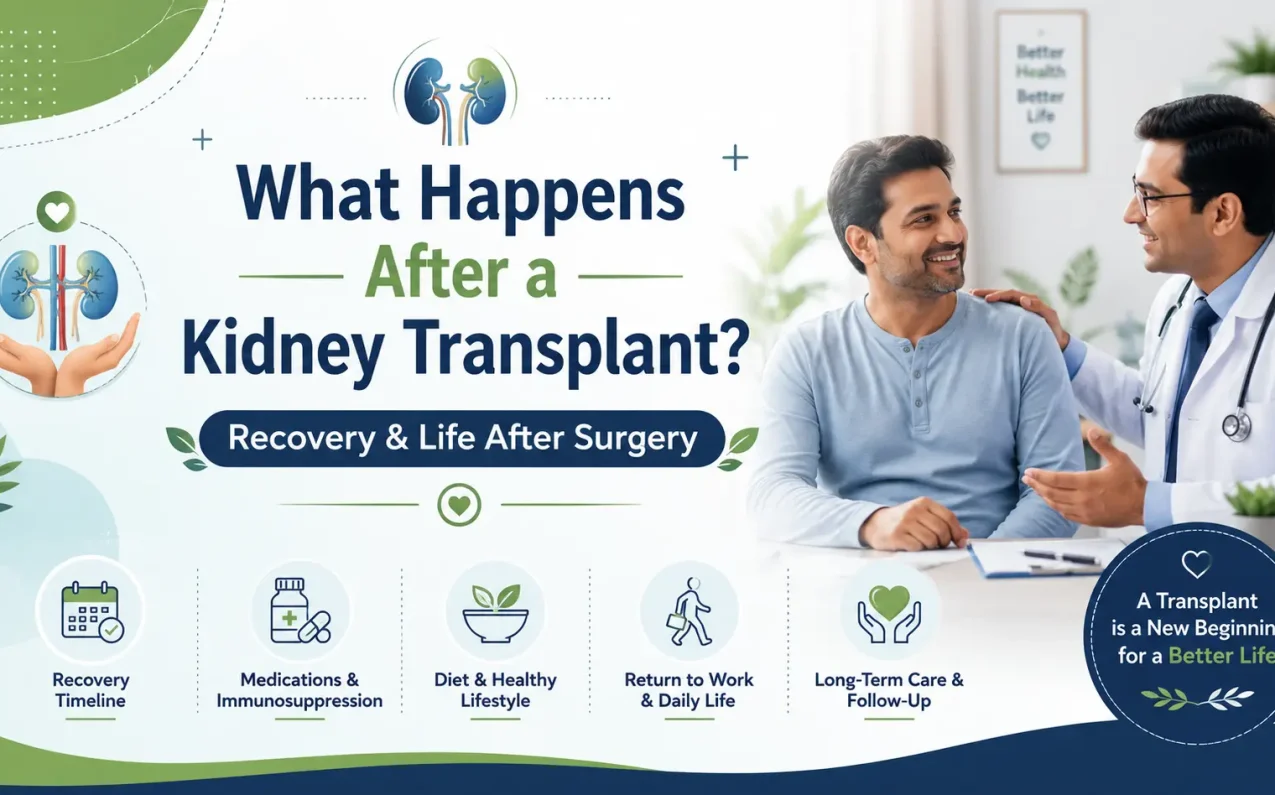
A kidney transplant is performed to improve a person’s quality of life—not to limit it. While the first few weeks after surgery require careful monitoring and certain restrictions, the long-term goal is to help patients return to a healthy, active, and fulfilling lifestyle.
Many people believe that life remains permanently restricted after a kidney transplant. In reality, once the initial recovery phase is complete and medical advice is followed consistently, most patients can gradually resume their daily routines.
This guide explains what typically happens after a kidney transplant, how recovery progresses, what precautions are necessary, and how patients can confidently return to normal life.
Quick Answer
Table of Contents
ToggleLife after a kidney transplant is usually intended to become normal again after the initial recovery period. During the first month, patients need to follow specific medical instructions, take prescribed medications regularly, and follow dietary recommendations. As recovery progresses, many people can return to work, social activities, and everyday responsibilities while continuing lifelong medical follow-up.
What Is the Recovery Period After a Kidney Transplant?
The first month after surgery is generally the most important phase of recovery.
During this period, doctors usually recommend:
- Adequate rest
- Regular follow-up appointments
- Taking prescribed medicines exactly as directed
- Following the recommended diet plan
- Monitoring overall recovery carefully
These temporary precautions help the transplanted kidney adjust properly and support long-term success.
The purpose of these restrictions is not to permanently change a person’s lifestyle but to ensure safe healing.
ReadMore: Want to understand the complete recovery journey after kidney transplant surgery?
Does Life Become Normal After a Kidney Transplant?
Yes, in many cases, patients gradually return to a normal lifestyle after recovering from surgery.
Once the recovery phase is completed and the treating nephrologist confirms that everything is progressing well, many people are able to:
- Return to their workplace
- Resume family responsibilities
- Meet friends and participate in social activities
- Enjoy an active daily routine
The objective of kidney transplantation is to improve quality of life rather than restrict it.
Can Patients Return to Work?
Yes.
After appropriate recovery and medical clearance, many kidney transplant recipients return to their professional lives.
The exact timeline varies from person to person depending on:
- Overall health
- Recovery progress
- Medical advice
- Type of work performed
Patients should always follow their treating specialist’s recommendations before resuming employment.
Can Patients Enjoy Social and Family Life?
Absolutely.
Kidney transplant recipients are generally encouraged to return to a balanced social life once their recovery is stable.
Many patients successfully participate in:
- Family gatherings
- Social events
- Daily household activities
- Community interactions
Maintaining emotional well-being and staying socially connected can contribute positively to overall quality of life.
Can Women Have a Healthy Pregnancy After a Kidney Transplant?
According to the shared discussion, successful pregnancies have been observed after kidney transplantation, with healthy deliveries in appropriately managed cases.
However, pregnancy after a kidney transplant requires:
- Careful medical evaluation
- Continuous specialist monitoring
- Proper medication management
- Regular follow-up throughout pregnancy
Every case is unique, so pregnancy planning should always be discussed with the treating medical team.
Why Are Medicines So Important After a Kidney Transplant?
One of the most important aspects of long-term transplant success is taking medications exactly as prescribed.
After a kidney transplant, patients receive immunosuppressive medicines that help the body accept the transplanted kidney.
A key point to understand is:
The dosage may gradually decrease over time, but these medicines should not be stopped on your own.
Stopping medication without medical advice may lead to serious complications.
Patients should always:
- Take medicines on time
- Never skip doses
- Never discontinue treatment without consulting their nephrologist
Should You Continue Following the Diet Recommended by Your Doctor?
Yes.
Diet remains an important part of post-transplant care.
Patients should continue following the dietary guidance provided by their nephrologist or healthcare team.
A personalized diet plan helps support recovery and complements ongoing medical treatment.
What Is a Common Misconception About Kidney Transplant?
One of the biggest misconceptions is that a kidney transplant permanently limits a person’s life.
In reality, the purpose of transplantation is exactly the opposite.
The goal is to help patients:
- Live better
- Become more independent
- Resume normal activities
- Improve overall quality of life
Temporary precautions during recovery should not be confused with lifelong restrictions.
Are Kidney Transplant Patients Able to Participate in Sports?
Yes.
The discussion highlights that transplant recipients even participate in organized sporting events.
This reflects an important message:
With proper medical care, regular follow-up, and adherence to treatment, many transplant recipients can remain physically active and enjoy an improved quality of life.
The level of physical activity should always be based on individual medical advice.
Are Kidney Transplant Patients Able to Participate in Sports?
Yes.
The discussion highlights that transplant recipients even participate in organized sporting events.
This reflects an important message:
With proper medical care, regular follow-up, and adherence to treatment, many transplant recipients can remain physically active and enjoy an improved quality of life.
The level of physical activity should always be based on individual medical advice.
How Has Kidney Transplant Surgery Improved?
Kidney transplant surgery has advanced significantly over the years.
Previously, surgery commonly involved:
- A large surgical incision
- More postoperative pain
- Longer recovery periods
Today, newer robotic-assisted techniques are available in selected cases.
These newer approaches may involve:
- Smaller surgical incisions
- Less postoperative discomfort
- Faster recovery
- Earlier discharge from the hospital
According to the discussion, some patients undergoing robotic-assisted procedures may be discharged within approximately 6–7 days and may begin returning to normal routines in about 15 days, depending on their overall recovery and medical evaluation.
Recovery timelines always differ between individuals.
Frequently Asked Questions (FAQs)
The initial recovery period is generally around the first month. Recovery continues gradually, and the timeline varies for each patient.
Yes. Once recovery is complete and medical advice is followed, many patients return to work, family life, and daily activities.
The discussion explains that immunosuppressive medicines are gradually reduced but should not be stopped without medical supervision
Many patients return to their jobs after recovery, provided their treating specialist considers it safe.