

Kidney disease often develops gradually, and many people don’t realize there’s a problem until routine blood tests reveal reduced kidney function. One of the most common stages at which people are diagnosed is Stage 3 Chronic Kidney Disease (CKD). While this diagnosis can feel overwhelming, it is also a stage where proper medical care and lifestyle changes may help slow the progression of the disease.
The good news is that Stage 3 kidney disease does not automatically mean kidney failure or dialysis. With timely treatment, careful monitoring, and management of the underlying cause, many people continue living active lives while protecting their remaining kidney function. For patients who want to understand the treatment options available if kidney disease advances in the future, learning about advanced kidney transplant surgery in Delhi can provide helpful insights into long-term care planning.
In this article, we’ll explain what Stage 3 kidney disease is, its symptoms, common causes, treatment options, and why early consultation with a kidney specialist is important.
What Is Stage 3 Kidney Disease?
Table of Contents
ToggleChronic Kidney Disease (CKD) is a long-term condition in which the kidneys gradually lose their ability to filter waste and excess fluid from the blood.
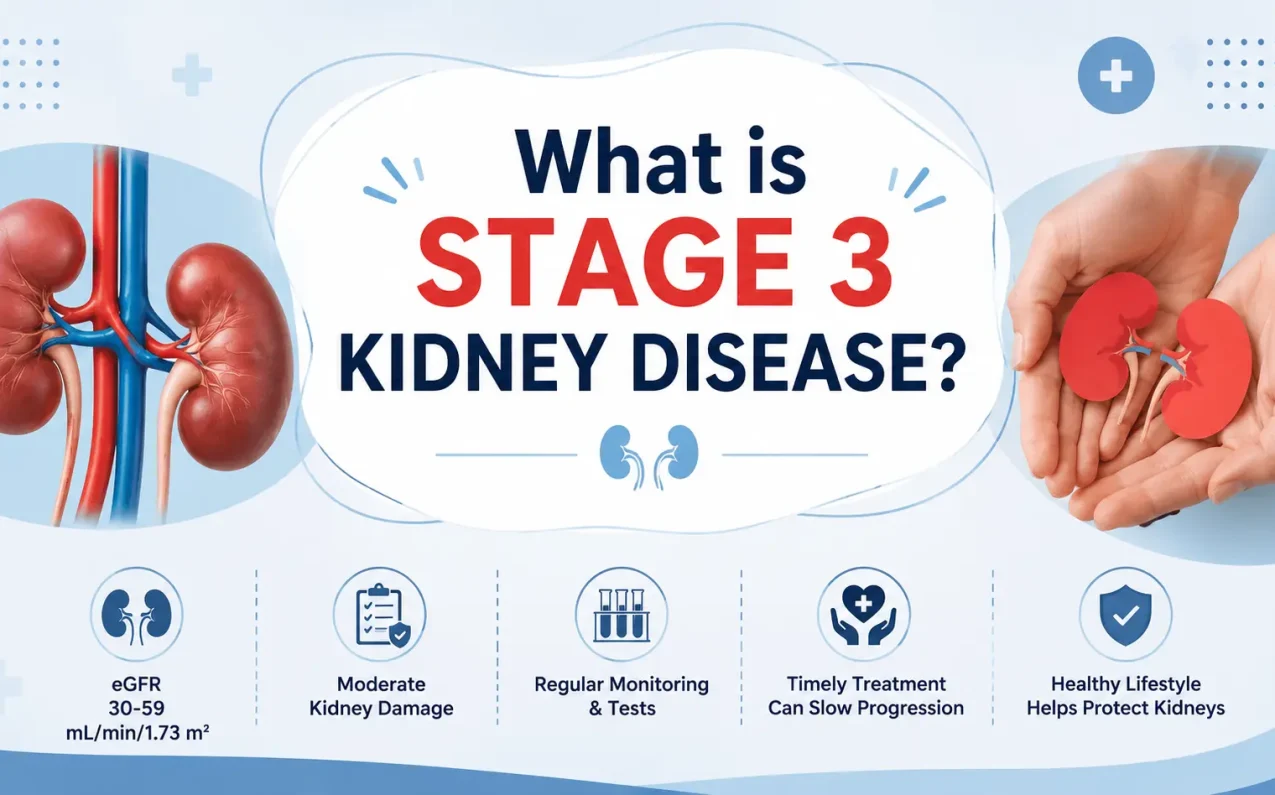
Doctors use a measurement called the estimated Glomerular Filtration Rate (eGFR) to evaluate kidney function. In Stage 3 CKD, kidney function has decreased moderately, with an eGFR ranging between 30 and 59 mL/min/1.73 m².
Stage 3 is further divided into two categories:
Stage 3A
- eGFR between 45 and 59
- Indicates a moderate decline in kidney function.
- Many people have few or no noticeable symptoms at this stage.
Stage 3B
- eGFR between 30 and 44
- Represents a more advanced reduction in kidney function.
- The risk of complications becomes higher, requiring closer monitoring and treatment.
Although kidney function has declined, the kidneys are still working. The primary goal during this stage is to preserve the remaining kidney function and prevent progression to Stage 4 or Stage 5.
Why Is Stage 3 Kidney Disease So Common?
Stage 3 CKD is one of the most frequently diagnosed stages of chronic kidney disease. Many patients first learn about their condition during this stage because earlier stages often cause few or no symptoms.
In many cases, people undergo blood tests for another health concern, and elevated creatinine levels or a reduced eGFR unexpectedly reveal kidney disease. This highlights the importance of routine kidney function tests, especially for individuals with conditions known to affect the kidneys. While Stage 3 CKD can often be managed with appropriate medical care and lifestyle changes, understanding the kidney failure treatment options, including dialysis and kidney transplant, can help patients prepare for future treatment decisions if the disease progresses.
Common Causes of Stage 3 Kidney Disease
Several medical conditions can gradually damage the kidneys over time. According to the discussion, the most common causes include:
Diabetes
Diabetes is one of the leading causes of chronic kidney disease. Persistently high blood sugar levels can damage the tiny blood vessels inside the kidneys, reducing their filtering ability over time.
High Blood Pressure
Uncontrolled high blood pressure places extra strain on the kidneys and may gradually reduce kidney function if not properly managed.
Glomerular Diseases
Diseases affecting the kidney’s filtering units can also lead to Stage 3 CKD.
Polycystic Kidney Disease
Some people develop kidney disease due to inherited conditions such as polycystic kidney disease, where fluid-filled cysts gradually affect kidney function.
Medications and Other Factors
Long-term use of certain pain-relieving medicines, along with other medications or medical conditions, may contribute to kidney damage. Kidney stones may also lead to chronic kidney disease in some individuals if they repeatedly affect the kidneys.
Symptoms of Stage 3 Kidney Disease
One important point to remember is that many people with Stage 3 CKD may have no symptoms at all.
Others experience mild symptoms that are often mistaken for everyday fatigue or aging.
Common symptoms may include:
Persistent Tiredness
Feeling tired more easily than usual is one of the earliest complaints. Many people assume they simply didn’t sleep well or have been working too hard, when reduced kidney function may actually be contributing to the fatigue.
Example
Imagine a 52-year-old office worker who begins feeling exhausted after climbing a single flight of stairs. Assuming it is just work-related stress, he ignores the problem for months. During a routine health check for high blood pressure, blood tests reveal reduced kidney function and Stage 3 CKD. Early diagnosis allows treatment to begin before the disease progresses further.
Frequent Urination at Night
Some people begin waking multiple times during the night to urinate. Others may notice increased urination during the day or urine that appears unusually clear.
These changes occur because the kidneys gradually lose some of their ability to concentrate urine.
Swelling
As kidney function declines, excess fluid may accumulate in the body.
Swelling can develop in:
- Feet
- Ankles
- Legs
- Around the eyes
Fluid retention may also contribute to breathing difficulty in some individuals if it becomes more severe.
Nausea
Some people develop mild nausea as kidney function declines. Although this symptom is generally more noticeable in later stages, sensitive individuals may experience it during Stage 3.
Itching
Persistent itching without an obvious skin condition can occur because waste products gradually begin accumulating in the bloodstream.
Reduced Appetite and Sleep Disturbance
Some individuals notice decreased appetite or disturbed sleep patterns. These symptoms are usually milder during Stage 3 but may become more prominent as kidney disease progresses.
Bone Pain and Weakness
As kidney disease affects the body’s mineral balance, some people may eventually develop bone-related complications or muscle weakness.
Why Some People Have No Symptoms
One of the most challenging aspects of Stage 3 CKD is that many patients feel completely healthy.
This explains why kidney disease is often discovered only after routine blood tests or investigations for another condition, such as high blood pressure or diabetes.
Even if you feel well, abnormal kidney test results should never be ignored.
Treatment of Stage 3 Kidney Disease
Treatment focuses on slowing disease progression rather than simply treating symptoms. The first step is identifying and managing the underlying cause.
If diabetes is responsible, blood sugar should be carefully controlled. If high blood pressure is the cause, maintaining healthy blood pressure becomes a priority. Depending on the patient’s condition, doctors may prescribe medications that help protect kidney function and slow further decline. Since treatment plans vary based on the stage and underlying cause of kidney disease, understanding the best treatment options for kidney disease can help patients make informed decisions in consultation with their healthcare provider.
Managing Complications
As kidney function decreases, several complications may develop, including:
- High potassium levels
- High phosphorus levels
- Low calcium levels
- Anemia
- Bone disorders
- Increased blood acidity
- Fluid retention
Each complication requires appropriate medical evaluation and treatment based on individual needs.
Why Seeing a Kidney Specialist Matters
Stage 3 kidney disease is an important turning point.
This is often the stage where specialized kidney care can make a meaningful difference.
A nephrologist can:
- Monitor kidney function regularly
- Adjust medications
- Treat complications early
- Recommend dietary changes
- Help reduce the risk of progression
Delaying specialist care may allow kidney damage to continue without proper management.
Diet and Lifestyle During Stage 3 CKD
Diet recommendations vary depending on each person’s blood test results and overall health.
Some individuals may need to reduce:
- Protein intake
- Foods high in phosphorus
- Foods rich in potassium
Lifestyle habits also play an important role:
- Maintain a healthy weight.
- Follow a balanced diet.
- Avoid smoking.
- Manage diabetes and high blood pressure.
- Avoid unnecessary painkillers unless advised by your doctor.
- Take medications exactly as prescribed.
Because nutritional needs differ from person to person, dietary changes should always be discussed with a healthcare professional.
How ConsultGrab Supports Patients with Kidney Disease
Receiving a diagnosis of Stage 3 kidney disease can raise many questions about treatment, specialist consultation, and long-term management. Choosing the right healthcare team early can make a significant difference.
At ConsultGrab, we help patients connect with experienced kidney specialists through our trusted healthcare network. Patients looking for the best medical treatment in Delhi with verified doctors and hospitals can also explore our dedicated resource to understand their options and make informed healthcare decisions. Our care team provides guidance throughout the treatment journey by assisting with specialist consultations, appointment scheduling, hospital selection, and treatment-related information. The goal is to ensure that every patient receives timely medical guidance and feels supported while making important healthcare decisions.
Conclusion
Stage 3 kidney disease is a serious condition, but it is also a stage where timely action can make a meaningful difference. Many people experience only mild symptoms—or none at all—making regular health checkups especially important for individuals with diabetes, high blood pressure, or other kidney disease risk factors.
Early diagnosis, appropriate medical treatment, healthy lifestyle choices, and regular follow-up with a kidney specialist can help slow disease progression and support long-term kidney health. If you have been diagnosed with Stage 3 CKD or have abnormal kidney test results, seeking timely expert advice is one of the most important steps you can take toward protecting your kidney function.
Frequently Asked Questions (FAQs)
Stage 3 kidney disease is a moderate stage of chronic kidney disease (CKD) in which the kidneys have reduced filtering ability. It is diagnosed when the estimated glomerular filtration rate (eGFR) falls between 30 and 59 mL/min/1.73 m². Although kidney function has declined, timely treatment and regular monitoring may help slow disease progression.
Many people with Stage 3 kidney disease have no noticeable symptoms. When symptoms occur, they may include fatigue, frequent urination at night, swelling in the feet or ankles, nausea, itching, reduced appetite, and sleep disturbances. Because symptoms can be mild, routine kidney function tests are important for early detection.
Stage 3 chronic kidney disease is generally considered a long-term condition, but its progression can often be slowed with appropriate medical care. Managing diabetes, controlling high blood pressure, following a kidney-friendly diet, taking prescribed medications, and attending regular follow-up appointments can help preserve remaining kidney function.
Yes. A nephrologist is a kidney specialist who can monitor kidney function, identify complications, recommend appropriate treatments, and develop a personalized management plan. Early consultation with a nephrologist during Stage 3 CKD may help reduce the risk of further kidney damage and improve long-term outcomes.
Managing Stage 3 kidney disease involves maintaining healthy blood pressure and blood sugar levels, following a balanced diet, avoiding unnecessary painkillers, maintaining a healthy weight, quitting smoking, and attending regular medical checkups. Your healthcare provider may also recommend dietary adjustments based on your kidney function and blood test results.