

Introduction
Table of Contents
ToggleGallbladder stones are commonly referred to as gallstones. Gallstones are a common digestive problem that affects millions of people worldwide. Gallstones are small stones that form in the gallbladder. The gallbladder is a small organ located under the liver that stores bile. Bile is a vital digestive fluid produced by the liver to aid in fat digestion in the body.When there is an imbalance of certain substances present in bile, small hard particles start to form in the gallbladder. These small hard particles gradually turn into gallstones. Many people are unaware that they are suffering from gallstones until certain signs and symptoms start to appear. Some gallstones are silent and do not cause any problems for a long time. However, once gallstones start to interfere with digestion, certain signs and symptoms start to appear.Learning about gallbladder stone symptoms is important to know how to identify them. People should be aware of gallbladder stone symptoms to avoid any severe health problems. Additionally, learning about gallbladder diseases and gallbladder stones causes is important to know how to identify gallbladder stones at an early stage. If you are interested in learning about digestive health and other health-related information, you can log
What Are Gallbladder Stones?
- Gallbladder stones are hardened deposits formed from bile components. Bile is composed of cholesterol, bile salts, and bilirubin. When the balance of these substances changes, crystals may begin to form in the gallbladder. Over time, these crystals grow larger and eventually develop into stones.
- Gallstones can vary in size. Some may be extremely small like grains of sand, while others can grow large enough to block bile ducts. A person may have a single stone or multiple stones in the gallbladder.home page
- Gallstones often remain unnoticed until they start interfering with the normal flow of bile. When bile flow becomes blocked, symptoms begin to appear.
Why Identifying Gallbladder Stone Symptoms Early is Important
Early detection of gallbladder stone symptoms can help prevent severe medical complications from occurring. In a normal state, when gallbladder stones are present, the bile ducts are usually obstructed from functioning properly. The bile is unable to flow from the gallbladder to the small intestine. The obstruction of the bile ducts by gallbladder stones can result in various medical complications, such as:
● Gallbladder Inflammation
● Bile Duct Infection
● Pancreatitis
● Severe Abdominal Pain
● Digestive DisordersIf gallbladder stone symptoms are not treated promptly, gallbladder diseases can become severe enough to require surgical intervention. The early detection of gallbladder stone symptoms can help doctors diagnose the problem and recommend proper treatment. previous blog
Common Symptoms of Gallbladder Stones
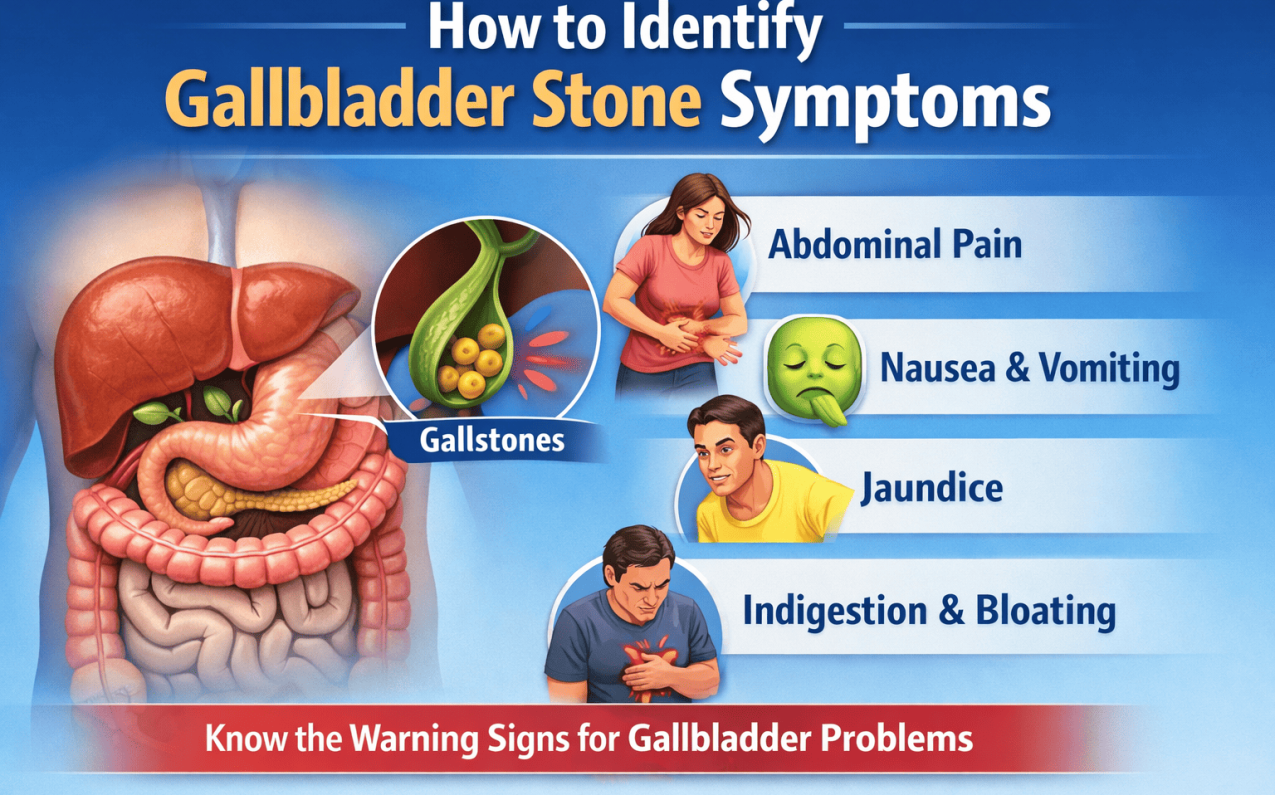
Gallstone symptoms vary from person to person. Some people experience mild gastrointestinal discomfort such as bloating or nausea, while others experience severe abdominal pain in the upper right or upper left region, especially after eating fatty foods.
1. Severe Pain in the Upper Right Abdomen
The most common symptom of the presence of stones in the gallbladder is sudden pain in the upper right side of the abdomen. The pain may be severe and sudden. The pain may last for several minutes or hours and may be caused by the consumption of fatty foods. The pain may also radiate to the back and the shoulder. The pain is generally referred to as the gallbladder attack.
2. Pain in the Upper Middle Abdomen
Some people may feel pain in the upper middle area instead of the right side. The pain could be severe or crampy. The pain could also come after meals.This pain could come when the gallbladder is contracting to release a bile.
3. Pain Between the Shoulder Blades
The pain caused by a Gallbladder Stone may radiate to other areas of the body through the nerves. The pain may be felt at:
● Between the shoulder blades.
● Right shoulder.
● Upper back. These are the common symptoms of Gallbladder problems.
4. Nausea and Vomiting
Digestive disturbances caused by gallstones may lead to nausea and vomiting. When bile flow becomes blocked, the digestive system struggles to break down fats.People with gallstones may feel nauseous after eating heavy or oily meals.
5. Bloating and Gas
Another common symptom is frequent bloating and gas. When digestion is a problem, the stomach may feel swollen or tight us. The symptoms may include the following:
● Excess gas
● Feeling full quickly
● Abdominal discomfort
6. Indigestion and Digestive Problems
Persistent indigestion may also indicate gallstones.
People may experience:
- Heartburn
- Acid reflux
- Stomach discomfort after meals
- Difficulty digesting fatty foods
7. Fever and Chills
If gallstones cause infection or inflammation in the gallbladder, a person may develop fever and chills. This indicates a serious condition that requires medical attention.
8. Yellowing of Skin and Eyes
When the bile ducts are blocked by the presence of gallstones, the bile may build up in the system and cause jaundice. Jaundice causes:
● Yellowing of the skin
● Yellowing of the eyes
● Dark urine
Stages of Gallbladder Stone Symptoms
Gallstone symptoms may appear in different stages depending on the severity of the condition.
Early Stage
At the early stage, symptoms may include mild digestive discomfort, bloating, or occasional abdominal pain.
Moderate Stage
At the early stage, symptoms may include mild digestive discomfort, bloating, or occasional abdominal pain.
Severe Stage
In severe cases, gallstones may block bile ducts and cause intense pain, fever, or infection.
Risk Factors for Gallbladder Stones
However, there are certain factors that increase the risk of gallbladder stones. These are:
● Obesity
● High-fat diet
● Age over 40
● Pregnancy
● Diabetes
● Rapid weight loss
● Family history of gallstones These people should be aware of gallbladder symptoms.
Diagnosis of Gallbladder Stones
Doctors use several medical tests to diagnose gallstones.
Ultrasound
Ultrasound is the most common test used to detect gallstones. It creates images of the gallbladder using sound waves.
Blood Tests
Blood tests help identify infection or inflammation in the body.
CT Scan
CT scans provide detailed images of internal organs and help detect complications.
MRI
MRI scans may be used to examine bile ducts and identify blockages.
Treatment Options for Gallbladder Stones
Treatment depends on the severity of symptoms.
Medications
Doctors may prescribe medications to dissolve certain types of gallstones.
HereLifestyle Changes
Healthy lifestyle changes can reduce symptoms and improve digestion
Gallbladder Removal Surgery
If gallstones cause severe symptoms, doctors may recommend gallbladder removal surgery.This surgery is called cholecystectomy and is considered safe and effective.
Diet for People with Gallbladder Stones
Diet plays a vital role in controlling symptoms of gallstones. Foods helpful in the management of gallstones stone :
● Fruits and vegetables
● Whole grains
● High-fiber foods
● Lean protein Foods to avoid:
● Fried food
● Fatty foods
● Processed snacks
● Foods high in cholesterol
Prevention Tips for Gallbladder Stones
Preventive steps include:
● Maintain a healthy weight
● Avoid rapid weight loss
● Eat a balanced diet
● Exercise regularly
● Drink enough water Healthy lifestyle habits help reduce the risk of early sign of goldblader stone
When to See a Doctor
You must consult a doctor at once if you experience:
● Severe abdominal pain
● Persistent vomiting
● Fever with abdominal pain
● Yellowing of the skin and the eyes
Conclusion
Gallbladder stones are a common digestive problem that may cause pain and health issues when not addressed properly. It is important to recognize the symptoms of the problem to seek medical attention on time.The symptoms of the problem, including pain, nausea, bloating, and digestive issues, should not be ignored. Recognizing the symptoms will help the individual seek medical attention before the problem gets out of hand.Eating a healthy diet and being physically active may help prevent the problem and promote digestive health.
Disclaimer
This article is intended for informational purposes only and should not be considered medical advice. The information provided here aims to increase awareness about gallbladder stone symptoms and related health conditions. Always consult a qualified healthcare professional for proper diagnosis and treatment of any medical condition.