

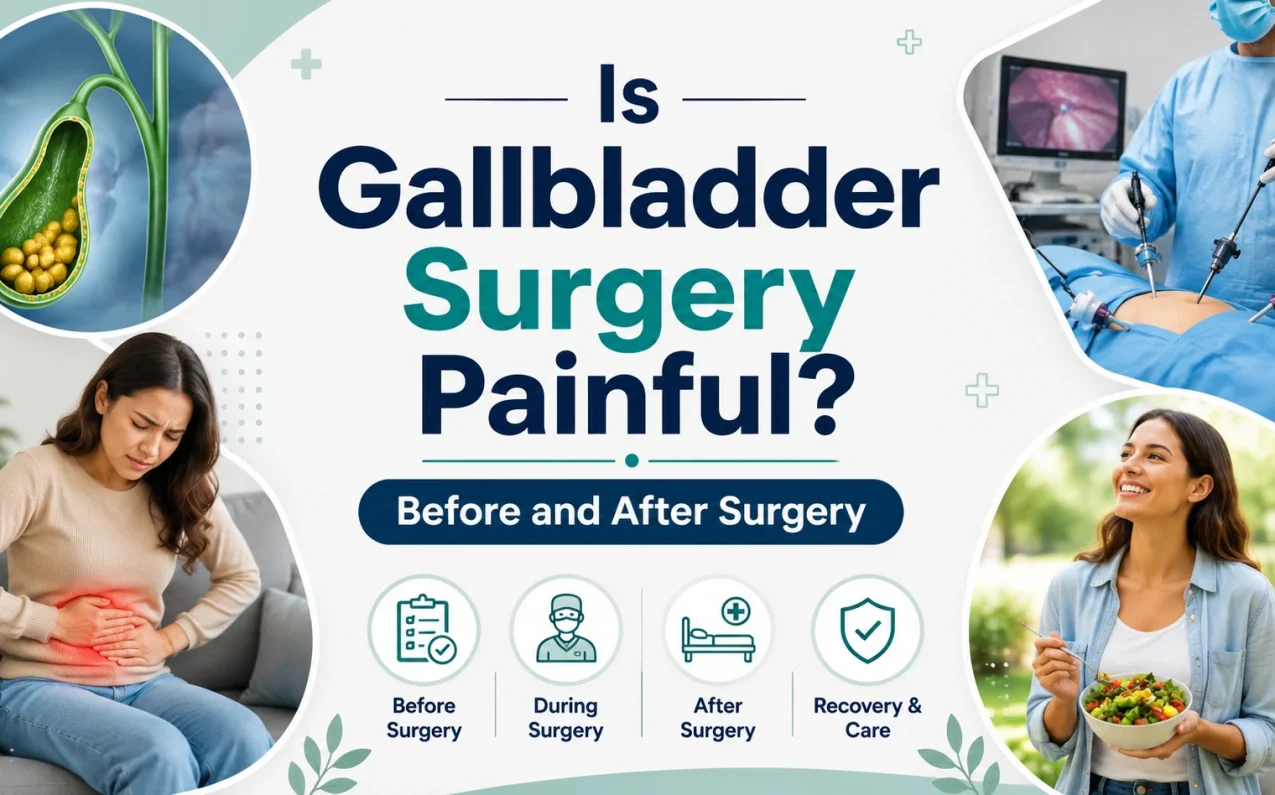
If your doctor has recommended gallbladder surgery, it’s natural to wonder, “Will it be painful?” The good news is that you won’t feel pain during the procedure because it is performed under general anesthesia. After surgery, you may experience mild to moderate discomfort around the incision sites, but this is usually temporary and can be managed with prescribed pain medication.
Today, most gallbladder removal procedures are performed using laparoscopic (minimally invasive) surgery, which generally results in less pain, smaller scars, and a quicker recovery than traditional open surgery. If you’re planning treatment, understanding the overall expenses can help you make an informed decision. You can also explore our guide on Gallbladder Treatment Cost in Delhi & India to learn about the factors that influence treatment costs and what to expect before planning your surgery
What Is the Gallbladder?
Table of Contents
ToggleThe gallbladder is a small organ located beneath the liver. It stores bile, a digestive fluid produced by the liver that helps break down fats in the small intestine.
Problems such as gallstones can block the flow of bile, causing inflammation, infection, and severe abdominal pain. When symptoms are linked to the gallbladder, surgery to remove it is often the most effective treatment.
Is Gallbladder Surgery Painful During the Procedure?
No. Gallbladder surgery is performed under general anesthesia, so you remain asleep throughout the operation and do not feel pain.
The surgery typically takes about one hour or less. In most cases, surgeons use a laparoscopic approach, making a few small incisions instead of one large cut. A tiny camera and specialized instruments are used to remove the gallbladder safely, helping reduce pain and speed up recovery.
What to Expect After Gallbladder Surgery
It is normal to have some discomfort after the anesthesia wears off. You may experience:
- Mild soreness around the incision sites
- Temporary abdominal discomfort
- Tiredness for a few days
- Mild shoulder discomfort caused by the gas used during laparoscopic surgery
These symptoms usually improve within a few days. Most patients are discharged the same day or the following day, depending on their recovery.
If you’re exploring whether surgery is the right option or want to understand the available treatments for gallbladder stones, read our detailed guide on What Is the Best Treatment for Gallbladder Stones Today? to learn about the latest treatment approaches and when surgery may be recommended.
Recovery Timeline
Recovery after laparoscopic gallbladder surgery is generally quick.
- First few days: Mild pain and soreness gradually decrease.
- Within a week: Many people feel well enough to resume light daily activities.
- Within one to two months: Most patients experience complete relief from the symptoms caused by gallbladder disease.
Your doctor may advise avoiding heavy lifting, strenuous exercise, swimming, and driving while taking prescription pain medication until you have recovered.
Can You Live Normally Without a Gallbladder?
Yes. Although the gallbladder stores bile, the liver continues to produce bile even after the gallbladder is removed. Instead of being stored, bile flows directly into the digestive system.
Most people adapt well and continue to digest food normally. Many patients can gradually return to a regular diet, although eating a balanced diet and limiting excessive fatty foods is recommended for overall digestive health.
Why Laparoscopic Surgery Is Preferred
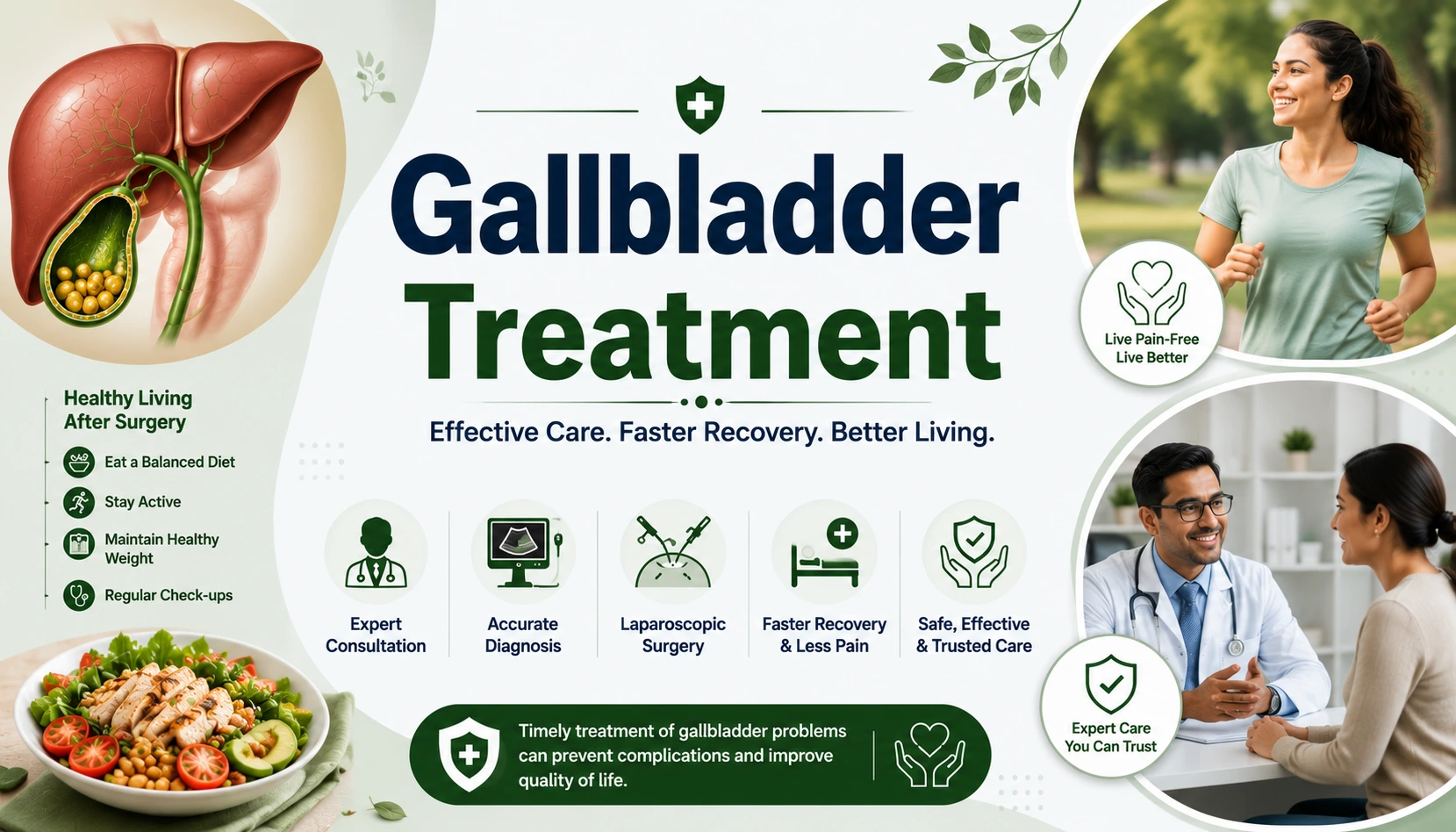
Laparoscopic gallbladder surgery has become the preferred treatment because it offers several advantages over traditional open surgery, including:
- Less postoperative pain
- Smaller incisions
- Faster recovery
- Shorter hospital stay
- Less visible scarring
- Quicker return to normal activities
These benefits make it one of the most commonly performed and successful surgical procedures. If you’re wondering whether surgery is the best option for your condition, Read More: What Is the Best Treatment for Gallbladder Stones Today? This guide explains the available treatment options and when gallbladder surgery may be recommended.
How ConsultGrab Can Help
Laparoscopic gallbladder surgery has become the preferred treatment because it offers several advantages over traditional open surgery, including:
- Less postoperative pain
- Smaller incisions
- Faster recovery
- Shorter hospital stay
- Less visible scarring
- Quicker return to normal activities
When medical evaluation confirms that these symptoms are caused by gallbladder disease, removing the gallbladder is often considered the most effective long-term treatment. Before surgery is recommended, doctors perform several diagnostic tests to confirm the condition. Read More: What Tests Are Done to Diagnose Gallbladder Problems?
Conclusion
Gallbladder surgery is generally not painful during the procedure because it is performed under general anesthesia. While mild discomfort after surgery is expected, it is usually temporary and improves as the body heals. Thanks to minimally invasive laparoscopic techniques, most patients recover quickly, experience less pain, and return to their normal routine within a short period.
If you are experiencing persistent gallbladder-related symptoms, seeking timely medical evaluation can help you receive the right diagnosis and treatment plan with confidence.
Frequently Asked Questions (FAQs)
No. Gallbladder surgery is performed under general anesthesia, so you do not feel pain during the procedure. After surgery, mild to moderate discomfort around the incision sites is common, but it is usually temporary and can be managed with prescribed pain medication. Most patients recover well after laparoscopic gallbladder surgery.
Recovery after laparoscopic gallbladder surgery is generally quick. Many patients return home the same day or the next day. Mild discomfort usually improves within a few days, while most people experience complete relief from gallbladder-related symptoms within one to two months.
Yes. The liver continues to produce bile even after the gallbladder is removed. Instead of being stored in the gallbladder, bile flows directly into the digestive system. Most people adapt well and can return to a normal diet while maintaining healthy eating habits.
Laparoscopic gallbladder surgery is preferred because it uses small incisions, resulting in less postoperative pain, minimal scarring, and a faster recovery than open surgery. Most patients also experience a shorter hospital stay and can return to their daily activities sooner.
After gallbladder surgery, patients are generally advised to avoid heavy lifting, strenuous activities, swimming until the incisions heal, and driving while taking prescription pain medication. Following your surgeon's recovery instructions helps promote healing and reduces the risk of complications.
Type your paragraph here