

Understanding the Risks of Delaying Treatment
Table of Contents
ToggleA hernia may start as a small bulge in the abdomen or groin, but it should never be considered a harmless condition. While some hernias remain stable for a period of time, others can gradually worsen and lead to serious health complications if left untreated. Understanding these risks helps you recognize when medical attention is necessary. If you’re also planning your treatment, it’s helpful to understand the factors that influence the Hernia treatment cost in Delhi NCR including the type of hernia, surgical approach, and hospital facilities, so you can make an informed healthcare decision.
What Happens If a Hernia Is Left Untreated?
An untreated hernia does not always cause immediate problems, but it can progressively become more serious over time. As the herniated tissue remains outside its normal position, it may place pressure on nearby structures, become trapped, or lose its blood supply.
Below are the most common complications associated with untreated hernias.
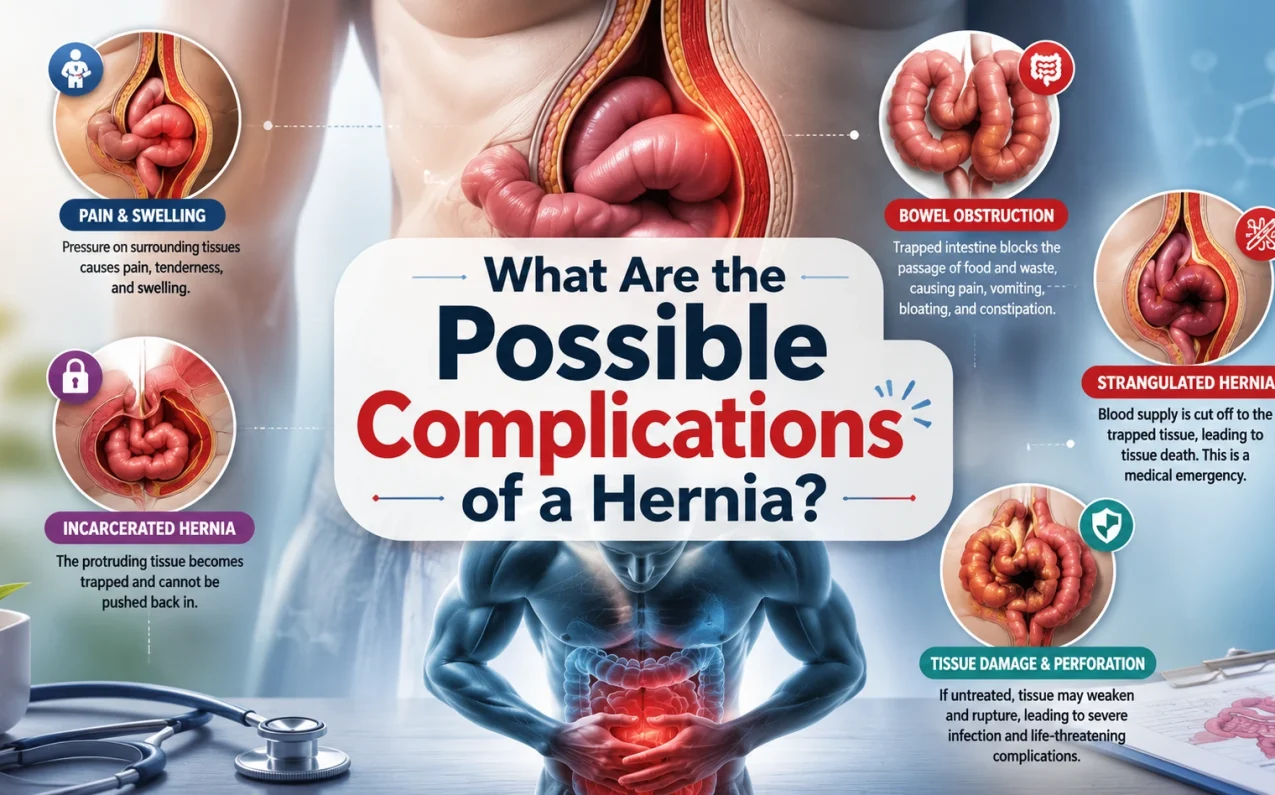
1. Pain and Swelling
One of the earliest complications is increased pressure on the surrounding muscles and tissues. As the hernia grows larger, it can push against nearby structures, resulting in pain, tenderness, and swelling around the affected area.
Many people notice that the discomfort becomes worse while lifting heavy objects, coughing, standing for long periods, or performing physical activities.
2. Incarcerated Hernia
An incarcerated hernia develops when the protruding tissue becomes trapped and cannot return to its normal position inside the abdomen.
When this happens, patients may experience:
- Persistent pain
- A firm or tender bulge
- Nausea
- Vomiting
- Increasing discomfort
A trapped hernia also increases the risk of more severe complications, making prompt medical evaluation essential.
3. Bowel Obstruction
If a portion of the intestine becomes trapped within the hernia, it may block the normal movement of food and waste through the digestive tract. This condition is known as a bowel obstruction.
Common symptoms include:
- Severe abdominal pain
- Abdominal swelling
- Vomiting
- Constipation
- Difficulty passing gas
A bowel obstruction is a serious condition that requires urgent medical attention.
4. Strangulated Hernia
Among all hernia complications, strangulation is considered the most dangerous.
A strangulated hernia occurs when the trapped intestine becomes twisted or compressed, cutting off its blood supply. Without adequate circulation, the affected tissue begins to die.
This complication can develop rapidly and often requires emergency surgery to prevent permanent tissue damage.
5. Tissue Damage and Perforation
If blood flow remains blocked for too long, the damaged portion of the intestine may weaken and eventually rupture. This is known as perforation.
A perforated intestine is a medical emergency because it can lead to severe infection within the abdominal cavity and requires immediate surgical treatment.
READ MORE: If surgery is recommended, it’s important to understand both the benefits and potential complications. Read our comprehensive guide on What Are the Risks of Hernia Surgery? to learn about possible surgical risks, recovery expectations, and how complications can be minimized.
Do Different Types of Hernias Have Different Complications?
Yes. The potential complications can vary depending on the type of hernia.
Hiatal hernias may lead to gastroesophageal reflux disease (GERD), heartburn, and chest discomfort due to the stomach moving through the diaphragm.
Umbilical hernias are often less concerning in children but may become more complicated in adults, particularly when associated with conditions such as obesity or increased abdominal pressure.
Ventral (incisional) hernias, which occur at the site of a previous surgical incision, can enlarge over time and may eventually become trapped or strangulated if not treated.
When Should You Seek Medical Care?
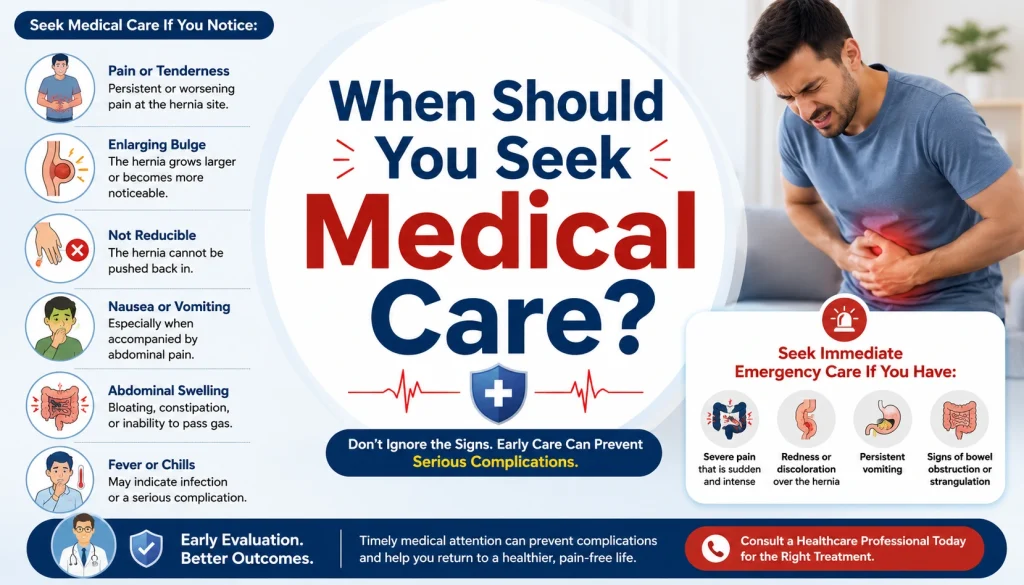
Although not every hernia is an emergency, worsening symptoms should never be ignored. You should seek medical evaluation if you experience:
- A growing bulge in the abdomen or groin
- Persistent or worsening pain
- A hernia that cannot be pushed back into place
- Nausea or vomiting
- Severe abdominal pain
- Symptoms of bowel obstruction
Early diagnosis can help prevent complications and reduce the need for emergency surgery.
READ MORE: Not sure whether your symptoms could indicate a hernia? Explore our detailed guide on What are the 5 warning signs of a hernia? to learn about the early symptoms, common warning signs, and when it’s important to seek medical evaluation.
How ConsultGrab Can Help
Managing a hernia begins with receiving the right diagnosis and expert medical guidance. At ConsultGrab, we help patients connect with experienced specialists and trusted hospitals for comprehensive hernia evaluation and treatment planning.
Our care team supports patients throughout the healthcare journey by arranging specialist consultations, assisting with appointments, explaining available treatment options, and helping individuals make informed decisions with confidence. Our goal is to make access to quality healthcare simple, transparent, and stress-free.
Conclusion
A hernia is more than just a visible bulge—it is a condition that can become increasingly serious if left untreated. Complications such as pain, swelling, incarceration, bowel obstruction, strangulation, and perforation can significantly impact your health and may require emergency treatment.
Seeking timely medical advice allows healthcare professionals to evaluate the hernia before complications develop and recommend the most appropriate course of action. Early intervention not only improves treatment outcomes but also helps prevent potentially life-threatening emergencies.
Frequently Asked Questions (FAQs)
An untreated hernia can lead to complications such as pain, swelling, incarceration (where the herniated tissue becomes trapped), bowel obstruction, strangulation, and, in severe cases, perforation. Early diagnosis and treatment help reduce the risk of these serious complications and improve overall outcomes.
A strangulated hernia occurs when the blood supply to the trapped tissue or intestine is cut off due to compression or twisting. Without immediate treatment, the affected tissue can die, increasing the risk of infection and perforation. Emergency surgery is usually required to prevent life-threatening complications.
Yes. A hernia can cause a bowel obstruction if part of the intestine becomes trapped within the hernia opening. This blockage prevents food, fluids, and gas from passing normally through the digestive tract, resulting in symptoms such as severe abdominal pain, vomiting, bloating, and constipation.
You should seek medical attention if a hernia becomes painful, enlarges rapidly, cannot be pushed back into place, or is accompanied by nausea, vomiting, abdominal swelling, or severe pain. These symptoms may indicate incarceration or strangulation, both of which require prompt medical evaluation.
Many hernia complications can be prevented through early diagnosis and timely treatment. Consulting a qualified specialist when symptoms first appear allows appropriate monitoring or surgical repair before complications such as bowel obstruction or strangulation develop.