

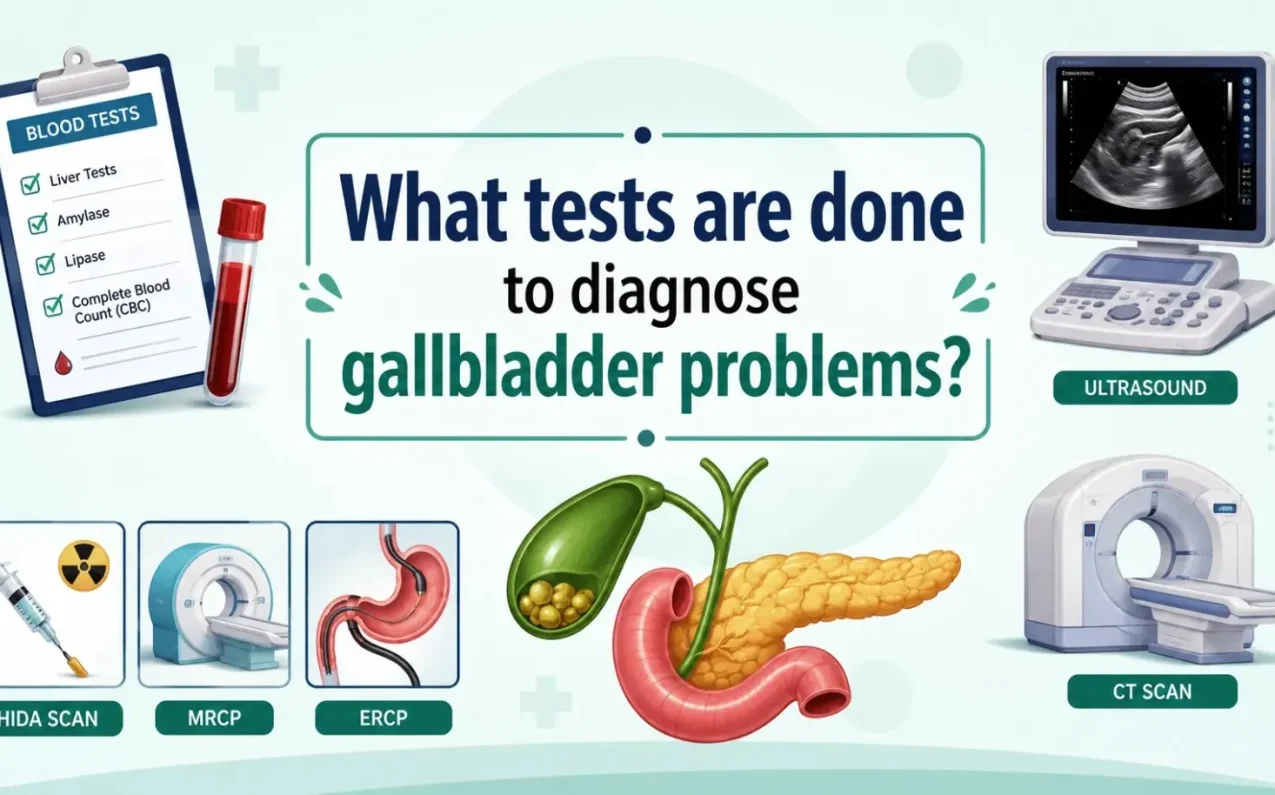
Gallbladder problems can lead to abdominal pain, digestive discomfort, and serious complications if not diagnosed correctly. Because symptoms often overlap with liver, pancreas, or digestive conditions, doctors rely on a combination of laboratory and imaging tests to confirm the diagnosis and guide treatment. Patients seeking the best gallbladder treatment benefit from accurate diagnosis, expert evaluation, and timely intervention tailored to their condition.
Understanding these tests helps patients feel more confident, informed, and prepared during their healthcare journey.
Why Proper Testing Is Essential for Gallbladder Diagnosis
Table of Contents
ToggleGallbladder-related symptoms may range from mild discomfort to severe inflammation or infection. Diagnostic tests are important because they help to:
- Identify whether the gallbladder is the source of symptoms
- Detect inflammation, infection, or blockage early
- Assess the involvement of nearby organs such as the liver or pancreas
- Support accurate treatment planning and decision-making
A structured testing approach reduces uncertainty and prevents delays in care. Recognizing the first signs of gallbladder issues and seeking evaluation early can help patients receive timely treatment and avoid complications.
Main Categories of Gallbladder Diagnostic Tests
Tests used to diagnose gallbladder problems generally fall into two broad categories:
- Blood Tests
- Radiological (Imaging) Tests
Together, these tests provide a complete clinical picture.
Blood Tests Used to Diagnose Gallbladder Problems
Blood investigations are usually the first step when gallbladder disease is suspected. These tests reveal signs of inflammation, infection, or organ stress that may be linked to gallbladder dysfunction.
Common Blood Tests Include:
Liver Tests
These blood tests help detect abnormalities related to bile flow and liver stress, which can occur when the gallbladder is affected.
Amylase and Lipase Levels
Amylase and lipase are digestive enzymes produced by the pancreas. Elevated levels may indicate pancreatic inflammation, which can sometimes be caused by gallbladder problems such as gallstones blocking bile ducts.
Complete Blood Count (CBC)
A CBC measures different blood cells, including white blood cells. A high white blood cell count may suggest infection or inflammation associated with gallbladder disease.
Blood test findings help doctors determine whether imaging tests are needed and how urgently further evaluation should proceed.
Imaging Tests for Gallbladder Evaluation
Imaging tests allow doctors to visualize the gallbladder and surrounding organs, confirming structural or functional problems.
Ultrasound of the Abdomen
Ultrasound uses sound waves to create images of intra-abdominal organs. It is commonly the first imaging test recommended to identify gallstones, gallbladder inflammation, or structural changes.
CT Scan of the Abdomen
A CT scan provides detailed cross-sectional X-ray images of abdominal organs. It may be advised when complications are suspected or when ultrasound findings are unclear.
HIDA Scan (Cholescintigraphy)
In this test, a small amount of radioactive material is injected into the body. The gallbladder absorbs this material, allowing doctors to evaluate how well it fills and empties bile. This test helps assess gallbladder function rather than just structure.
MRCP
This advanced imaging technique uses magnetic resonance technology to create detailed images of the gallbladder, bile ducts, liver, and pancreas without invasive instruments.
ERCP
This procedure involves guiding a flexible tube through the mouth into the digestive tract. A dye is injected to visualize the bile and pancreatic ducts on X-ray. In selected cases, this test may also allow treatment of blockages during the same procedure.
How Modern Diagnostic Approaches Improve Care
Current diagnostic practices focus on using the right test at the right time, avoiding unnecessary procedures while ensuring accurate results. By combining blood tests with targeted imaging, doctors can:
- Detect problems early
- Reduce patient discomfort
- Identify complications promptly
- Plan safer and more effective treatment
Each test plays a specific role, and not every patient needs every investigation.
How ConsultGrab Supports Patients During Diagnosis
At ConsultGrab, we understand that medical tests and reports can feel confusing and overwhelming. Our role is to guide patients through every step—from diagnosis to treatment planning.
We support patients by:
- Explaining test results in clear, simple language
- Connecting patients with appropriate specialists based on findings
- Assisting with appointments at verified hospitals in Delhi
- Offering transparent guidance and coordinated care
Our focus is to ensure that patients feel informed, confident, and supported throughout their healthcare journey.
Making Informed Decisions with the Right Guidance
Gallbladder problems are manageable when diagnosed accurately and early. Understanding diagnostic tests empowers patients to ask the right questions and make informed choices about their care.
With expert guidance and coordinated support, the diagnostic process becomes smoother, less stressful, and more effective.
Final Thought
Gallbladder problems can feel confusing, especially when multiple tests and medical terms are involved. However, each diagnostic test—whether a blood investigation or an imaging study—plays a specific role in identifying the root cause and guiding the next steps in care. Accurate diagnosis is the foundation of safe and effective treatment.
With the right medical guidance, patients can move forward with confidence, knowing their condition is being evaluated thoroughly and responsibly. Understanding the purpose of these tests helps reduce anxiety and empowers patients to make informed healthcare decisions.
At ConsultGrab, our goal is to ensure that no patient feels uncertain or unsupported. From understanding diagnostic results to connecting with trusted specialists and hospitals, we are committed to making the healthcare journey smoother, clearer, and stress-free.
Right diagnosis leads to the right treatment—and with the right guidance, every step becomes easier.
Frequently Asked Questions (FAQs)
Gallbladder problems are diagnosed using a combination of blood tests and imaging studies. Blood tests include liver tests, amylase, lipase, and complete blood count to detect inflammation or infection. Imaging tests such as ultrasound, CT scan, HIDA scan, MRCP, and ERCP help visualize gallbladder structure and function.
Blood tests help identify signs of gallbladder-related inflammation, infection, or bile flow obstruction. Liver tests can show bile duct issues, while amylase and lipase levels assess pancreatic involvement. A complete blood count may indicate infection, helping doctors decide if further imaging or urgent treatment is needed.
An abdominal ultrasound is usually the first imaging test for suspected gallbladder problems. It is non-invasive and effective in detecting gallstones, gallbladder inflammation, and structural abnormalities. Ultrasound also helps evaluate nearby organs without radiation exposure, making it a preferred initial diagnostic tool.
A HIDA scan is a diagnostic test that evaluates gallbladder function rather than structure. A small radioactive tracer is injected to assess how well the gallbladder fills and empties bile. It is recommended when symptoms persist but ultrasound results appear normal or inconclusive
After diagnostic tests, patients may need help understanding reports and deciding next steps. Platforms like ConsultGrab support patients by explaining test results, connecting them with appropriate specialists, and coordinating care at verified hospitals to ensure confident and informed treatment decisions.