

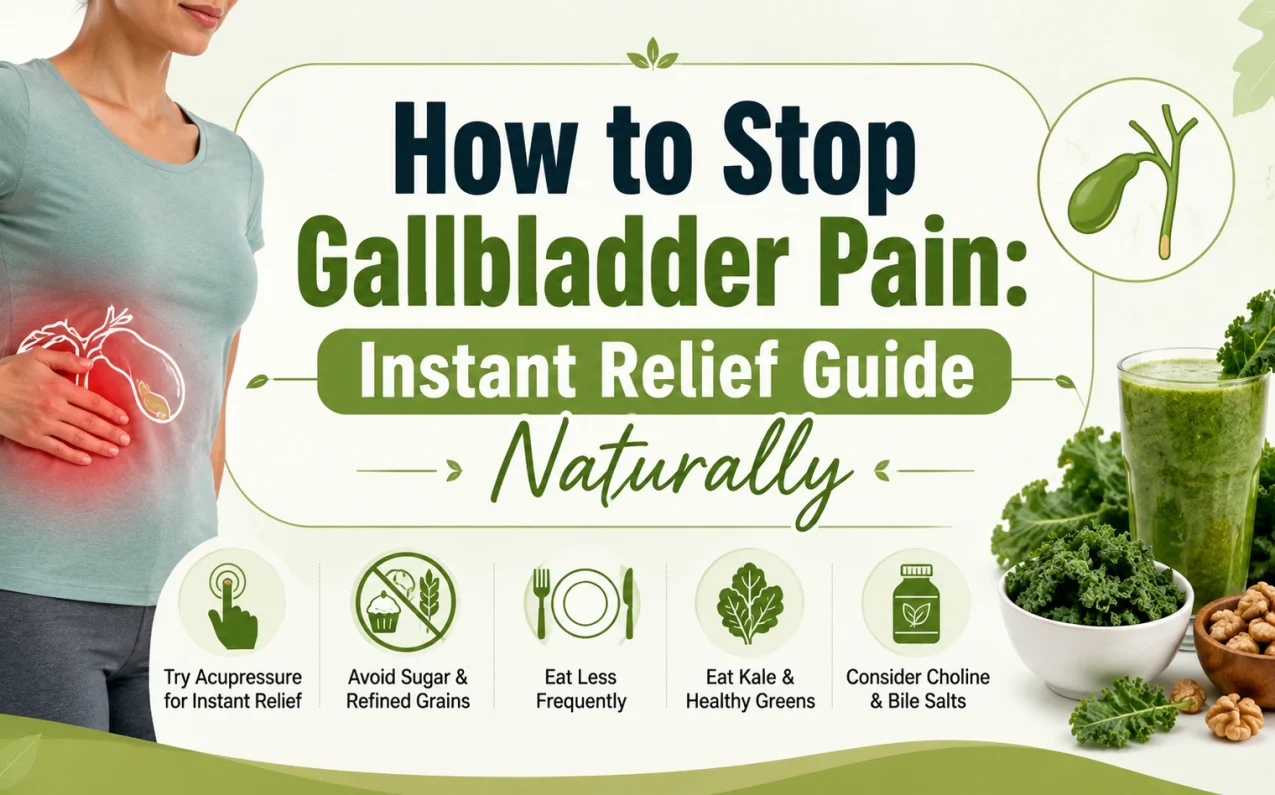
Gallbladder pain can be sudden, intense, and disruptive. It often develops in the upper right side of the abdomen and may sometimes spread toward the right shoulder or back. While immediate relief is important, understanding what may be contributing to the discomfort is equally essential.
This guide explains a commonly discussed approach for temporary symptom relief, along with lifestyle changes that may support gallbladder health over time. If your pain is severe, persistent, or accompanied by fever, vomiting, or jaundice, seek prompt medical evaluation.
What Is Gallbladder Pain?
Table of Contents
ToggleGallbladder pain usually occurs beneath the right rib cage and may feel sharp, cramping, or constant. Some people experience discomfort after eating, while others notice pain that radiates toward the right shoulder blade.
Because several digestive conditions can produce similar symptoms, an accurate diagnosis is important before starting any treatment.
Is There a Way to Get Temporary Relief?
One approach described in the shared discussion involves gently massaging a tender point on the opposite side of the upper abdomen rather than pressing directly over the painful area.
According to the discussion, applying light pressure for one to two minutes to a sensitive spot on the left side below the rib cage may provide temporary comfort for some individuals, including those who have previously undergone gallbladder surgery. The emphasis is on using gentle pressure and avoiding direct pressure over the painful gallbladder region.
It is important to remember that this approach is presented as a temporary comfort measure and should not replace medical evaluation, especially if pain continues or becomes more severe.
Why Does Gallbladder Pain Keep Returning?
The discussion suggests that symptom relief alone may not address the underlying cause. Long-term improvement focuses on identifying and correcting factors that may be contributing to repeated discomfort.
While the exact cause differs from person to person, persistent symptoms should always be evaluated by a qualified healthcare professional.
Dietary Changes Mentioned in the Discussion
The discussion highlights several dietary habits that may help reduce recurring discomfort:
- Reduce added sugar intake.
- Limit refined grains such as white bread, pasta, cereals, crackers, biscuits, waffles, and pancakes.
- Avoid very heavy meals that combine large amounts of fat with refined carbohydrates.
- Reduce intake of foods that seem to trigger symptoms.
- Avoid frequent snacking and allow time between meals.
The discussion suggests that eating fewer, well-spaced meals may allow the gallbladder more time to function between meals.
Foods Discussed for Gallbladder Support
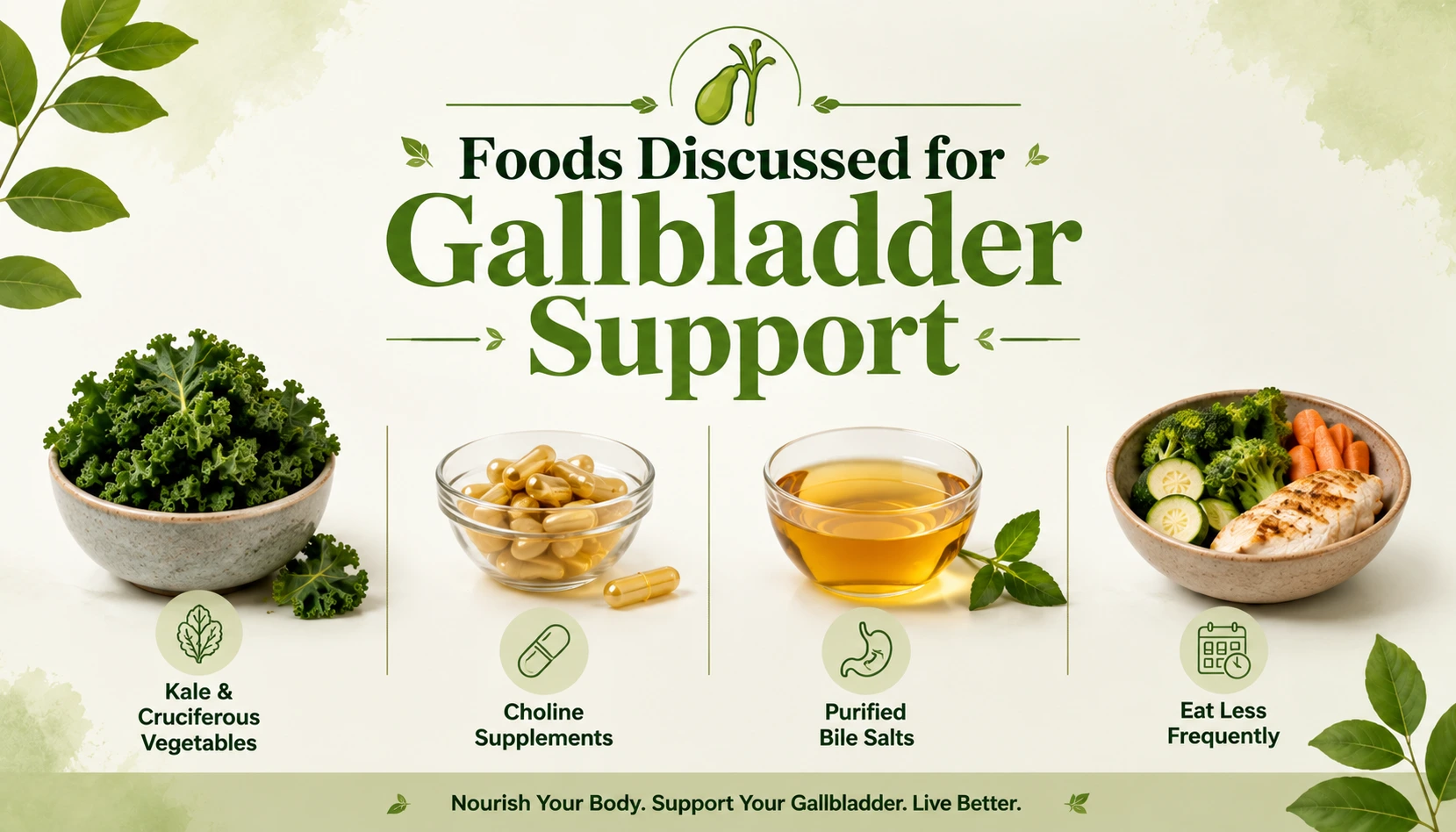
The discussion also mentions several nutritional approaches that are commonly discussed for supporting gallbladder function, including:
- Kale and other cruciferous vegetables.
- Choline supplements.
- Purified bile salts in certain situations discussed by the speaker.
These suggestions were presented within the discussion as supportive measures rather than guaranteed treatments. Any supplements should only be considered after discussing them with a qualified healthcare professional.
What If Gallstones Are Present?
The discussion notes that gallstones may require a different approach than general gallbladder discomfort and suggests that persistent symptoms should not be ignored.
Gallstones and other gallbladder conditions can require medical assessment to determine the most appropriate treatment plan. Self-managing recurring pain without knowing its cause may delay necessary care.
When Should You See a Specialist?
Seek medical evaluation if you experience:
- Recurrent gallbladder pain.
- Severe pain lasting several hours.
- Pain associated with fever or chills.
- Yellowing of the skin or eyes.
- Persistent nausea or vomiting.
- Pain that continues even after previous gallbladder surgery.
Early diagnosis can help identify whether symptoms are related to gallstones, inflammation, digestive disorders, or another underlying condition.
If your gallbladder pain is severe, keeps returning, or is caused by gallstones or inflammation, your doctor may recommend further evaluation to determine the most appropriate treatment. In some cases, surgery may be considered depending on the underlying condition and the severity of symptoms.
READ MORE: Is Gallbladder Surgery Painful? Learn what to expect before, during, and after gallbladder surgery, including recovery, pain management, and how the procedure can help relieve long-term gallbladder problems.
How ConsultGrab Can Help
Finding the right specialist can make a significant difference when dealing with ongoing gallbladder symptoms. ConsultGrab connects patients with experienced doctors and trusted hospitals for accurate diagnosis, treatment guidance, and appointment support. Whether you need medical advice, diagnostic evaluation, or help understanding your treatment options, our care team is here to guide you throughout your healthcare journey.
READ MORE: Gallbladder Treatment Cost in Delhi – Learn about the average cost of gallbladder treatment in Delhi, the factors that influence treatment expenses, available treatment options, and what to expect before planning your care.
Conclusion
Managing gallbladder pain involves more than finding temporary relief. While gentle comfort techniques and dietary adjustments may help some individuals manage symptoms, recurring pain should always be properly evaluated to identify its underlying cause. Early consultation with an experienced healthcare professional can help ensure timely diagnosis, appropriate treatment, and better long-term digestive health.
Frequently Asked Questions
According to the discussed approach, temporary relief may be achieved by gently massaging a tender point on the opposite side of the upper abdomen instead of pressing directly on the painful gallbladder area. This method is intended only for short-term comfort and should not replace a medical evaluation if pain is severe or recurring.
The discussion recommends reducing added sugar, refined grains such as bread, pasta, cereals, crackers, and biscuits, as well as limiting heavy fatty meals. These dietary adjustments are suggested to help minimize recurring gallbladder discomfort and support better digestive function over time.
Yes. The discussion explains that some individuals may continue to experience discomfort even after gallbladder removal. Persistent or recurring pain following surgery should be assessed by a qualified healthcare professional to determine the underlying cause and recommend appropriate treatment.
The discussion suggests that eating fewer, well-spaced meals instead of frequent snacking may give the gallbladder more time to function effectively. This eating pattern is presented as one lifestyle strategy that may help reduce digestive discomfort and support normal bile concentration.
Medical attention is recommended if gallbladder pain is severe, lasts for several hours, keeps returning, or is accompanied by symptoms such as fever, vomiting, or yellowing of the skin or eyes. Early evaluation can help identify the cause and determine the most appropriate treatment.