

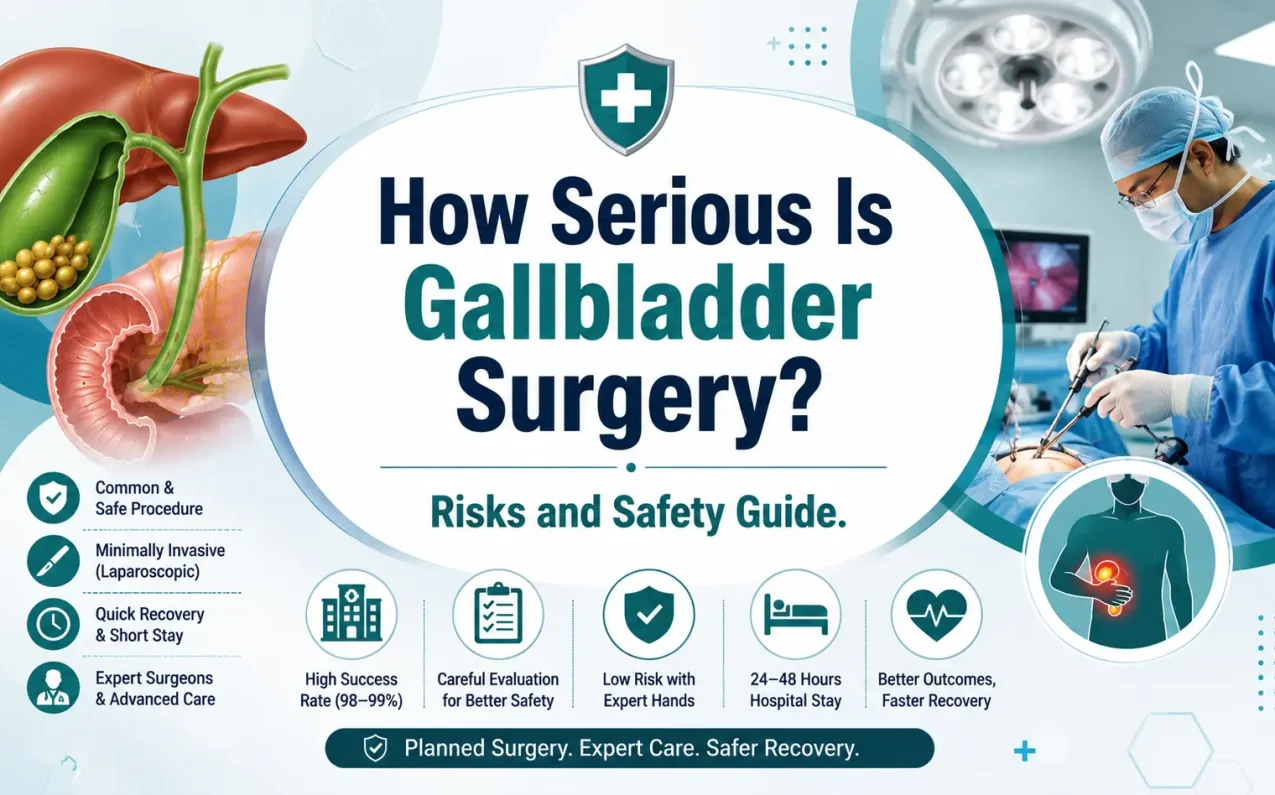
Hearing that you need gallbladder surgery can naturally raise concerns. One of the most common questions patients ask is, “How serious is gallbladder surgery?” While any operation involving an internal organ should be taken seriously, modern gallbladder surgery is considered one of the safest and most commonly performed abdominal procedures.
In most cases, laparoscopic gallbladder surgery (cholecystectomy) has a very high success rate and allows patients to recover quickly. Although the procedure carries some risks, serious complications are uncommon when the surgery is performed by an experienced surgeon and at the appropriate time.
When patients are told they need gallbladder surgery (cholecystectomy), one of the first questions they ask is, “How serious is the surgery, and what should I expect afterward?” While it is natural to feel anxious, understanding the procedure, its risks, and the recovery process can help you make informed decisions with confidence.
Read more: Is Life Better After Gallbladder Removal? What to Expect
Is Gallbladder Surgery a Serious Procedure?
Table of Contents
ToggleGallbladder surgery is medically classified as a major operation because it is performed under general anesthesia and involves the removal of an internal organ. However, advances in minimally invasive laparoscopic surgery have significantly improved patient safety, reduced pain, and shortened recovery time.
Today, most patients undergo surgery through small keyhole incisions instead of a large abdominal cut. This modern approach minimizes tissue damage and allows many people to return home within 24 to 48 hours after the procedure.
Although gallbladder surgery (cholecystectomy) is considered a safe and commonly performed procedure, patients often have practical concerns beyond the operation itself. Along with understanding the risks and recovery, many also want to know how much the surgery may cost and what factors can affect the final hospital bill.
Read more: What Is the Cost of Gallbladder Surgery? Complete Guide 2026
Why Is Gallbladder Surgery Considered Safe?
Modern surgical technology has made gallbladder removal safer than ever before.
Laparoscopic surgery uses high-definition cameras and specialized instruments that provide surgeons with a clear view of the operating area. This precision helps reduce blood loss, lowers the risk of complications, and supports faster healing.
Most patients recover well and are able to resume light daily activities within a week, making laparoscopic cholecystectomy the preferred treatment for gallbladder stones and related conditions.
The seriousness of gallbladder surgery depends on factors such as the patient’s overall health, the severity of the gallbladder condition, and whether the procedure is planned or performed as an emergency. Although modern laparoscopic surgery offers faster recovery and fewer complications, many patients still wonder how the procedure is medically classified and what to expect during treatment.
Read more : Is Gallbladder Surgery a Major Surgery? What Patients Should Know
What Are the Possible Risks?
Although gallbladder surgery is generally safe, every surgical procedure carries some level of risk.
Potential complications include bile duct injury, internal bleeding, infection, bile leakage, and reactions to general anesthesia. In some cases, severe inflammation or scar tissue may require the surgeon to convert a laparoscopic procedure into an open surgery to ensure patient safety.
These complications are uncommon, but understanding them helps patients make informed treatment decisions.
Planned Surgery vs. Emergency Surgery
The timing of gallbladder surgery plays an important role in its overall safety.
When surgery is planned after diagnosing gallstones or chronic gallbladder disease, the procedure is usually straightforward and associated with a smooth recovery. However, delaying treatment can lead to severe infection, gallbladder rupture, jaundice, or other complications that may require emergency surgery, increasing both surgical complexity and recovery time.
Early medical evaluation and timely treatment often provide the best outcomes.
How ConsultGrab Helps Patients
Choosing the right healthcare provider is an important step before any surgery. At ConsultGrab, we help patients connect with trusted specialists and verified hospitals while offering transparent treatment guidance, appointment support, and assistance throughout the care journey. Our goal is to help every patient make informed decisions with confidence.
Conclusion
Gallbladder surgery should be taken seriously because it involves general anesthesia and the removal of an internal organ. However, thanks to modern laparoscopic techniques, it has become a highly safe and routinely performed procedure with excellent success rates. Seeking timely treatment, choosing an experienced surgeon, and following post-operative instructions can help ensure a safe surgery and a smooth recovery.
If you’re writing this for ConsultGrab, this format is suitable for publication and is structured to perform well for both readers and AI-powered search engines.
Frequently Asked Questions (FAQ's)
Gallbladder surgery (cholecystectomy) is considered a major abdominal operation because it involves general anesthesia and the removal of an internal organ. However, with modern laparoscopic techniques, it is also one of the safest and most commonly performed procedures, with a success rate of approximately 98–99% and a low risk of major complications.
Yes. Laparoscopic gallbladder surgery is generally safer for most eligible patients because it uses small incisions, causes less pain, reduces blood loss, and allows faster recovery. Most patients are discharged within 24–48 hours, while open surgery is typically reserved for complicated cases requiring a larger incision and longer hospital stay.
Although gallbladder surgery is considered safe, potential risks include bile duct injury, bleeding, infection, bile leakage, and complications related to general anesthesia. These complications are uncommon and occur in a small percentage of patients, especially when the procedure is performed by an experienced laparoscopic or gastro surgeon.
Yes. Planned (elective) gallbladder surgery is generally associated with lower risks and a smoother recovery. Emergency surgery for severe infection, gallbladder rupture, or bile duct blockage may involve greater surgical complexity, a longer hospital stay, and a higher likelihood of postoperative complications.
Recovery depends on the surgical technique and the patient's overall health. After laparoscopic cholecystectomy, most patients return to light daily activities within 5–7 days and recover fully within a few weeks. Recovery after open gallbladder surgery usually takes longer due to the larger incision and increased healing time.