

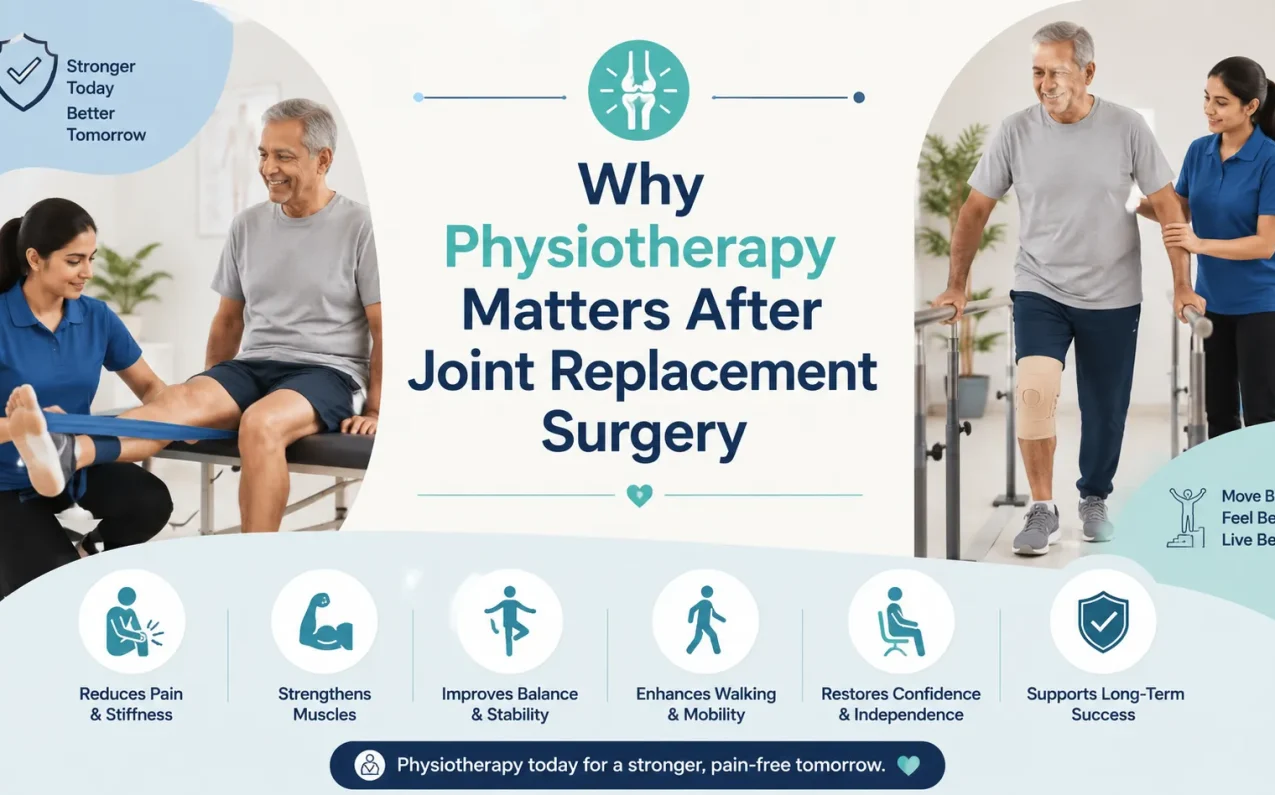
Joint replacement surgery can dramatically improve quality of life for people suffering from severe arthritis, chronic joint pain, stiffness, and limited mobility. However, many patients assume that once the surgery is completed, the hard part is over.
The truth is that surgery is only one part of the recovery journey.
While the damaged joint is replaced during surgery, the surrounding muscles, ligaments, balance mechanisms, and movement patterns still need to adapt to the new joint. This is why physiotherapy is considered one of the most important components of recovery after knee replacement or hip replacement surgery. Choosing an experienced orthopedic specialist is equally important because proper surgical planning and post-operative guidance can significantly influence recovery outcomes. Patients exploring treatment options can learn more about the Best Doctors for Knee Replacement Surgery in Delhi to better understand their care choices and treatment journey.
Without proper rehabilitation, patients may not achieve the full benefits of their surgery, even if the procedure itself is technically successful.
Why Physiotherapy Is Essential After Joint Replacement
Table of Contents
ToggleJoint replacement surgery replaces the damaged joint with an artificial implant designed to reduce pain and improve movement. However, the body must learn how to function effectively with the new joint.
The muscles surrounding the joint may have become weak due to years of pain, reduced activity, or altered walking patterns before surgery. These muscles require retraining and strengthening to support the new implant properly.
Physiotherapy helps patients:
- Restore strength and mobility
- Improve balance and coordination
- Reduce swelling and stiffness
- Relearn proper walking patterns
- Increase confidence during movement
- Support long-term implant function
Simply replacing the joint does not automatically restore normal movement. Rehabilitation teaches the body how to use the new joint safely and efficiently.
What Happens If You Skip Physiotherapy?
Many patients underestimate the importance of post-surgical rehabilitation. Missing physiotherapy sessions can significantly slow recovery and may limit the benefits of surgery. Understanding the recovery process after joint replacement can help patients appreciate why rehabilitation is so important. For a detailed overview of recovery milestones, walking progression, and expected healing stages, read our guide on knee replacement surgery recovery time week-by-week.
Without proper rehabilitation, patients may experience:
Persistent stiffness
Increased swelling
Ongoing discomfort
Muscle weakness
Poor balance
Difficulty walking normally
Reduced range of motion
In some cases, patients may continue facing challenges similar to those they experienced before surgery despite having a new joint.
This is why physiotherapy should never be viewed as an optional step. It is a vital part of the overall treatment process..
Benefits of Physiotherapy After Joint Replacement Surgery
Faster Recovery
One of the primary goals of physiotherapy is to activate muscles early after surgery.
When muscles become active:
- Blood circulation improves
- Healing is supported
- Swelling reduces
- Joint movement improves
Better circulation helps deliver oxygen and nutrients to healing tissues, which can contribute to a smoother recovery process.
Reduced Pain
Physiotherapy exercises are designed to improve muscle function and joint mobility.
As strength and movement improve, pressure on the surrounding tissues decreases, helping reduce discomfort. Many patients find that effective rehabilitation helps them rely less on pain medication during recovery.
Improved Confidence and Independence
Long-term joint pain often affects confidence and independence.
As patients regain strength and mobility through physiotherapy, they become more comfortable performing daily activities such as walking, climbing stairs, sitting, standing, and moving around without assistance.
The ability to walk confidently again is often one of the most rewarding milestones in recovery.
Modern Recovery Approaches Focus on Early Movement
Current rehabilitation approaches emphasize the importance of early mobilization after joint replacement surgery.
Many patients are encouraged to begin basic joint movements and assisted walking on the day of surgery, depending on their medical condition and surgeon’s recommendations.
Standing and walking typically begin with:
- Professional supervision
- Support from a walker
- Guided movement exercises
- Safety monitoring
Early movement helps reduce stiffness, improve circulation, and promote functional recovery.
Contrary to common belief, prolonged bed rest after joint replacement surgery is generally not recommended.
Why Balance Training Matters
Modern physiotherapy programs place significant emphasis on balance training.
Before surgery, many patients develop altered movement patterns due to pain and reduced mobility. After surgery, these habits often need correction.
Balance-focused rehabilitation helps patients:
- Improve stability
- Prevent falls
- Walk more naturally
- Gain confidence in movement
- Enhance overall mobility
As balance improves, patients often experience smoother walking patterns and greater independence.
The Importance of Muscle Strengthening
One of the most important goals of physiotherapy is rebuilding muscle strength.
Rehabilitation typically focuses on strengthening:
- Quadriceps muscles
- Hamstring muscles
- Hip muscles
- Gluteal muscles
- Calf muscles
Strong muscles help stabilize the joint and support proper movement patterns.
Many patients lose muscle strength before surgery because chronic pain limits activity levels. Physiotherapy helps restore that strength and improve overall lower-limb function.
Regaining Range of Motion
Range of motion refers to how well the joint can bend and straighten.
Restoring movement is a key part of patient satisfaction after joint replacement surgery.
Physiotherapy programs often include exercises that help patients gradually:
- Bend the joint comfortably
- Straighten the joint fully
- Improve flexibility
- Reduce stiffness
Range-of-motion improvements occur progressively and may continue for many months after surgery.
Patients should understand that recovery is a gradual process and not an overnight transformation.
Physiotherapy Protects Your Implant in the Long Term
Physiotherapy is not only important for short-term recovery.
Strong muscles absorb many of the forces generated during daily activities such as walking, climbing stairs, and standing.
When muscles function efficiently:
- Less stress is transferred directly to the implant
- Joint stability improves
- Movement becomes more coordinated
- Risk of falls decreases
Maintaining good muscle strength and balance may help support the long-term performance of the artificial joint.
When Should Physiotherapy Start?
One of the biggest misconceptions about joint replacement recovery is that patients should rest for several weeks before beginning rehabilitation.
In reality, physiotherapy often begins on the same day as surgery.
Depending on the patient’s condition, rehabilitation may include:
- Gentle joint movements
- Standing with support
- Walking with a walker
- Bed mobility exercises
- Basic functional training
Starting rehabilitation early helps prevent stiffness and encourages faster recovery.
What Happens During Hospital-Based Physiotherapy?
During the hospital stay, patients are introduced to essential recovery techniques and exercises.
These may include:
Walking Training
Patients learn how to walk safely using a walker or other support device.
Stair-Climbing Training
Guided stair-climbing practice helps prepare patients for daily life after discharge.
Daily Activity Training
Patients learn techniques for:
- Sitting and standing safely
- Getting in and out of bed
- Using the toilet comfortably
- Moving independently
These skills help patients transition safely back to home life.
Recovery Continues After Hospital Discharge
Physiotherapy does not end when patients leave the hospital.
A customized rehabilitation plan is often created based on:
- Age
- Strength levels
- Functional goals
- Recovery progress
- Overall health condition
The focus shifts toward helping patients return to everyday activities confidently, safely, and without unnecessary discomfort.
Three Keys to Successful Physiotherapy
1. Consistency
Regular participation in physiotherapy is essential.
Each session contributes to improving strength, flexibility, mobility, and confidence. Patients who remain consistent generally experience better outcomes and smoother recoveries.
2. Patience
Joint replacement recovery takes time.
Results are achieved gradually through repeated exercises, muscle strengthening, and movement training. Comparing your recovery to someone else’s can create unnecessary frustration because every individual’s healing journey is unique.
3. Home Exercise Practice
Exercises taught during physiotherapy sessions should be continued at home according to professional guidance.
Home practice reinforces progress made during supervised sessions and plays an important role in recovery.
However, moderation is important. Overexercising may increase soreness or interfere with rehabilitation progress.
How ConsultGrab Supports Joint Replacement Patients
Recovering from joint replacement surgery involves much more than the operation itself. Patients often need guidance regarding specialists, hospitals, rehabilitation planning, and long-term recovery expectations.
At ConsultGrab, we help patients connect with experienced orthopedic specialists and trusted hospitals through our verified healthcare network. Our care team provides treatment guidance, appointment support, and transparent information so patients can make informed healthcare decisions with confidence.
Whether you are considering knee replacement surgery, hip replacement surgery, or exploring treatment options for chronic joint problems, having the right support can make the entire treatment journey smoother and less stressful.
Final Thoughts
Joint replacement surgery is only the first step toward restoring mobility and improving quality of life. The real success of the procedure depends heavily on what happens afterward.
Physiotherapy helps patients regain strength, improve balance, restore movement, reduce pain, and return to everyday activities with confidence. It also supports long-term implant function and may help reduce future complications. Recovery experiences can vary depending on the surgical technique and implant approach used. Patients who want to better understand their treatment options can explore the different types of knee replacement surgery and how they affect recovery before making informed decisions about their care.
A simple way to remember the recovery journey is this: joint replacement surgery completes the first half of the work, while physiotherapy helps complete the second half. Together, they create the foundation for a successful recovery and a more active future.
Frequently Asked Questions (FAQs)
Physiotherapy is an essential part of recovery after joint replacement surgery because it helps the body adapt to the new joint. It improves muscle strength, mobility, balance, and coordination while reducing stiffness and swelling. Consistent physiotherapy helps patients regain independence and achieve the full benefits of knee replacement or hip replacement surgery.
Physiotherapy should typically begin on the same day as knee replacement or hip replacement surgery, depending on the patient's condition. Early rehabilitation may include gentle joint movements, standing with support, and assisted walking. Starting physiotherapy early helps reduce stiffness, improve circulation, and support a faster recovery process.
Skipping physiotherapy after joint replacement surgery can slow recovery and reduce the overall success of the procedure. Patients may experience increased stiffness, swelling, muscle weakness, poor balance, and difficulty walking normally. Without proper rehabilitation, the body may struggle to adapt to the new joint and regain optimal function.
Physiotherapy strengthens the muscles surrounding the artificial joint, helping them absorb forces generated during walking and daily activities. This improves joint stability, movement coordination, and balance. Stronger muscles place less stress on the implant, which can support long-term function and help maintain mobility after joint replacement surgery.
Successful physiotherapy after joint replacement surgery depends on consistency, patience, and regular home exercise practice. Attending rehabilitation sessions regularly, following the prescribed exercise plan, and allowing time for gradual improvement help patients recover strength, mobility, and confidence while achieving better long-term results.