

Knee replacement surgery can significantly improve mobility and quality of life for people suffering from severe arthritis, chronic knee pain, or advanced joint damage. One of the most common questions patients ask before undergoing the procedure is: “How long does it take to recover after knee replacement surgery?”
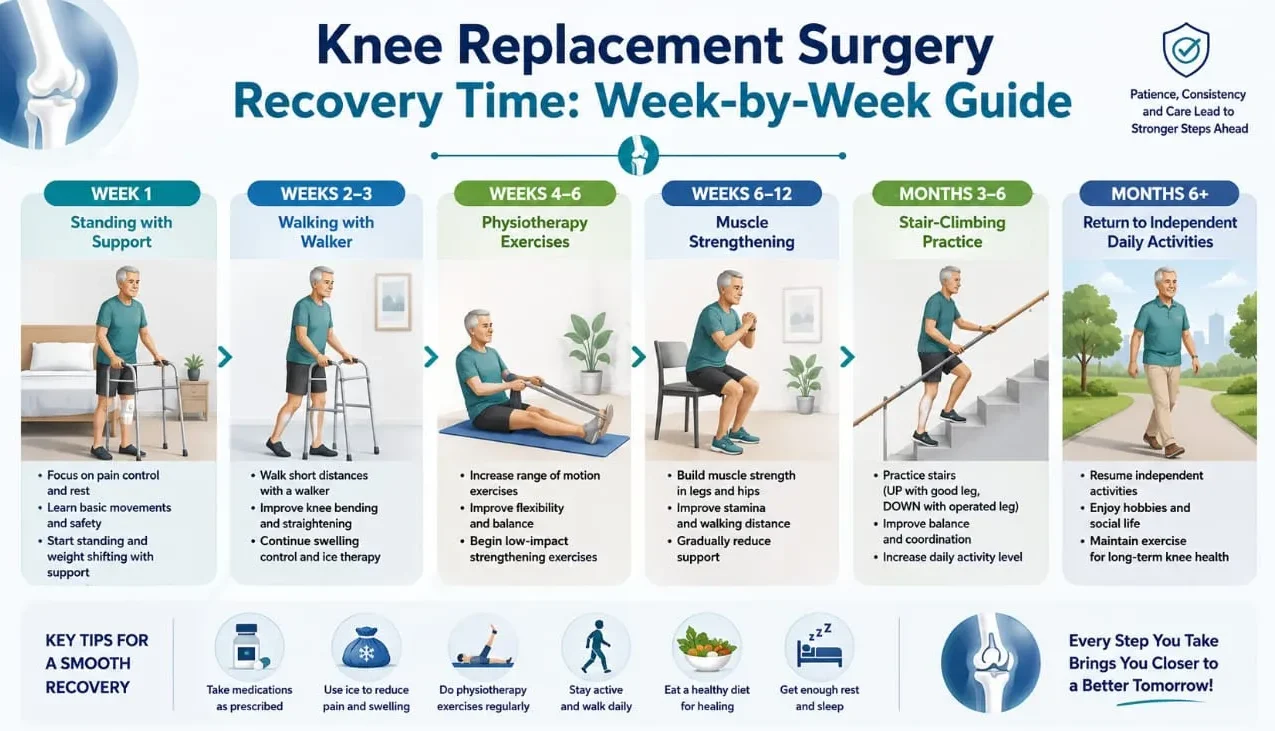
The answer is that recovery is gradual. While patients are encouraged to start moving soon after surgery, complete recovery usually takes around 6 to 8 weeks, with continued improvement over the following months. Understanding the recovery timeline can help patients prepare both physically and mentally for the journey ahead.
Understanding Early Recovery After Knee Replacement Surgery
Table of Contents
ToggleMany people hear that patients are asked to stand or walk shortly after surgery and assume they will be able to move normally right away. This is not the case.
Knee replacement is a major surgical procedure, and the body needs time to heal. Early standing and walking are carefully supervised activities performed with support, usually using a walker and under the guidance of healthcare professionals. Choosing experienced orthopedic specialists can also play an important role in ensuring a safe recovery and successful outcome. If you are looking for expert treatment guidance, you can explore the Best Doctors for Knee Replacement Surgery in Delhi to understand your options and make informed healthcare decisions.
Since patients have undergone surgery and received anesthesia, they may experience temporary dizziness, weakness, or light-headedness when standing for the first time. This can happen because blood pressure may temporarily drop after lying down for an extended period. For this reason, movement is introduced gradually and safely.
Day 1: Standing and Taking the First Steps
Depending on the patient’s condition, standing may begin on the day of surgery or the following day.
During this stage:
- A walker or support device is used.
- Standing is closely supervised.
- A few initial steps may be taken if the patient’s condition allows.
- The goal is not normal walking but safe early mobilization.
Patients should not expect to walk independently or comfortably at this stage. The focus is simply on beginning the recovery process.
Days 2 to 3: Learning Everyday Movements
Once the patient becomes comfortable standing, attention shifts toward performing routine activities safely.
During this period, patients are generally guided on:
- Getting in and out of bed
- Sitting on a chair safely
- Using the toilet comfortably
- Standing up from a seated position
- Sitting with legs hanging from the bed
- Beginning gentle knee bending exercises
Physical therapy typically becomes an important part of recovery during this phase.
Days 4 to 5: Stair Climbing Practice
As confidence and strength improve, patients may begin learning how to use stairs.
Initially:
- Both feet may be placed on the same step before moving upward.
- Movements are performed slowly and carefully.
- Balance and safety remain the priority.
As muscle strength improves, patients gradually progress to a more natural stair-climbing pattern.
The Importance of Physiotherapy and Muscle Strength
One of the most important factors that influences recovery is the strength of the thigh muscles, especially the muscles responsible for supporting and stabilizing the knee.
These muscles help:
- Keep the knee straight while standing
- Provide stability during walking
- Prevent sudden buckling of the knee
- Improve balance and confidence
If muscle strength does not return properly, the knee may remain slightly bent during walking. This can increase the risk of falls and may affect overall recovery.
For this reason, rehabilitation exercises are often considered just as important as the surgery itself.
Weeks 3 to 4: Walking With Greater Independence
By the third or fourth week, many patients are able to walk without relying completely on a walker.
However, healthcare professionals may recommend:
- Continuing support for a short period
- Transitioning from a walker to a walking stick
- Avoiding situations that increase the risk of falls
Even if patients feel stronger, using support devices temporarily can provide additional safety while muscles continue to recover.
One Month After Surgery: What Improvements Can Be Expected?
Around one month after surgery, many patients notice significant improvements.
The severe arthritis pain that existed before surgery is often greatly reduced or completely relieved. Most patients can move more comfortably and perform daily activities with greater ease.
However, some temporary symptoms may still be present, including:
- Mild knee swelling
- Leg swelling
- A feeling of heaviness around the knee
- Temporary numbness around the surgical area
These symptoms are usually part of the normal healing process and tend to improve gradually over time.
Why Does the Knee Sometimes Feel Heavy?
Many patients describe a sensation that the knee feels unusually heavy during the first few weeks after surgery.
This feeling can be surprising, but it is commonly reported during recovery. The body is adapting to the operated joint, surrounding tissues are healing, and muscles are regaining strength.
In most cases, this sensation improves steadily over the following two to three months.
Why Some Patients Continue to Walk With a Swaying Pattern
Even after pain has disappeared, some individuals continue walking with the same side-to-side movement they had before surgery.
This often happens because the body develops movement habits while coping with arthritis pain over many years.
Although the painful joint has been replaced, the old walking pattern may remain as part of muscle memory.
A simple way to improve walking posture is to practice walking consciously in front of a mirror. Regular practice helps retrain movement patterns and encourages a more natural walking style.
Can You Sit Cross-Legged After Knee Replacement Surgery?
This is one of the most frequently asked questions among patients.
Sitting cross-legged or using positions that require deep knee bending is generally not considered strictly prohibited. However, it is usually not recommended as a routine habit.
The reason is that these positions place additional stress on the artificial joint. While occasional use may not create immediate problems, repeated stress over many years could potentially affect the long-term durability of the implant.
Patients should always follow the recommendations provided by their treating orthopedic team regarding these activities.
Can Indian Toilets Be Used After Knee Replacement?
Similar to sitting cross-legged, using Indian-style toilets is generally considered an activity that should be approached with caution rather than something that is absolutely forbidden.
Deep squatting places greater force on the knee joint. While occasional necessity may not cause immediate damage, regular use may increase stress on the implant over time.
For long-term joint protection, many patients find Western-style toilets to be a more comfortable and practical option after knee replacement surgery.
When Can Patients Return to Normal Daily Activities?
Most patients can return to routine daily activities without support within approximately 6 to 8 weeks after a successful knee replacement surgery.
Recovery speed varies from person to person and depends on factors such as:
- Muscle strength
- Physical therapy participation
- Overall health condition
- Age
- Commitment to rehabilitation exercises
Following medical advice and maintaining consistency with prescribed exercises are key to achieving the best outcome.
How ConsultGrab Supports Patients Considering Knee Replacement Surgery
For many patients, deciding whether to undergo knee replacement surgery can be overwhelming. Understanding treatment options, selecting the right specialist, comparing hospitals, and planning recovery all require careful guidance.
At ConsultGrab, we help patients connect with experienced orthopedic specialists and trusted hospitals for knee replacement consultation. Our team provides treatment guidance, appointment assistance, and transparent information so patients can make informed healthcare decisions with confidence.
Whether you are exploring treatment options or preparing for surgery, having the right support can make the entire journey smoother and less stressful.
Final Thoughts
Knee replacement surgery recovery is a gradual process rather than an overnight transformation. While standing and walking often begin within the first day, full recovery typically takes around two months, with continued improvements in strength, mobility, and comfort afterward. It is important to remember that recovery expectations can vary depending on the specific procedure performed. Understanding the different types of knee surgery and their recovery requirements can help patients make informed decisions and better prepare for treatment.
Patience, physiotherapy, muscle strengthening exercises, and proper medical guidance play a major role in achieving successful results. By understanding what to expect during each stage of recovery, patients can approach the process with realistic expectations and greater confidence.
Frequently Asked Questions (FAQs)
Most patients can return to normal daily activities within 6 to 8 weeks after knee replacement surgery. Recovery begins with assisted standing and walking shortly after surgery and progresses gradually through physiotherapy, muscle strengthening exercises, and mobility training. Complete improvement in comfort, strength, and function may continue for several months.
Patients are usually encouraged to stand and take a few assisted steps on the day of surgery or the following day, depending on their condition. Walking initially requires a walker or support device. Most patients gradually improve their mobility and may start walking without a walker around the third or fourth week of recovery.
Physiotherapy plays a crucial role in knee replacement recovery because it helps restore muscle strength, improve knee movement, and prevent instability. Strengthening the thigh muscles, particularly those responsible for keeping the knee straight during standing and walking, is essential for achieving a safe and successful recovery outcome.
Yes, mild swelling, heaviness, and temporary numbness around the knee are common during the recovery period after knee replacement surgery. Many patients notice these symptoms during the first few weeks. In most cases, they gradually improve and typically resolve within two to three months as healing progresses.
Sitting cross-legged and using Indian-style toilets are generally not strictly prohibited after knee replacement surgery, but they are usually not recommended for regular use. These positions place increased stress on the knee implant, which may affect its long-term durability. Occasional use may be possible, but patients should follow their surgeon's advice.