


Gallbladder stones are becoming increasingly common, and one of the most frequent questions patients ask after seeing their ultrasound report is: “What size of gallbladder stone is dangerous?”
The answer is important: there is no single gallstone size that automatically makes a stone dangerous or completely safe. Small and large gallstones can both cause complications, although the type of risk may differ depending on their size.
Therefore, gallstone treatment should not be based only on waiting for the stone to reach a particular size.
What Size of Gallbladder Stone Is Dangerous?
Table of Contents
ToggleThere is no specific size at which a gallbladder stone suddenly becomes dangerous.
However, different sizes can create different risks:
- Gallstones smaller than 5 mm may have a greater chance of moving into the bile ducts.
- Gallstones larger than 2 cm can have their own complications.
- Stones may gradually increase in size over time.
- Both small and large stones can potentially cause serious problems.
This means that a patient should not simply wait for a gallstone to become larger before seeking medical advice.
How Do Gallstones Form?
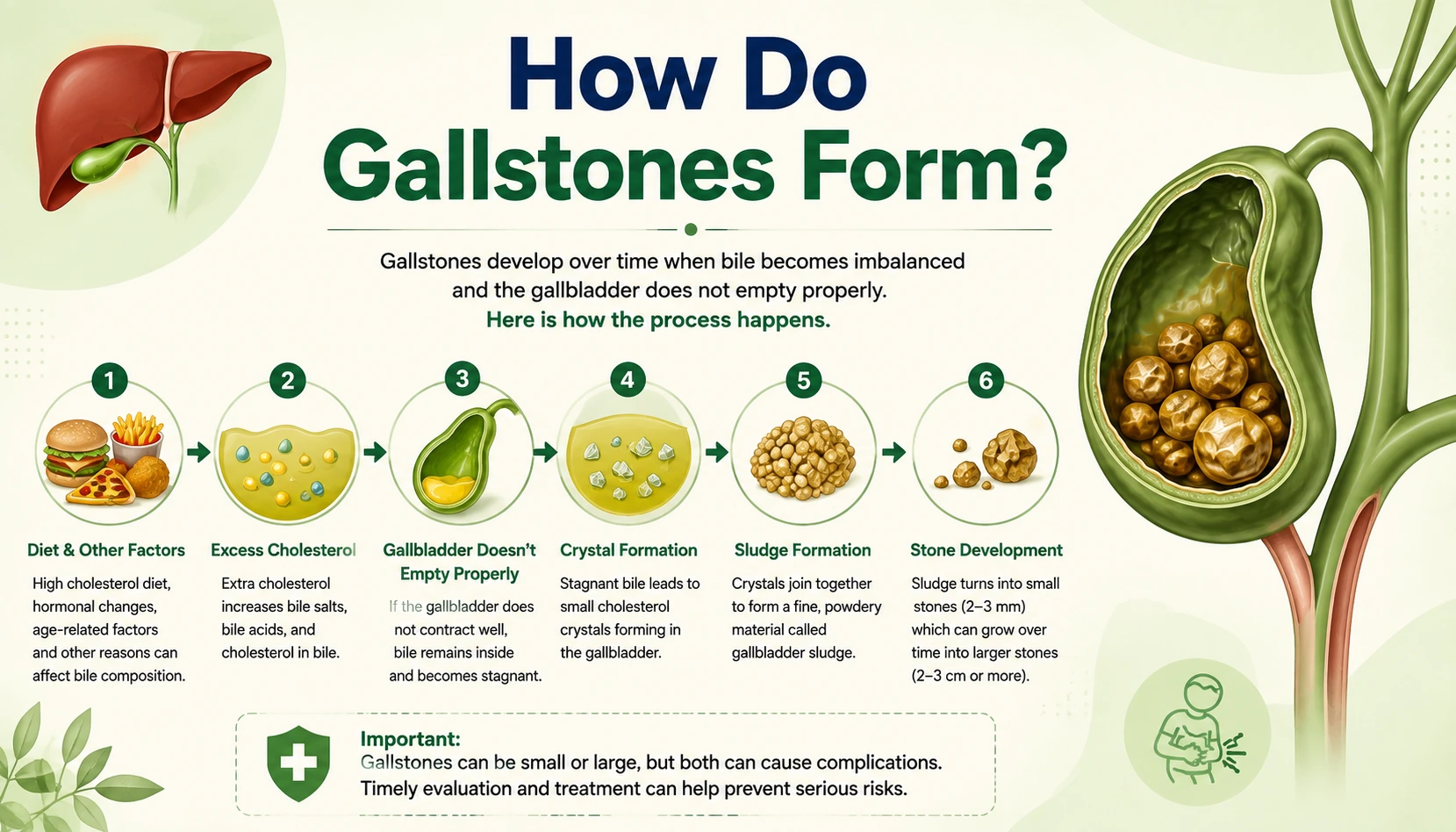
Gallstones can develop due to several factors, including hormonal, dietary, and age-related factors.
One important factor is a higher amount of cholesterol in the diet, which can result in increased amounts of cholesterol and bile-related substances being present in the bile.
READ MORE: Foods That Can Trigger Gallbladder Problems: What You Should Know
Another important factor is poor gallbladder contraction. When the gallbladder does not contract properly and does not empty its bile effectively, some bile can remain inside and become stagnant.
Over time, small cholesterol crystals can accumulate. These crystals can join together and form a fine, powder-like material known as gallbladder sludge. This sludge can become the starting point for gallstone formation.
Small stones may initially measure around 2–3 mm, but they can gradually become larger. Gallstones measuring 2–3 cm and even 3–4 cm can occur.
Are Small Gallstones Dangerous?
Yes, small gallstones can also be dangerous.
Stones measuring less than 5 mm may have a greater chance of moving into the bile ducts. Once a stone enters the bile duct, it can potentially block the normal passage of bile.
This blockage may result in jaundice. A small stone can also move toward the opening associated with the pancreas and cause a blockage there, potentially resulting in pancreatitis.
Both bile duct blockage and pancreatitis are serious complications.
Therefore, the assumption that a small gallstone is harmless simply because of its size can be misleading.
Are Large Gallstones Dangerous?
Large gallstones can create different types of risks.
Gallstones measuring more than 2 cm can potentially block the opening of the gallbladder and contribute to infection. Infection involving the bile ducts is known as cholangitis.
Large stones can also be associated with Mirizzi syndrome, a condition involving obstruction of the common bile duct.
Another concern is long-term untreated disease. When a large gallstone remains in the gallbladder for many years without treatment, the risk of gallbladder cancer may increase.
READ MORE: Is Gallbladder Surgery Safe? Risks, Recovery and New Facts!!
This is why large stones should not simply be ignored because they are less likely to move through the bile ducts than very small stones.
Which Is More Dangerous: Small or Large Gallstones?
There is no straightforward answer that small stones are always more dangerous than large stones, or vice versa.
The risks are different.
Small stones, particularly those below 5 mm, may be more likely to move into the bile ducts and cause blockage, jaundice, or pancreatitis.
Larger stones, particularly those above 2 cm, may cause blockage, infection, Mirizzi syndrome, and concerns associated with long-term untreated gallstones.
The important takeaway is that there is no gallstone size that should automatically be considered harmless.
Should You Wait Until a Gallstone Gets Bigger?

No. Waiting for a gallstone to reach a particular size is not the right approach.
There is no specific measurement at which treatment or surgery should automatically be recommended, nor is there one size below which every stone should simply be watched.
If gallbladder-related symptoms are present, proper medical evaluation is important. If you are experiencing gallbladder pain and want to learn more about managing the discomfort, read our guide below.
READ MORE: How to Stop Gallbladder Pain: Instant Relief Guide Naturally
The decision about treatment should consider the patient’s individual situation rather than only the measurement mentioned in an ultrasound report.
How ConsultGrab Can Help
Understanding a gallstone report and deciding what to do next can be confusing for patients. ConsultGrab helps bridge the gap between patients and relevant medical specialists by providing healthcare guidance and treatment coordination.
Patients can receive support with understanding their case, connecting with appropriate specialists, exploring treatment options, arranging appointments, and comparing treatment and cost information.
READ MORE: Gallbladder Surgery Cost in Delhi
The goal is to make the healthcare journey more transparent, informed, and less stressful.
Conclusion
There is no single gallbladder stone size that determines whether a stone is dangerous.
Small stones below 5 mm may be more likely to move into the bile ducts and cause blockage, jaundice, or pancreatitis. Larger stones above 2 cm can have different complications, including blockage, infection, and Mirizzi syndrome. When large stones remain untreated for many years, there may also be an increased risk of gallbladder cancer.
The most important point is therefore simple:
Do not wait for a gallbladder stone to reach a particular size before seeking medical advice.
If you have gallstones or gallbladder-related symptoms, an appropriate medical evaluation can help determine the safest next step based on your individual situation.
ConsultGrab is committed to helping patients access relevant specialists, understand treatment options, receive appointment assistance, and navigate their healthcare journey with greater confidence and transparency.
Frequently Asked Questions
There is no single gallbladder stone size that is automatically dangerous. Stones smaller than 5 mm may move into the bile ducts and cause blockage, jaundice, or pancreatitis. Stones larger than 2 cm can have different risks, including blockage, infection, and complications associated with long-term untreated gallstones.
Yes, a gallbladder stone smaller than 5 mm can potentially cause complications. Because small stones may move into the bile ducts more easily, they can cause bile duct blockage, jaundice, or blockage near the pancreatic opening, potentially resulting in pancreatitis.
Gallstones larger than 2 cm can have their own potential risks. They may block the gallbladder opening and contribute to infection, including cholangitis. Large stones that remain untreated for many years may also be associated with an increased risk of gallbladder cancer.
No. There is no particular gallbladder stone size that should be used as the only reason to start or delay treatment. Small stones can cause bile duct blockage and pancreatitis, while larger stones can cause other complications. Medical evaluation should consider the patient's individual condition and potential risks.
Yes. Small gallstones, particularly those below 5 mm, may be more likely to move into the bile ducts and cause blockage, jaundice, or pancreatitis. Larger gallstones, particularly those above 2 cm, can contribute to blockage, infection, Mirizzi syndrome, and concerns related to long-term untreated disease.