

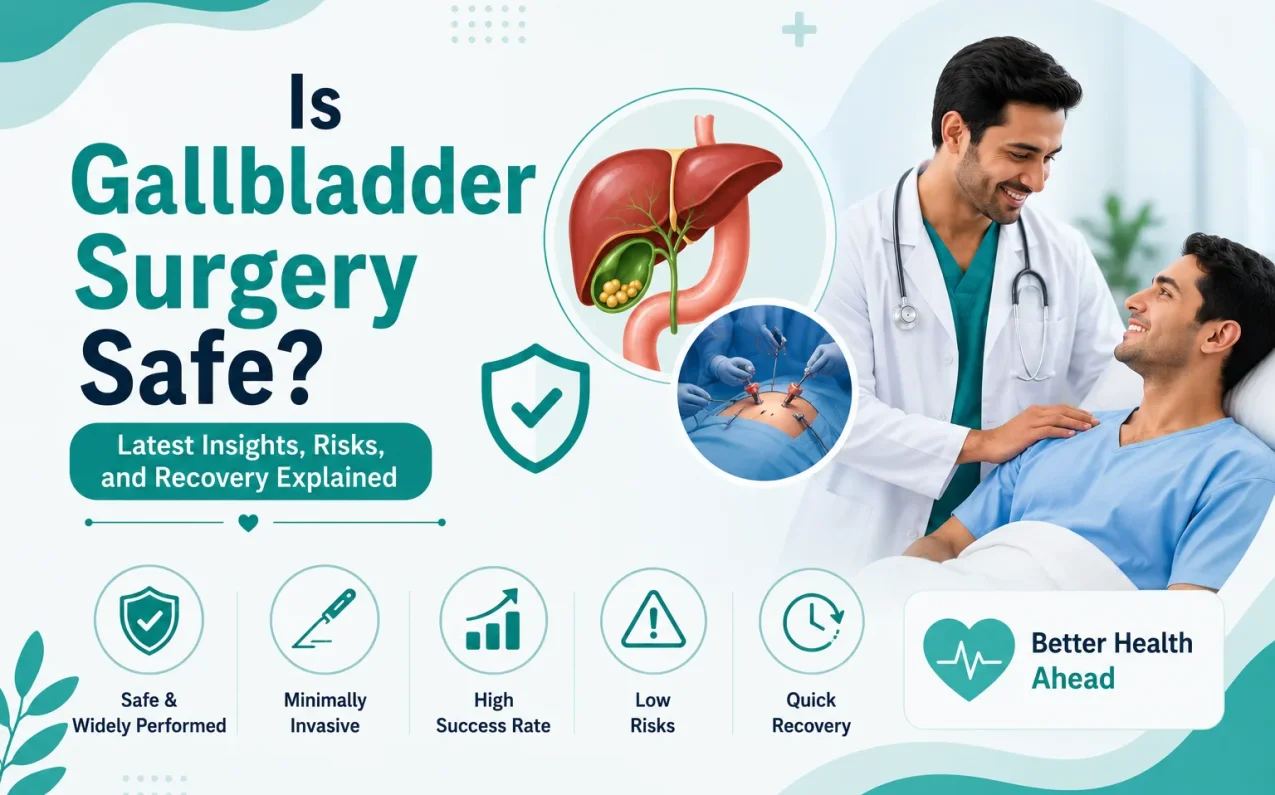
Gallbladder surgery, medically referred to as cholecystectomy, continues to be one of the most frequently performed abdominal surgeries worldwide. Recent medical discussions and updated clinical observations reaffirm that this procedure remains highly safe, effective, and reliable for patients suffering from gallstones or gallbladder inflammation—especially when performed using modern minimally invasive techniques.
With advancements in surgical methods and anesthesia safety, gallbladder surgery has evolved into a routine procedure with predictable outcomes and fast recovery for most patients. Individuals seeking the best gallbladder treatment in Delhi should consult experienced specialists who can recommend the most appropriate treatment approach based on their condition and overall health.
Why Gallbladder Surgery Is Commonly Recommended
Table of Contents
ToggleGallbladder surgery is typically advised when the gallbladder becomes non-functional due to gallstones or chronic inflammation. In such cases, the gallbladder often turns into a repeated source of infection, pain, and digestive disturbance.
Unlike kidney stones—where the organ is preserved—the gallbladder is removed entirely because a stone-filled gallbladder is considered indirect evidence that it is no longer functioning properly. Keeping a diseased gallbladder offers no benefit and may increase the risk of complications.
Laparoscopic Gallbladder Surgery: The Current Standard
Today, most gallbladder surgeries are performed using a laparoscopic (keyhole) technique, which involves:
- 3–4 very small incisions
- Each incision usually less than 1 cm
- Use of a camera and precision instruments
This approach results in:
- Minimal pain
- Lower infection risk
- Short hospital stay
- Faster return to daily activities
Most patients are able to walk within a few hours and are discharged within 24 hours.
Safety Statistics and Outcomes (Updated Perspective)
Recent clinical data highlights why gallbladder surgery is considered one of the safest abdominal procedures:
Parameter | Outcome |
Success rate | 90–95% |
Mortality rate | Less than 0.1% |
Overall complication rate | 1–2% |
Average recovery time | 1–2 weeks (laparoscopic) |
Hospital stay | Same day or 1–2 days |
Long-term symptom relief | Very high |
Most complications—such as infection, bleeding, or bile duct injury—are rare and are further minimized when surgery is done in a well-equipped hospital with experienced specialists.
Is Gallbladder Surgery Painful?
Pain after laparoscopic gallbladder surgery is usually mild to moderate and well controlled with medications.
- Patients can move comfortably within hours
- Heavy painkillers are rarely required
- No long-term pain is expected
Patients who experienced gallstones before surgery often describe discomfort in specific areas of the abdomen. Understanding where gallbladder pain is located can help individuals recognize symptoms earlier and better understand the relief many experience after treatment.
Because pain is minimal, patients often resume light daily activities very quickly.
Recovery and Return to Normal Life
For most patients:
- Walking starts within 2–3 hours
- Discharge happens the next day
- Work can resume within 1–2 weeks
- No long-term follow-up is typically needed
Many patients also wonder how many days of bed rest are needed after gallbladder removal. In most cases, prolonged bed rest is not recommended, and early movement is encouraged to support faster recovery and reduce the risk of complications.
Open surgery is only used in complex cases and may require longer recovery, but laparoscopic surgery covers the majority of patients today.
Digestion After Gallbladder Removal
One of the biggest concerns patients have is digestion after surgery. In reality:
- Digestion usually improves
- Symptoms like bloating and pain reduce
- The body adapts naturally without the gallbladder
The gallbladder stores bile, but bile production continues even after removal—allowing normal digestion over time.
Anesthesia Safety in Gallbladder Surgery
Gallbladder surgery is performed under general anesthesia, which is considered very safe with modern monitoring. Pre-surgery evaluation ensures risks are minimized, even in elderly patients or those with other medical conditions.
Temporary side effects such as nausea or dizziness may occur but usually resolve within a short time.
Who May Have a Higher Risk of Complications?
While the procedure is safe, certain factors may slightly increase risk:
- Obesity
- Severe gallbladder inflammation
- Previous abdominal surgeries
- Advanced age
Even in these cases, careful planning and specialist evaluation help ensure safe outcomes.
How ConsultGrab Supports Patients Through Gallbladder Surgery
Choosing surgery can be stressful—not because of the procedure itself, but due to uncertainty about doctors, hospitals, costs, and next steps. This is where ConsultGrab plays a vital role.
We support patients by:
- Connecting them with verified specialists and hospitals
- Providing clear treatment explanations
- Offering appointment coordination support
- Ensuring transparent cost and treatment comparison
Our care team focuses on making sure every patient feels informed, confident, and supported throughout the treatment journey.
Final Verdict: Is Gallbladder Surgery Safe?
Yes. Gallbladder surgery is one of the safest and most commonly performed surgical procedures globally. With laparoscopic techniques, minimal pain, quick recovery, and excellent long-term outcomes, it remains a highly effective solution for gallbladder disease.
With the right guidance and medical support, patients can expect a smooth, stress-free experience and a rapid return to a healthier life.
If you are considering gallbladder surgery and want expert guidance without confusion, ConsultGrab is here to help you take the next step with confidence.
You have not enough Humanizer words left. Upgrade your Surfer plan.
Frequently Asked Questions (FAQs)
Yes, gallbladder surgery is considered one of the safest abdominal surgeries worldwide. It is most commonly performed using laparoscopic techniques, which reduce pain, complications, and recovery time. For patients with gallstones or a non-functioning gallbladder, surgery provides reliable symptom relief with a very high success rate.
Laparoscopic gallbladder surgery uses small incisions and a camera-guided approach, resulting in less tissue damage, lower infection risk, minimal blood loss, and faster recovery. Most patients are discharged within 24 hours and return to normal activities within one to two weeks, making it the preferred and safer option in routine cases.
Although rare, gallbladder surgery may involve risks such as infection, bleeding, bile duct injury, or anesthesia-related complications. The overall complication rate is low, especially when surgery is performed by experienced specialists. Pre-surgical evaluation and modern monitoring significantly reduce these risks for most patients.
Recovery after laparoscopic gallbladder surgery is usually quick. Patients often walk within a few hours, go home within a day, and resume normal activities in one to two weeks. Pain is generally mild and manageable, allowing for a smooth and predictable recovery process in most cases.
Yes, digestion often improves after gallbladder removal. A gallbladder with stones usually does not function properly and can cause digestive discomfort. Once removed, the body adapts to continuous bile flow, and symptoms like pain, bloating, and indigestion commonly reduce over time.