

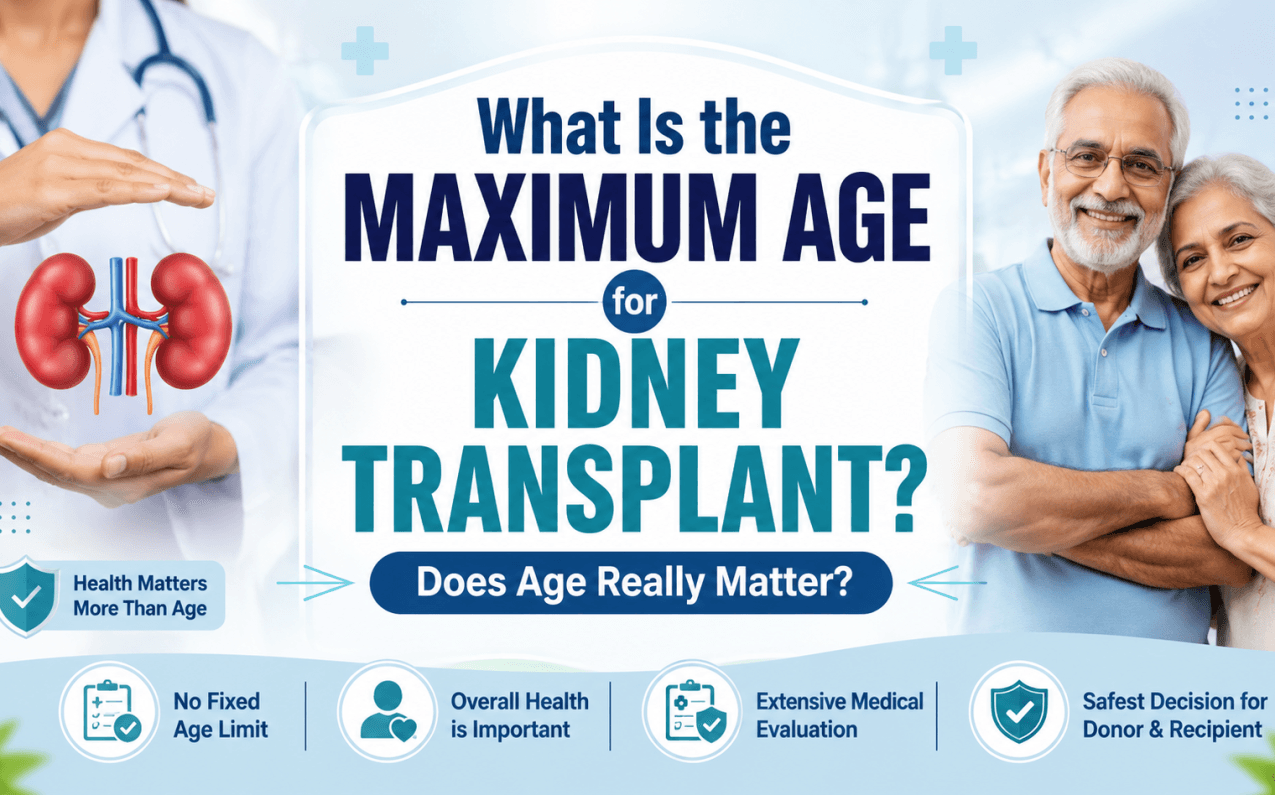
When people think about kidney donation, one of the most common questions is, “What is the maximum age for kidney transplant?” Many assume there is a strict age limit for donating a kidney. However, the reality is different.
Recent discussions around kidney transplantation have once again highlighted an important fact: age alone is not the deciding factor for kidney donation. Instead, a person’s overall health and medical fitness play a much bigger role in determining whether they are eligible to donate a kidney.
In this guide, we’ll explain how age is evaluated, why health matters more than the number of years, and what factors doctors consider before approving someone for kidney donation.
Quick Answer
Table of Contents
ToggleThere is no fixed maximum age for kidney donation. Doctors primarily assess whether the donor is healthy enough to safely undergo surgery and continue living a healthy life with one kidney. A comprehensive medical evaluation is more important than age itself.
Is There a Maximum Age for Kidney Transplant?
One of the biggest misconceptions is that people automatically become ineligible to donate a kidney after reaching a certain age.
Based on current medical practice, there is no universal maximum age limit for kidney donation. Instead of focusing only on age, doctors carefully evaluate the donor’s physical health, kidney function, and overall medical condition before making a decision.
This means that an older individual who is in excellent health may be considered a suitable donor, while a younger person with significant medical problems may not qualify.
Why Overall Health Matters More Than Age
The primary goal of kidney donation is to protect both the recipient and the donor. Since a healthy person can live with one kidney, doctors must ensure that donating a kidney will not create health problems in the future.
Before approving a donor, the medical team performs a detailed health assessment to determine whether the individual can safely undergo surgery and continue living a healthy life afterward.
Rather than asking, “How old is the donor?”, the more important question becomes:
“Is the donor healthy enough to donate a kidney safely?”
This patient-centered approach helps reduce surgical risks while protecting long-term kidney health.
What Do Doctors Check Before Approving a Kidney Donor?
Every potential donor undergoes extensive medical screening. The purpose of this evaluation is to identify any condition that could increase the risks during surgery or affect kidney function later in life.
The assessment generally focuses on:
- Overall physical health
- Existing medical conditions
- Kidney function
- Fitness for anesthesia and surgery
- Long-term health outlook after donation
These evaluations help ensure that donation is as safe as possible for the donor.
Who May Not Be Eligible for Kidney Donation?
Although there is no strict upper age limit, certain health conditions can prevent someone from becoming a kidney donor.
People with Diabetes
Individuals who have diabetes are generally not considered suitable kidney donors because diabetes can increase the risk of developing kidney disease in the future. Protecting the donor’s remaining kidney is an important priority.
People with Difficult-to-Control High Blood Pressure
High blood pressure is another important factor during donor evaluation.
People whose blood pressure is difficult to manage are generally not considered suitable donors because uncontrolled hypertension can affect kidney health over time.
However, if blood pressure is well controlled and requires only minimal treatment, the medical team may consider donation after a complete evaluation.
People with Serious Heart or Major Medical Conditions
Individuals with significant heart disease or other severe medical conditions may not be suitable candidates because these illnesses can increase the risks associated with anesthesia, surgery, and recovery.
Every case is evaluated individually to ensure donor safety.
Can Someone Live with One Kidney?
Yes. A healthy person does not need two kidneys to live a normal life. This is why kidney donation is possible.
However, this is only considered safe after doctors confirm that the donor’s remaining kidney is healthy and capable of supporting normal body function in the long term.
How ConsultGrab Can Help
Understanding kidney transplant eligibility can be confusing, especially when different sources provide different information. At ConsultGrab, we help patients connect with experienced kidney specialists and trusted hospitals for accurate medical guidance.
Our care team can assist you with:
- Understanding kidney transplant eligibility
- Connecting with experienced transplant specialists
- Appointment booking support
- Guidance throughout the treatment journey
- Transparent information to help you make informed decisions
Our goal is to ensure that every patient receives trusted guidance before making important healthcare decisions.
Conclusion
If you’re wondering “What is the maximum age for kidney transplant?”, the most accurate answer is that there is no fixed age limit for kidney donation. Medical teams prioritize the donor’s overall health, kidney function, and ability to safely undergo surgery rather than focusing only on age.
Every potential donor is assessed individually through detailed medical screening to ensure the best possible outcome for both the donor and the recipient. If you are considering kidney donation or need guidance about kidney transplant options, consulting experienced transplant specialists is the best first step toward making an informed decision.
Frequently Asked Questions
No. There is no fixed maximum age. Doctors focus more on the donor's overall health than on age alone.
A healthy donor has a better chance of safely undergoing surgery and maintaining good kidney function after donation.
It depends. If blood pressure is difficult to control, donation is generally not recommended. In some cases, people with well-controlled blood pressure may still be considered after medical evaluation.
Generally, people with diabetes are not considered suitable kidney donors because of the increased risk of future kidney disease.