

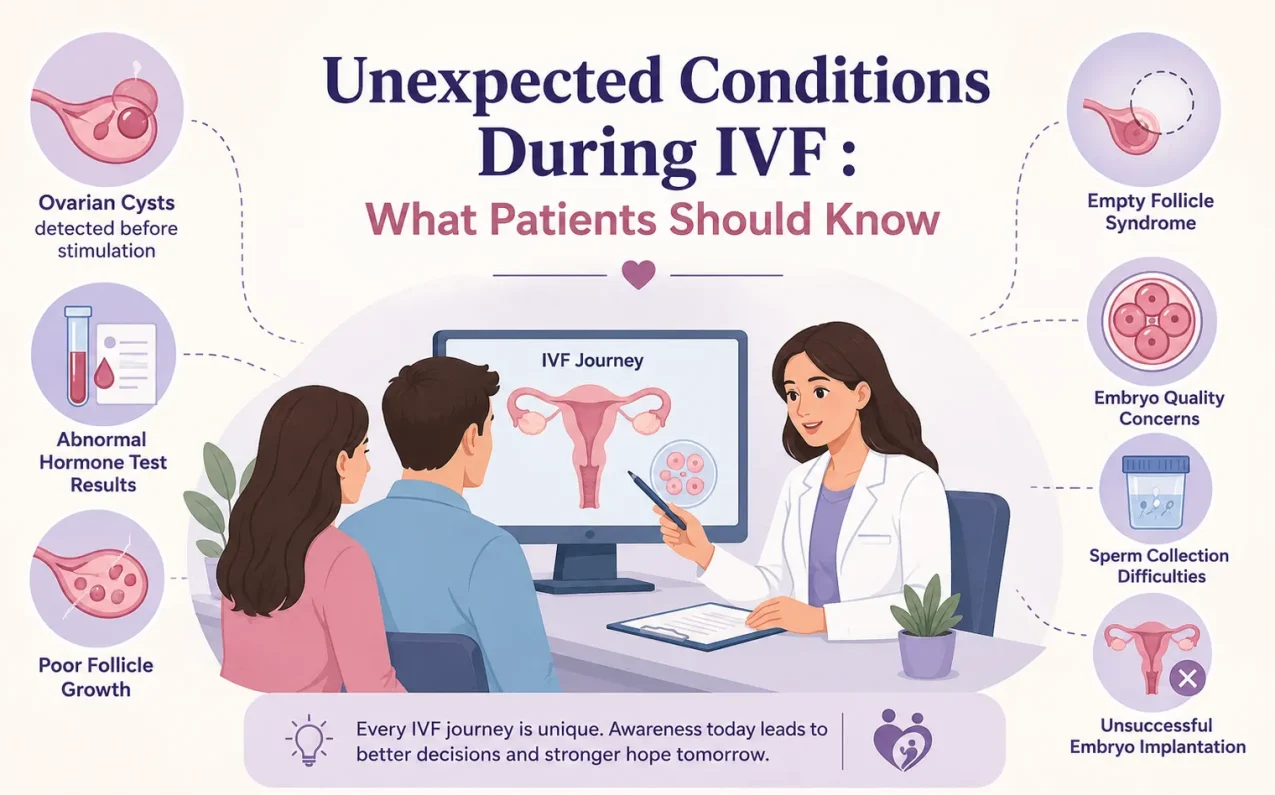
Starting an IVF journey is often filled with hope, excitement, and expectations. Many couples begin treatment believing that the process will follow a predictable path from ovarian stimulation to embryo transfer. However, IVF is a highly individualized treatment, and unexpected situations can arise at different stages of the cycle.
Understanding these possibilities in advance can help patients stay informed, reduce anxiety, and make better decisions throughout treatment. Working with experienced fertility specialists can also make a significant difference when unexpected challenges arise during treatment. Consulting the best doctors for IVF in Delhi can help patients receive personalized guidance and timely interventions throughout their fertility journey. While many challenges can be managed with timely medical guidance, being mentally prepared is equally important.
In this article, we discuss some of the unexpected conditions that may occur during IVF treatment and how patients can navigate them with confidence.
Unexpected Findings Before IVF Stimulation Begins
Table of Contents
ToggleMost IVF cycles begin after an initial evaluation and preparation phase. Patients may take supplements and medications aimed at supporting egg quantity and quality before starting ovarian stimulation.
However, during the early ultrasound examination, doctors may identify conditions that were not previously detected.
Ovarian Cysts May Be Found
An ultrasound performed at the beginning of the menstrual cycle may reveal the presence of an ovarian cyst. Depending on its size and nature, additional blood tests may be required to determine whether treatment should continue as planned.
In some situations:
- The IVF cycle may need to be postponed.
- Additional monitoring may be recommended.
- A minor procedure to drain fluid from the cyst may be advised before proceeding.
Although this can be disappointing, postponing treatment is sometimes necessary to improve the chances of a successful cycle.
Blood Test Results Can Affect Treatment Plans
Hormonal assessments play a major role in IVF planning.
Doctors evaluate several factors, including:
- Hormone levels
- Ovarian reserve indicators
- Body weight
- Ovarian appearance on ultrasound
- Antral follicle count
Based on these findings, stimulation medication doses are carefully selected.
However, if blood test values are significantly different from expected levels, treatment may need to be delayed or cancelled for that cycle. This decision is generally made to avoid poor response and improve future outcomes.
When Ovaries Do Not Respond as Expected
Even after receiving fertility injections, the ovaries may not always respond as anticipated.
Sometimes:
- Follicles grow slowly.
- Egg development remains limited.
- Increasing medication doses may not produce the desired response.
In such cases, doctors may decide that continuing the cycle is unlikely to be beneficial and recommend cancelling the cycle rather than proceeding with low chances of success.
Although difficult emotionally, this approach can help avoid unnecessary procedures and expenses.
The Importance of Injection Timing
IVF treatment involves multiple injections, and timing can be extremely important. For patients who are new to fertility treatment, understanding how many injections are given during IVF treatment can help set realistic expectations and improve treatment preparedness.
While minor variations in the timing of some stimulation injections may be acceptable, certain medications must be administered exactly as instructed.
Why Timing Matters
Specific injections are used to prevent premature hormonal surges that could trigger ovulation too early.
If these injections are delayed:
- Ovulation may occur before egg retrieval.
- Mature eggs may be released from the ovaries.
- The cycle may be compromised.
Following the prescribed schedule carefully is one of the most important responsibilities during IVF treatment.
Frequent Monitoring Can Be Emotionally Challenging
Many patients are surprised by the number of hospital visits required during IVF.
The process often includes:
- Repeated ultrasound scans
- Multiple blood tests
- Medication adjustments
- Additional procedures when necessary
Some interventions may become necessary during treatment even if they were not discussed at the beginning because doctors can only make certain decisions based on real-time responses from the ovaries and hormones.
This level of monitoring can feel overwhelming and emotionally exhausting.
Why Mental Well-Being Matters During IVF
The combination of daily injections, frequent appointments, waiting for results, and uncertainty can affect emotional health.
Many patients experience:
- Stress
- Anxiety
- Mood fluctuations
- Fear of failure
Maintaining emotional balance throughout treatment is important because IVF is not only a physical process but also a psychological journey.
Staying positive does not guarantee success, but it can make the experience more manageable and less overwhelming.
Empty Follicle Syndrome: When No Eggs Are Retrieved
One unexpected situation that can occur during egg retrieval is known as empty follicle syndrome.
In this condition:
- Follicles appear to be present on ultrasound.
- During egg retrieval, no eggs are obtained from those follicles.
Although uncommon, it is a recognized possibility during IVF treatment.
This is one reason why doctors carefully monitor every stage of stimulation and retrieval.
The Critical Role of the Final Trigger Injection
Before egg retrieval, patients receive a final maturation injection that prepares eggs for collection.
The timing of this injection is extremely important.
If Given Too Early
- Eggs may remain immature.
If Given Too Late
- Eggs may be released before retrieval.
Because egg retrieval is usually scheduled based on a precise interval after this injection, following the exact timing instructions is essential.
When Good Follicle Numbers Do Not Guarantee Good Eggs
During monitoring, patients may see a large number of follicles on ultrasound and assume that many healthy eggs will be obtained.
However, follicles and eggs are not the same thing.
A follicle is a fluid-filled structure that contains an egg. The true quality of the egg often becomes clear only after retrieval.
As a result:
- Numerous follicles may be present.
- Egg quality may still be poor.
- Healthy embryos may not develop despite retrieving multiple eggs.
This can be one of the most unexpected and frustrating aspects of IVF treatment.
When Embryos Do Not Develop Properly
After egg retrieval, fertilization techniques are used to create embryos.
Sometimes fertilization occurs successfully, but later development becomes a challenge.
Unexpected situations may include:
- Poor-quality embryos
- Embryos that stop developing
- No embryos reaching advanced developmental stages
Even when multiple eggs are retrieved, embryo development is not guaranteed.
This is why embryo growth remains one of the most closely monitored phases of IVF.
Challenges Related to Sperm Collection on Retrieval Day
Egg retrieval and sperm collection often occur on the same day.
However, emotional pressure and performance anxiety can occasionally make sperm collection difficult.
To prepare for this possibility, fertility centers may recommend advance planning strategies, including preserving a backup sperm sample whenever appropriate.
In situations where a sample cannot be obtained on retrieval day, doctors may need to consider alternatives such as:
- Freezing retrieved eggs
- Using previously stored sperm samples
- Performing sperm retrieval procedures when necessary
These approaches help prevent losing an IVF cycle due to unexpected sperm collection difficulties.
When Everything Looks Perfect but IVF Still Fails
One of the most difficult realities of IVF is that success is never guaranteed.
There are cases where:
Egg retrieval goes well.
Embryos develop successfully.
The uterine lining appears healthy.
Embryo transfer is completed smoothly.
Yet pregnancy may still not occur.
This can be emotionally devastating for patients who feel everything went according to plan.
However, a failed first attempt does not mean future cycles will fail as well. Patients can often benefit from reviewing important tips to increase IVF success rates and learning about the latest advancements in fertility treatment that may help improve outcomes in subsequent cycles.
Why Patients Should Not Lose Hope After the First IVF Cycle
IVF success often requires patience.
A single unsuccessful cycle does not define the overall outcome of fertility treatment.
Each cycle provides valuable information about:
Ovarian response
Egg development
Embryo quality
Implantation potential
Doctors can use these insights to make adjustments and improve future treatment strategies. As patients prepare for additional treatment cycles, it is also helpful to understand how much IVF costs in India so they can make informed financial decisions and plan their fertility journey effectively.
Remaining hopeful and focused on the long-term journey can help patients move forward with confidence.
How ConsultGrab Supports Patients During Fertility Treatment
Unexpected developments during IVF can leave patients feeling confused and emotionally overwhelmed. Having access to reliable guidance can make a significant difference.
At ConsultGrab, we help patients connect with experienced fertility specialists and trusted treatment centers. Our care team provides support with:
- Understanding treatment recommendations
- Coordinating specialist consultations
- Clarifying available fertility treatment options
- Appointment assistance
- Treatment planning guidance
Our goal is to ensure that patients feel informed, supported, and confident throughout their fertility journey.
Conclusion
IVF treatment is a carefully planned process, but it does not always follow a predictable path. Ovarian cysts, unexpected hormone results, poor ovarian response, empty follicles, embryo development challenges, sperm collection issues, and unsuccessful transfers are all possibilities that patients should understand before beginning treatment.
Being aware of these situations can help reduce fear when unexpected developments occur. Most importantly, patients should remember that setbacks during IVF are not uncommon, and many individuals achieve success after adjusting their treatment approach and continuing their journey with the guidance of experienced fertility specialists.
Frequently Asked Question (FAQs)
Yes, an IVF cycle can be cancelled before egg retrieval if unexpected issues arise. Common reasons include ovarian cysts, abnormal blood test results, or poor ovarian response to fertility medications. Doctors may postpone treatment to improve the chances of a successful IVF cycle in the future.
Injection timing is critical during IVF treatment because certain medications control ovulation and egg maturation. Missing or delaying these injections can lead to premature ovulation, immature eggs, or egg release before retrieval. Following the prescribed schedule helps maximize the chances of successful egg retrieval and embryo development.
Empty Follicle Syndrome is a condition where follicles appear normal on ultrasound, but no eggs are retrieved during the egg collection procedure. Although uncommon, it can occur during IVF treatment. Proper monitoring and accurate timing of fertility medications are important to reduce potential risks associated with egg retrieval.
Yes, IVF can sometimes be unsuccessful even when good-quality embryos are available and the uterine lining appears suitable for implantation. Pregnancy depends on multiple biological factors that cannot always be predicted. An unsuccessful first IVF cycle does not prevent success in future treatment attempts.
If a sperm sample cannot be provided on the day of egg retrieval, fertility specialists may use a previously frozen sample if available. In some cases, eggs may be frozen temporarily or sperm retrieval procedures may be considered. These options help prevent disruption of the IVF treatment process.