

Introduction
Table of Contents
ToggleDementia is a group of conditions that affect memory, thinking, behavior, and the ability to perform everyday activities. As people live longer, dementia is becoming a growing health concern worldwide, including in India.
While age and genetics play a role in dementia risk, researchers are increasingly focusing on factors that can be modified through lifestyle changes. Nutrition is one such factor. A recent study conducted by researchers at the ICMR–National Institute of Nutrition (ICMR-NIN) suggests that deficiencies in certain vitamins may be linked to a higher risk of developing dementia-related problems later in life.
The findings highlight the importance of maintaining a balanced diet that provides essential vitamins and minerals needed for healthy brain function.
Key Findings from the Research
Researchers found several important associations between nutrition and dementia risk:
- Nearly 40% of participants showed a higher predicted risk of dementia.
- Individuals with higher dementia risk were more likely to have vitamin deficiencies.
- Low levels of vitamin D and several B vitamins were particularly common among higher-risk individuals.
- Participants with poorer dietary diversity tended to have a greater dementia risk.
- Diets higher in saturated fats and lower in healthier unsaturated fats were associated with increased risk factors.
- Vitamin deficiencies were more common among people living in rural areas compared to urban populations.
These findings suggest that nutritional health may play an important role in maintaining cognitive function as people age.
How the Study Was Conducted
The study was carried out by researchers from the ICMR-National Institute of Nutrition in Hyderabad in collaboration with international research institutions.
Researchers evaluated 570 adults between the ages of 40 and 80 years from both rural and urban regions of Telangana.
To estimate dementia risk, the team used a culturally adapted version of the Cardiovascular Risk Factors, Ageing and Incidence of Dementia (CAIDE) score, a widely used assessment tool.
Participants also underwent:
- Cognitive function testing using the Montreal Cognitive Assessment (MoCA)
- Blood testing to measure vitamin levels
- Dietary assessments to evaluate food intake patterns
- Analysis of dietary diversity and nutrient consumption
The researchers then compared nutritional status with estimated dementia risk.
What Researchers Discovered
The study revealed a clear relationship between nutritional status and dementia risk factors.
Participants with a higher predicted dementia risk were significantly more likely to have deficiencies in important micronutrients. These included:
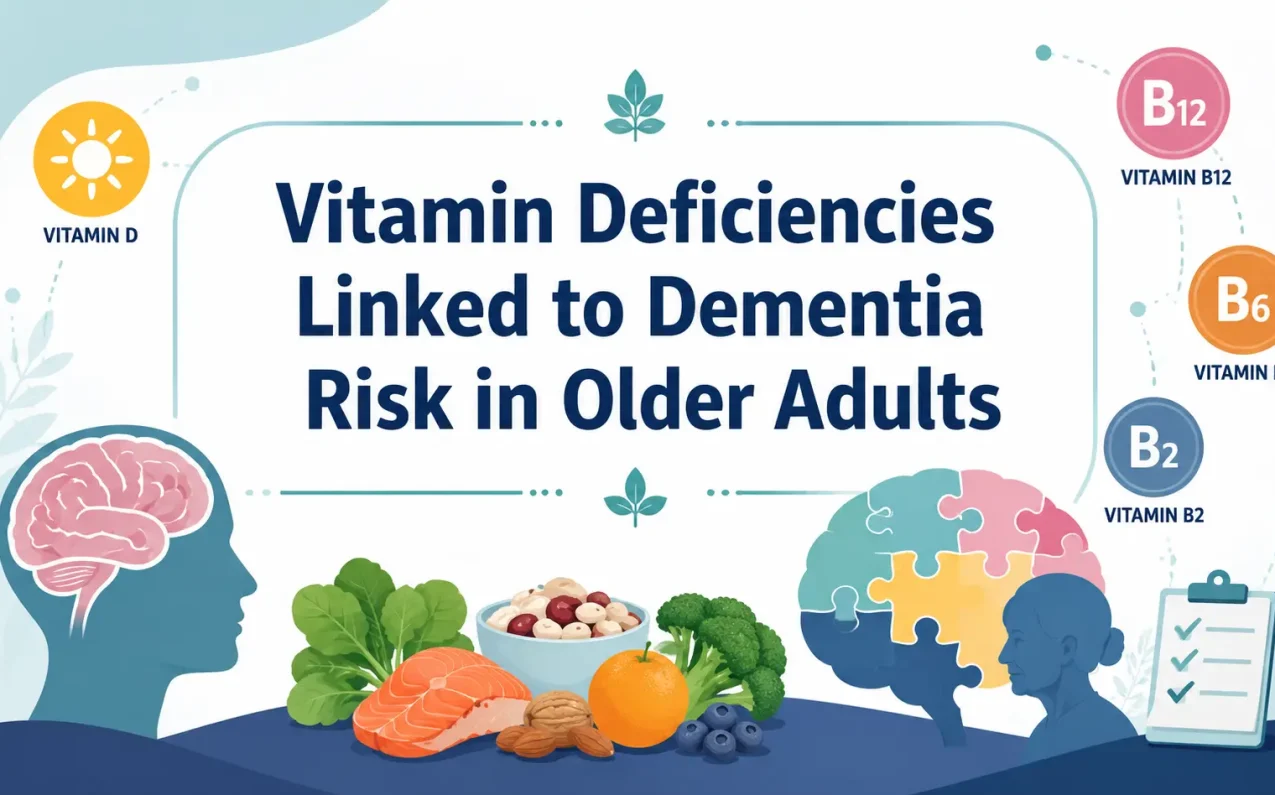
- Vitamin D
- Vitamin B2 (Riboflavin)
- Vitamin B6
- Vitamin B12
These nutrients support several brain functions, including nerve communication, energy production, and maintenance of healthy brain cells.
Researchers also found that people at higher risk generally consumed less varied diets. Their eating patterns included:
- Lower intake of nutrient-rich foods
- Reduced dietary diversity
- Higher consumption of saturated fats
- Lower intake of beneficial unsaturated fats
Another important observation was the rural-urban difference. Rural participants experienced a greater burden of vitamin deficiencies, which may reflect differences in food access, dietary habits, and availability of nutrient-rich foods.
Although the study cannot prove that vitamin deficiencies directly cause dementia, the findings suggest a strong association between nutritional health and dementia risk factors.
What This Means for Patients
The results provide additional evidence that nutrition may be an important factor in supporting long-term brain health.
Potential Implications
Patients and families may consider the following points:
- A balanced diet may help support healthy cognitive ageing.
- Adequate vitamin intake could be an important part of dementia prevention strategies.
- Maintaining dietary diversity may be beneficial for overall brain health.
- Addressing nutritional deficiencies may represent a potentially modifiable risk factor.
Who May Benefit Most?
The findings may be particularly relevant for:
- Middle-aged and older adults
- Individuals with limited dietary variety
- People with known vitamin deficiencies
- Those concerned about long-term cognitive health
- Communities with limited access to nutrient-rich foods
Important Limitations
Several limitations should be considered:
- The study was observational and cross-sectional.
- Researchers measured associations rather than cause-and-effect relationships.
- Vitamin deficiencies may be one of several factors influencing dementia risk.
- Additional long-term studies are needed to confirm whether correcting deficiencies can reduce future dementia risk.
Is This Already Part of Clinical Practice?
Healthcare professionals already recognize the importance of nutrition for overall health. However, this research adds to growing evidence that nutritional status may also influence cognitive health.
While maintaining adequate vitamin levels is important, vitamin supplements should not be viewed as a proven treatment for preventing dementia. More research is needed to determine the most effective approaches.
When to Speak With a Specialist
Patients may consider discussing brain health and nutritional concerns with a qualified healthcare professional if they experience:
- New memory problems
- Difficulty concentrating
- Changes in thinking abilities
- Concerns about vitamin deficiencies
- Questions about cognitive decline risk factors
- Interest in preventive health strategies
A healthcare specialist can help evaluate individual risk factors, recommend appropriate testing when necessary, and provide personalized guidance based on overall health status.
For individuals seeking additional support, services such as ConsultGrab can help patients access healthcare guidance, compare treatment options, arrange appointments, and connect with qualified specialists for informed discussions about cognitive health and preventive care.
Future Research and Next Steps
Researchers believe further studies are needed to better understand the relationship between nutrition and dementia.
Future investigations may explore:
- Whether correcting vitamin deficiencies lowers dementia risk
- The long-term effects of dietary improvements on cognitive health
- Which nutrients have the greatest impact on brain ageing
- Strategies to improve nutritional health in rural populations
- Public health interventions focused on dementia prevention
As dementia rates continue to rise globally, identifying preventable risk factors remains an important area of research.
Conclusion
This study adds to growing evidence that nutrition may play a significant role in brain health and dementia risk. Researchers found that vitamin deficiencies, particularly involving vitamin D and B vitamins, were more common among adults with a higher predicted risk of dementia.
Although the findings do not prove causation, they highlight nutrition and dietary diversity as potentially modifiable factors that may support healthy cognitive ageing. Further research will help determine whether improving nutritional status can reduce future dementia risk.
Original Research Source
This article is based on findings from a scientific research study and related media reporting.
Primary Research: https://www.thelancet.com/journals/lansea/article/PIIS2772-3682(26)00065-7/fulltext
Media Coverage: https://www.thehindu.com/news/national/telangana/vitamin-deficiencies-may-raise-dementia-risk-finds-icmr-nin-study/article69678257.ece
The content has been independently rewritten, analyzed, and simplified for educational purposes to help patients and families better understand the research findings.
Frequently Asked Questions (FAQs)
Research suggests that deficiencies in certain vitamins, including vitamin D, vitamin B6, vitamin B12, and vitamin B2, may be associated with a higher risk of dementia-related factors. However, current evidence shows an association rather than proof that deficiencies directly cause dementia.
Several vitamins support normal brain function, including vitamin D, vitamin B12, vitamin B6, vitamin B2, folate, and other essential micronutrients. These nutrients help maintain nerve health, energy production, and communication between brain cells.
There is currently no conclusive evidence that vitamin supplements alone can prevent dementia. Supplements may help correct diagnosed deficiencies, but maintaining overall health through balanced nutrition, physical activity, and medical care remains important.
A diverse diet containing fruits, vegetables, whole grains, legumes, nuts, seeds, fish, and healthy fats may help support brain health. These foods provide essential vitamins, minerals, antioxidants, and other nutrients important for cognitive function.
In some cases, healthcare providers may recommend testing for vitamin deficiencies as part of a broader evaluation of memory concerns or cognitive symptoms. The appropriate tests depend on individual health history, symptoms, and clinical assessment.