

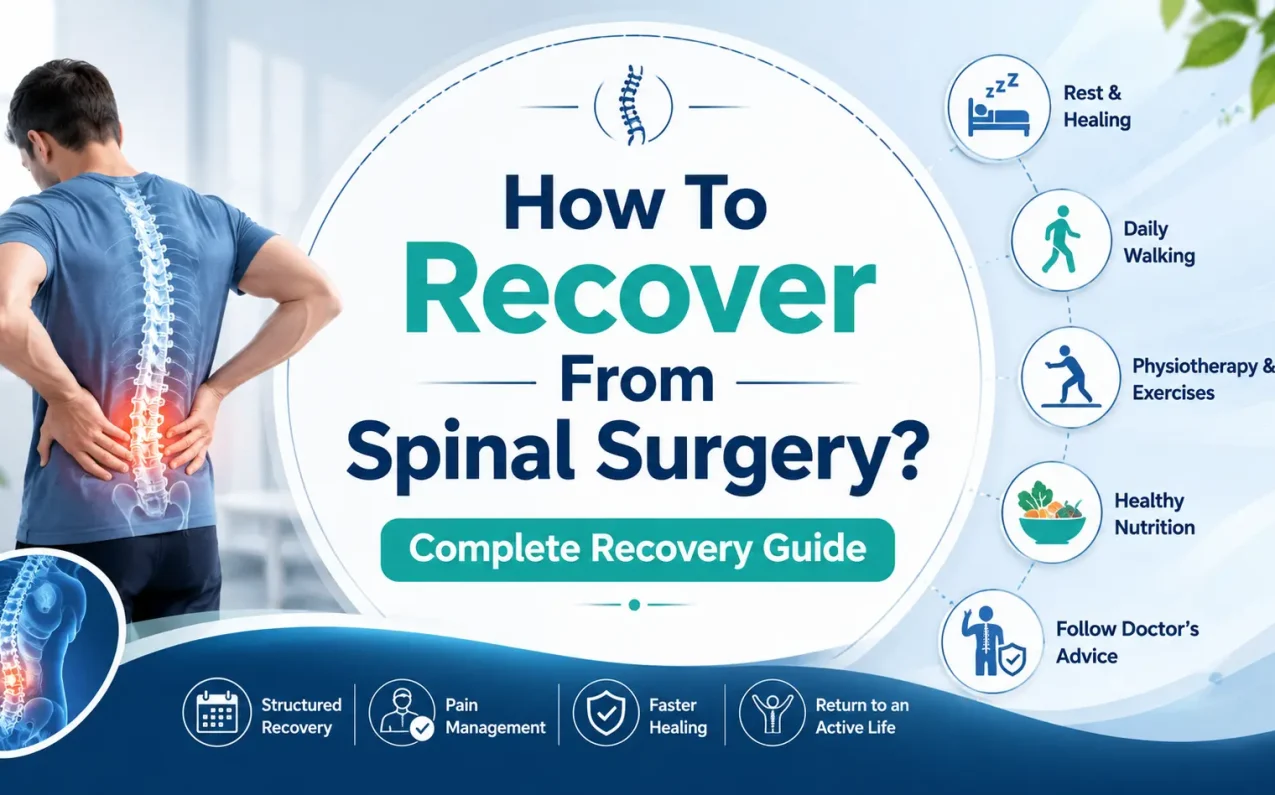
Spinal surgery is a major step toward relieving chronic pain, improving mobility, and restoring quality of life. However, recovery plays an equally important role in achieving the best outcome. A well-managed recovery ensures proper healing, reduces complications, and helps patients return to daily life safely.
This comprehensive guide explains everything you need to know about spinal surgery recovery, including timelines, pain management, activity guidelines, and expert-backed recovery insights.
.
Types of Spinal Surgery
Table of Contents
ToggleSpinal surgery varies depending on the condition being treated. Common procedures include the ones explained in detail in our guide on Types of Spine Surgery Explained, which can help you better understand each treatment option and its purpose.
Decompression surgery (relieves pressure on nerves)
Disc replacement surgery (replaces damaged discs)
Spinal fusion surgery (stabilizes the spine using implants)
Deformity correction surgery
Cancer-related spinal surgery
Fracture repair surgery
Many procedures today use minimally invasive (keyhole) techniques, which can reduce recovery time and improve healing.
What Happens During Spinal Surgery?
The goal of spinal surgery is to relieve pain and restore stability.
- A discectomy removes part of a damaged disc
- A decompression procedure removes bone or tissue pressing on nerves
- A fusion surgery uses rods, screws, or cages to stabilize the spine
Each procedure is tailored to the patient’s condition and symptoms.
Recovery Timeline After Spinal Surgery
Recovery depends on the type of surgery and individual health:
- Discectomy or decompression: 3–4 weeks to return to work
- Cervical disc replacement: 2–4 weeks
- Minimally invasive fusion: around 6 weeks
However, full recovery may take several months, and in some cases up to a year.
Latest Recovery Insights After Spinal Surgery
Recent clinical observations show that recovery is influenced not only by the procedure but also by overall health before surgery.
Factors that affect recovery include:
- Physical fitness and activity level
- Age and body weight
- Diet and lifestyle habits
A healthier body generally recovers faster and more efficiently.
Early Recovery Phase at Home
The first few weeks after surgery are critical.
- Fatigue is normal—rest is essential
- Walking begins early, often the day after surgery
- Gradual movement helps prevent stiffness
- Patients should return to a normal diet and routine habits
Balancing rest with light activity is key to recovery.
Pain and Muscle Spasms
Pain and discomfort after surgery are expected.
Common symptoms include:
- Incision site pain
- Muscle spasms
- Temporary stiffness
Pain management may include:
- Prescribed painkillers
- Muscle relaxants
- Preventive medications when needed
Cold therapy can help:
- Apply ice packs over clothing (not directly on skin)
- Limit use to 20 minutes at a time
Pain gradually improves over weeks, and medications are reduced under medical guidance.
Activity Guidelines for Safe Recovery
Movement is essential but must be controlled. For a deeper understanding of safe movements and recovery strategies, you can explore our guide on Activity after Spine Surgery: Expert Tips for Faster Healing, which provides detailed recommendations for each stage of recovery.
Avoid:
Bending, twisting, and heavy lifting
Staying in one position for too long
Follow:
Daily walking with gradual increase in distance
Light activities combined with rest
Structured physiotherapy exercises
Walking is one of the safest and most effective recovery activities.
Physiotherapy and Rehabilitation
Physiotherapy is a key part of recovery.
It helps to:
- Restore mobility and flexibility
- Strengthen back and core muscles
- Reduce pain and prevent complications
A personalized rehabilitation plan ensures steady and safe progress.
Hospital Stay and Home Care
Most patients stay in the hospital for 1 to 4 days, depending on the procedure.
At home:
- Take things slow in the first week
- Seek help for daily activities if needed
- Gradually increase independence
Support from family or caregivers can significantly improve early recovery.
Driving and Daily Activities e
Driving is usually restricted initially:
- Most patients resume driving within 2 to 6 weeks
- Avoid driving while on pain medications
Daily activities should be resumed gradually and carefully.
Returning to Work
Return to work depends on healing and job type:
- Non-physical jobs: 4–6 weeks
- Physically demanding jobs: up to 3 months
A gradual return is often recommended.
Digestive and Urinary Considerations
Temporary side effects may include:
- Constipation due to medication
- Nausea from anesthesia
- Difficulty urinating in some cases
Helpful tips:
- Eat a high-fiber diet
- Stay hydrated
- Use prescribed supportive medications if needed
Diet for Faster Healing
Nutrition plays a major role in recovery.
- High-protein foods support tissue repair
- Small, frequent meals improve energy levels
A healthy diet accelerates healing and improves overall recovery outcomes.
Procedure-Specific Recovery Expectations
Laminectomy
- Recovery: 6 weeks to 6 months
- Function improves within 3–4 months
- Walking is encouraged early
Laminectomy with Fusion
- Hospital stay: 4–5 days
- Recovery: 3–6 months
- Activity restrictions required for up to 6 months
Full recovery for some patients may take up to a year.
Healing Is a Gradual Process
Recovery is not always linear. Some days will feel better than others.
Successful healing requires:
- Patience and consistency
- Following medical advice
- Attending follow-up appointments
- Commitment to physiotherapy
Why Expert Guidance Matters
Every patient’s recovery journey is different. Having the right support system ensures:
- Faster healing
- Reduced complications
- Better long-term outcomes
How ConsultGrab Supports Your Spine Recovery
At ConsultGrab, we act as a trusted bridge between patients and experienced medical specialists. We understand that spinal conditions require the right diagnosis, expert care, and continuous support. If you are searching for expert care, you can explore our detailed guide on Best Doctors for Spine Surgery in Delhi to connect with highly qualified specialists.
Our Approach:
Understand your medical condition in detail
Connect you with qualified spine specialists
Provide clear treatment guidance
Support you throughout surgery and recovery
What You Get:
Free expert guidance from our care team
Quick appointment booking support
Transparent treatment and cost comparison
Access to a verified hospital network in Delhi
Whether you are planning spinal surgery or recovering from it, we ensure a smooth, informed, and stress-free healthcare journey.
Final Thoughts
Recovering from spinal surgery takes time, patience, and proper care. While the surgery addresses the root cause, your recovery efforts determine the final outcome.
By following medical advice, staying active safely, and maintaining a healthy lifestyle, you can achieve a successful recovery and return to your daily life with confidence.
If you are looking for expert guidance or need help connecting with the right specialists, having a trusted support system can make all the difference in your recovery journey.
Frequently asked Questions
Recovery from spinal surgery varies depending on the procedure and patient health. Minor procedures like discectomy may take 3–4 weeks, while spinal fusion can require 3–6 months. Full recovery may take up to a year, influenced by age, fitness level, and adherence to rehabilitation.
After spinal surgery, patients should avoid bending, twisting, heavy lifting, and prolonged sitting or standing. These movements can strain the spine and delay healing. Instead, light activities like walking and guided physiotherapy exercises are recommended to support safe recovery and improve mobility.
at the coast
Yes, pain and muscle spasms are common after spinal surgery, especially around the incision site. Pain is typically managed with prescribed medications, muscle relaxants, and cold therapy. Symptoms gradually improve over weeks as healing progresses, and medications are reduced under medical supervision.
at the coast
Most patients can return to non-physical work within 4–6 weeks after spinal surgery, while physically demanding jobs may require up to 3 months. Driving is usually safe after 2–6 weeks, once pain is controlled and medications that affect alertness are discontinued.
Bookmarksgrove right at the coast
Physiotherapy is essential after spinal surgery to restore strength, flexibility, and mobility. A structured rehabilitation program helps reduce pain, prevent complications, and improve long-term outcomes. Personalized exercises guided by a physiotherapist ensure safe recovery and support a return to normal activities.