

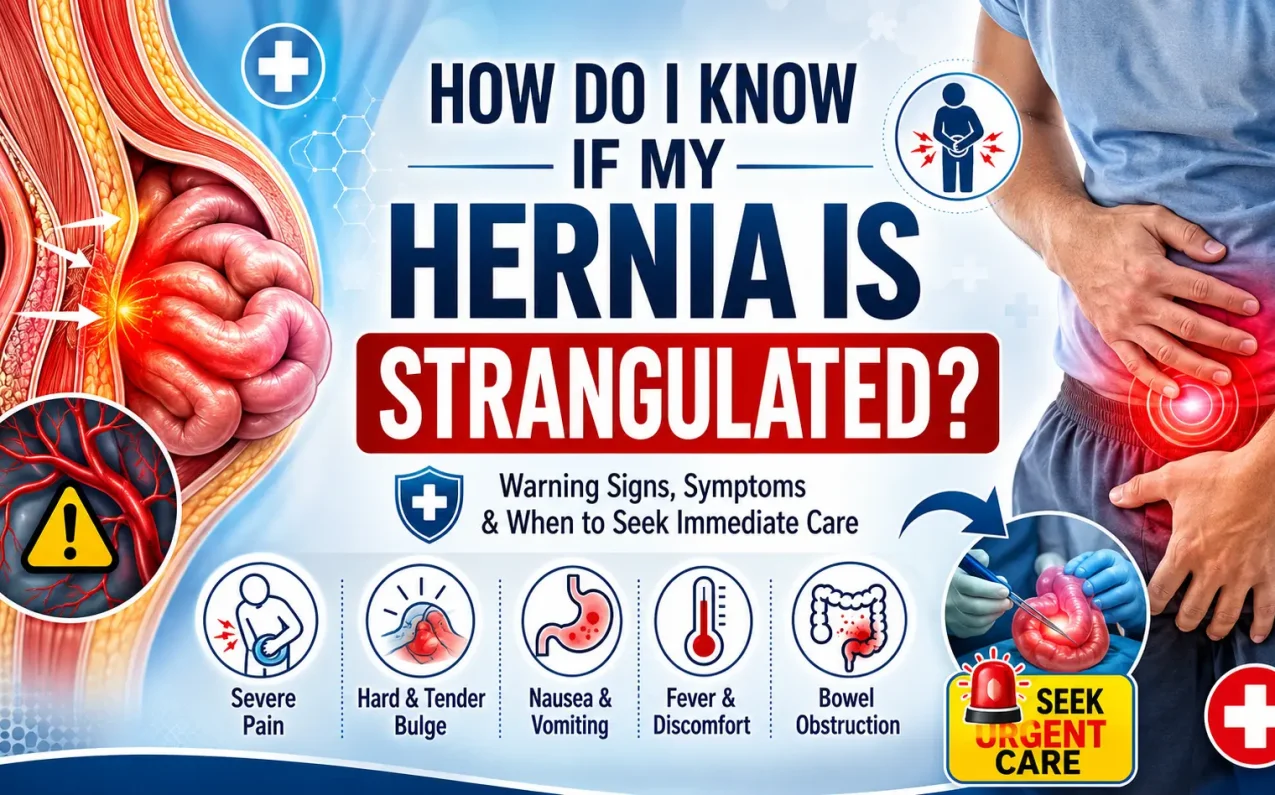
A hernia occurs when an organ or tissue pushes through a weak spot in the abdominal wall. In the early stages, many hernias can move in and out of place, especially when you cough, lift heavy objects, or strain. However, some hernias can become trapped, leading to serious complications. If you are researching treatment options or looking for the Best Doctors for Hernia Surgery in Delhi, understanding the warning signs of a strangulated hernia is essential because this condition requires immediate medical attention.
A strangulated hernia is considered one of the most dangerous complications of any hernia. It develops when the blood supply to the trapped tissue is reduced or completely blocked. Without prompt treatment, the affected tissue can become damaged and eventually die, creating a life-threatening emergency.
This guide explains how to recognize a strangulated hernia, why it happens, its symptoms, risks, diagnosis, treatment options, and when to seek emergency medical care.
Understanding a Hernia
Table of Contents
ToggleA hernia develops when an internal organ, fatty tissue, or a portion of the intestine pushes through a weakened area of muscle or connective tissue.
Common types of hernias include:
- Inguinal hernia (groin area)
- Umbilical hernia (around the belly button)
- Femoral hernia
- Incisional hernia
- Hiatal hernia
In many cases, a hernia begins as a soft bulge that can be pushed back into the abdomen. This stage is known as a reducible hernia. Although it may not cause severe symptoms initially, the condition can worsen over time if left untreated.
What Is a Strangulated Hernia?
A strangulated hernia occurs when tissue becomes trapped within the hernia defect and its blood supply is compromised.
The progression usually follows three stages:
1. Reducible Hernia
The bulge moves in and out easily and can often be pushed back manually.
2. Incarcerated Hernia
The tissue becomes trapped outside the abdominal wall and cannot return to its normal position.
3. Strangulated Hernia
The trapped tissue loses its blood supply because the opening in the abdominal wall compresses the blood vessels. This can lead to tissue death, intestinal damage, infection, and potentially life-threatening complications.
Among all hernia-related complications, strangulation is considered the most serious and urgent.
How Do I Know If My Hernia Is Strangulated?
Recognizing the symptoms early can make a significant difference in treatment outcomes.
The most common warning signs include:
Severe and Sudden Pain
Pain is often the first major indicator of strangulation.
Unlike the mild discomfort associated with a typical hernia, strangulated hernia pain is:
- Intense
- Persistent
- Sudden in onset
- Worsening over time
The pain is usually concentrated around the hernia site but may spread across the abdomen.
A Firm, Tender Bulge
The hernia may become:
- Hard
- Swollen
- Extremely tender to touch
Unlike a reducible hernia, the bulge cannot be pushed back into the abdomen.
Redness or Skin Discoloration
The skin over the hernia may appear:
- Red
- Purple
- Darkened
- Inflamed
This can indicate impaired blood flow to the trapped tissue
Nausea and Vomiting
When part of the intestine becomes trapped and blood flow is restricted, digestive symptoms often develop.
These may include:
- Nausea
- Vomiting
- Loss of appetite
- Feeling unwell
Fever and General Illness
A strangulated hernia can trigger infection and inflammation.
Patients may experience:
- Fever
- Chills
- Fatigue
- Rapid heartbeat
Bowel Obstruction Symptoms
Because the intestine may be involved, symptoms of bowel obstruction can occur, including:
- Abdominal bloating
- Severe abdominal cramps
- Constipation
- Inability to pass gas
These symptoms require urgent medical evaluation
Why Does a Hernia Become Strangulated?
A hernia becomes strangulated when the opening in the abdominal wall compresses the tissue protruding through it.
Initially, the intestine or fat may move freely through the defect. Over time, however, larger portions of tissue may protrude and become trapped.
When this occurs:
- The tissue becomes incarcerated.
- Blood flow begins to decrease.
- Oxygen supply is reduced.
- Tissue damage develops.
- Tissue death may occur.
This process can progress rapidly, which is why immediate treatment is critical.
Which Hernias Are Most Likely to Become Strangulated?
Although any hernia has the potential to strangulate, some types carry a higher risk.
Inguinal Hernia
An inguinal hernia occurs in the groin and is one of the most common hernia types.
Because bowel loops frequently enter the hernia sac, strangulation can occur if the tissue becomes trapped.
Umbilical Hernia
An umbilical hernia develops near the navel.
While some umbilical hernias remain stable for years, larger defects can trap tissue and become strangulated.
Femoral Hernia
Femoral hernias have a particularly high risk of incarceration and strangulation because they pass through a narrow opening.
Risk Factors for Strangulation
Several factors increase the likelihood of a hernia becoming strangulated.
These include:
- Delaying hernia treatment
- Increasing hernia size
- Chronic coughing
- Heavy lifting
- Obesity
- Constipation and straining
- Pregnancy
- Advanced age
Patients often ask about How to prevent hernia naturally? While maintaining a healthy weight, avoiding excessive strain, treating chronic cough, and following proper lifting techniques may reduce risk factors, these measures cannot repair an existing hernia defect. Surgical evaluation remains important.
When Should You Go to the Emergency Room?
Seek emergency medical care immediately if you have a hernia and experience:
- Severe pain
- Sudden worsening symptoms
- A bulge that cannot be pushed back
- Red or purple skin over the hernia
- Fever
- Vomiting
- Abdominal swelling
- Constipation or inability to pass gas
Many patients searching online for What are the 5 warning signs of a hernia? are often trying to determine whether their symptoms are dangerous. Persistent pain, an enlarging bulge, tenderness, digestive symptoms, and skin discoloration should never be ignored.
Treatment for a Strangulated Hernia
A strangulated hernia almost always requires emergency surgery.
The goals of treatment are:
- Restore blood flow
- Return trapped tissue to the abdomen
- Remove damaged tissue if necessary
- Repair the abdominal wall defect
Emergency Hernia Surgery
During surgery, the surgeon:
- Accesses the hernia.
- Evaluates the trapped tissue.
- Restores circulation when possible.
- Removes dead tissue if needed.
- Repairs the weakened area.
Prompt intervention significantly improves outcomes.
Recovery After Surgery
Recovery depends on:
- Type of hernia
- Severity of strangulation
- Overall health
- Presence of bowel damage
Most patients gradually return to normal activities after following their surgeon’s postoperative instructions.
Can a Strangulated Hernia Be Prevented?
The best prevention strategy is early evaluation and treatment of a diagnosed hernia.
Preventive measures include:
- Seeking medical advice when a hernia is first noticed
- Avoiding heavy lifting
- Managing chronic cough
- Maintaining a healthy body weight
- Preventing constipation
- Following surgeon recommendations
While lifestyle measures may reduce strain on the abdominal wall, they cannot eliminate the existing defect. Early treatment helps prevent incarceration and strangulation.
How ConsultGrab Can Help
Finding the right specialist is crucial when dealing with hernia symptoms, especially if there is concern about complications such as incarceration or strangulation. ConsultGrab helps patients connect with experienced surgeons, compare treatment options, understand surgical procedures, and make informed healthcare decisions.
Whether you are seeking expert consultation, guidance regarding hernia symptoms, or access to qualified surgical specialists, the platform simplifies the process of finding appropriate medical care and treatment support.
Finding the right specialist is crucial when dealing with hernia symptoms, especially if there is concern about complications such as incarceration or strangulation. ConsultGrab helps patients connect with experienced surgeons, compare treatment options, understand surgical procedures, and make informed healthcare decisions.
Whether you are seeking expert consultation, guidance regarding hernia symptoms, or access to qualified surgical specialists, the platform simplifies the process of finding appropriate medical care and treatment support.
Conclusion
A strangulated hernia is a serious medical emergency that occurs when trapped tissue loses its blood supply. Common warning signs include severe pain, a firm and tender bulge, redness or discoloration, nausea, vomiting, fever, and symptoms of bowel obstruction. These symptoms should never be ignored because delayed treatment can lead to tissue death, infection, intestinal damage, and life-threatening complications.
If you have a known hernia and notice sudden changes in symptoms, seek immediate medical attention. Early diagnosis and timely surgical intervention remain the most effective ways to prevent complications and protect your long-term health.
Frequently Asked Questions (FAQs)
A strangulated hernia typically causes severe pain, a hard bulge that cannot be pushed back, skin discoloration, nausea, vomiting, and sometimes fever. These symptoms indicate reduced blood flow to trapped tissue and require immediate emergency medical evaluation
Yes. A strangulated hernia can become life-threatening if left untreated. Loss of blood supply can cause tissue death, bowel perforation, severe infection, peritonitis, and sepsis. Emergency surgery is usually required to prevent serious complications
Yes. An incarcerated hernia occurs when tissue becomes trapped and cannot return to the abdomen. If the blood supply to that trapped tissue becomes restricted, the condition progresses into a strangulated hernia, which is a surgical emergency.
Femoral hernias generally have the highest risk of strangulation because they pass through a narrow opening. However, inguinal and umbilical hernias can also become strangulated if tissue becomes trapped and blood flow is compromised.
No. Symptoms of a strangulated hernia should never be monitored at home. Severe pain, vomiting, fever, or a non-reducible hernia bulge require immediate medical attention because delays can increase the risk of permanent tissue damage and emergency complications