

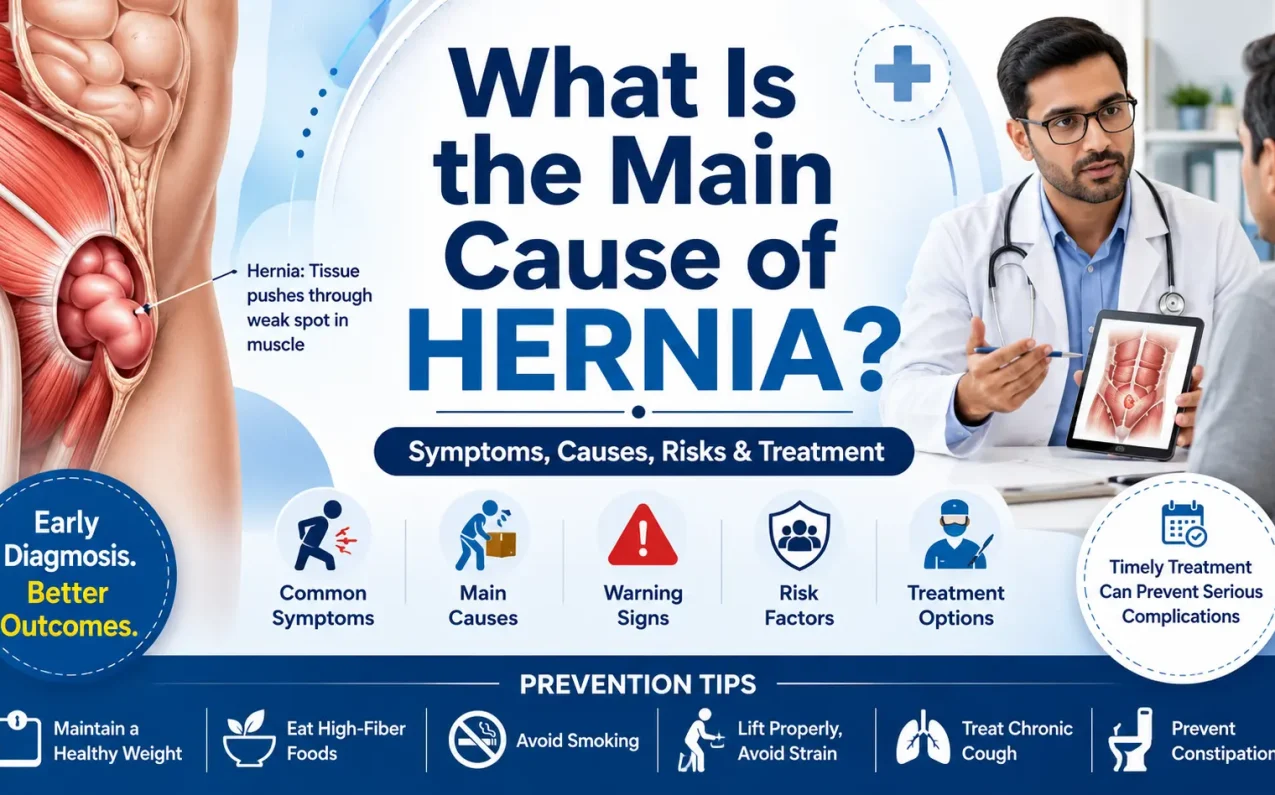
A hernia is a common medical condition that occurs when an internal organ or tissue pushes through a weak spot in the surrounding muscle or connective tissue. It often appears as a visible bulge and can affect people of all ages. Understanding the causes of hernia is important because early recognition and treatment can help prevent serious complications.
If you are looking for expert surgical care, consulting the Best Doctors for Hernia Surgery in Delhi can help you receive an accurate diagnosis and personalized treatment plan.
Hernias do not always cause immediate pain, which is why many people ignore the condition during its early stages. However, untreated hernias can enlarge over time and may eventually become trapped or strangulated, requiring emergency surgery.
This guide explains the main causes of hernia, common symptoms, risk factors, complications, prevention strategies, and available treatment options.
Understanding What a Hernia Is
Table of Contents
ToggleA hernia develops when an organ, fatty tissue, or part of the intestine protrudes through a weak area in the abdominal wall or surrounding muscles. The most common types include:
- Inguinal hernia (groin hernia)
- Femoral hernia
- Umbilical hernia
- Incisional hernia
- Hiatal hernia
- Ventral hernia
According to surgical specialists, hernias are broadly categorized into external and internal hernias. External hernias are more commonly diagnosed because they usually create a visible swelling or bulge beneath the skin.
The majority of hernias occur in areas where the abdominal wall is naturally weaker or has become weakened over time.
What Is the Main Cause of Hernia?
The primary cause of a hernia is weakness in the muscles or connective tissues that normally hold organs in place. When pressure builds inside the abdomen, tissues can push through these weakened areas and form a hernia.
In many cases, both muscle weakness and increased abdominal pressure work together to create the condition.
Common causes include
1. Congenital Muscle Weakness
Some people are born with weak areas in their abdominal wall. These weak spots may remain unnoticed for years before a hernia develops.
This is particularly common in children and individuals who develop inguinal hernias early in life.
2. Aging and Natural Muscle Deterioration
As people age, muscles gradually lose strength and elasticity. This natural weakening makes older adults more susceptible to hernias.
Age-related muscle deterioration is one of the most significant risk factors for developing abdominal wall defects.
3. Heavy Lifting and Physical Strain
Frequently lifting heavy objects can increase pressure inside the abdomen. When performed incorrectly or repeatedly, heavy lifting can contribute to the development of a hernia.
People working in physically demanding occupations often face a higher risk.
4. Chronic Coughing
Persistent coughing places repeated stress on abdominal muscles. Long-term smokers and individuals with chronic respiratory conditions may experience increased hernia risk because of continuous abdominal pressure.
5. Chronic Constipation
Repeated straining during bowel movements can significantly increase abdominal pressure. Over time, this strain may contribute to muscle weakness and hernia formation.
Maintaining digestive health is an important part of hernia prevention.
6. Pregnancy
Pregnancy stretches abdominal muscles and increases pressure inside the abdomen. Multiple pregnancies may further increase the likelihood of developing certain types of hernias.
7. Previous Abdominal Surgery
Surgical incisions can weaken the abdominal wall. Hernias that develop at the site of a previous operation are known as incisional hernias.
These hernias may appear months or even years after surgery.
How Does a Hernia Develop?
The abdominal wall acts like a protective barrier that keeps organs in their proper position. When a weak area develops, pressure from activities such as coughing, lifting, bending, or straining can force tissue through that opening.
Initially, the hernia may only appear when standing or exerting effort. Over time, the bulge may become larger and more noticeable.
In some cases, the protruding tissue can become trapped, leading to serious complications that require urgent medical attention.
Common Symptoms of a Hernia
Symptoms vary depending on the type and size of the hernia. Some people experience minimal discomfort, while others develop significant pain.
Common symptoms include:
- A visible bulge beneath the skin
- Swelling in the groin or abdomen
- Burning sensation near the bulge
- Aching discomfort
- Pressure or heaviness in the affected area
- Pain during lifting, coughing, or bending
- Swelling around the testicles in some men
Many hernias become more noticeable when standing and may reduce in size when lying down.
Warning Signs That Require Immediate Medical Attention
A hernia should never be ignored if symptoms suddenly worsen.
Some patients searching for What are the 5 warning signs of a hernia? are often concerned about identifying emergencies. Important warning signs include:
- Sudden severe pain
- Nausea and vomiting
- Fever
- Inability to pass stool or gas
- A bulge that becomes red, purple, or dark
These symptoms may indicate incarceration or strangulation of the hernia, which can become life-threatening if not treated promptly.
Types of Hernias and Their Causes
Inguinal Hernia
An inguinal hernia develops in the groin region and is the most common type of hernia.
It occurs when tissue protrudes through a weak area in the inguinal canal. Men are significantly more likely than women to develop this condition.
Ventral Hernia
Ventral hernias occur along the abdominal wall. They may develop because of muscle weakness, obesity, previous surgery, or increased abdominal pressure.
Incisional Hernia
Incisional hernias form through scars left by previous abdominal surgery. These hernias occur when surgical wounds fail to regain full strength.
Umbilical Hernia
Umbilical hernias occur near the belly button. They are commonly seen in infants but can also affect adults.
Femoral Hernia
Femoral hernias develop in the upper thigh or groin area and are more common in women.
Who Is Most at Risk?
Certain individuals have a higher likelihood of developing a hernia.
Risk factors include:
- Male gender
- Increasing age
- Family history of hernia
- Obesity
- Smoking
- Chronic cough
- Chronic constipation
- Pregnancy
- Premature birth
- Connective tissue disorders
- Previous abdominal surgery
Having one or more risk factors does not guarantee a hernia will occur, but it does increase susceptibility.
Can a Hernia Heal on Its Own?
One of the most common misconceptions is that a hernia will disappear without treatment.
Unfortunately, most hernias do not heal naturally. Once a weakness develops in the muscle wall, it generally remains present.
Some patients wonder about Can a person live with a hernia? The answer depends on the severity, symptoms, and risk of complications. While some small hernias can be monitored for a period of time, many eventually require surgical repair to prevent worsening.
A healthcare professional can determine whether observation or treatment is appropriate.
Complications of an Untreated Hernia
Ignoring a hernia may lead to several complications.
Enlargement of the Hernia
Most hernias become larger over time. Larger hernias can cause increased discomfort and become more difficult to repair.
Incarcerated Hernia
An incarcerated hernia occurs when tissue becomes trapped within the defect and cannot return to its normal position.
This can cause pain, bowel obstruction, and digestive symptoms.
Strangulated Hernia
A strangulated hernia develops when blood flow to trapped tissue is cut off.
This is a surgical emergency because it can lead to tissue death, infection, and potentially life-threatening complications.
How Is a Hernia Diagnosed?
Diagnosis typically begins with a physical examination.
A healthcare professional may ask the patient to:
- Stand
- Cough
- Strain gently
- Change positions
Imaging studies may also be recommended, including:
- Ultrasound
- CT scan
- MRI scan
These tests help determine the size, location, and severity of the hernia.
Treatment Options for Hernia
Treatment depends on the hernia type, symptoms, size, and risk of complications.
Watchful Waiting
Small hernias that are not causing significant symptoms may sometimes be monitored.
Regular follow-up appointments are important to ensure the condition is not worsening.
Surgical Repair
Surgery remains the definitive treatment for most hernias.
Modern techniques have significantly improved outcomes and recovery times.
Open Hernia Repair
The surgeon makes an incision, returns the protruding tissue to its proper position, and strengthens the weakened area.
Laparoscopic Hernia Repair
This minimally invasive approach uses small incisions and specialized instruments.
Benefits often include:
- Less postoperative pain
- Smaller scars
- Faster recovery
- Earlier return to normal activities
Many groin hernias are now treated using advanced laparoscopic techniques such as Total Extraperitoneal (TEP) repair.
Mesh reinforcement is commonly used during surgery to reduce recurrence rates and strengthen the abdominal wall.
Can Hernias Be Prevented?
Although congenital weaknesses cannot be prevented, lifestyle changes may help reduce the risk of developing certain hernias.
Preventive measures include:
- Maintaining a healthy body weight
- Exercising regularly
- Consuming a high-fiber diet
- Avoiding chronic constipation
- Stopping smoking
- Managing chronic cough
- Using proper lifting techniques
Learning about How to prevent hernia naturally? often begins with reducing unnecessary strain on abdominal muscles and adopting healthier daily habits.
Recovery After Hernia Surgery
Recovery depends on the surgical technique and the patient’s overall health.
Most modern hernia repairs allow:
- Early walking
- Same-day discharge in many cases
- Rapid return to light activities
- Gradual return to work
Patients are usually advised to avoid heavy lifting for a period recommended by their surgeon.
Following postoperative instructions carefully helps reduce complications and recurrence risk.
How ConsultGrab Can Help
Finding the right specialist is one of the most important steps in successful hernia treatment. ConsultGrab helps patients connect with experienced surgeons, compare treatment options, understand hospital facilities, and make informed healthcare decisions.
Whether you need evaluation for a newly diagnosed hernia, guidance regarding surgical options, or assistance finding expert surgeons in Delhi, ConsultGrab simplifies the process by helping patients access reliable healthcare information and connect with appropriate medical professionals.
Conclusion
A hernia primarily develops because of weakness in the abdominal muscles or connective tissues combined with increased pressure inside the abdomen. Factors such as aging, heavy lifting, chronic coughing, constipation, pregnancy, and previous surgery can all contribute to its development.
Although some hernias may remain symptom-free for a period, they rarely heal on their own and can become larger or lead to serious complications if left untreated. Recognizing symptoms early and seeking timely medical evaluation can help prevent emergencies and improve treatment outcomes.
Modern hernia surgery is highly effective, often minimally invasive, and designed to provide durable repair with faster recovery. If you notice a bulge, discomfort, or other symptoms suggestive of a hernia, consulting a qualified healthcare professional is the safest course of action.
Frequently Asked Questions (FAQs)
The most common cause of a hernia is a weakness in the abdominal wall combined with increased pressure inside the abdomen. Heavy lifting, chronic coughing, constipation, obesity, pregnancy, and aging can all contribute to hernia formation by placing strain on weakened muscles.
No, most hernias do not heal on their own because the weakness in the muscle wall remains present. While some small hernias may be monitored, many eventually require surgical repair to prevent enlargement, discomfort, or potentially serious complications
Common symptoms include a visible bulge in the groin, discomfort while lifting or coughing, pressure in the affected area, and occasional burning sensations. Some men may also experience swelling around the testicles if the hernia extends into the scrotum.
A hernia becomes an emergency when it becomes strangulated or incarcerated. Warning signs include severe pain, nausea, vomiting, fever, inability to pass gas or stool, and a bulge that turns red, purple, or dark. Immediate medical attention is required.
You can reduce your risk by maintaining a healthy weight, eating fiber-rich foods, avoiding smoking, treating chronic coughs, preventing constipation, and using proper lifting techniques. These measures help reduce pressure on abdominal muscles and lower the likelihood of hernia formation.