
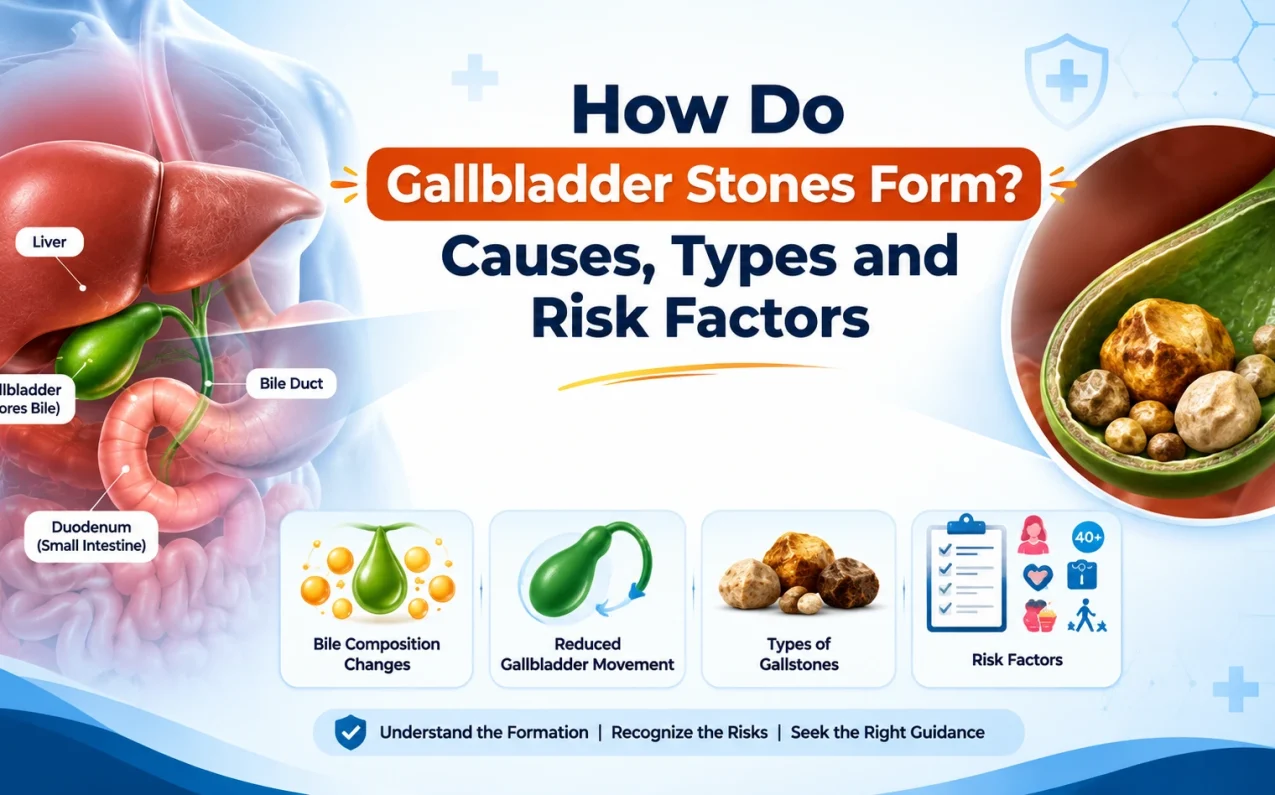
Gallbladder stones, commonly called gallstones, are formed when changes occur in the bile stored inside the gallbladder. Although the exact cause of gallstone formation is not completely known, reduced gallbladder movement and changes in the balance of substances present in bile can contribute to the development of crystals and stones.
Understanding how gallstones form begins with understanding the role of the gallbladder and bile in digestion.
What Is the Gallbladder and What Does It Do?
Table of Contents
ToggleThe gallbladder is a small organ located beneath the liver. While the liver produces bile, the gallbladder mainly works as a storage organ.
When a person is not eating, bile produced by the liver is directed toward the gallbladder, where it is stored. When food is eaten, a neurohormonal signal causes the gallbladder to contract. This pushes bile through the bile duct into the duodenum, a part of the small intestine, where bile helps with digestion.
In simple terms:
Liver produces bile → gallbladder stores bile → food triggers gallbladder contraction → bile enters the duodenum for digestion.
This normal movement of bile is important for understanding gallstone formation.
How Do Gallbladder Stones Form?
The exact reason why gallstones develop is still unknown. However, one important factor discussed in relation to gallstone formation is reduced gallbladder movement, also known as hypomotility.
If the gallbladder does not contract properly or does not empty completely, bile can remain inside the gallbladder. This may lead to the formation of sediment. Over time, this sediment can contribute to crystal formation and eventually the development of gallstones.
The composition of bile is another important part of this process.
READ MORE: How to Stop Gallbladder Pain: Instant Relief Guide Naturally
What Are the Types of Gallstones?
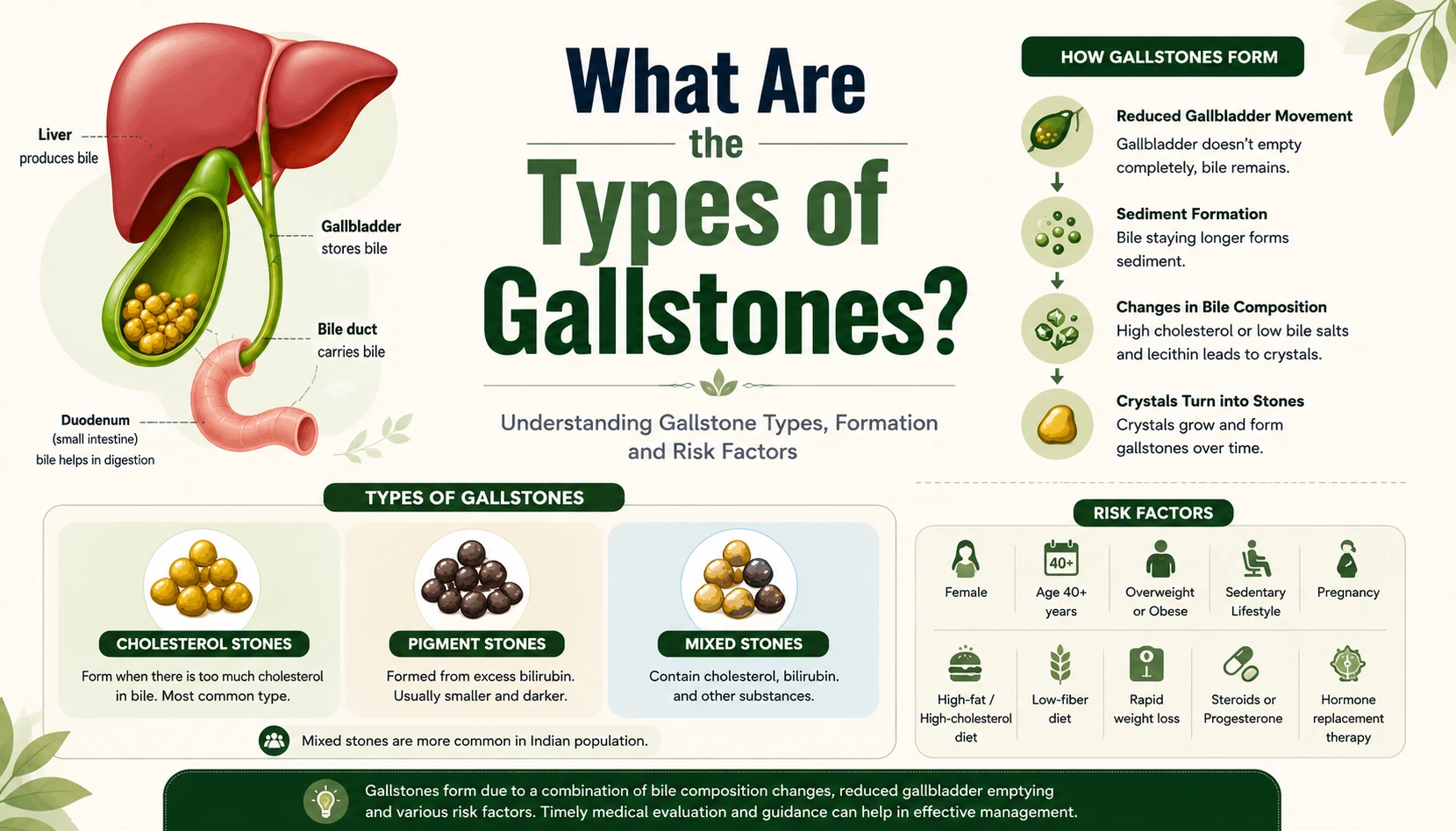
Gallstones can be broadly classified into three types:
- Cholesterol stones
- Pigment stones
- Mixed stones
Mixed stones contain a combination of components and are described as more common in the Indian population.
Who Is at Risk of Developing Gallstones?
Certain factors are associated with a higher risk of gallstone formation. These include:
- Being female
- Being 40 years or older
- Being overweight or obese
- Having a sedentary lifestyle
- Pregnancy
- Eating a high-fat or high-cholesterol diet
- Following a low-fiber diet
- Experiencing rapid weight loss
- Taking certain hormones such as steroids or progesterone
- Hormone replacement therapy
Having one or more of these risk factors does not necessarily mean that a person will develop gallstones. Gallstone formation can involve several factors working together.
Does Diet Cause Gallstones?
Diet is one of the factors associated with gallstone formation. A high-fat, high-cholesterol, and low-fiber diet is identified as a risk factor.
However, gallstones should not be viewed as something caused by one particular food or one meal. The process is more complex and can involve the composition of bile, gallbladder movement, body weight, lifestyle, and other risk factors.
READ MORE: What Diet Should Be Followed After Gallbladder Surgery?
Can Rapid Weight Loss Cause Gallstones?
Yes. Rapid weight loss is one of the factors associated with gallstone formation. This is important because quickly losing weight does not necessarily mean that the body is undergoing changes that are beneficial for every organ.
Weight-related factors, dietary patterns, and gallbladder function can all contribute to the overall risk of gallstone development.
Can Hormones Increase Gallstone Risk?
Certain hormonal factors are also associated with gallstone formation. The risk factors discussed include the use of steroids, progesterone, and hormone replacement therapies. Pregnancy is also included among the associated risk factors.
These factors should be considered as part of a person’s overall risk rather than as a single direct cause.
Gallstone Formation Explained Simply
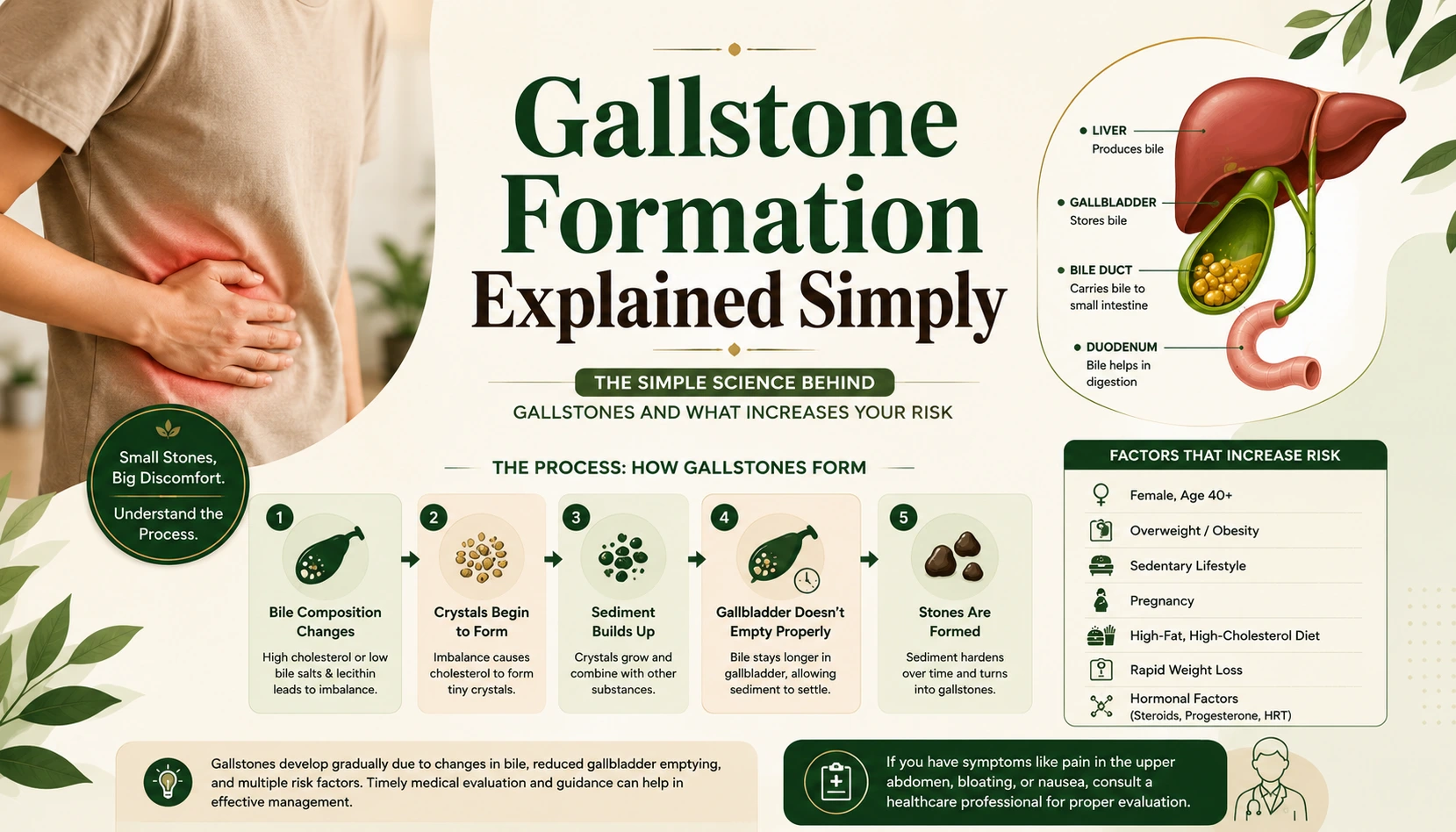
The process can be summarized as follows:
Reduced gallbladder movement → bile remains inside longer → sediment may develop → changes in bile composition can encourage crystals → crystals may contribute to gallstone formation.
At the same time, factors such as age, body weight, lifestyle, pregnancy, diet, rapid weight loss, and certain hormonal treatments can influence the likelihood of developing gallstones.
How ConsultGrab Can Help
If you are concerned about gallstones or have been advised to seek specialist evaluation, professional medical guidance can help you understand your individual situation and available treatment options.
ConsultGrab helps patients connect with relevant medical specialists and provides support with specialist selection, appointment assistance, treatment guidance, and hospital comparison. Its approach is designed to make the healthcare journey clearer and more informed.
READ MORE: Gallbladder Treatment Cost in Delhi & India
Because every patient’s situation is different, gallstone-related concerns should be evaluated individually rather than based only on general risk factors.
Conclusion
Gallstones can form when bile composition changes and the gallbladder does not empty properly. Increased cholesterol concentration or reduced bile salts and lecithin can encourage crystal formation, while reduced gallbladder movement may allow sediment to remain and contribute to stone development.
Female sex, age 40 or above, obesity, sedentary lifestyle, pregnancy, certain dietary patterns, rapid weight loss, and certain hormonal treatments are among the factors associated with a higher risk of gallstone formation.
Understanding how gallstones form can help you recognize the importance of appropriate medical guidance when gallstone disease is suspected.
Gallbladder stones can form when bile composition changes or the gallbladder does not empty properly. Increased cholesterol concentration or reduced bile salts and lecithin can encourage crystal formation. Reduced gallbladder movement may allow sediment to remain inside, which can gradually contribute to gallstone development.
There are three main types of gallstones: cholesterol stones, pigment stones, and mixed stones. Mixed stones contain a combination of components and are described in the provided content as more common in the Indian population. The type of gallstone depends on the substances involved in its formation.
Gallstone risk is associated with several factors, including being female, age 40 or older, overweight or obese, a sedentary lifestyle, pregnancy, a high-fat or high-cholesterol diet, a low-fiber diet, rapid weight loss, and certain hormonal treatments such as steroids, progesterone, or hormone replacement therapy.
Yes, diet is one factor associated with gallstone formation. A high-fat, high-cholesterol, and low-fiber diet may increase the risk. However, gallstones do not result from one particular food alone. Their formation can involve multiple factors, including bile composition, gallbladder movement, body weight, lifestyle, and hormonal factors.
Yes, rapid weight loss is identified as a risk factor for gallstone formation. Gallstone development involves several factors, including changes in bile composition and gallbladder function. Therefore, rapid weight loss may contribute to the conditions associated with gallstone development, particularly when combined with other risk factors.