

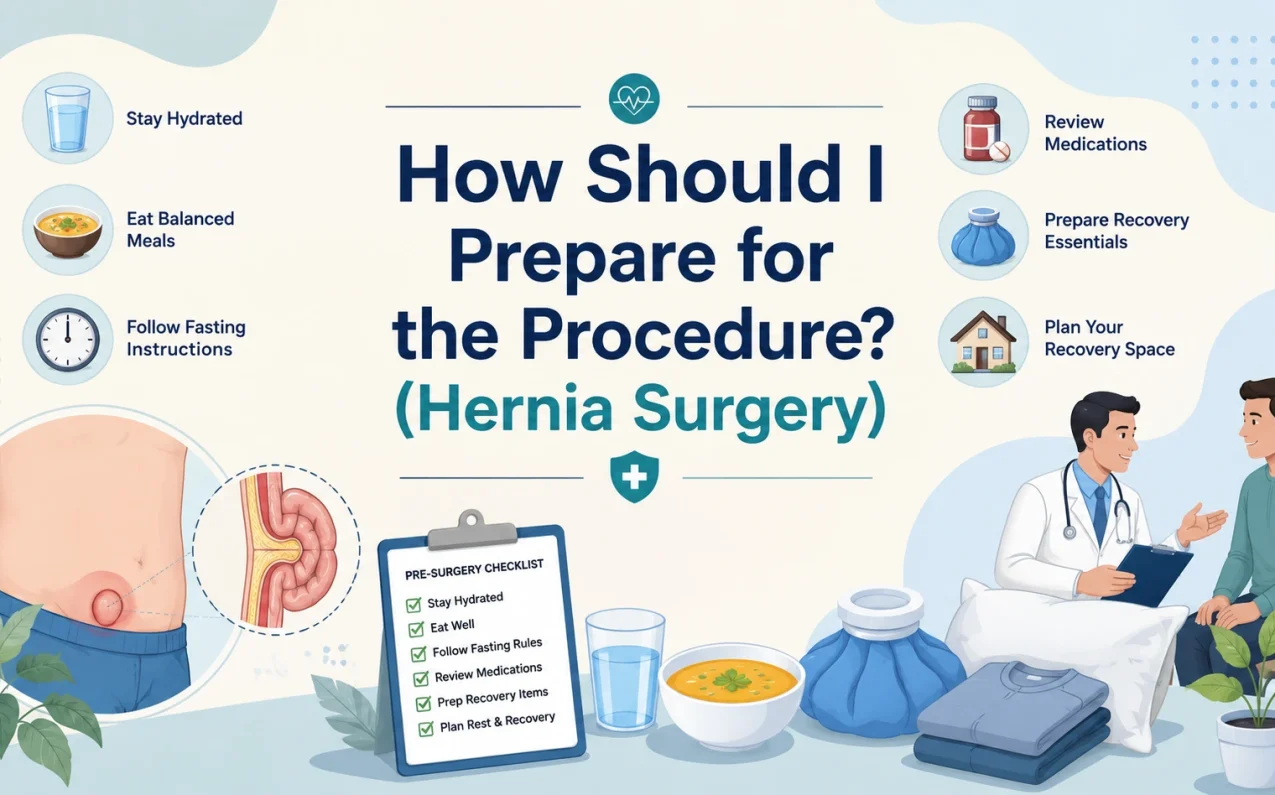
Preparing for hernia surgery is an important step toward a smooth procedure and comfortable recovery. While the surgery itself is carefully planned by your medical team, what you do in the days leading up to the operation can also make a significant difference. If you are looking for the best hernia treatment in Delhi, choosing an experienced surgeon and the right hospital is equally important for achieving the best possible outcome. From following fasting instructions to preparing your home for recovery, simple steps taken before surgery can help reduce stress and support a better healing experience.
This guide explains how to prepare for hernia surgery, what to expect before the procedure, and how proper planning can make your recovery easier.
Why Is Preparation Before Hernia Surgery Important?
Table of Contents
TogglePreparing for surgery is similar to preparing for any important event—it requires planning ahead. The actions you take before the day of surgery can help ensure that your body is ready for the procedure and that your recovery is as comfortable as possible.
Good preparation can also help you feel more confident and organized, allowing you to focus on healing after the operation.
While surgery is often the recommended treatment for many hernias, some cases may be managed without an operation depending on the type of hernia, symptoms, and your doctor’s evaluation. Read More: Treating Hernia Without Surgery to explore when non-surgical treatment options may be appropriate and what factors are considered before deciding on surgery.
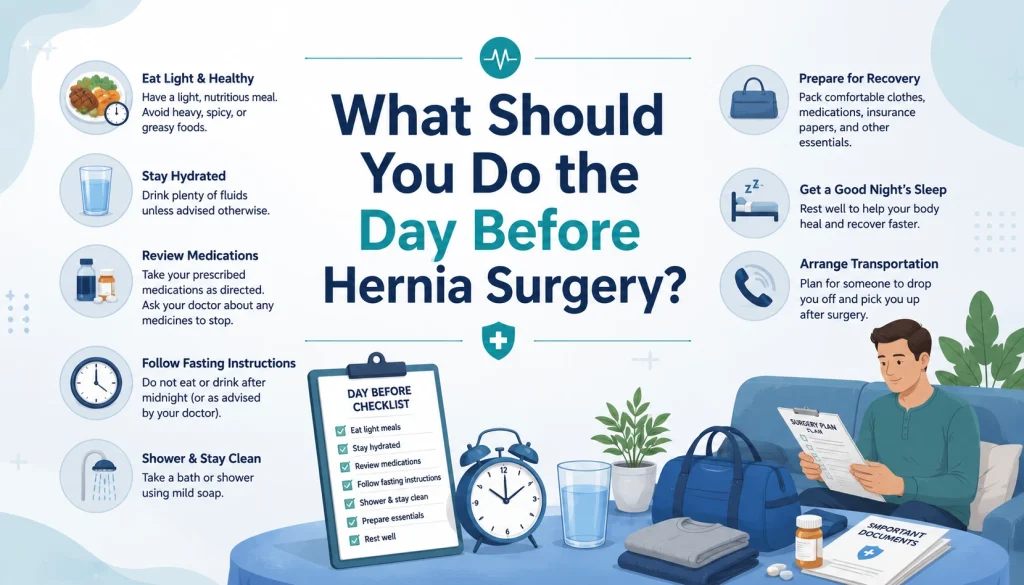
What Should You Do the Day Before Hernia Surgery?
The day before surgery is an important time to prepare both your body and your home.
Stay Well Hydrated
If your healthcare team instructs you not to eat or drink after midnight before surgery, it can be helpful to stay well hydrated during the day beforehand. Drinking enough water earlier in the day may make the fasting period more comfortable.
Eat a Balanced Meal
Since fasting is generally required after midnight, eating satisfying and nutritious meals during the day before surgery can help reduce discomfort while waiting for your procedure. Follow any dietary instructions provided by your surgical team.
Why Is Fasting Required Before Surgery?
In most cases, patients are instructed not to eat or drink anything after midnight before surgery. This fasting period helps prepare your body for anesthesia and is a standard safety measure before many surgical procedures. Always follow the specific fasting instructions provided by your surgeon or anesthesiologist.
Prepare Your Home Before Surgery
Recovery becomes much easier when your home is ready before you leave for the hospital.
Consider preparing:
- Light, easy-to-eat meals such as soups or simple sandwiches.
- Drinking water and other approved fluids.
- Frequently used items within easy reach.
- A comfortable place to rest after returning home.
Planning ahead means you can spend more time recovering and less time worrying about daily tasks.
Eating the right foods before and after surgery can also support a smoother recovery and overall well-being. Read More: Diet tips for hernia patients? to learn which foods may help during your recovery.
Which Medications May Need to Be Stopped Before Hernia Surgery?
Certain medications may need to be temporarily stopped before surgery. However, never stop taking any medication unless instructed by your healthcare provider.
Your medical team will usually review your medications before surgery and advise you on what should be paused and for how long.
Some commonly discussed medications include:
Anti-inflammatory Medicines
Medications such as ibuprofen or naproxen (Aleve) are often stopped approximately two days before surgery, depending on your surgeon’s instructions.
Blood Thinners
Blood-thinning medications usually require a longer pause before surgery, commonly around seven days. The exact timing depends on your medical condition and the specific medication you take.
Your surgical team will provide personalized guidance based on your health history.
What Recovery Supplies Should You Prepare?
Having a few basic recovery items ready before surgery can make the first few days much more comfortable.
Useful items may include:
- Ice packs for swelling and comfort.
- A resealable plastic bag filled with ice if commercial ice packs are unavailable.
- Comfortable pillows for support while resting.
- Loose, comfortable clothing for after surgery.
Preparing these items in advance allows you to focus on recovery instead of making last-minute arrangements.
What Should You Expect After Hernia Surgery?
After returning home, your body needs time to recover. Rest, follow your surgeon’s instructions, and avoid unnecessary physical strain during the early recovery period.
Having prepared meals, comfortable resting arrangements, and cooling packs available can make the recovery process more manageable and convenient.
How ConsultGrab Supports Your Surgical Journey
Preparing for surgery involves more than just the procedure itself. Understanding pre-operative instructions, selecting the right hospital, and knowing what to expect can make the entire experience less stressful.
At ConsultGrab, we help patients connect with experienced surgeons and verified hospitals while providing clear treatment guidance throughout their healthcare journey. Our care team assists with specialist consultations, appointment scheduling, treatment coordination, and transparent information so patients can make informed decisions with confidence.
Whether you’re preparing for hernia surgery or seeking guidance for other surgical treatments, we’re committed to helping you access trusted medical care with personalized support every step of the way.
Conclusion
Successful hernia surgery begins with proper preparation. Following fasting instructions, discussing medications with your healthcare provider, staying organized, and preparing your recovery space can contribute to a smoother surgical experience. By planning ahead and following your medical team’s guidance, you can approach your procedure with greater confidence and focus on a comfortable recovery.
Frequently Asked Questions
The day before hernia surgery, stay well hydrated, eat balanced meals as advised by your healthcare provider, and prepare your home for recovery. Most patients are instructed to stop eating and drinking after midnight before surgery. Following your surgeon's pre-operative instructions helps ensure a safer procedure and smoother recovery.
Fasting before hernia surgery is a standard safety measure that helps prepare your body for anesthesia. Patients are commonly advised not to eat or drink anything after midnight before the procedure. Always follow the specific fasting instructions provided by your surgeon or anesthesiologist for your individual case.
Some medications, including anti-inflammatory medicines and blood thinners, may need to be temporarily stopped before hernia surgery. However, you should never discontinue any medication without medical advice. Your surgical team will review your medications and provide personalized instructions before the procedure.
Before your hernia surgery, prepare your recovery space with light meals, drinking water, ice packs or reusable cold packs, comfortable pillows, and loose clothing. Having these essentials ready allows you to rest comfortably and focus on recovery without unnecessary physical effort after the procedure.
ConsultGrab supports patients by connecting them with experienced surgeons and verified hospitals while providing treatment guidance, appointment assistance, and transparent healthcare information. The care team helps patients understand the surgical process, coordinate consultations, and make informed decisions throughout their hernia treatment journey.