


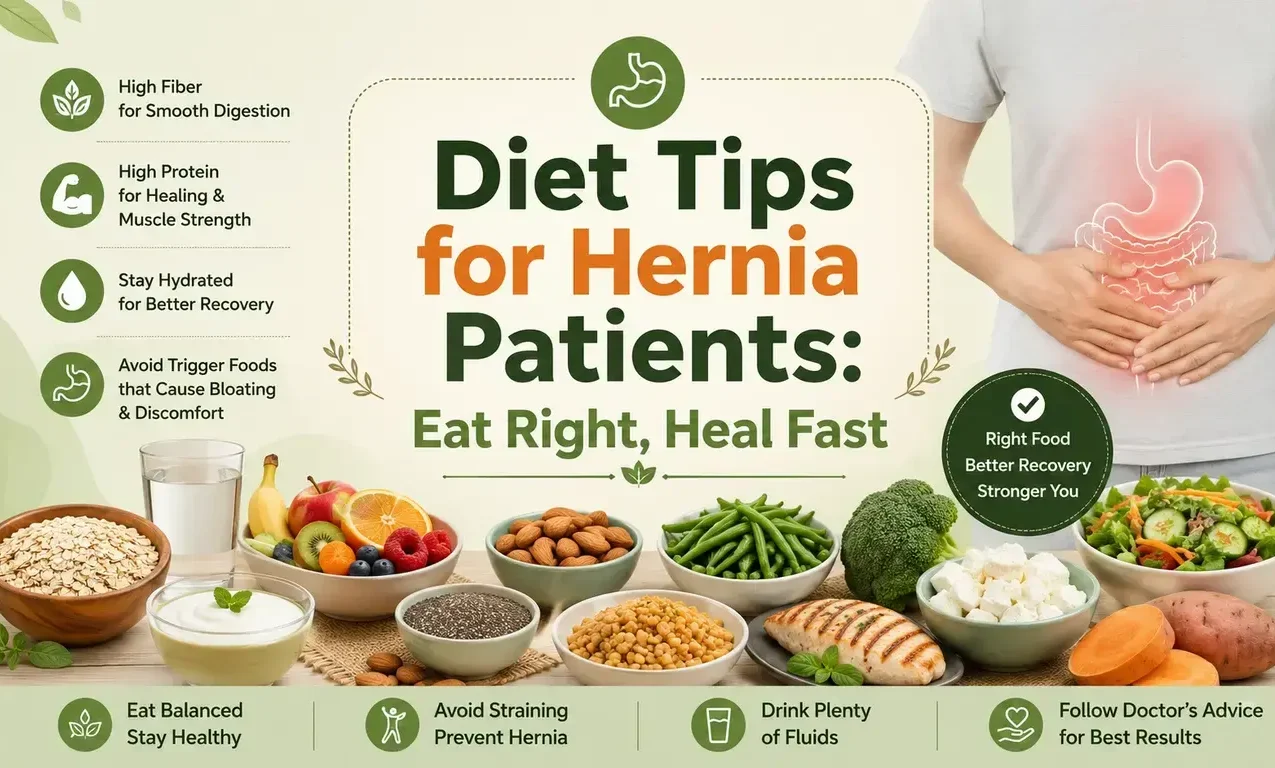
Living with a hernia or recovering after hernia surgery can raise many questions about diet and lifestyle. One of the most common concerns patients have is whether certain foods can worsen symptoms, delay recovery, or increase discomfort.
The good news is that most hernia patients do not need extremely restrictive diets. However, the right food choices can help reduce digestive discomfort, prevent constipation, support healing, and improve overall recovery. Patients looking for advanced surgical care and expert consultation can also explore options for Best Doctors for Hernia Surgery in Delhi through trusted healthcare guidance platforms like ConsultGrab.
At ConsultGrab, we help patients connect with experienced medical specialists and trusted hospitals so they can receive the right diagnosis, treatment guidance, and ongoing support throughout their healthcare journey.
Understanding Hernia and Diet
Table of Contents
ToggleA hernia occurs when an internal organ or tissue pushes through a weak area in the surrounding muscle or tissue wall. Different types of hernias may affect patients differently. Some patients experience bloating, constipation, acidity, or acid reflux symptoms depending on the type and severity of the hernia.
Although diet cannot cure a hernia, proper eating habits may help reduce strain on the abdominal area and improve comfort. Recent healthcare reports also suggest that tailored dietary habits may help prevent symptoms from becoming worse in some patients.
Best Foods for Hernia Patients
1. High-Protein Foods for Recovery
After hernia surgery, the body needs protein to repair tissues and rebuild abdominal muscle strength. Since hernia surgery mainly involves the abdominal wall muscles rather than the digestive tract, protein-rich foods are usually encouraged during recovery.
Good protein sources include:
- Eggs
- Paneer
- Milk and curd
- Lentils and pulses
- Soy products
- Fish
- Chicken
- Lean meat
- Nuts and seeds
Vegetarian patients can also consider plant-based protein options or supplements if recommended by their healthcare provider.
Contrary to common myths, non-vegetarian food is generally not restricted after hernia surgery unless advised otherwise by the treating doctor.
2. Fibre-Rich Foods to Prevent Constipation
Constipation can increase pressure on the abdominal wall and worsen discomfort in hernia patients. Doctors commonly recommend increasing fibre intake to maintain soft stools and reduce strain during bowel movements.
Helpful fibre-rich foods include:
- Fruits
- Vegetables
- Oats
- Whole grains
- Brown rice
- Beans and legumes
- Salads
However, fibre should be increased gradually because sudden excess fibre may lead to bloating or gas in some patients.
3. Hydration Is Extremely Important
Adequate fluid intake supports digestion and helps prevent constipation. Drinking enough water during recovery can make bowel movements easier and reduce unnecessary abdominal strain.
Patients are generally advised to:
- Drink water regularly
- Avoid dehydration
- Include fluids like soups and fresh liquids if comfortable
Foods Hernia Patients May Need to Limit
While there are no universal restrictions for all hernia patients, some foods may trigger symptoms like bloating, acidity, or reflux in certain individuals.
Foods That May Cause Bloating
Digestive bloating can put extra pressure on the abdominal wall. Some patients may feel better by limiting:
- Cabbage
- Broccoli
- Onions
- Garlic
- Mushrooms
- Carbonated drinks
Recent health guidance also notes that eating too quickly or swallowing excess air may worsen bloating symptoms.
Foods That May Trigger Acid Reflux in Hiatal Hernia
Patients with hiatal hernia may experience acid reflux, heartburn, or chest discomfort. In such cases, doctors often recommend limiting foods that increase acidity.
These may include:
- Fried foods
- Spicy foods
- Tomato-based foods
- Citrus fruits
- Coffee and caffeine
- Peppermint
- Alcohol
- Carbonated beverages
At the same time, foods like bananas, oatmeal, green vegetables, yogurt, and low-acid meals may help soothe symptoms in some patients.
Common Myths About Hernia Diet
Many patients believe:
- Pulses should be avoided
- Meat causes infection
- Only bland food should be eaten
- Certain foods can reopen stitches
In reality, standard hernia recovery usually does not require severe food restrictions. Most patients can continue eating balanced home-cooked meals while focusing on protein, fibre, and hydration. Patients who are still exploring treatment approaches may also want to understand treating hernia without surgery before making informed healthcare decisions.
Lifestyle Tips That May Help Hernia Patients
Along with diet, some healthy habits may help reduce discomfort:
- Eat smaller meals
- Avoid lying down immediately after eating
- Maintain healthy body weight
- Avoid excessive straining
- Exercise regularly as advised by doctors
- Drink enough water daily
Several medical sources also suggest avoiding tight clothing around the abdomen and quitting smoking to reduce symptom aggravation.
Why Proper Medical Guidance Matters
Every hernia case is different. Some patients may only require lifestyle adjustments, while others may need surgery depending on the severity and symptoms. Understanding how hernia symptoms can vary between genders may also help patients make informed treatment decisions. Patients can learn more about Hernia in Men vs Women: Key Differences, Symptoms, and Treatment to better understand these differences.
At ConsultGrab, patients receive guidance and support through a verified healthcare network in Delhi. We help individuals connect with experienced specialists and trusted hospitals for proper diagnosis, treatment planning, appointment support, and medical guidance.
What We Help Patients With
- Hernia consultation guidance
- Specialist appointment assistance
- Treatment planning support
- Access to trusted hospitals
- Transparent treatment coordination
Our goal is to make the treatment journey simpler, clearer, and less stressful for patients and their families.
At ConsultGrab, patients receive guidance and support through a verified healthcare network in Delhi. We help individuals connect with experienced specialists and trusted hospitals for proper diagnosis, treatment planning, appointment support, and medical guidance.
Final Thoughts
A healthy and balanced diet can play an important role in managing hernia symptoms and supporting recovery after surgery. Most patients benefit from:
- High-protein meals
- Adequate fibre
- Proper hydration
- Smaller balanced meals
- Avoiding constipation and excessive bloating
Although diet alone cannot cure a hernia, smart eating habits combined with proper medical care can improve comfort and recovery significantly.
Patients experiencing persistent pain, swelling, severe reflux, vomiting, or worsening symptoms should always seek medical advice from qualified healthcare professionals.
Frequently Asked Questions (FAQs)
Hernia patients should focus on a high-protein and fibre-rich diet after surgery. Foods like eggs, lentils, paneer, chicken, fish, fruits, vegetables, and whole grains may help support muscle healing, improve recovery, and prevent constipation. Adequate hydration is also important to reduce abdominal strain during recovery.
Hernia patients may benefit from limiting foods that cause bloating, acidity, or acid reflux. Common trigger foods include fried foods, spicy meals, carbonated drinks, caffeine, onions, garlic, and acidic foods like tomato sauce and citrus fruits. Avoiding heavy meals may also help reduce discomfort and abdominal pressure.
Yes, constipation can increase pressure on the abdominal wall and may worsen hernia discomfort. Doctors often recommend fibre-rich foods, adequate fluids, and healthy digestion habits to keep stools soft and reduce straining during bowel movements. Preventing constipation is considered important for hernia management and post-surgery recovery.
In most cases, non-vegetarian food such as chicken, eggs, and fish can be safely consumed after hernia surgery unless a doctor advises otherwise. These foods provide high-quality protein that supports tissue repair, muscle recovery, and overall healing after abdominal wall surgery.
A balanced hiatal hernia diet may help reduce acid reflux, heartburn, and bloating symptoms. Doctors commonly recommend smaller meals, low-acid foods, lean proteins, whole grains, bananas, oatmeal, and green vegetables while limiting caffeine, fried foods, alcohol, and spicy meals that can trigger reflux symptoms.



1 Comment
Types of Hernias and Hernia Symptoms: A Simple Guide
[…] Read More: Diet Tips for Hernia Patients: Eat Right, Heal Fast […]