

Recovering from hernia surgery is just as important as the surgery itself. While many people start feeling better within a few weeks, the body continues healing internally for much longer. During this recovery period, following your surgeon’s instructions carefully can make a significant difference.
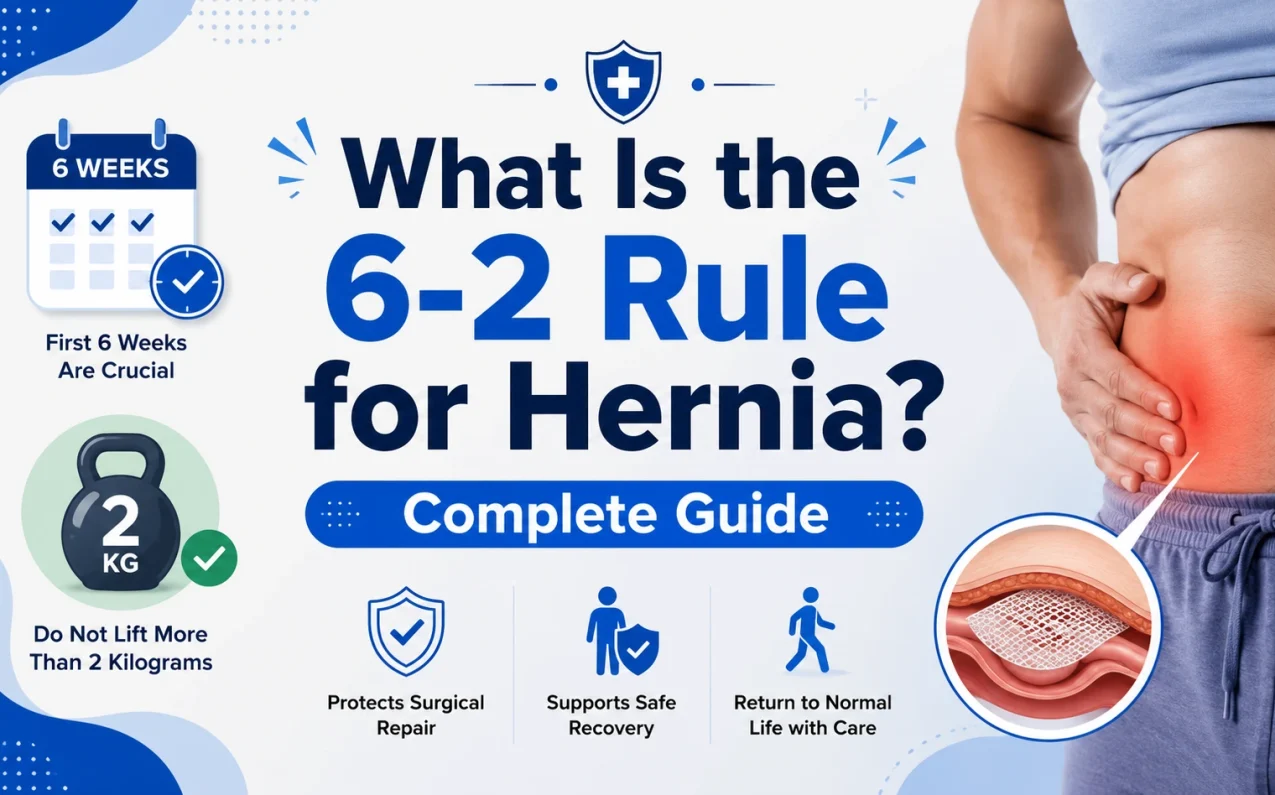
One guideline that many patients hear after surgery is the 6-2 rule for hernia. At first, the term may sound confusing, but it is actually a simple recovery rule designed to protect the surgical repair while your body heals.
In this article, we’ll explain what the 6-2 rule means, why it matters, and what precautions you should take during the first few weeks after hernia surgery.
Why Is the 6-2 Rule Important?
Table of Contents
ToggleDuring hernia surgery, the weakened area of the abdominal wall is repaired. In many cases, a surgical mesh is placed to provide additional support to the weakened muscles.
However, placing the mesh is only one part of the treatment. The body also needs time to heal around it. The surrounding tissues gradually attach to the mesh, allowing it to become properly supported.
This healing process takes time. The first six weeks are particularly important because the repair is still settling inside the body.
If heavy lifting or excessive strain occurs during this period, pressure inside the abdomen increases. This additional pressure can place stress on the repaired area and may affect the healing process. It may also increase the possibility of the hernia returning.
That is why following the 6-2 rule is considered an important part of recovery.
Feeling Better Does Not Always Mean You Are Fully Healed
Many patients notice that pain and discomfort begin to improve within a couple of weeks after surgery. As a result, they often feel ready to return to their normal routine.
However, internal healing continues even after the outside of the body appears to have recovered.
This is why patients are often advised not to rush back into lifting heavy objects, exercising intensely, or performing physically demanding activities simply because they feel comfortable.
Giving your body the full healing period helps protect the surgical repair.
To learn about other foods that can support liver wellness, read our detailed guide on Best Diet for Kidney Disease: Foods That Support Kidney Health
What Should You Avoid During the First Six Weeks?
Following the 6-2 rule is not only about avoiding heavy lifting. It also means reducing activities that increase pressure on the abdomen.
During the recovery period, it is generally recommended to avoid:
- Lifting heavy grocery bags
- Carrying buckets filled with water
- Moving furniture
- Weight training or gym workouts
- Any activity that requires significant physical effort
If something feels heavy, it is always safer to ask someone else for help rather than risking unnecessary strain on the healing area.
Prevent Constipation During Recovery
Many people do not realize that heavy lifting is not the only thing that increases abdominal pressure.
Straining during bowel movements can also place pressure on the repaired muscles.
To help avoid constipation during recovery:
- Drink plenty of water.
- Include fiber-rich foods in your daily diet.
- Eat fruits and vegetables regularly.
These simple habits can help make bowel movements more comfortable and reduce unnecessary strain.
Is Walking Safe After Hernia Surgery?
Yes. Light walking is generally considered a beneficial activity during recovery.
Remaining in bed all day is usually not recommended. Gentle walking encourages movement and supports healthy blood circulation without placing excessive stress on the surgical repair.
The key is to keep your activity light and avoid pushing your body beyond what feels comfortable.
Read More: Best Liver Transplant Doctors in Delhi – Complete Treatment
When Should You Speak to a Medical Professional?
While recovering, pay attention to your body.
If you notice increasing pain or experience symptoms that suddenly become worse, it is important to seek medical advice instead of waiting for them to improve on their own.
Early medical guidance can help address concerns before they become more serious.
How ConsultGrab Can Support Your Treatment Journey
Understanding recovery instructions after surgery is an important part of achieving the best possible outcome. However, many patients also need help finding the right specialist, understanding treatment options, or scheduling consultations.
ConsultGrab acts as a trusted bridge between patients and experienced medical specialists. From treatment guidance and appointment assistance to helping patients understand their options, the care team supports individuals throughout their healthcare journey with transparency and confidence.
Whether you need help connecting with the right specialist or understanding the next steps in your treatment, having reliable guidance can make the recovery process less stressful and more informed.
Conclusion
The 6-2 rule for hernia is a simple but valuable guideline that supports safe recovery after surgery.
For the first six weeks, avoid lifting anything heavier than 2 kilograms, give your body enough time to heal internally, avoid unnecessary strain, maintain healthy bowel habits, and stay active with light walking instead of complete bed rest.
Most importantly, remember that every recovery journey is different. Always follow the instructions provided by your surgeon, and if your symptoms worsen or you have concerns during recovery, seek medical advice promptly.
Allowing your body the time it needs to heal today can help protect your recovery in the long run.
Frequently Asked Questions (FAQs)
The 6-2 rule means avoiding lifting more than 2 kilograms during the first 6 weeks after hernia surgery to support proper healing.
Heavy lifting increases pressure inside the abdomen, which can place stress on the healing surgical repair.
Yes. Light walking is generally encouraged because it supports movement and healthy blood circulation without excessive strain.
Always follow the recovery instructions provided by your surgeon, as every patient's condition and treatment plan are unique.