

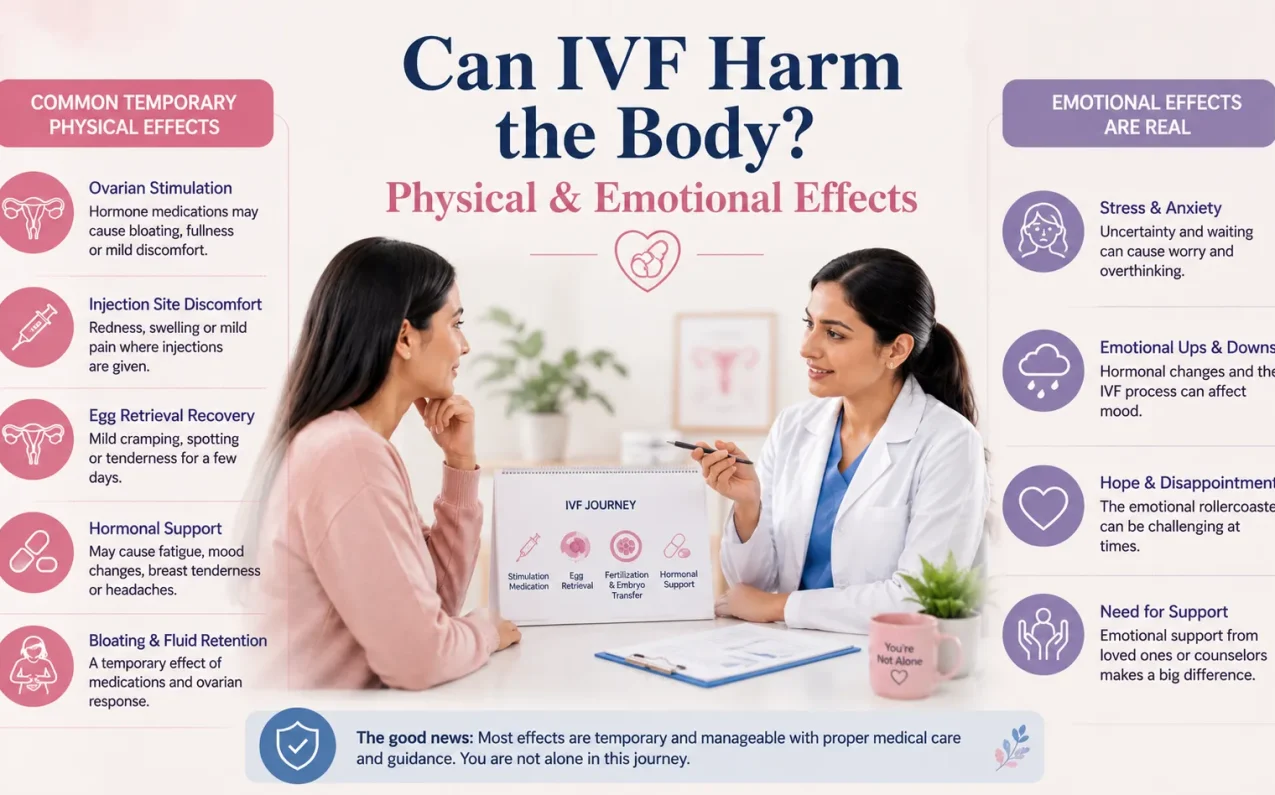
One of the most common concerns people have before starting IVF treatment is whether IVF can harm the body. Many individuals worry about the effects of fertility medications, injections, procedures, and the overall treatment process.
The good news is that most of the effects experienced during IVF are temporary. While the treatment can cause certain physical and emotional changes, these effects generally occur during the treatment cycle and are usually manageable with proper medical supervision. Seeking guidance from the best IVF doctors in Delhi can help ensure that treatment is carefully monitored, concerns are addressed promptly, and patients receive personalized fertility care throughout their journey.
Understanding what to expect can help reduce anxiety and make the IVF journey feel more comfortable and predictable.
Does IVF Cause Permanent Changes to the Body?
Table of Contents
ToggleIn most cases, IVF does not cause permanent physical changes to the body. The effects that patients commonly experience are typically linked to fertility medications, ovarian stimulation, egg retrieval procedures, and hormonal support given during treatment. For many individuals, concerns about discomfort during these stages are common, which is why understanding whether IVF treatment is painful can help set realistic expectations before starting the process.
These changes are generally temporary and often improve after the treatment cycle is completed.
Ovarian Hyperstimulation Syndrome (OHSS): A Major IVF-Related Concern
One of the more significant complications associated with IVF treatment is Ovarian Hyperstimulation Syndrome (OHSS).
OHSS can occur when the ovaries respond excessively to fertility medications and produce a very large number of eggs. The likelihood of developing OHSS often depends on an individual’s ovarian response and the treatment protocol being used.
When doctors identify a higher risk of OHSS, they may modify the treatment approach by changing the final trigger injection and using protocols designed to reduce the risk. Patients can also benefit from understanding the important precautions to take before ovum pickup during IVF, as proper preparation and adherence to medical instructions can support a safer egg retrieval process and help reduce treatment-related risks.
Symptoms of OHSS May Include:
- Abdominal bloating
- Swelling of the stomach
- Stomach pain or discomfort
- Fluid accumulation in the abdomen
- Fluid accumulation around the lungs
- Difficulty breathing
When doctors believe a patient is at risk of developing OHSS, close monitoring may be recommended. In some situations, hospitalization and supportive treatment may be required to manage symptoms effectively.
Common Temporary Physical Effects During IVF
Apart from OHSS, many patients experience mild and temporary physical changes during different stages of IVF treatment.
1. Bloating and Abdominal Discomfort
Hormonal injections used during ovarian stimulation can sometimes cause:
- Mild bloating
- A feeling of heaviness in the abdomen
- Temporary discomfort
These symptoms are generally short-lived and often improve after the treatment phase is completed.
2. Breast Tenderness
Some individuals may notice breast tenderness during IVF treatment due to hormonal changes caused by medications and injections.
This discomfort is usually temporary and may resolve as hormone levels stabilize.
Physical Effects After Egg Retrieval
Egg retrieval (ovum pickup) is performed using a needle-based procedure to collect mature eggs from the ovaries.
After the procedure, some patients may experience:
- Mild abdominal pain
- Temporary fatigue
- General discomfort
These effects are commonly short-term and often improve with rest.
Light Spotting After Egg Retrieval
Because a needle is used during egg retrieval, some patients may notice light spotting afterward.
This minor bleeding can occur as part of the recovery process and is generally temporary.
Does Embryo Transfer Cause Physical Pain?
Embryo transfer itself usually does not create significant physical discomfort.
The procedure is generally not performed under anesthesia, but many patients report that it is not particularly painful.
One source of discomfort during embryo transfer may come from holding urine before the procedure, as patients are often asked to have a full bladder. When the bladder becomes very full, it can lead to temporary pelvic pressure or pain.
Progesterone Support and Associated Discomfort
After embryo transfer, progesterone support is commonly prescribed in the form of injections or vaginal pessaries.
Progesterone Injections
Some patients may experience discomfort because progesterone injections are oil-based and are often administered into the hip or buttock area.
Possible issues may include:
- Injection-site pain
- Temporary soreness
- Redness around the injection site
- Local discomfort
Improper administration may increase the risk of irritation or infection at the injection site.
Vaginal Progesterone Pessaries
Certain patients may also find vaginal progesterone pessaries slightly uncomfortable to insert, especially during the initial days of use.
While this can create temporary inconvenience, it is often manageable with proper guidance from the fertility team.
The Emotional Impact of IVF Is Often Greater Than the Physical Impact
For many individuals and couples, the emotional aspect of IVF can be more challenging than the physical symptoms.
The treatment journey often involves:
- Frequent hospital visits
- Multiple injections
- Regular ultrasound scans
- Monitoring appointments
- Scheduled trigger injections
- Waiting for treatment milestones
One of the most emotionally demanding periods is the waiting time between embryo transfer and pregnancy testing.
The Emotional Roller Coaster of Waiting for Results
The anticipation of receiving the final result can create significant emotional pressure.
Patients may experience:
- Anxiety
- Nervousness
- Stress
- Emotional exhaustion
When the result is positive, many people feel relief and happiness. However, if the outcome is unsuccessful, feelings of disappointment, stress, and emotional distress may occur.
This emotional journey is a natural part of the IVF process and highlights the importance of having a strong support system throughout treatment.
How ConsultGrab Supports Patients During Fertility Treatment
Navigating fertility treatment can feel overwhelming, especially when questions arise about procedures, side effects, treatment options, and next steps.
At ConsultGrab, we help patients connect with experienced fertility specialists and trusted healthcare providers. Our team offers guidance throughout the treatment journey, helping patients understand their options and make informed decisions with confidence.
Whether you need assistance understanding fertility treatments, exploring parenthood options, or finding the right specialist, our care coordinators work to make the process smoother and less stressful.
Final Thoughts
So, can IVF harm the body?
Most physical effects associated with IVF are temporary and occur as a result of hormonal medications, ovarian stimulation, egg retrieval, or progesterone support. Some individuals may experience mild discomfort such as bloating, tenderness, fatigue, spotting, or injection-site pain during treatment.
While physical symptoms are often manageable, many patients find that the emotional demands of IVF have a greater impact on their overall experience. Understanding these potential effects and receiving proper medical support can make the journey more comfortable and reassuring.
If you are considering fertility treatment and need guidance in finding the right specialist, obtaining expert advice, or understanding your available options, learning about the cost of IVF treatment in India can help you plan your fertility journey more effectively. Professional support can help you move forward with greater clarity and confidence.
Frequently Asked Questions (FAQs)
In most cases, IVF does not cause permanent damage to the body. The physical effects associated with IVF treatment are usually temporary and may include bloating, breast tenderness, mild abdominal pain, fatigue, or spotting. These symptoms are generally related to fertility medications, egg retrieval, and hormonal support used during the IVF cycle.
Ovarian Hyperstimulation Syndrome (OHSS) is a potential complication of IVF that can occur when the ovaries respond excessively to fertility medications. Symptoms may include abdominal bloating, stomach pain, fluid accumulation, and breathing difficulty. Fertility specialists often use modified IVF protocols and close monitoring to reduce the risk of OHSS in high-risk patients.
Most patients experience only mild discomfort after egg retrieval during IVF. Temporary symptoms may include abdominal pain, fatigue, and light spotting because the procedure involves collecting eggs with a needle. These effects usually improve within a short period and are considered a normal part of the recovery process.
Embryo transfer is generally not considered a painful IVF procedure. Some patients may experience temporary discomfort from holding a full bladder before the transfer, as this is often required during the procedure. Hormonal support, such as progesterone injections or vaginal pessaries, may also cause mild discomfort afterward.
The emotional impact of IVF treatment can sometimes be greater than the physical effects. Frequent hospital visits, injections, monitoring appointments, and the wait for pregnancy test results may cause stress, anxiety, nervousness, and emotional fatigue. Having proper medical guidance and emotional support can help patients manage the IVF journey more confidently.