

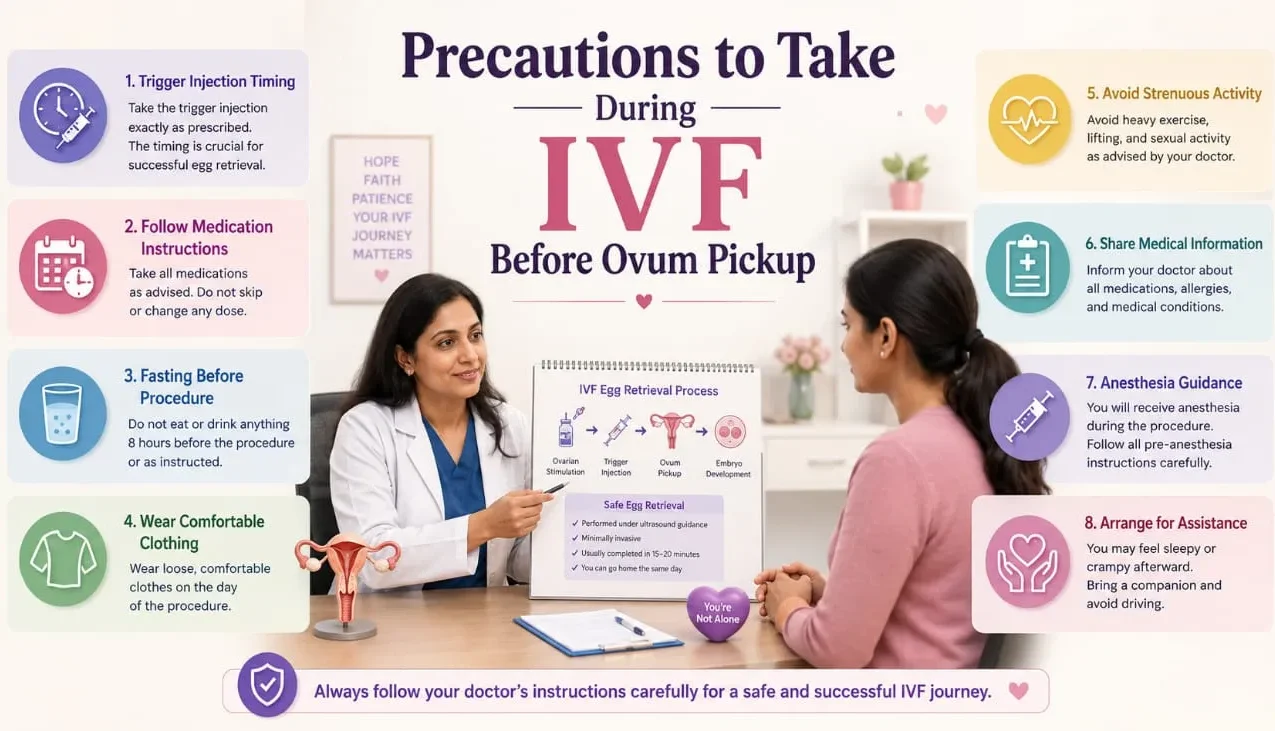
IVF treatment is an important step in the journey toward parenthood. One of the most critical stages of the IVF process is ovum pickup, also called egg retrieval. Proper preparation before this procedure plays a major role in improving treatment outcomes and reducing complications.
Many patients focus only on daily injections during IVF stimulation, but the precautions taken before ovum pickup are equally important. Small mistakes in timing, medication handling, or preparation can affect egg quality and the overall IVF cycle. Since IVF treatment also involves financial planning for consultations, medications, and procedures, many couples also look for detailed information about the IVF treatment cost in India and complete patient guide before starting their fertility journey.
This guide explains the important precautions to follow before ovum pickup and what patients should expect during the process.
Understanding Ovum Pickup in IVF
Table of Contents
ToggleDuring IVF treatment, fertility injections are used to help the ovaries develop multiple follicles. Depending on the body’s response, follicles may mature within 10 to 16 days.
When follicles reach the required size, usually around 18–20 mm, doctors advise a final trigger injection to mature the eggs completely before retrieval.
This final injection is one of the most important steps in the IVF process because ovum pickup is usually planned approximately 34 to 36 hours later.
The timing of this injection is extremely sensitive and directly impacts the success of egg retrieval.
Important Precautions Before Ovum Pickup
1. Take the Final Trigger Injection at the Exact Time
The final maturation injection must be taken at the exact time instructed by the fertility specialist.
Even small delays or timing mistakes can affect the IVF outcome. Incorrect timing may lead to:
- Premature egg release
- Immature eggs
- Difficulty during egg retrieval
- Reduced chances of fertilization
Many fertility centers provide the injection during nighttime because ovum pickup is scheduled based on the exact injection timing.
2. Store the Injection Properly
The trigger injection usually requires cold storage.
Patients should:
- Store the injection in the lower section of the refrigerator
- Avoid placing it inside the freezer
- Carry it in a cool condition while traveling to the clinic or hospital
Improper storage may reduce the effectiveness of the medication.
Precautions for the Male Partner Before Semen Collection
On the day of ovum pickup, the male partner is generally required to provide a semen sample.
Doctors usually recommend ejaculation approximately 3 to 4 days before ovum pickup.
This timing is important because:
- Very long abstinence may increase dead sperm cells
- Very short abstinence may reduce sperm count
Maintaining the recommended gap helps improve semen quality during IVF treatment.
Medicines and Tests Before Ovum Pickup
Antibiotics and Stomach Preparation
One day before ovum pickup, doctors may prescribe:
- Antibiotics
- Medicines for stomach cleaning or bowel preparation
These medications should be taken exactly as instructed.
Keep Fresh Reports Ready
Before anesthesia is given, recent medical reports are often required.
Patients should keep:
- Fresh blood reports
- ECG reports (if advised)
- Chest X-ray reports (especially for older patients)
Having all reports ready helps avoid delays on the procedure day.
Fasting Instructions Before Ovum Pickup
Ovum pickup is performed under anesthesia. Because of this, patients must remain on an empty stomach.
Usually, patients are advised:
- Not to eat anything after midnight
- Not to drink water, juice, tea, or other liquids before the procedure
Even drinking liquids can create complications during anesthesia, so fasting instructions should be followed strictly.
Reach the Hospital on Time
Reaching the hospital at the correct time is extremely important.
Patients are generally advised to arrive around 2 hours before the scheduled ovum pickup.
Several pre-procedure steps are completed during this time, including:
- IV line placement
- Antibiotic administration
- Changing into surgical clothing
- Shaving preparation if required
If there is a significant delay, eggs may release naturally before retrieval, which can result in failure to collect eggs during the procedure.
Empty the Bladder Before the Procedure
Before entering the operation theater, patients are usually advised to pass urine.
An empty urinary bladder helps during the egg retrieval process and improves procedural comfort.
Carry All Important Documents
Patients should bring:
- Medical files
- Investigation reports
- Consent papers
- IVF treatment records
Keeping documents organized helps ensure a smooth admission process.
Why an Additional Accompanying Person May Be Needed
In some IVF cases, the male partner may have severe sperm count issues, including azoospermia (absence of sperm).
In such situations, doctors may plan a minor sperm retrieval procedure on the same day.
Since both partners may undergo procedures, having an additional accompanying person can be important for:
- Consent formalities
- Assistance during discharge
- Transportation support
Personal Care Precautions Before Ovum Pickup
Take a Bath Before Leaving for the Hospital
Maintaining hygiene before the procedure is important.
Avoid Perfume or Deodorant
Patients should avoid:
- Perfumes
- Deodorants
- Strong fragrances
Strong chemical smells may negatively affect eggs and sperm inside the IVF laboratory environment.
Remove Jewelry and Nail Paint
Patients should avoid wearing:
- Jewelry
- Nail polish
- Accessories
Nail paint can interfere with monitoring devices used during anesthesia.
Avoid Contact Lenses
Patients who wear contact lenses should remove them before the procedure.
Important Guidance About Regular Medicines
Patients taking medicines for conditions such as:
- Thyroid disorders
- Blood pressure
- Heart conditions
may usually take them early in the morning with a small sip of water, but only according to medical advice.
Patients with diabetes should discuss:
- Insulin dosage
- Diabetes medications
with their doctor beforehand because fasting instructions may require medication adjustments.
Is Ovum Pickup Painful?
Ovum pickup is generally a short procedure lasting around 15 to 20 minutes.
Since it is performed under anesthesia:
- The procedure is usually painless
- Patients remain asleep during egg retrieval
- No major cuts or stitches are required
- Eggs are collected using a fine needle guided through the vaginal route
Many patients are concerned about discomfort during IVF treatment, but ovum pickup is typically well-managed under anesthesia. If you want to understand the complete experience, recovery, and discomfort levels during fertility treatment, you can also read our detailed guide on Is IVF Painful? IVF Discomfort & Pain Relief Guide 2026.
Recovery After Ovum Pickup
Ovum pickup is usually a day-care procedure, meaning patients can return home the same day after observation.
Most patients remain in the hospital for around 5 to 6 hours.
After the procedure, mild symptoms may occur, such as:
- Light abdominal pain
- Heaviness
- Mild nausea
- Vomiting sensation due to anesthesia
These symptoms generally improve gradually.
The Most Important IVF Precaution Before Egg Retrieval
The success of ovum pickup depends heavily on two major factors:
- Taking the final trigger injection at the exact instructed time
- Reaching the hospital without delay
Both steps are extremely important because timing directly affects egg maturity and retrieval success.
Careful preparation and following medical instructions properly can help make the IVF process smoother and more successful.
Expert IVF Guidance and Fertility Consultation
At ConsultGrab, we understand that IVF treatment can feel emotionally and physically overwhelming. Every fertility journey is unique, and proper medical guidance can make a major difference during treatment planning.
Our care team helps patients connect with experienced fertility specialists and trusted hospitals for:
- IVF consultation support
- Fertility treatment guidance
- Surrogacy consultation
- Appointment coordination
- Treatment planning assistance
We believe patients should receive transparent information, compassionate support, and access to trusted fertility care throughout their parenthood journey.
Whether you are starting IVF treatment or exploring fertility options, ConsultGrab helps simplify the process with personalized medical guidance.
Conclusion
Preparing properly before ovum pickup is essential for improving IVF outcomes. From handling the trigger injection correctly to fasting, medication planning, and arriving on time, every precaution matters.
Patients should always follow their fertility specialist’s instructions carefully and maintain proper coordination with the IVF team throughout the treatment cycle. Choosing experienced fertility experts can also make a significant difference in IVF planning, egg retrieval, and overall treatment success. Patients looking for expert fertility care can explore our guide to the Best Doctors for IVF – In Vitro Fertilization in Delhi for trusted consultation and treatment support.
With the right preparation and support, ovum pickup can be a smooth and safe step toward achieving pregnancy through IVF.
Frequently Asked Questions (FAQs)
Before ovum pickup in IVF treatment, patients should take the final trigger injection at the exact prescribed time, remain fasting after midnight, avoid perfumes and deodorants, carry fresh medical reports, and reach the hospital on time. Proper preparation helps improve egg retrieval success and reduces complications during the IVF procedure.
The trigger injection is important because it helps mature the eggs before ovum pickup. IVF specialists usually schedule egg retrieval 34 to 36 hours after the injection. If the timing is incorrect, eggs may become immature or release early, which can negatively affect fertilization and overall IVF success rates.
No, patients are usually advised to stay completely empty stomach before ovum pickup because the procedure is performed under anesthesia. Eating or drinking, including water, juice, tea, or coffee, may increase anesthesia-related risks. Most fertility centers recommend fasting from midnight before the procedure day.
Ovum pickup is generally not painful because it is performed under anesthesia. The egg retrieval procedure usually takes around 15 to 20 minutes, and patients remain asleep throughout the process. Mild abdominal discomfort, heaviness, or nausea may occur afterward, but these symptoms usually improve within a short time.
Reaching the hospital at least two hours before ovum pickup is important because several pre-procedure preparations are required, including IV line setup, antibiotics, consent formalities, and surgical preparation. Delays may affect the timing of egg retrieval, increasing the risk of premature egg release before the IVF procedure begins.