



Quick Answer
Indians experience heart attacks nearly a decade earlier than people in Western countries, and sudden cardiac deaths occur 5 to 8 years earlier, because of a combination of genetic risk factors unique to South Asians (higher Lp(a) levels, denser LDL particles), higher visceral fat and insulin resistance even at normal body weight, and silent coronary artery blockages that build up for years without producing any symptoms. Being physically fit does not rule out this risk, because outward fitness reflects skeletal muscle strength, not the condition of the coronary arteries.
The Scale of the Problem in India
Table of Contents
ToggleCardiovascular disease is the leading cause of death worldwide, responsible for roughly 18 million deaths a year — about a third of all deaths globally. In India, the share of deaths caused by heart disease has nearly doubled in three decades, rising from around 15% in 1990 to over 28% today.
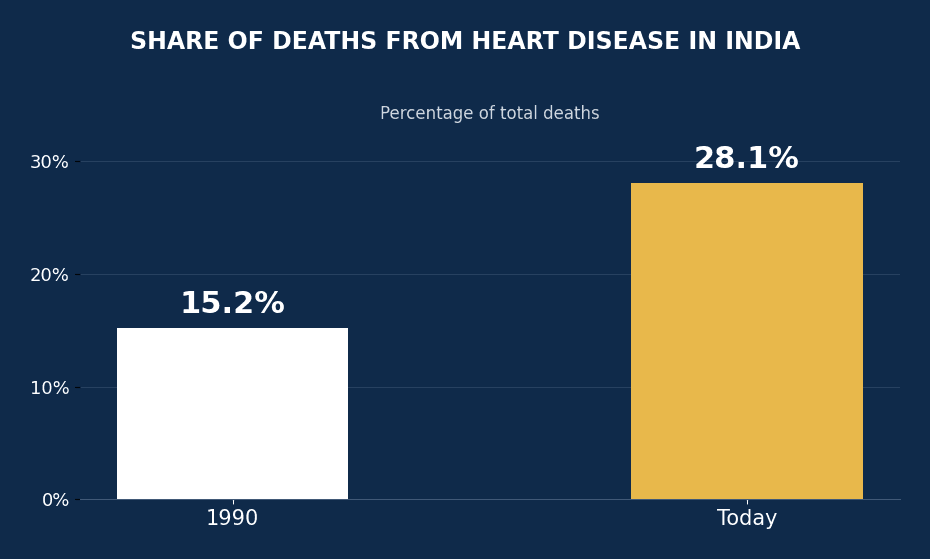
Show Image Heart disease’s share of total deaths in India has nearly doubled since 1990, from 15.2% to 28.1%.
What makes this trend alarming is not just the number of cases, but the age at which they occur. Heart attacks in Indians tend to happen roughly a decade earlier than in Western populations, and sudden cardiac deaths occur 5 to 8 years earlier. National crime data has also recorded a sharp year-on-year rise in sudden deaths linked to cardiac causes, with double-digit percentage increases reported in recent years.
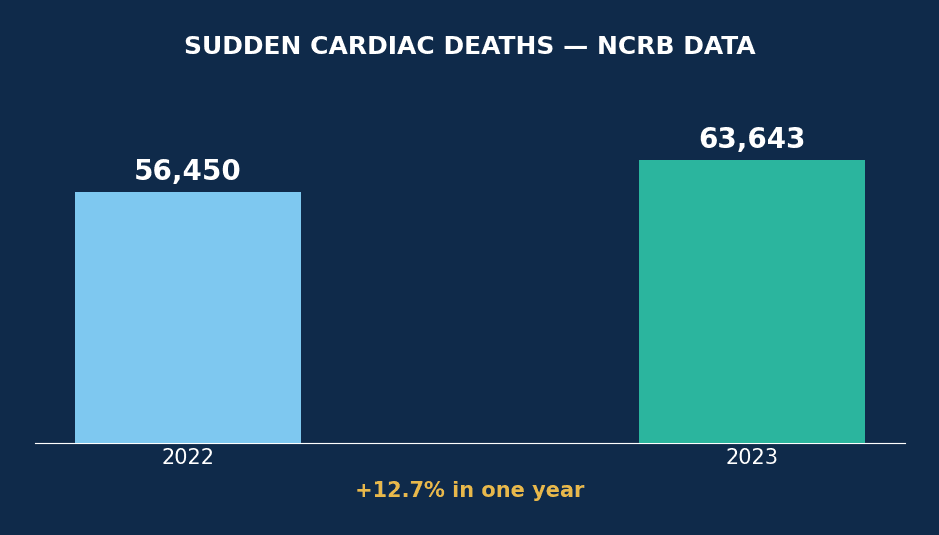
Show Image Sudden cardiac deaths recorded by NCRB rose from 56,450 in 2022 to 63,643 in 2023 — a 12.7% increase in a single year.
Alongside the statistics, there has been a steady stream of news reports of otherwise healthy young people collapsing during workouts, dance events, or even in their sleep — a pattern that has pushed heart health among young Indians into mainstream public conversation.
What a Landmark Autopsy Study Revealed
A recent tertiary-care hospital study reviewed over 2,000 autopsies conducted in a single year and identified a subset of deaths that fit the strict clinical definition of sudden cardiac death — death within one hour of symptom onset if witnessed, or within 24 hours of last being seen normal if unwitnessed.
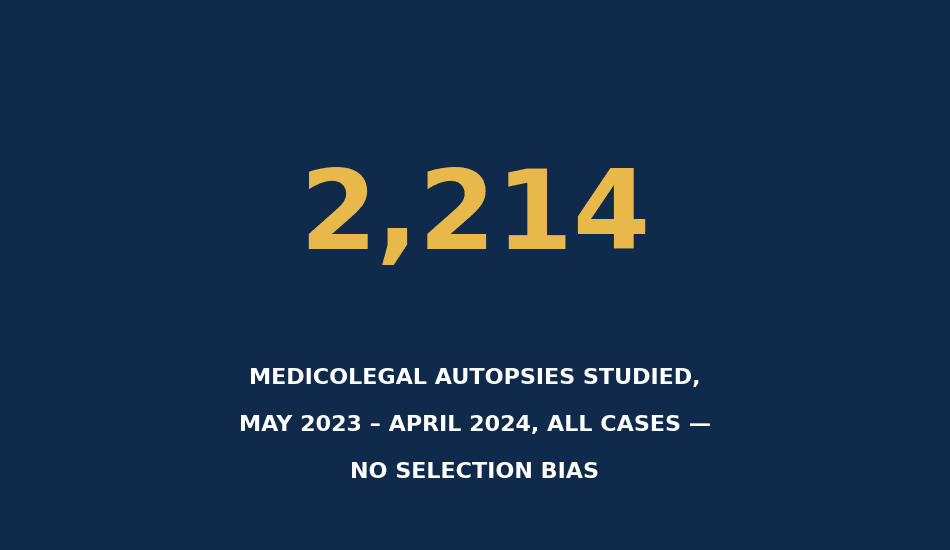
Show Image The study reviewed 2,214 medicolegal autopsies over a full year, covering all cases with no selection bias.
The findings were striking:
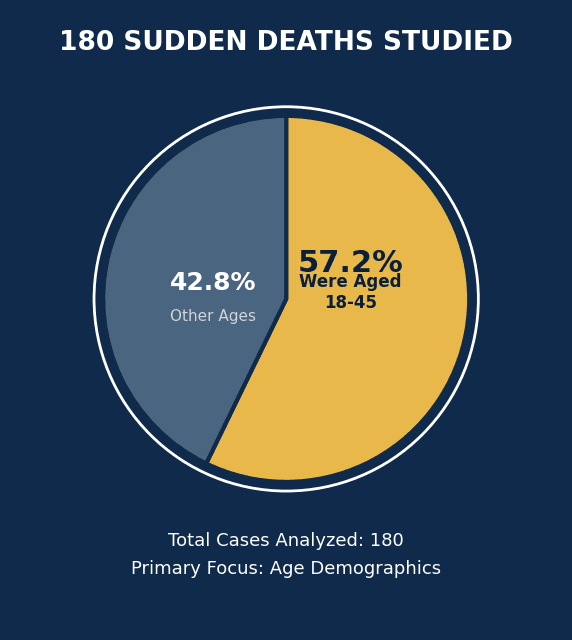
Show Image Out of 180 deaths meeting the clinical definition of sudden cardiac death, 57.2% occurred in people aged 18–45.
- More than half of the sudden deaths occurred in people between 18 and 45 years old.
- Families overwhelmingly described the deceased as “perfectly healthy.”
- Coronary artery disease — blockage in the arteries that supply blood to the heart — accounted for the majority of these deaths.
- On autopsy, arteries showed blockages exceeding 70% in most cases.
- The artery most frequently blocked was the left anterior descending (LAD) artery, often nicknamed the “widow maker” because of how little chance of survival a sudden blockage there leaves.
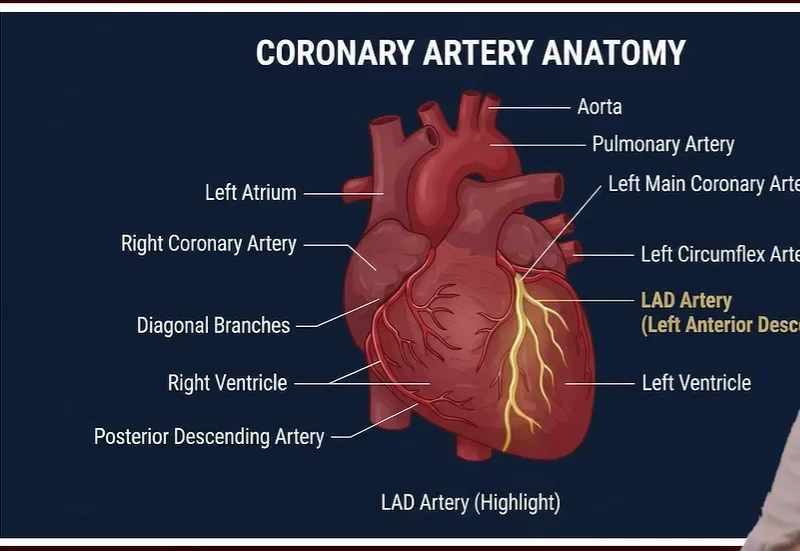
Show Image The left anterior descending (LAD) artery, highlighted here, supplies a large portion of the heart muscle — a severe blockage here is why it’s nicknamed the “widow maker.”
Sudden Death, Not a Sudden Disease
The most important insight from this kind of research is a simple but uncomfortable truth: the death may be sudden, but the disease never is.
A 70% arterial blockage does not form overnight. It builds up gradually, layer by layer, over years — while a person goes to work, goes to the gym, gets married, and lives an apparently normal life, all without a single warning symptom. This is why cardiologists increasingly describe these cases not as “sudden cardiac death” but as a silent disease with a sudden ending.
Why "Being Fit" Doesn't Mean "Having a Healthy Heart"
This is one of the most common misunderstandings about cardiac risk. Physical fitness — visible muscle tone, strength, stamina — reflects the condition of your skeletal muscles. It tells you nothing about what is happening inside your coronary arteries, which cannot be assessed by looking in a mirror.
A person can simultaneously be muscular and lean on the outside, while carrying significant, undetected plaque buildup inside their arteries. The real drivers of arterial blockage are cholesterol levels, blood sugar, blood pressure, chronic inflammation, and genetics — none of which show up in the mirror or on a scale.
Genetic and Biological Risk Factors Specific to South Asians
Research consistently shows that South Asians face a several-times-higher risk of heart disease than other populations, even when smoking rates, weight, and cholesterol levels are similar. Three biological factors help explain why:
1. Elevated Lipoprotein(a), or Lp(a)
Lp(a) is a genetically determined type of cholesterol particle that cannot be lowered through diet, exercise, or most standard medications. It directly promotes blockages in blood vessels. Roughly 25% of South Asians have elevated Lp(a), compared to around 20% of white populations and 10% of East Asian populations. Critically, Lp(a) is not measured in a routine lipid profile — it has to be tested specifically.
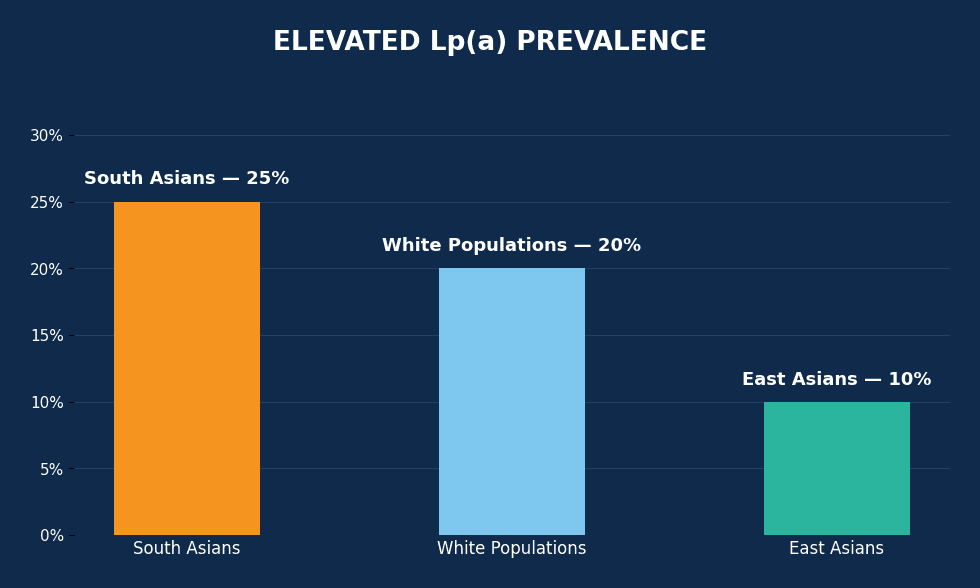
Show Image Elevated Lp(a) is found in roughly 25% of South Asians, compared to 20% of white populations and 10% of East Asians.
2. Denser, Smaller LDL Particles
Studies indicate that Asian Indian men tend to have roughly twice as many small, dense LDL particles compared to other populations, even when their total cholesterol number looks identical. Smaller, denser particles penetrate artery walls more easily, meaning a “normal” cholesterol report does not guarantee healthy arteries. Particle density and count matter as much as the total cholesterol figure.
3. "Thin-Fat" Body Composition
Many Indians carry a body type researchers describe as “thin-fat” — a normal or even low body weight combined with higher visceral fat, lower muscle mass, and greater insulin resistance. This combination raises cardiac risk independently of how a person looks or how much they weigh, meaning a 30-year-old with a normal BMI and a normal-looking report can still be carrying a genetic and metabolic disadvantage.
When It's Not Blocked Arteries: Other Causes in Young People
Not every sudden cardiac death in a young person is caused by coronary artery blockage. Other underlying conditions include:
- Hypertrophic cardiomyopathy — abnormal thickening of the heart muscle, a leading cause of sudden death in young athletes.
- Inherited arrhythmia syndromes — electrical conduction problems in a structurally normal-looking heart, which can cause the heartbeat to suddenly go out of control.
- Myocarditis — inflammation of the heart muscle, often following a viral infection.
All three share one dangerous trait: they frequently produce no symptoms until the first, and sometimes only, episode occurs — often during intense physical exertion.
What Actually Triggers a Cardiac Event
A government-backed multi-state study set out to determine why sudden deaths rose after 2021, specifically examining any link to COVID-19 vaccination.
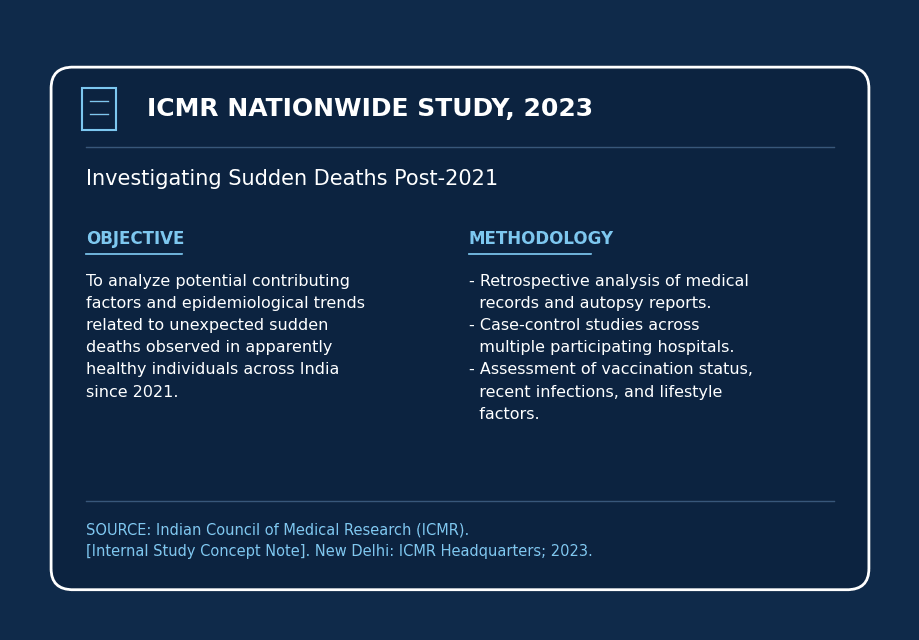
Show Image A 2023 nationwide study analyzed medical records, autopsy reports, and case-control data to investigate the rise in sudden deaths among apparently healthy individuals since 2021.
The study found no association between vaccination and sudden death; vaccinated individuals actually showed a somewhat lower risk. However, it did identify four factors with a clear connection to sudden death:
- Prior hospitalization for COVID-19
- Intense physical exertion within 48 hours of death
- A family history of sudden cardiac death
- Tobacco or alcohol use
The 48-hour intense exertion link deserves an important clarification: exercise itself is not dangerous — it is one of the most protective habits for heart health. The risk arises when someone with a pre-existing, undetected blockage or electrical abnormality suddenly performs an unaccustomed burst of intense activity, which can act as the trigger for an already-present but silent condition. This is a common pattern: a largely sedentary person, with no recent blood work, pushes hard in a single gym session, marathon, or dance event — activity their body isn’t conditioned for — and that single day becomes the tipping point.
Supplements, Steroids, and Image Pressure
A 2025 study published in a cardiology journal raised concerns about rising cardiac events among Indian actors, models, and fitness-focused young adults, tracing it to three contributing factors:
- Anabolic steroids, used to build muscle quickly, which can directly enlarge the heart, alter cholesterol, and raise clotting risk — frequently used without medical supervision.
- Unregulated stimulant-based supplements, such as certain pre-workout formulas and fat burners containing high caffeine or other stimulant compounds, which spike heart rate and blood pressure and pose added risk to anyone with an existing (even undiagnosed) heart weakness.
- Body image pressure, with research suggesting that 30–40% of young Indians report body dissatisfaction driven by idealized, media-influenced fitness standards — a pressure that can push people toward these substances in the first place.
Not all supplements carry this risk — well-studied options like plain protein powder or creatine are generally considered safe for healthy individuals. The concern is specifically around unregulated stimulants and performance-enhancing substances used without medical guidance.
Warning Signs You Should Never Ignore
- Tightness or heaviness in the chest, jaw, or left arm
- Sudden breathlessness that wasn’t there before
- Dizziness or fainting during physical exertion
These are not signs of acidity or general fatigue — they can be your heart’s first, and sometimes only, warning.
Who Should Get Screened, and When
- Start basic screening at 25–30, not 45. An annual blood pressure check, fasting blood sugar test, and lipid profile are simple, inexpensive, and widely available.
- Get Lp(a) tested at least once in your lifetime, since it is a genetic marker not included in routine testing and gives a far more complete risk picture than a standard cholesterol panel.
- Family history is a major red flag. If a close relative has had a heart attack or sudden cardiac death at a young age, screening — including an ECG and echocardiography — is strongly advised.
- Returning to exercise after a long gap or being over 35 with any risk factor is a reason to consult a doctor before starting an intense fitness routine, and to build up gradually rather than starting at full intensity.
How ConsultGrab Can Help
Knowing you need a cardiac risk assessment is only the first step — knowing where to go and which specialist to trust is often the harder part. ConsultGrab works as a bridge between patients and verified specialists across Delhi’s trusted hospital network, helping you get the right screening and the right cardiology consultation without the confusion of navigating it alone. Our care team offers free guidance, appointment assistance, and transparent cost comparison, so a decision as important as understanding your heart health doesn’t have to be a stressful one. If you or a family member falls into a higher-risk category — due to family history, age, or lifestyle factors — reach out for support in connecting with the right specialist for a thorough evaluation.
Frequently Asked Questions (FAQs)
A combination of genetic factors (elevated Lp(a), denser LDL particles), higher visceral fat and insulin resistance even at normal weight, and undiagnosed coronary blockages that build silently over years without symptoms.
Yes. Physical fitness reflects skeletal muscle condition, not the state of the coronary arteries. Arterial blockages can develop silently in people who appear outwardly healthy and active.
Basic screening — blood pressure, fasting blood sugar, and a lipid profile — should ideally begin between ages 25 and 30, rather than waiting until 45.
Lp(a), or lipoprotein(a), is a genetically determined cholesterol particle linked to arterial blockage. It cannot be changed through diet or exercise and is not part of a standard cholesterol test, yet it's significantly more common in South Asians than in other populations.
Chest or jaw tightness, pain radiating to the left arm, sudden unexplained breathlessness, and dizziness or fainting during physical activity all warrant immediate medical attention.
This article is intended for general awareness and does not replace professional medical advice. If you are experiencing chest pain, breathlessness, or related symptoms, please consult a qualified doctor immediately.
Sources
This article is based on findings from a scientific research study and related media reporting.



2 Comments
Why 60 Feels Old in India But Not in Japan? The Actual Data.
[…] Why Do Indians Get Heart Attacks 10 Years Earlier Than the West? […]
Anemia in CKD: What the New 2026 Guidelines Say
[…] Why Do Indians Get Heart Attacks 10 Years Earlier Than the West? […]