

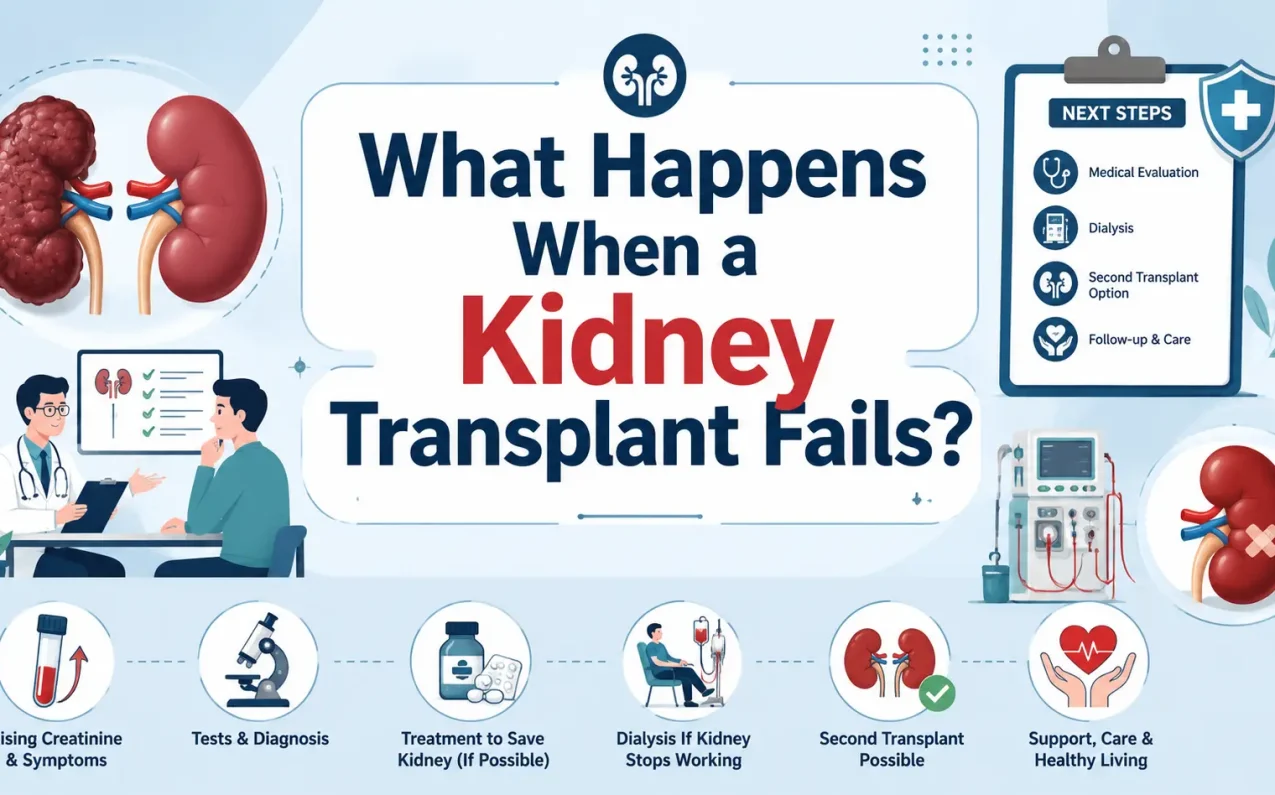
A kidney transplant failure means the transplanted kidney (graft) is no longer able to perform its normal function effectively. It does not mean the surgery has failed or that treatment options are over. Depending on the cause and the patient’s condition, doctors may try to save the kidney, restart dialysis, or plan a second kidney transplant. Early diagnosis and regular follow-up play a crucial role in deciding the next steps.
What Happens When a Kidney Transplant Fails?
Table of Contents
ToggleA kidney transplant can significantly improve a person’s quality of life, but like any medical treatment, it does not always last forever. Over time, the transplanted kidney may gradually lose its ability to function, a condition known as kidney transplant failure.
Many people assume that transplant failure means life-threatening complications or the end of treatment. In reality, this is a common misconception. A failed kidney transplant is considered a medical setback, not the end of available treatment. Many patients continue living fulfilling lives with dialysis or by undergoing a second kidney transplant.
A simple way to understand this is to imagine replacing an old car with a well-maintained second-hand vehicle. It may run smoothly for years, but eventually the engine may wear out. That doesn’t mean driving is no longer possible—you may repair the engine, replace it, or buy another car. Similarly, a transplanted kidney does not come with a lifetime guarantee and may gradually weaken over time.
Why Does a Kidney Transplant Fail?
The reasons behind kidney transplant failure vary from one patient to another. Generally, doctors classify transplant failure into two stages:
Early Kidney Transplant Failure
This usually happens within the first few days or months after surgery and is relatively uncommon. Possible reasons include:
- Severe rejection by the immune system
- Blood clot formation
- Reduced blood supply to the transplanted kidney
- Surgical complications
- Serious infections
If these problems are identified early, timely treatment may help save the transplanted kidney.
Late Kidney Transplant Failure
Late failure is more common and usually develops gradually over several months or years. Possible causes include:
- Chronic rejection
- High blood pressure
- Diabetes
- Side effects of medicines
- Repeated infections
- Return of the original kidney disease
- Natural ageing of the transplanted kidney
Since this process develops slowly, regular medical follow-ups become extremely important.
Signs That a Transplanted Kidney May Be Failing
Not every patient experiences noticeable symptoms in the beginning. In many cases, routine blood tests detect changes before any physical symptoms appear.
Some possible warning signs include:
- Rising creatinine levels
- Reduced urine output
- Swelling in the legs or face
- High blood pressure
- Fatigue and weakness
- Nausea
- Loss of appetite
- Shortness of breath
- Protein in the urine
Even if you feel completely normal, regular blood tests should never be skipped after a kidney transplant.
How Do Doctors Confirm Kidney Transplant Failure?
Doctors do not rely on a single blood test to confirm transplant failure. Instead, they assess the overall condition using multiple investigations, including:
- Blood tests such as creatinine, urea, electrolytes, and eGFR
- Urine tests to check for protein, blood, or infection
- Ultrasound to evaluate kidney size and blood flow
- Kidney biopsy, when required, to identify rejection, infection, medicine-related damage, or other underlying problems
The treatment plan depends on the findings of these evaluations.
Can a Failing Kidney Be Saved?
Not every failing transplanted kidney is permanently damaged.
Whether the kidney can be saved depends on factors such as:
- How early the problem is detected
- The underlying cause of failure
- The extent of kidney damage
- Whether medicines have been taken regularly
In some cases, adjusting medications or treating rejection may improve kidney function. In others, the damage may be irreversible.
What Happens If the Kidney Completely Stops Working?
If the transplanted kidney can no longer function, doctors usually consider two treatment options:
- Restarting dialysis, either hemodialysis or peritoneal dialysis, to remove waste products from the body.
- Planning a second kidney transplant, if the patient is medically suitable and a donor is available.
- READ MORE: How Long Do Kidney Transplant Patients Live After Surgery?
- It is also important to understand that a failed transplanted kidney does not always need to be removed. Removal is generally considered only in specific situations such as severe infection, continuous pain, repeated bleeding, uncontrolled rejection, or other serious complications.
Similarly, transplant medicines should never be stopped without medical advice. Depending on the patient’s condition, some medicines may be reduced while others mayneed to continue.
Reducing the Risk of Kidney Transplant Failure
Although transplant failure cannot always be prevented, healthy habits can help reduce the risk.
Some important steps include:
- Taking medicines exactly as prescribed
- Attending every follow-up appointment
- Getting regular blood tests
- Managing blood pressure and diabetes
- Preventing infections
- Following a healthy diet
- Avoiding smoking and alcohol
- Reporting any unusual symptoms promptly
How ConsultGrab Supports Kidney Care Patients
Managing a kidney transplant journey involves much more than surgery alone. Patients often need guidance while understanding treatment options, choosing experienced specialists, scheduling consultations, and planning future care.
At ConsultGrab, we help patients connect with trusted medical specialists and verified hospital networks, making it easier to access the right medical guidance. Our care team supports patients with appointment assistance, treatment coordination, and transparent healthcare information so they can make informed decisions with confidence.
Conclusion
A kidney transplant failure should not be viewed as the end of treatment. Modern medical care offers multiple pathways, including medication adjustments, dialysis, and even a second kidney transplant when appropriate. The key is early detection, regular follow-up, and timely medical guidance. With the right support and expert care, many patients continue to lead active and meaningful lives even after transplant failure.
Frequently Asked Questions (FAQs)
It means the transplanted kidney is no longer functioning well enough to meet the body's needs and may require additional treatment.
Yes. Depending on the cause, doctors may adjust medicines, treat rejection, restart dialysis, or recommend a second transplant.
Yes. Many patients are medically suitable for a second kidney transplant after proper evaluation.
While it cannot always be prevented, regular follow-ups, taking medicines correctly, controlling blood pressure and diabetes, and monitoring kidney function can help reduce the risk.
No. It is usually removed only if there are serious complications such as infection, pain, bleeding, or uncontrolled rejection.