


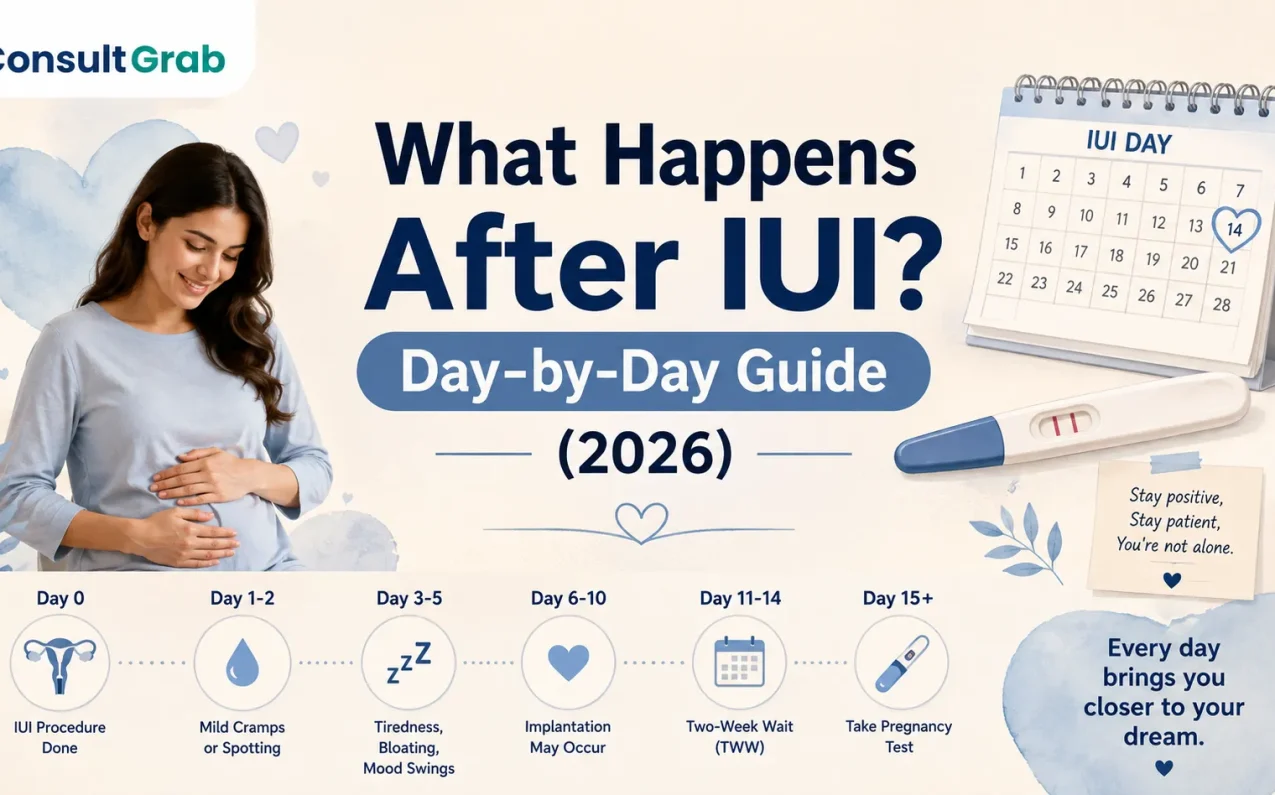
After an IUI procedure, most women can go back to their normal routine within a few hours. Over the next two weeks, your body goes through implantation and early hormonal changes — this is often called the “two-week wait.” Some mild cramping or spotting is common, but the only way to confirm pregnancy is a blood test around day 14.
What Happens Right After IUI?
Table of Contents
ToggleThe IUI procedure itself takes just 10–15 minutes and isn’t painful for most people. You may feel a little cramping, similar to period cramps, but it usually settles within an hour.
- You can rest for 10–15 minutes at the clinic, then go home.
- Most people return to normal activities — including work — the same day.
- Some clinics prescribe progesterone support to help the uterine lining.
If you’re still deciding on treatment, you can check IUI cost in India or IUI cost in Delhi to plan your budget before starting.
Day-by-Day Timeline After IUI
Day 0 (Procedure Day): The insemination happens. Mild cramping is common. Rest for a bit, then resume light activities.
Day 1–3: Some spotting or cramping may continue. This is usually normal and not a cause for worry.
Day 6–8: If pregnancy occurs, implantation typically happens around this time. Light spotting or cramping (“implantation bleeding”) can happen here.
Day 9–13: Early pregnancy hormones (hCG) start building up, but it’s still too early to test.
Day 14: This is when most clinics recommend a beta-hCG blood test to confirm pregnancy. Testing earlier can give a false negative.
Common Symptoms After IUI — What's Normal
- Mild cramping: Common in the first few days, usually harmless.
- Light spotting: Can happen after the procedure or around implantation (day 6–8).
- Bloating: Common, especially if you’re on hormone medication.
- No symptoms at all: Also completely normal — the absence of symptoms doesn’t mean it hasn’t worked.
If you notice heavy bleeding, severe pain, fever, or unusual discharge, contact your doctor right away instead of waiting it out.
Do's and Don'ts After IUI
| Do | Don't |
|---|---|
| Rest for the first few hours | Avoid strenuous exercise or heavy lifting for a few days |
| Stay hydrated and eat a balanced diet | Don't panic over normal foods like ice cream or mango — there's no proven link to IUI failure |
| Take prescribed medications on time | Don't skip your progesterone support if prescribed |
| Gentle daily activities are fine | Avoid hot tubs or saunas during the two-week wait |
| Light travel is generally fine | Avoid long-haul or bumpy travel right after the procedure if you can |
About sex after IUI: Most doctors say light intimacy is fine a day or two after the procedure, but there’s no solid evidence that having sex after IUI actually improves your chances. If you’re unsure, it’s best to ask your own doctor, since advice can vary case to case.
When to Take a Pregnancy Test After IUI
Testing too early is one of the most common mistakes. Here’s why waiting matters:
- Before Day 10: Too early — hCG levels aren’t high enough yet, even if implantation happened.
- Day 12–13: Some home tests may show a faint line, but false negatives are common.
- Day 14 onward: The most reliable time for a home urine test or a clinic blood test (beta-hCG).
A blood test at the clinic is more accurate than a home urine test, especially this early.
How to Improve Your Chances After IUI
- Follow your medication schedule exactly as prescribed.
- Attend all your follow-up scans and tests.
- Manage stress where you can — it won’t guarantee success, but it helps you get through the wait.
- Avoid smoking and alcohol during this period.
- Don’t hesitate to ask your doctor about your specific case — general tips don’t replace personalized advice.
Doctor's Advice
Dr. Nidhi Sharma — MBBS, DGO, DNB | Leading IVF & Fertility Specialist | 20+ Years of Experience
The two-week wait after IUI is emotionally the hardest part for most couples. My advice is simple — don’t test too early, and don’t read too much into every cramp or twinge. Some people feel symptoms, some don’t, and neither means anything on its own. Stick to your medication schedule, keep your follow-up appointments, and wait for the blood test on day 14. That’s the only reliable way to know.
Frequently Asked Questions (FAQs)
The procedure itself takes minutes, with mild cramping common on day 0. Implantation, if it happens, usually occurs around day 6–8. A pregnancy blood test is recommended around day 14.
Wait until day 14 for the most reliable result. Testing earlier increases the chance of a false negative.
Mild cramping is common and doesn't confirm or rule out pregnancy — it can happen with or without a successful cycle.
Light travel is usually fine, but avoid long or bumpy trips right after the procedure if possible.
There's no strong evidence either way. Light intimacy is generally considered safe a day or two after the procedure — check with your doctor if you're unsure.
Most people don't need strict bed rest — resting for the first few hours is enough. Avoid heavy exercise for a few days.
Implantation typically happens 6–8 days after the procedure, if pregnancy occurs.
Most doctors recommend trying 2–3 cycles, since the success rate per cycle is around 15–20%.



3 Comments
Is IUI Painful? What to Really Expect — Your Complete Answer
[…] Read More: What Happens After IUI? Day-by-Day Guide (2026). […]
What Is IUI? A Simple Explanation of the Entire IUI Process - Consult Grab
[…] What Happens After IUI? Day-by-Day Guide — for a full breakdown of what to expect during those 15 days. […]
Why Does IUI Fail? Common Reasons Explained (2026)
[…] More: What Happens After IUI? Day-by-Day Guide — for what to expect during this recovery and medication […]