


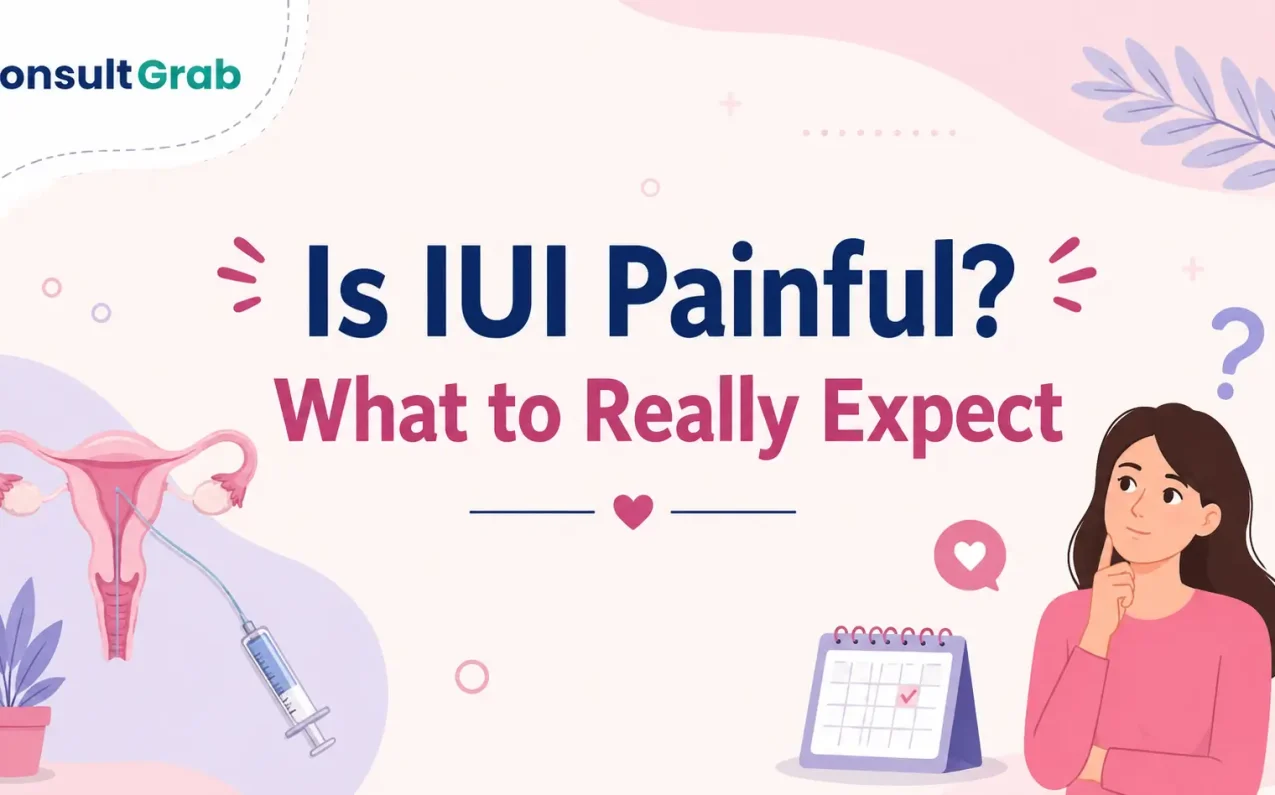
No, IUI is not painful for most women. It can cause mild discomfort — similar to a routine ultrasound scan — but it isn’t something most people would describe as painful.
Is IUI Painful? The Direct Answer
Table of Contents
ToggleFor most women, IUI is not painful. What some women feel instead is mild discomfort — a brief cramping or pinching sensation as the catheter passes through the cervix. This typically lasts only a few seconds to a couple of minutes and settles quickly once the procedure is done.
Whether you feel anything at all often comes down to your own comfort level and sensitivity, rather than the procedure itself being inherently painful.
What Does IUI Discomfort Actually Feel Like?
Women who do feel something during IUI usually describe it as:
- A brief cramp, similar to a mild period cramp
- A pinching feeling as the catheter passes through the cervix
- Mild pressure, but nothing described as sharp or lasting pain
This discomfort is very similar to what many women feel during a routine transvaginal ultrasound (TVS) — a scan most people tolerate easily without needing any pain relief.
Who Is More Likely to Feel Discomfort During IUI?
Not everyone experiences the procedure the same way. A few factors can make a difference:
- Sensitivity to internal exams: Women who find pelvic exams or scans uncomfortable in general may feel more discomfort during IUI too.
- Anxiety about the procedure: Feeling anxious or tense can make the cervix tighten slightly, which can make catheter placement feel a bit more uncomfortable than it would otherwise.
- First-time procedures: Not knowing what to expect can sometimes make the experience feel more intense than it physically is.
None of these factors mean the procedure itself becomes painful — they simply affect how much discomfort a person notices.
Pain Management Options During IUI
Clinics typically offer a few ways to make the process more comfortable, especially for women who feel anxious or sensitive:
- Mild pain relief before the procedure: A pain-relief medication given about 10–15 minutes beforehand can reduce cramping and help the cervix relax, making catheter placement smoother.
- A calm, unhurried approach: Simply knowing what to expect and going in with a relaxed mindset can reduce how much discomfort is felt.
- Anesthesia, as a last resort: For a small number of women — roughly 1 in 10 — who are extremely anxious or sensitive to any discomfort, the procedure can be done under light anesthesia. This isn’t the norm; the vast majority of women complete IUI without needing it.
If you’re planning your treatment and want to understand the full picture of what’s involved, it also helps to know what it will cost.
Read More: IUI Treatment Cost in India (2026) — Complete Price Breakdown.
Does Discomfort During IUI Affect Its Success?
No — mild discomfort during the procedure has no bearing on whether IUI works. When performed correctly, especially for couples dealing with mild male-factor issues or unexplained infertility, IUI can make a real difference in the journey toward pregnancy. The procedure’s comfort level and its effectiveness are two separate things entirely.
Once the procedure is done, many women want to know what comes next — what’s normal to feel, and when to test.
Read More: What Happens After IUI? Day-by-Day Guide (2026).
Is IUI More Painful Than IVF, or an HSG Test?
It’s natural to compare IUI with other fertility procedures you may have heard of. Here’s how it stacks up:
IUI vs. IVF: IUI is significantly less painful than IVF. IUI involves a quick, non-surgical insemination that takes minutes. IVF, on the other hand, involves daily hormone injections and a minor surgical procedure (egg retrieval) done under sedation — which naturally comes with more physical discomfort and recovery time. If pain is a major concern for you, IUI is the gentler option of the two.
IUI vs. HSG (Hysterosalpingogram): An HSG test — used to check if the fallopian tubes are open — is generally considered more uncomfortable than IUI. It involves dye being pushed through the uterus and tubes, which can cause stronger cramping than an IUI procedure. If you’ve had an HSG before and tolerated it, IUI is very likely to feel easier in comparison.
Getting the Right Guidance for Your IUI Journey
Every fertility journey looks a little different, and it helps to have someone walk you through it — from understanding the procedure itself to finding the right specialist and hospital network. That’s where a platform like ConsultGrab can help: connecting you with verified fertility specialists, explaining your treatment options clearly, and offering support and transparent guidance at every step, so you never have to navigate these decisions alone.
Frequently Asked Questions (FAQs)
No, IUI is not painful for most women. It may cause mild, brief discomfort, but it isn't a painful procedure.
Most women describe it as a brief cramp or pinching sensation, similar to what's felt during a routine ultrasound scan.
Most women don't. Only a small percentage — around 1 in 10 — who are highly anxious or sensitive may need light anesthesia. It's not the standard approach.
Sensitivity to internal exams, anxiety about the procedure, and going in without knowing what to expect can all make the experience feel more uncomfortable than it physically is.
Yes, some clinics offer mild pain-relief medication about 10–15 minutes before the procedure to ease cramping and help with catheter placement.
No. How much discomfort you feel has no connection to whether the procedure is successful.
For most women, it's uncomfortable at most, not painful — a brief cramping or pinching sensation is the most commonly reported experience.
IVF is generally more physically demanding, involving daily injections and a minor surgical egg-retrieval step. IUI is a quicker, non-surgical procedure with far less discomfort.
No, most women find IUI less uncomfortable than an HSG test, since HSG involves dye being pushed through the uterus and tubes, which tends to cause stronger cramping.



2 Comments
What Is IUI? A Simple Explanation of the Entire IUI Process - Consult Grab
[…] Is IUI Painful? What to Really Expect — many clinics use soft, fine instruments specifically to keep this part of the process as comfortable as possible. […]
Why Does IUI Fail? Common Reasons Explained (2026)
[…] More: Is IUI Painful? What to Really Expect — for more on what the actual procedure day […]