

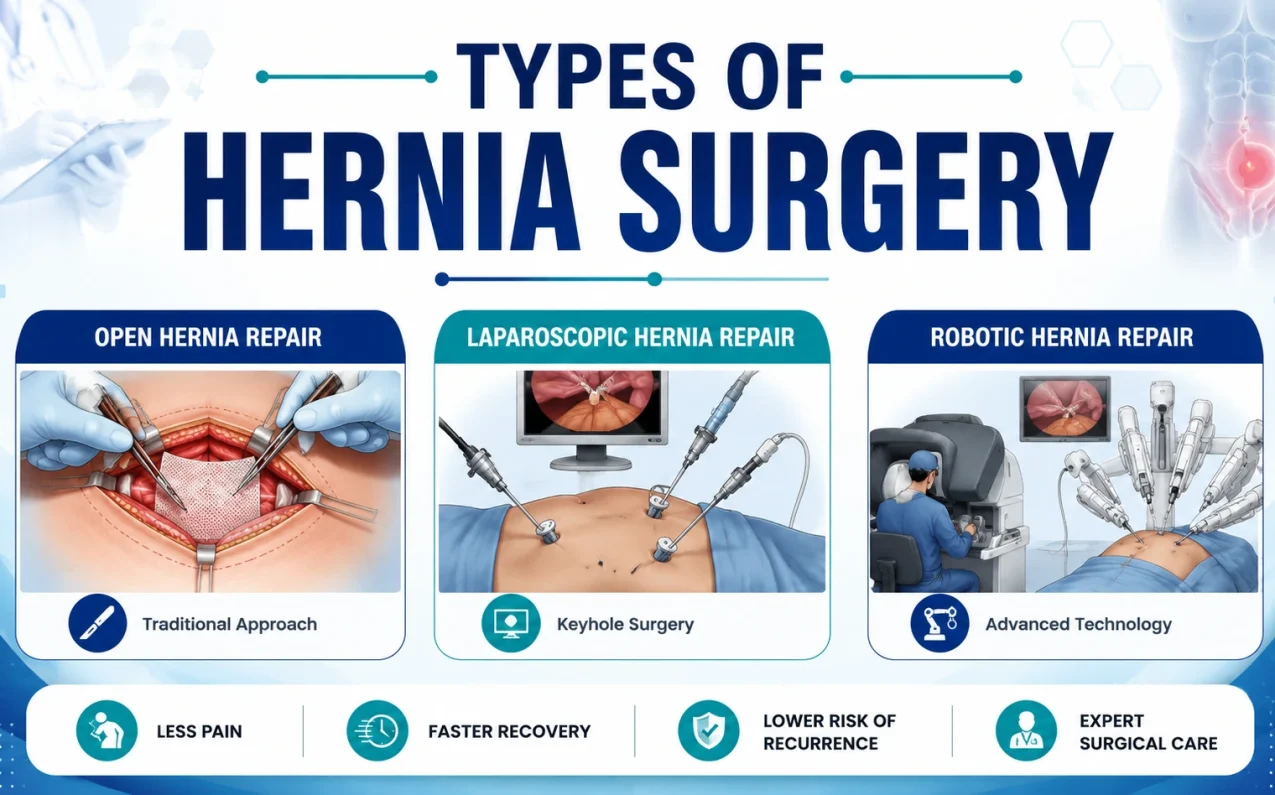
Hernia surgery is one of the most commonly performed surgical procedures worldwide. When a hernia develops, a weakness or gap in the abdominal wall allows internal tissues, such as fat or a portion of the intestine, to push outward and create a visible bulge. While some hernias may not cause symptoms initially, many gradually worsen over time and eventually require surgical treatment.
Understanding the different types of hernia surgery can help patients make informed decisions and discuss the most suitable treatment options with their healthcare team. Consulting experienced specialists is important for choosing the right surgical approach and ensuring safe recovery. Patients looking for expert treatment guidance can explore the Best Doctors for Hernia Surgery in Delhi to learn about advanced treatment options and specialist care.
What Is a Hernia?
Table of Contents
ToggleA hernia occurs when tissue from inside the abdomen protrudes through a weakened area of muscle or connective tissue. Depending on where it develops, a hernia may appear as a lump or swelling and may cause discomfort, pressure, or pain.
Some common abdominal wall hernias include:
- Inguinal Hernia: Occurs in the groin area.
- Umbilical Hernia: Develops around the belly button.
- Epigastric Hernia: Appears in the upper abdominal region between the chest and the navel.
- Incisional Hernia: Forms at the site of a previous surgical incision.
Hernias can affect both men and women and may occur at any age.
When Is Hernia Surgery Needed?
Not every hernia requires immediate surgery. Some patients may have small hernias that cause little or no discomfort. However, most hernias do not heal on their own and often enlarge over time.
Surgery may be recommended when:
- The hernia causes pain or discomfort.
- The bulge becomes larger.
- Daily activities are affected.
- There is a risk of complications.
- The hernia becomes difficult to push back into place.
Because each patient’s condition is different, the decision to proceed with surgery should always be made after a detailed medical evaluation.
What Is Hernia Repair Surgery?
Hernia repair surgery is a procedure designed to return the protruding tissue to its normal position and strengthen the weakened abdominal wall.
Unlike some medical conditions that can be managed with medicines, hernias are generally treated through surgery. There are no medications or injections that permanently repair the defect in the abdominal wall.
Modern hernia surgery focuses on repairing the weakness while minimizing pain, reducing recovery time, and lowering the chance of recurrence. Proper postoperative care, including healthy eating habits and lifestyle adjustments, can also support healing and recovery after surgery. Patients can explore these inguinal hernia treatment without surgery to better understand which foods may support recovery and digestive health after hernia treatment.
Main Types of Hernia Surgery
Today, surgeons use three primary approaches to repair hernias.
1. Open Hernia Repair Surgery
Open surgery is the traditional method of hernia repair.
During the procedure:
- A single incision is made over the hernia site.
- The protruding tissue is returned to its proper position.
- The weakened area is repaired and reinforced.
- Surgical mesh is often used to strengthen the abdominal wall.
Advantages of Open Hernia Repair
- Suitable for many types of hernias.
- Effective for both simple and complex cases.
- Widely available across healthcare centers.
- Can sometimes be performed using local or regional anesthesia.
Recovery
Recovery varies depending on the size and complexity of the hernia. Most patients can gradually return to normal activities under medical guidance. Understanding the different treatment approaches and recognizing early warning signs can also support a smoother recovery process. Patients can learn more about Types of Hernia Surgery & When to Seek Help to better understand symptoms, treatment options, and when medical evaluation may be necessary.
2. Laparoscopic Hernia Repair Surgery
Laparoscopic surgery, often called “keyhole surgery,” is a minimally invasive technique.
Instead of one large incision, the surgeon makes several small incisions and inserts:
- A thin camera (laparoscope)
- Specialized surgical instruments
The camera projects images onto a monitor, allowing the surgeon to repair the hernia from inside the abdomen.
Advantages of Laparoscopic Hernia Repair
- Smaller incisions
- Less postoperative pain
- Reduced risk of wound infection
- Faster return to daily activities
- Minimal scarring
- Earlier return to work for many patients
Studies and clinical experience have made laparoscopic repair one of the most popular approaches for suitable candidates.
3. Robotic Hernia Repair Surgery
Robotic hernia repair is an advanced form of minimally invasive surgery.
This technique uses robotic-assisted instruments controlled by the surgeon through a specialized console. The robotic system provides enhanced precision and visualization during the procedure.
Potential Benefits
- High surgical precision
- Small incisions
- Reduced postoperative discomfort
- Faster recovery compared with many traditional approaches
- Improved access to difficult anatomical areas
Robotic surgery may not be necessary for every patient, and suitability depends on factors such as hernia type, size, medical history, and surgeon expertise.
The Role of Surgical Mesh
One of the most important advancements in hernia surgery has been the use of surgical mesh.
Before mesh repair became common, surgeons often closed the defect by stitching tissues together under tension. This approach was associated with:
- Higher recurrence rates
- Increased postoperative pain
Modern mesh repair strengthens the weakened area without placing excessive tension on surrounding tissues.
Benefits of Mesh Repair
- Lower recurrence rates
- Better long-term durability
- Reduced strain on surrounding muscles
- Less postoperative discomfort in many cases
Today, mesh reinforcement is frequently used in both open and minimally invasive hernia repairs
How Do Surgeons Decide Which Surgery Is Best?
There is no single “best” hernia surgery for everyone.
Several factors influence the choice of procedure:
- Age of the patient
- Overall health and fitness
- Type of hernia
- Size of the hernia
- Previous surgeries
- Risk factors and medical history
- Available hospital infrastructure
- Surgeon experience and expertise
A personalized treatment plan helps ensure the safest and most effective outcome.
What Happens During Recovery?
Recovery time depends on:
- The type of surgery performed
- The size and complexity of the hernia
- The patient’s overall health
In many cases:
- Patients can walk shortly after surgery.
- Most procedures are performed as day-care surgeries.
- Light activities can often be resumed within a short period.
- Heavy lifting may need to be avoided until cleared by the surgeon.
Following postoperative instructions carefully is essential for a smooth recovery.
Possible Risks and Complications
Like all surgical procedures, hernia surgery carries some risks, although serious complications are uncommon.
Potential complications may include:
- Infection
- Fluid collection (seroma)
- Blood collection (hematoma)
- Temporary urinary difficulties
- Recurrence of the hernia
- Chronic postoperative pain
- Mesh-related complications in rare cases
Prompt medical attention should be sought if symptoms such as fever, severe pain, increasing swelling, wound discharge, or difficulty passing stool develop after surgery.
Recent Advances in Hernia Surgery
Recent developments continue to improve hernia treatment outcomes. Modern surgical techniques focus on:
- Minimally invasive approaches
- Enhanced mesh technologies
- Reduced postoperative pain
- Faster recovery pathways
- Improved long-term durability
As surgical technology evolves, patients now have access to safer and more effective treatment options than ever before.
How ConsultGrab Can Help
Navigating hernia treatment options can sometimes feel overwhelming. Understanding whether surgery is needed, which surgical approach may be suitable, and where to seek treatment often requires expert guidance.
At ConsultGrab, we help patients connect with experienced specialists and trusted hospitals for surgical evaluation and treatment planning. Our care team assists patients by:
- Understanding their medical condition in detail
- Explaining available treatment options
- Connecting them with relevant specialists
- Supporting appointment scheduling
- Providing treatment and hospital guidance
Our goal is to help patients make informed healthcare decisions with confidence and clarity.
Conclusion
Hernia surgery remains the most effective treatment for repairing a hernia and preventing future complications. Modern treatment options—including open, laparoscopic, and robotic surgery—offer excellent outcomes when selected appropriately for the patient’s condition.
Since every hernia is unique, an individualized evaluation is essential to determine the most suitable treatment approach. Seeking timely medical advice can help prevent complications and support a smoother recovery journey.
Frequently Asked Questions (FAQs)
The main types of hernia surgery are open hernia repair, laparoscopic hernia repair, and robotic hernia repair. Open surgery uses a single incision, while laparoscopic and robotic techniques use small incisions and specialized instruments. The best option depends on the hernia type, size, patient health, and surgeon expertise.
Laparoscopic hernia surgery often provides benefits such as smaller incisions, less postoperative pain, reduced infection risk, and faster recovery. However, open hernia repair may be more suitable for certain patients or complex hernias. A specialist determines the most appropriate surgical approach after evaluating the individual case.
Surgical mesh is commonly used to reinforce the weakened abdominal wall during hernia repair. Mesh provides additional support, reduces tension on surrounding tissues, and helps lower the risk of hernia recurrence. It is frequently used in both open and minimally invasive hernia surgery techniques.
Recovery after hernia surgery varies depending on the type of hernia, surgical technique, and overall health of the patient. Many people can resume light activities within a few days, while strenuous exercise and heavy lifting may require several weeks of recovery under medical guidance.
Hernias generally do not heal on their own and cannot be permanently repaired with medications or injections. While some small or asymptomatic hernias may be monitored, surgery remains the most effective treatment to repair the abdominal wall defect and prevent potential complications in the future.