

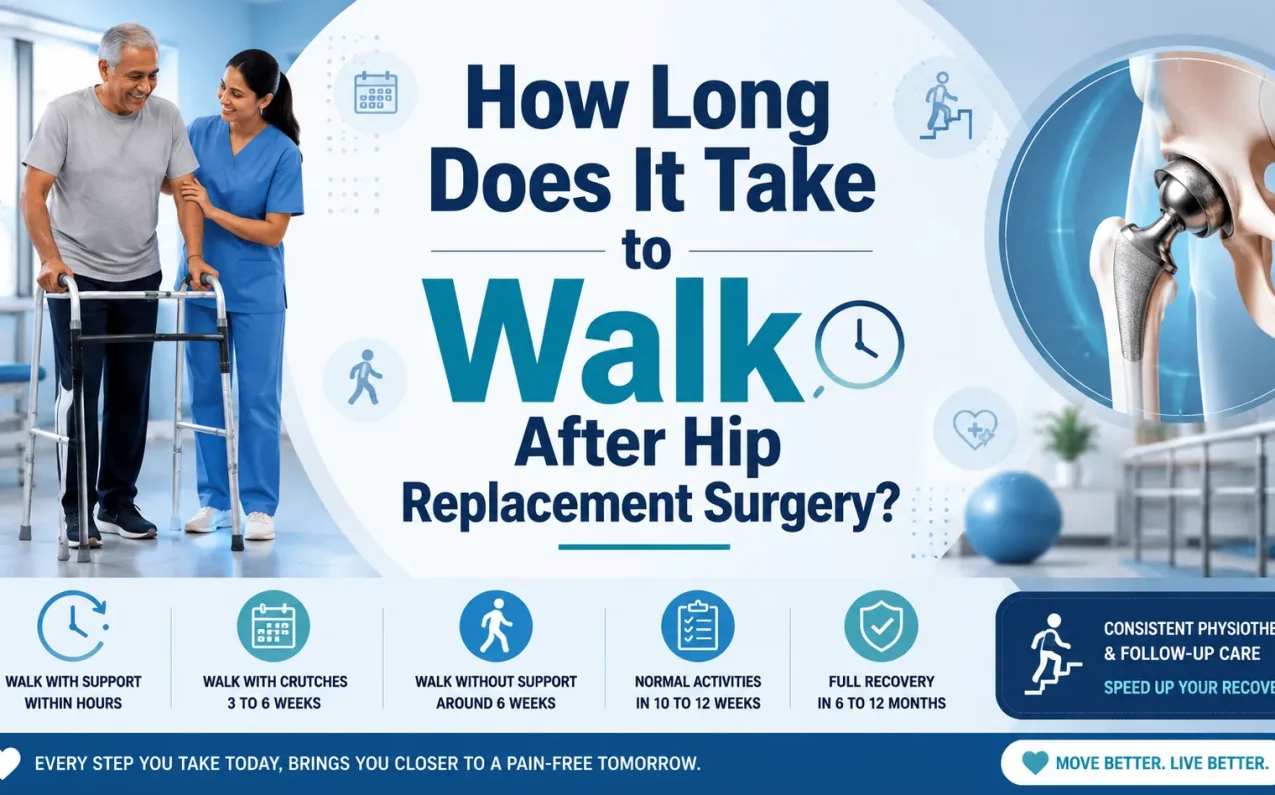
Hip replacement surgery is often life-changing for people struggling with long-term hip pain, stiffness, or limited mobility. One of the most common and important questions patients ask before surgery is:
“How long will it take for me to walk again after hip replacement surgery?”
The answer is not the same for everyone. Walking after hip replacement happens in stages, and understanding these stages helps patients recover with confidence rather than confusion or unrealistic expectations.
When Can You Walk After Hip Replacement Surgery?
Table of Contents
ToggleIn most cases, patients are encouraged to stand and start walking within a few hours after surgery, usually with the help of a walker or crutches. Early movement is considered a critical part of modern hip replacement recovery.
Doctors promote early walking because it:
- Improves blood circulation
- Reduces joint stiffness
- Prevents blood clots
- Boosts confidence and mental recovery
However, this early walking is supported walking, not normal walking.
Why Some Patients Take Longer to Start Walking
Some patients may find it harder to get up initially if:
- They are overweight
- They have been physically inactive for a long time
- Their muscles were weak before surgery
- They have other medical conditions
This does not mean the surgery failed. It simply means the body needs more time to adapt.
Walking Early vs Walking Normally: A Key Difference
It is very important to understand that walking soon after surgery does not mean full recovery.
- Early walking: Standing and taking steps with support
- Normal walking: Walking without support, without limping, and with balanced movement
Normal walking depends on:
- Muscle strength
- Balance and coordination
- Joint flexibility
- Correct walking habits
As strength and balance improve, patients often ask about daily activities like going up and down stairs after hip replacement, which becomes safer with proper technique and rehabilitation.
Understanding Hip Replacement Surgery Types
Recovery timelines also depend on the type of hip replacement surgery performed.
Partial Hip Replacement
In partial hip replacement, only the damaged portion of the hip joint is replaced.
- Recovery may feel quicker initially
- Resuming daily activities may take around 6 months
- Full muscle strength still develops gradually
Total Hip Replacement
In total hip replacement, the entire hip joint (ball and socket) is replaced with artificial components.
- Walking with walker or crutches: 3 to 6 weeks
- Walking without support: around 6 weeks
- Returning to most daily activities: 10 to 12 weeks
- Complete recovery: 6 to 12 months
- Full muscle strength and fitness: 1 to 2 years
Artificial hip joints are designed to last 15 to 20 years or more when cared for properly.
Understanding the hip replacement surgery procedure helps patients feel more prepared and confident before treatment.
Hospital Stay and Immediate Recovery
Most patients are discharged:
- On the same day, or
- Within 24 hours after surgery
Before discharge, patients are taught:
- How to sit, stand, and walk safely
- Basic exercises to do at home
- Precautions to protect the new hip joint
These early steps are extremely important for long-term success.
Role of Physiotherapy in Walking Recovery
Physiotherapy is not optional — it is essential.
In the first few weeks:
- Simple exercises are done at home
- Focus is on mobility and circulation
After a few weeks:
- Structured physiotherapy sessions begin
- Exercises improve muscle strength, balance, and walking posture
Stopping physiotherapy too early can:
- Slow recovery
- Cause muscle weakness
- Lead to persistent limping
Even if pain reduces quickly, continuing exercises is crucial.
Factors That Affect How Fast You Recover
Every patient heals differently. Recovery speed depends on several factors:
1. Age
Younger patients often recover faster, but hip replacement is more commonly done in older adults due to arthritis.
2. Overall Health
Conditions like diabetes, obesity, heart disease, or weak bones can slow healing.
3. Pre-Surgery Activity Level
Patients who were active before surgery often regain strength faster.
4. Home Support
Help from family or caregivers during the first few weeks makes recovery safer and smoother.
5. Consistency With Exercises
Regular physiotherapy and home exercises play the biggest role in walking normally again.
Daily Care and Precautions After Hip Replacement
During the early recovery period, patients must be cautious while:
- Bathing
- Getting in and out of bed
- Using the toilet
- Sitting or standing
- Bending, twisting, or turning suddenly
Pain and stiffness are common initially, but staying gently active helps reduce both.
Missing follow-up consultations can delay recovery, as doctors need to assess progress and address any issues early.
Why Some Patients Recover Slower Than Expected
Some patients feel better after a few months and assume recovery is complete. They may:
- Stop physiotherapy
- Avoid exercises
- Resume activities incorrectly
This can lead to:
- Muscle weakness
- Poor walking posture
- Long-term discomfort
True recovery is not just pain relief — it is restoring strength, balance, and confidence.
How ConsultGrab Supports Patients Through Recovery
At ConsultGrab, we understand that hip replacement is not just a surgical procedure — it is a complete treatment journey.
We help patients by:
- Connecting them with experienced orthopedic specialists
- Assisting with appointments at verified hospitals
- Offering transparent treatment and cost comparison
- Providing guidance before and after surgery
Our care team ensures patients:
- Understand their recovery timeline
- Know what to expect at every stage
- Never feel alone during treatment or recovery
Final Words: What to Expect Realistically
- Walking begins within hours after hip replacement surgery
- Walking normally takes weeks to months
- Full recovery may take up to a year
- Muscle strength continues improving for 1–2 years
Recovery success depends not only on surgery but also on discipline, guidance, and consistent rehabilitation.
If you are planning hip replacement surgery or experiencing long-term hip pain, expert guidance at the right time can make your recovery smoother, safer, and more confident.
Frequently Asked Question (FAQs)
Most patients are encouraged to stand and walk within a few hours after hip replacement surgery using support such as a walker or crutches. Early walking helps improve circulation, reduce stiffness, and prevent complications, but this initial movement does not mean full or normal walking recovery.
Walking normally after hip replacement surgery usually takes between six weeks and three months. The exact timeline depends on muscle strength, balance, physiotherapy consistency, and overall health. Full confidence and strength in walking may continue improving for up to one year.
Yes, recovery time differs. Partial hip replacement may allow daily activities within about six months. Total hip replacement typically involves walking with support for three to six weeks, returning to normal activities in ten to twelve weeks, and complete recovery within six to twelve months.
Walking recovery after hip replacement depends on age, overall health, body weight, pre-surgery activity level, muscle strength, home support, and commitment to physiotherapy. Patients who follow post-surgical exercises and attend regular follow-ups generally regain normal walking faster and more safely.
Physiotherapy is essential after hip replacement because it helps rebuild muscle strength, restore balance, and correct walking patterns. Even if pain reduces early, stopping physiotherapy too soon can delay recovery and cause long-term limping or weakness. Consistent rehabilitation ensures stable and normal walking.