
Starting IVF treatment can feel emotionally overwhelming for many couples and individuals. One of the most common concerns patients have before beginning fertility treatment is simple but important: “Is IVF painful?”
The idea of daily injections, medical procedures, hormone medications, and uncertainty about the process can naturally create anxiety. However, most patients are surprised to learn that IVF is generally not considered severely painful. While some stages may cause temporary discomfort, cramping, bloating, or emotional stress, modern fertility treatment is designed to be as safe and manageable as possible.
Choosing experienced fertility specialists can also make the IVF journey more comfortable and emotionally reassuring. Patients often look for guidance from the Best Doctors for IVF – In Vitro Fertilization in Delhi to better understand treatment options, success factors, and personalized fertility care.
Advancements in reproductive medicine are also helping improve patient comfort. Researchers are now exploring new technologies that may one day reduce the need for multiple IVF injections, making fertility treatment less stressful for future patients.
Understanding what actually happens during IVF can help reduce fear and allow patients to approach treatment with greater confidence.
What Is IVF?
Table of Contents
ToggleIVF (In Vitro Fertilization) is an advanced fertility treatment where eggs are collected from the ovaries, fertilized in a laboratory, and then transferred into the uterus to support pregnancy.
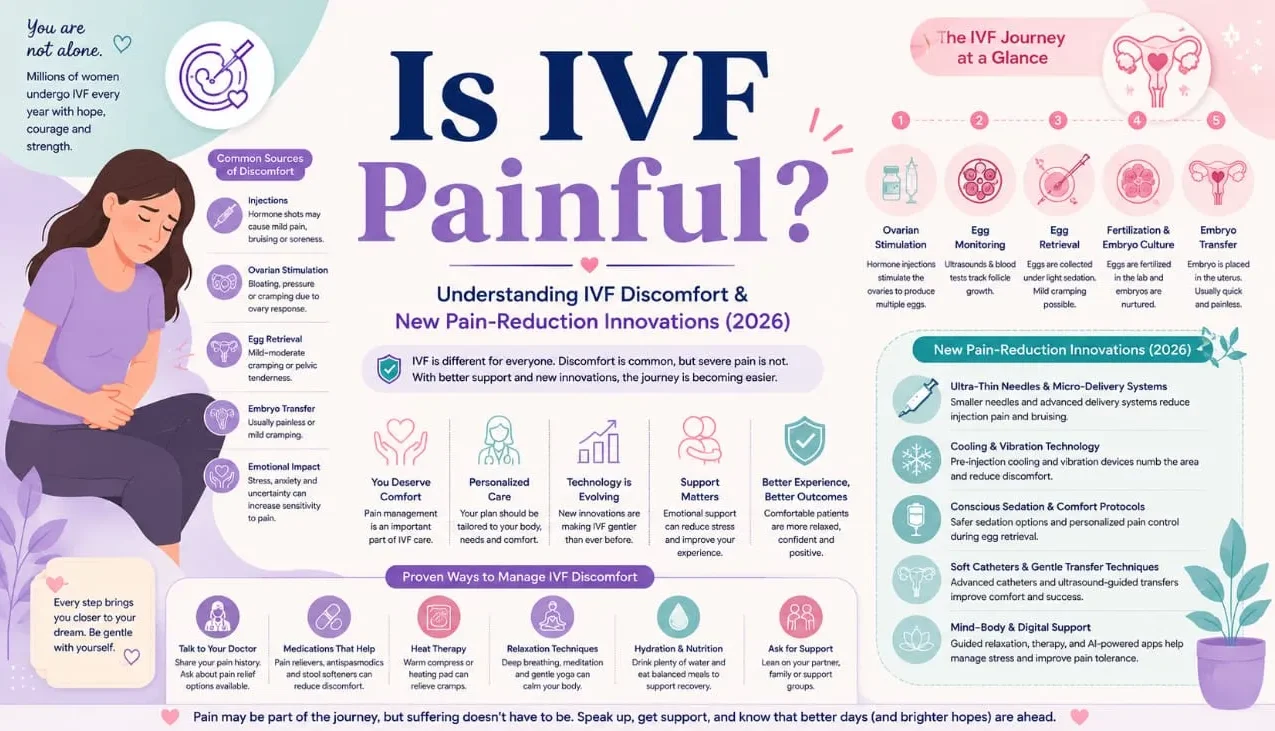
The IVF process usually includes:
- Hormonal stimulation medications
- Ultrasound monitoring and blood tests
- Egg retrieval procedure
- Laboratory fertilization
- Embryo development
- Embryo transfer
- Pregnancy testing
Each step is carefully monitored by fertility specialists to maximize safety and improve treatment success. Since IVF treatment involves multiple medical procedures and medications, many patients also want to understand the financial aspects before starting treatment. Reading a detailed guide on How Much Does IVF Cost in India? Full Patient Guide can help patients better prepare for IVF expenses, treatment planning, and fertility consultation costs..
Is IVF Actually Painful?
IVF is usually associated more with temporary discomfort than severe pain.
The experience varies from patient to patient. Some women experience only mild symptoms, while others may feel temporary physical or emotional discomfort during specific treatment stages.
The most commonly reported symptoms include:
- Bloating
- Mild abdominal discomfort
- Cramping
- Fatigue
- Hormonal mood changes
- Injection site soreness
Most symptoms are temporary and manageable under proper medical supervision.
IVF Injections: The Part Most Patients Fear
For many patients, fertility injections are the most emotionally stressful part of IVF treatment.
During ovarian stimulation, hormone medications are injected daily to help the ovaries produce multiple eggs.
Do IVF Injections Hurt?
IVF injections are usually given with very small needles. Most patients describe the sensation as mild stinging, pressure, or temporary soreness rather than severe pain.
Some temporary side effects may include:
- Mild bruising
- Injection-site tenderness
- Bloating
- Breast tenderness
- Mood swings
- Fatigue
Although the anticipation of injections can feel stressful initially, many patients become more comfortable with the process after several days.
A New IVF Patch Could Reduce Injections in the Future
One of the most exciting recent developments in fertility research is the possibility of reducing IVF injections through a new medication delivery patch.
Researchers are currently studying a painless microneedle patch designed to deliver IVF hormone medications automatically during ovarian stimulation.
Unlike traditional injections, the patch uses extremely tiny microneedles that are designed not to reach deeper pain receptors in the skin.
The system may eventually work through:
- Automated hormone delivery
- Light-activated medication release
- Scheduled dosing technology
- Reduced need for manual injections
If future clinical trials become successful, this innovation could potentially help reduce:
- Fear of daily injections
- Bruising from hormone shots
- Medication timing mistakes
- Stress during IVF treatment
Researchers and fertility specialists also believe that improving patient comfort may positively improve the overall IVF experience. Patients considering fertility treatment often prefer consulting with the Best Doctors for IVF – In Vitro Fertilization in Delhi to better understand modern IVF advancements, treatment safety, and personalized fertility care options.
However, this technology is still in early-stage research and is not yet available for standard fertility treatment. Current IVF treatment continues to rely on medically supervised hormone injections for ovarian stimulation.
Even so, the research highlights an important shift in fertility care — improving not only pregnancy success rates but also patient comfort and emotional wellbeing
Ultrasounds and Blood Tests During IVF
Throughout IVF treatment, doctors monitor the ovaries closely through regular ultrasounds and blood tests.
Is Monitoring Painful?
Most monitoring procedures involve little to no pain.
Some women may experience:
- Mild discomfort during transvaginal ultrasound
- Slight soreness after blood collection
These monitoring appointments are extremely important because they help fertility specialists safely adjust medications and track follicle growth.
Egg Retrieval Procedure: Does It Hurt?
Egg retrieval is often the stage patients worry about the most.
During this procedure, eggs are collected from the ovaries using a thin needle guided by ultrasound imaging.
What Patients Usually Experience
In most fertility centers, egg retrieval is performed under sedation or anesthesia. This means patients generally do not feel pain during the actual procedure.
After retrieval, temporary symptoms may include:
- Mild pelvic cramping
- Bloating
- Pelvic soreness
- Light spotting
- Fatigue
Most women recover within a short period and resume normal activities after proper rest.
Is Embryo Transfer Painful?
Embryo transfer is one of the final steps of IVF treatment.
During this procedure, the embryo is carefully placed into the uterus using a soft catheter.
What Does Embryo Transfer Feel Like?
Most patients describe embryo transfer as quick and minimally uncomfortable.
Some women may experience:
- Mild pressure
- Slight cramping
- Temporary discomfort
The procedure itself usually takes only a few minutes.
The Emotional Side of IVF
Although physical discomfort during IVF is generally manageable, the emotional side of fertility treatment can sometimes feel more challenging.
Patients may experience:
- Anxiety
- Emotional exhaustion
- Fear of unsuccessful cycles
- Stress during waiting periods
- Hormonal mood fluctuations
Emotional support and clear medical guidance play a major role in helping patients feel more confident throughout the IVF journey.
Modern fertility care increasingly focuses not only on medical outcomes but also on reducing emotional stress for patients and families.
Common Side Effects During IVF Treatment
Some temporary side effects are common during IVF treatment.
Common IVF Symptoms
- Bloating
- Mild cramping
- Breast tenderness
- Fatigue
- Nausea
- Mood swings
- Temporary spotting
- Injection-site discomfort
Most symptoms improve after treatment stages are completed.
Patients should always remain in contact with their fertility specialist during treatment.
When Should Patients Contact a Doctor?
Although IVF is considered a safe and medically supervised treatment, patients should seek immediate medical attention if they experience:
- Severe abdominal pain
- Heavy bleeding
- High fever
- Severe swelling
- Difficulty breathing
- Severe vomiting or nausea
Early medical evaluation helps ensure patient safety throughout treatment. Since IVF treatment may involve multiple medical procedures, medications, and monitoring visits, many patients also prefer understanding the financial aspects of fertility care in advance. Reading How Much Does IVF Cost in India? Full Patient Guide can help patients better prepare for treatment expenses, consultation fees, and overall IVF planning.
Can IVF Be Made Less Stressful?
Yes. Fertility specialists continuously work to make IVF safer, more comfortable, and less emotionally difficult for patients.
Patients may improve their IVF experience by:
- Following medication instructions carefully
- Staying hydrated
- Taking proper rest
- Maintaining healthy communication with doctors
- Seeking emotional support
- Understanding each treatment stage in advance
New research into painless medication delivery systems also reflects the growing focus on improving patient comfort in modern fertility care
Lorem ipsum dolor sit amet, consectetur adipiscing elit. Ut elit tellus, luctus nec ullamcorper mattis, pulvinar dapibus leo.
The Importance of Trusted Fertility Guidance
Choosing the right fertility guidance and medical support system is extremely important during IVF treatment.
At ConsultGrab, patients receive support in connecting with trusted fertility specialists and experienced medical professionals for infertility and reproductive consultation guidance.
The focus is on:
- Transparent medical information
- Expert consultation support
- Appointment assistance
- Treatment understanding
- Compassionate patient care
Every fertility journey is unique, and proper guidance can help patients make informed and confident healthcare decisions.
Surrogacy and Alternative Parenthood Support
In some situations involving infertility, medical complications, or difficulties carrying a pregnancy, fertility experts may also discuss alternative parenthood options such as surrogacy.
ConsultGrab also provides consultation support for patients seeking guidance regarding surrogacy and fertility treatment pathways.
The goal is to ensure intended parents receive clear information, trusted medical coordination, and supportive care throughout their parenthood journey.
Final Thoughts
IVF is generally not considered a highly painful procedure, although certain stages may involve temporary discomfort, bloating, cramping, injections, or emotional stress.
For most patients, the physical symptoms are manageable and short-term under proper medical supervision.
At the same time, ongoing fertility research is creating hope for even more patient-friendly IVF experiences in the future, including technologies designed to reduce injection-related discomfort.
Understanding the IVF process, maintaining realistic expectations, and staying connected with experienced fertility specialists can help patients feel more prepared and confident during treatment.
With proper medical guidance, emotional support, and advances in reproductive care, IVF continues to become safer, more supportive, and more comfortable for hopeful parents worldwide.
Frequently Asked Questions (FAQs)
IVF treatment is generally not considered severely painful. Most patients experience mild and temporary discomfort such as bloating, cramping, injection-site soreness, or fatigue during different stages of the IVF process. Procedures like egg retrieval are usually performed under sedation, which helps minimize pain and improve patient comfort.
Many patients find daily hormone injections during ovarian stimulation to be the most uncomfortable part of IVF treatment. These injections may cause mild bruising, bloating, or tenderness. However, modern fertility clinics use small needles and carefully monitored protocols to make the IVF process as manageable as possible.
Egg retrieval is usually performed under sedation or anesthesia, so most patients do not feel pain during the procedure itself. After egg retrieval, some women may experience temporary cramping, pelvic soreness, bloating, or mild spotting. These symptoms typically improve within a short recovery period.
Researchers are currently studying innovative IVF technologies such as painless microneedle hormone patches that may reduce the need for daily fertility injections in the future. Although this technology is still in early research stages, it reflects ongoing efforts to improve patient comfort and reduce stress during IVF treatment.
Patients can make IVF treatment more manageable by following medical instructions carefully, staying hydrated, taking proper rest, and maintaining open communication with fertility specialists. Emotional support, clear treatment guidance, and trusted fertility consultation services can also help reduce anxiety throughout the IVF journey.