


Most people needing stiff, painful knees fixed end up getting them replaced – doctors do countless operations each year. Pain from worn joints or constant swelling can fade afterward, movement often gets easier too. Still, big surgeries bring possible problems, surprises some don’t expect when signing up. Knowing what might go wrong matters just as much as hoping for relief.
If you are considering surgery, it is important to first learn about the Risks and Complications of Knee Replacement so you can make an informed decision about your treatment options. Understanding both the benefits and potential challenges of the procedure will help you prepare mentally and physically for the recovery process.
Confusion fades when support shows up. Patients find their way through tough choices at ConsultGrab. Deciding on knee surgery? Clarity comes first here. Free advice waits for anyone weighing options. Picking a hospital gets easier with real insight. Surgeons in India stand ready – experience matters. Guidance flows without cost or pressure. Medical steps feel less heavy with solid direction nearby. Trust builds slowly, one honest talk at a time. The path clears – not by force, but steady help.
Understanding Knee Replacement Surgery
Table of Contents
ToggleWhen the knee wears out, doctors swap it piece by piece with man-made parts built from tough stuff like metal or hard plastic. This fix, known as knee arthroplasty, takes broken bits away then fits new ones right in place. Each part slides together so movement feels smoother after healing.
- This procedure typically helps people dealing with:
- Severe osteoarthritis
- Rheumatoid arthritis
- Knee joint deformities
- Injury-related joint damage
- Chronic knee pain affecting daily life
Though things often go well, getting around easier afterward, there’s no ignoring this counts as serious surgery – with its own set of possible problems. Complications can happen, even if most people do fine.
Thinking through these points takes time, yet talking with a doctor helps clarify next steps. A second opinion might open new angles, though weighing risks matters just as much.
Why It Is Important to Know the Risks
Not everyone thinks about problems that might follow knee replacement, even though most talk up its upsides. Knowing what could go wrong gives a clearer picture for those facing the procedure
- Prepare for surgery and recovery
- Follow proper rehabilitation plans
- Identify warning signs early
- Reduce complications through preventive care
If you are unsure whether surgery is the right option, you can visit our Home Page to explore medical guidance, expert recommendations, and resources that help patients make better healthcare decisions.
ConsultGrab also provides guidance on the best knee replacement hospitals in India, information about experienced orthopedic surgeons, and cost comparisons between hospitals, so patients can choose treatment with confidence.
Common Risks and Complications of Knee Replacement
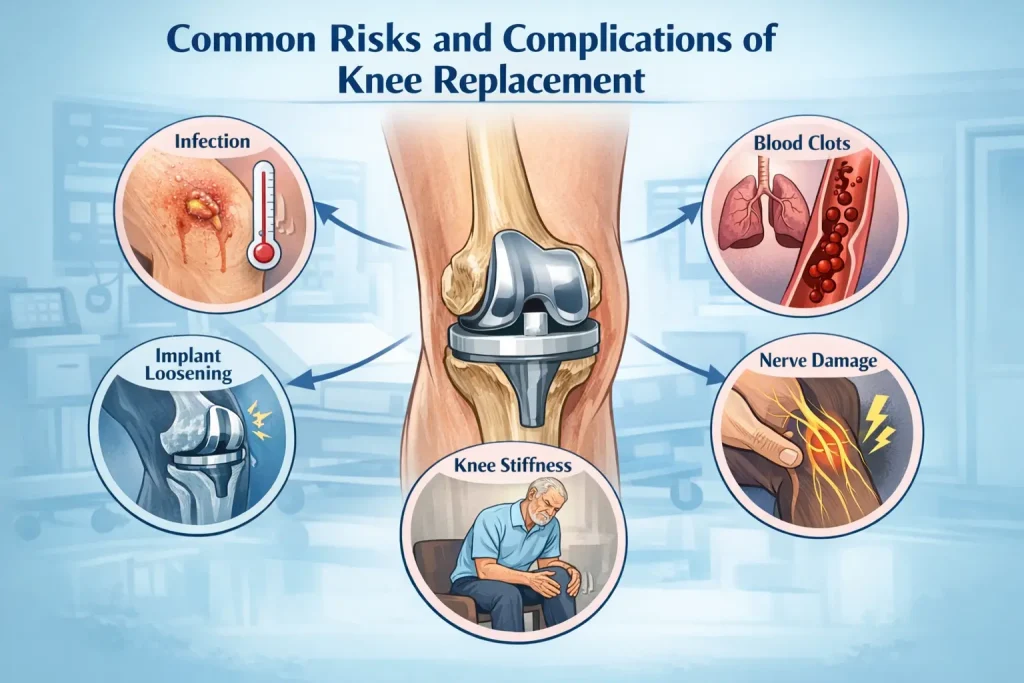
Few people face problems after knee replacement, yet it does happen now and then. Problems might be small at first but sometimes grow into bigger health troubles.
Below are some of the most common risks associated with the procedure.
1. Infection After Surgery
Infection stands as a major risk after knee replacement. Sometimes it shows up near the cut made during surgery. Other times, it takes hold far within the prosthetic joint itself.
Symptoms of infection may include:
- Fever
- Increased pain in the knee
- Swelling and redness
- Fluid leaving the incision after surgery
When things get serious, doctors might take out the fake joint. After clearing up the infection, a new one goes in.
Before cutting skin, clinics clean tools till they shine. Doctors hand out antibiotic pills because germs might show up later.
2. Blood Clots
Blood clots are another possible complication following knee replacement surgery. These clots typically develop in the leg veins and are known as deep vein thrombosis (DVT).
If a clot travels to the lungs, it can cause a life-threatening condition called pulmonary embolism.
Common symptoms include:
- Swelling in the leg
- Pain or tenderness
- Warmth in the affected area
- Difficulty breathing in severe cases
Right after surgery, moving around helps stop clots – doctors often pair that with medicine to keep blood flow smooth.
3. Implant Loosening
Loose implants sometimes show up years later. Younger people face that risk more often because movement wears down the material faster – especially if daily life includes intense physical effort.
Implant loosening may cause:
- Persistent pain
- Knee instability
- Reduced movement
Sometimes a second operation becomes necessary when the old implant has degraded.
4. Nerve Damage
A few patients notice odd sensations after knee surgery – numbness sometimes shows up without warning. Weakness creeps in for some, a quiet shift beneath the skin.
Recovery often brings slow progress, yet a few people keep dealing with effects over time.
Through careful movements, surgeons work to prevent damage to nerves when operating.
5. Knee Stiffness
Stiffness might show up in the knee following surgery for certain people. Completing a full bend or stretch of the leg could feel tough because of it.
Stiffness is usually caused by:
- Scar tissue formation
- Limited movement during recovery
- Improper rehabilitation
After surgery, movement exercises slowly bring back ease in motion plus muscle power.
6. Pain After Surgery
Few people find full relief right away when their knee gets replaced. Yet lingering soreness shows up now and then despite the operation meant to stop it.
Possible reasons include:
- Implant alignment issues
- Scar tissue formation
- Nerve irritation
- Infection or inflammation
Figuring out what’s wrong comes first if you want to understand where the pain starts.
7. Allergic Reaction to Implant Materials
Now and then, some people react badly to substances found in fake knee parts.
Symptoms may include:
- Swelling
- Skin irritation
- Persistent joint pain
Should a patient have reacted to metals in the past, doctors might suggest an allergy test ahead of surgery.
8. Limited Range of Motion
Full motion in the knee might never return – despite a surgery that technically worked. Recovery isn’t guaranteed, even when the procedure goes perfectly.
Factors affecting mobility include:
- Age
- Muscle strength
- Rehabilitation consistency
- How bad the joint is damaged ahead of the operation
Following a proper physiotherapy routine significantly improves recovery outcomes.
9. Bleeding and Swelling
Might see blood loss while operating – sometimes it shows up later too.
Swelling near the knee can stick around for a few weeks post-op in some people. As recovery moves forward, things tend to get better on their own.
Sleep well, keep the area raised, also apply cold packs to ease puffiness.
Factors That Increase the Risk of Complications
Problems with your health might make recovery tougher once you’ve had a new knee put in.
These include:
- Obesity
- Diabetes
- Smoking
- Heart disease
- Weak immune system
- Previous knee surgeries
Before having an operation, anyone with such health issues needs a thorough check by a doctor.
How to Reduce the Risks of Knee Replacement Surgery
Although complications are possible, many risks can be reduced with proper preparation and expert medical care.
Here are some important steps patients can take.
Choose an Experienced Surgeon
Selecting a skilled orthopedic surgeon significantly improves surgical outcomes and reduces complications.
Follow Pre-Surgery Instructions
Doctors may recommend lifestyle changes such as:
- Weight management
- Quitting smoking
- Managing blood sugar levels
Participate in Rehabilitation
Physical therapy is essential for recovery and helps restore strength and flexibility in the knee joint.
Attend Follow-Up Appointments
Regular check-ups allow doctors to monitor recovery and detect potential complications early.
If you want expert help selecting the right surgeon or hospital, you can Book an Appointment through ConsultGrab and receive personalized guidance for your treatment journey
How ConsultGrab Helps Patients Make the Right Decision
Choosing knee replacement surgery can be overwhelming for many patients. Medical decisions often involve confusion about hospital quality, surgeon expertise, and treatment costs.
ConsultGrab simplifies this process by offering:
- Free consultation to determine if surgery is required
- Guidance on the best knee replacement hospitals in India
- Information about experienced orthopedic surgeons
- Cost comparison between hospitals
- Assistance with appointments and second opinions
Our platform is designed to help patients make informed medical decisions without stress or confusion.
If you have questions about knee replacement surgery or want expert advice, you can also Contact Us and our team will guide you through every step of the process.
Our goal is simple:
To help patients make the right medical decision without confusion.
Recovery After Knee Replacement Surgery
Most people need a few weeks, sometimes more, to heal after knee replacement – the pace hinges on how healthy they are and whether therapy stays consistent.
Typical recovery timeline:
Recovery After Knee Replacement Surgery
First few weeks
- Pain management
- Basic walking with support
- Initial physiotherapy
1–3 months
- Improved mobility
- Strength building exercises
- Increased independence
3–6 months
- Near-normal walking ability
- Improved joint flexibility
- Back to your usual routine each day
Patients who follow their rehabilitation program closely often achieve better results.
When to Seek Medical Attention
Patients should contact their doctor immediately if they notice symptoms such as:
- High fever
- Severe swelling or redness
- Persistent knee pain
- Difficulty breathing
- Sudden leg swelling
Getting help fast stops small issues turning into big problems.
Disclaimer
All information provided in this article is collected from various medical sources available on the internet and is intended for educational purposes only. It should not be considered as medical advice. Always consult qualified healthcare professionals before making any medical decisions.