
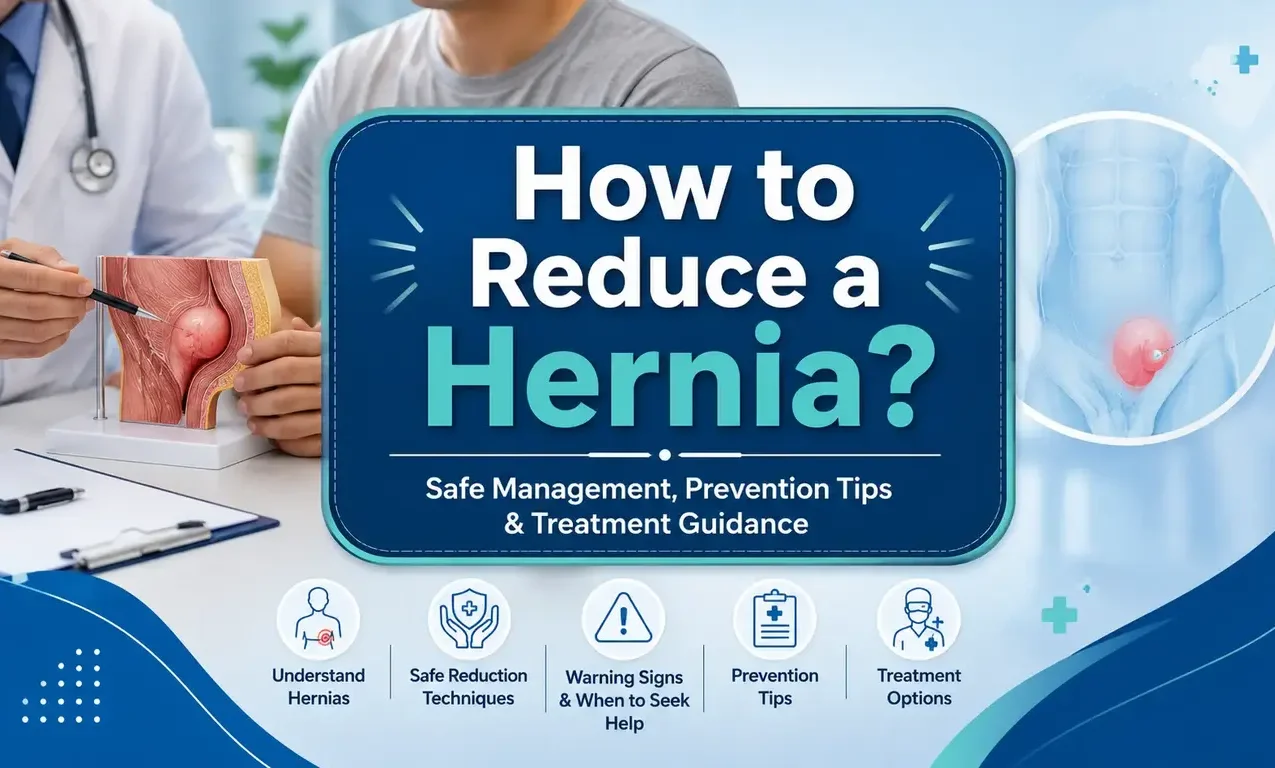
A hernia occurs when an internal organ or tissue pushes through a weak area in the surrounding muscle or connective tissue. Hernias commonly develop in the abdomen or groin and may appear as a noticeable bulge that becomes more prominent while standing, coughing, or lifting heavy objects.
If your hernia is causing persistent discomfort, recurring symptoms, or requires surgical evaluation, consulting the Best Doctors for Hernia Surgery in Delhi can help you understand the most appropriate treatment options based on your condition.
Understanding when hernia reduction may be appropriate, when it can be dangerous, and what lifestyle measures may help reduce strain on the abdominal wall is important for making informed healthcare decisions.
What Does Hernia Reduction Mean?
Table of Contents
ToggleHernia reduction refers to the process of gently moving the protruding tissue back through the opening in the muscle wall from which it emerged.
In some cases, a hernia may reduce naturally when a person lies down. In other situations, trained healthcare professionals may use specific positioning and manual techniques to encourage the herniated tissue to return to its normal position. Along with proper medical management, maintaining healthy digestive habits and following appropriate diet tips for hernia patients may help reduce abdominal strain and support overall comfort. Choosing the right foods can also help prevent constipation, which is a common factor that may worsen hernia symptoms.
It is important to remember that successful reduction does not repair the underlying weakness in the abdominal wall. The defect remains present and may still require medical treatment or surgical repair.
Common Types of Hernias
Several types of hernias can occur, including:
- Inguinal hernia (groin hernia)
- Femoral hernia
- Umbilical hernia
- Incisional hernia
- Abdominal wall hernia
- Hiatal hernia
Among these, inguinal hernias are among the most frequently diagnosed.
When Can Hernia Reduction Be Considered?
Healthcare professionals may consider reduction when:
- The hernia is visible or palpable.
- The patient is stable and comfortable.
- Symptoms are mild to moderate.
- The hernia appears uncomplicated.
- There are no signs of compromised blood supply.
Each case requires careful evaluation before any attempt is made to reduce the hernia.
When Should a Hernia NOT Be Reduced?
Not all hernias are suitable for manual reduction.
Immediate medical attention is necessary if a patient experiences:
- Severe or worsening pain
- Skin discoloration or changes over the hernia
- Significant tenderness
- Increasing swelling
- Signs of illness or distress
- Concerns about trapped tissue or compromised blood supply
In these situations, attempting to push the hernia back may not be appropriate. Surgical evaluation is often required to determine the safest treatment approach.
How Healthcare Professionals Approach Hernia Reduction
1. Patient Positioning
For uncomplicated inguinal hernias, patients may be placed in a position where the lower body is elevated above the head. This allows gravity to help reduce pressure around the hernia and may assist the tissue in moving back through the defect.
For some abdominal hernias, patients are typically positioned lying flat on their back.
2. Applying Ice
Ice packs may be placed over the hernia area for approximately 15 to 30 minutes before reduction.
This may help:
- Reduce swelling
- Improve comfort
- Increase the likelihood of successful reduction
In some cases, the reduction of swelling alone may help the hernia retract.
3. Encouraging Muscle Relaxation
Relaxing the abdominal muscles can make reduction easier.
Measures that may help include:
- Comfortable positioning
- Slight bending of the knees
- Appropriate pain control when medically indicated
Reduced muscle tension often improves the chances of successful reduction.
4. Gentle Manual Reduction
Healthcare professionals generally use slow, controlled pressure rather than force.
The process may involve:
- Identifying the hernia opening when possible
- Stabilizing the surrounding tissue
- Applying gradual pressure toward the defect
- Adjusting the direction of pressure as needed
Successful reduction often requires patience and careful technique.
Why Hernia Reduction Can Be Challenging
Not every hernia is easy to reduce.
Factors that may make reduction more difficult include:
- Larger hernias
- Long-standing hernias
- Significant swelling
- Difficulty locating the fascial defect
- Increased fatty tissue around the area
Because anatomy differs from person to person, reduction techniques often need to be adjusted for individual patients.
What Happens After a Hernia Is Reduced?
Even after successful reduction, medical observation remains important.
Patients should be monitored for:
- Persistent pain
- Worsening discomfort
- Recurrence of the bulge
- New swelling
- Signs that tissue blood supply may be compromised
If symptoms worsen after reduction, further evaluation may be necessary.
Can You Push a Hernia Back Yourself?
Some uncomplicated hernias may temporarily flatten when a person lies down. However, attempting forceful self-reduction is generally not recommended.
A painful, swollen, firm, or difficult-to-reduce hernia should always be assessed by a qualified healthcare professional.
Delaying evaluation may increase the risk of complications.
How to Reduce the Risk of a Hernia
While no strategy can completely eliminate the risk of a hernia, several lifestyle habits may help reduce abdominal strain and support overall abdominal wall health.
Avoid Excessive Heavy Lifting
Heavy lifting can significantly increase pressure inside the abdomen.
When lifting objects:
- Bend your knees
- Keep your back straight
- Lift with your legs rather than your back
- Avoid lifting loads that cause strain
Using proper lifting techniques may help reduce stress on weakened areas of the abdominal wall.
Prevent Constipation
Repeated straining during bowel movements may increase pressure within the abdomen.
To support digestive health:
- Eat fibre-rich fruits and vegetables
- Include whole grains in your diet
- Consume beans, lentils, and oats
- Drink adequate water throughout the day
Healthy bowel habits may help reduce unnecessary abdominal strain.
Manage Conditions That Increase Abdominal Pressure
Persistent coughing, repeated sneezing, urinary difficulties, and similar conditions can place ongoing stress on abdominal muscles.
Seeking timely medical care for these conditions may help reduce the risk of worsening hernia symptoms.
Maintain a Healthy Weight
Excess body weight can increase pressure on the abdominal wall.
Maintaining a healthy weight through balanced nutrition and regular physical activity may help support abdominal muscle function and reduce strain.
Stay Active
Regular exercise helps maintain muscle strength and overall fitness.
Gentle activities that support core strength may contribute to better abdominal wall support. However, individuals with a diagnosed hernia should consult a healthcare professional before beginning any exercise program.
Hernia Prevention Remains an Important Part of Patient Care
Recent patient education efforts continue to emphasize that reducing abdominal strain plays an important role in hernia prevention and long-term management. Healthcare professionals commonly encourage healthy weight management, proper lifting techniques, prevention of constipation, treatment of chronic coughs, and regular physical activity as part of a comprehensive approach to reducing hernia-related risks.
While these measures cannot guarantee prevention, they may help lower the likelihood of hernia development and symptom progression.
Long-Term Treatment Options for Hernias
The most appropriate treatment depends on several factors, including:
- Hernia type
- Size of the defect
- Severity of symptoms
- Overall health status
- Risk of complications
Treatment plans may include:
- Observation and monitoring
- Lifestyle modifications
- Activity adjustments
- Surgical repair when necessary
A specialist can determine the most suitable approach after a thorough evaluation.
How ConsultGrab Can Help
Navigating a hernia diagnosis can feel overwhelming, especially when deciding between conservative management and surgical treatment.
At ConsultGrab, we help patients connect with experienced specialists and trusted hospitals through our verified healthcare network. Our goal is to ensure patients receive clear guidance and access to appropriate treatment options.
Our care team can assist with:
- Free treatment guidance
- Specialist consultation support
- Appointment scheduling assistance
- Treatment and cost comparison
- Coordination with experienced healthcare providers
Whether you are experiencing a newly diagnosed hernia or seeking a second opinion regarding treatment options, ConsultGrab helps make the healthcare journey smoother and more informed.
Conclusion
Understanding how to reduce a hernia begins with recognizing that not every hernia can be safely reduced. In uncomplicated cases, healthcare professionals may use positioning techniques, swelling reduction measures, muscle relaxation, and gentle manual pressure to encourage the herniated tissue to return to its normal position. However, before attempting any form of reduction, it is important to recognize the 5 warning signs of a hernia that may indicate a more serious condition requiring immediate medical attention. Identifying these symptoms early can help prevent complications and ensure timely treatment.
However, severe pain, skin changes, increasing tenderness, or signs of illness require immediate medical attention rather than attempted reduction.
Equally important is reducing factors that place excessive strain on the abdominal wall. Proper lifting techniques, maintaining a healthy weight, preventing constipation, managing chronic coughs, and staying physically active may help reduce the risk of hernia development and progression.
If you are experiencing hernia symptoms or need guidance regarding treatment options, seeking expert medical evaluation remains the safest and most effective course of action.
Frequently Asked Questions (FAQ)
Hernia reduction is the process of gently moving the protruding tissue or organ back through the weakened area of the abdominal wall or muscle. In some uncomplicated cases, healthcare professionals may perform manual reduction, but this does not repair the underlying hernia defect
While some reducible hernias may temporarily move back into place when lying down, forcefully pushing a hernia back yourself is not recommended. A painful, swollen, firm, or difficult-to-reduce hernia should be evaluated by a healthcare professional to avoid potential complications.
A hernia should not be manually reduced if there is severe pain, skin discoloration, increasing tenderness, significant swelling, or signs of illness. These symptoms may indicate an incarcerated or strangulated hernia, which requires urgent medical evaluation and possible surgical treatment.
You can help reduce the risk of a hernia by maintaining a healthy weight, avoiding excessive heavy lifting, preventing constipation, treating chronic coughs, and staying physically active. These measures help reduce abdominal pressure and support the strength of the abdominal wall.
Yes. Even if a hernia is successfully reduced, the weakness in the abdominal wall remains. Depending on the hernia type, size, symptoms, and risk of complications, a healthcare provider may recommend monitoring, lifestyle modifications, or surgical hernia repair for long-term management.