

Need Expert Medical Guidance? Talk to a Specialist Today
Table of Contents
ToggleShare your details and our care team will call you back with the right specialist and clear next steps.
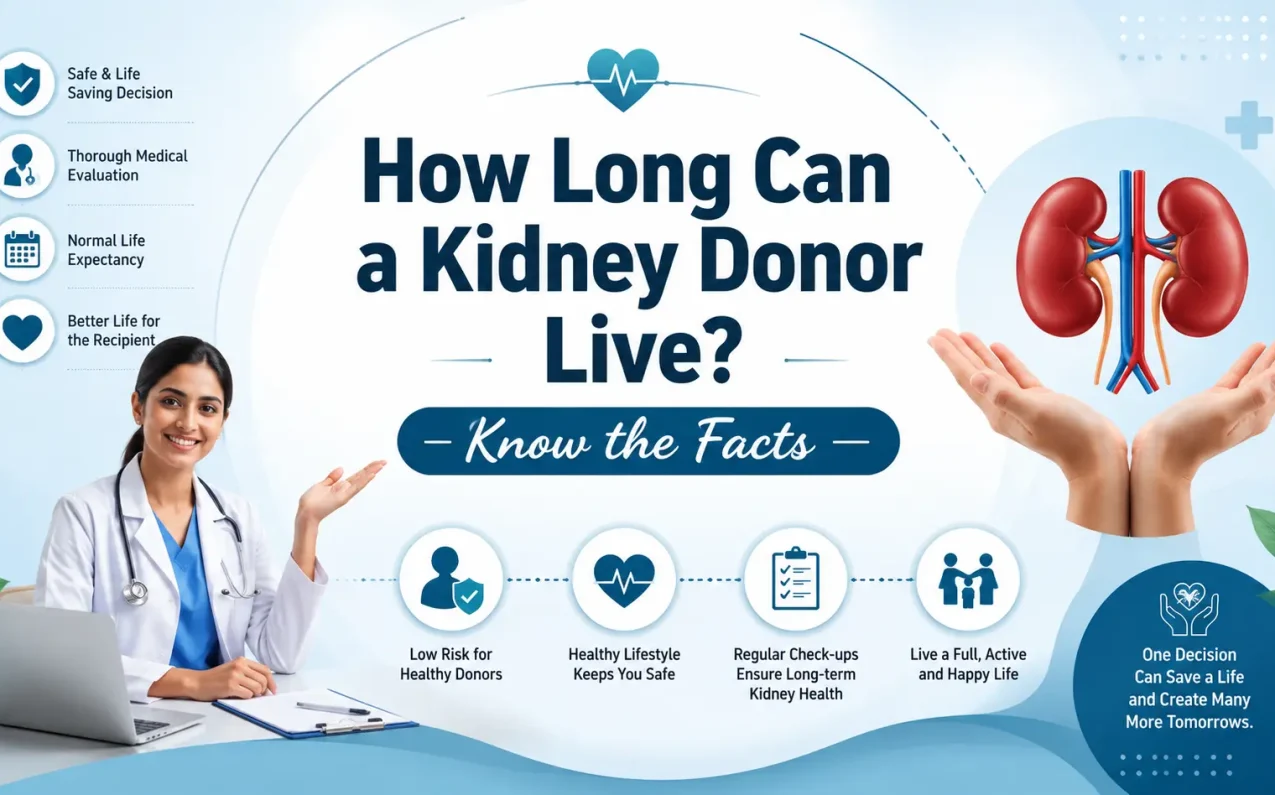
Donating a kidney is one of the most generous decisions a person can make. While living kidney donation can significantly improve the recipient’s quality of life, many potential donors share one important concern: How long can a kidney donor live after donation?
The reassuring answer is that, for carefully selected healthy donors, kidney donation does not reduce life expectancy. Before donation, every potential donor undergoes a thorough medical evaluation to ensure they are healthy enough to live safely with one kidney.
How Long Can a Kidney Donor Live?
A kidney donor can generally expect to live a normal lifespan. Based on the discussion shared by transplant experts, donating one kidney does not shorten a healthy person’s life expectancy. People who are approved for kidney donation are extensively screened, meaning they are usually healthier than the average population before surgery.
The greatest benefit of living kidney donation is for the recipient. A kidney from a living donor is often available sooner, is typically of better quality, and can help the recipient live longer with improved kidney function. While donors may not receive a direct medical benefit, many describe a deep sense of satisfaction from improving another person’s life.
Does Donating a Kidney Increase the Risk of Kidney Disease?
Living with one kidney naturally raises questions about future kidney health. Donation does increase the donor’s relative risk of kidney failure compared with someone equally healthy who does not donate. However, it is important to understand this risk in context.
Because kidney donors are carefully selected after detailed health evaluations, they begin with a very low risk of kidney disease. Even though donation increases that relative risk, the overall lifetime risk for a healthy donor remains low. This is why transplant teams spend time discussing both the benefits and the potential risks before anyone decides to donate.
What Factors Can Affect a Donor's Long-Term Kidney Health?
Not every risk factor can be changed. Some factors, such as family history of kidney disease, age, and genetic background, may influence a person’s long-term risk. These are known as non-modifiable risk factors.
Fortunately, many important risks are within a donor’s control. Maintaining a healthy lifestyle after donation plays a major role in protecting the remaining kidney and supporting lifelong health.
How Can Kidney Donors Stay Healthy?
After donating a kidney, healthy habits become even more important. Donors are generally advised to:
- Maintain a healthy body weight.
- Prevent high blood pressure and diabetes through regular health check-ups.
- Avoid smoking.
- Use pain-relieving medicines like NSAIDs only when absolutely necessary and under medical guidance.
- Avoid extremely high-protein diets that may increase the workload on the remaining kidney.
- Stay physically active and continue routine follow-up with healthcare professionals.
These lifestyle choices help support kidney health for many years after donation.
Can Women Have a Healthy Pregnancy After Kidney Donation?
Many women are able to have successful pregnancies after donating a kidney. According to the expert discussion, babies are generally born healthy, although they may be slightly smaller or arrive a little earlier than average.
There is also a slightly increased risk of a pregnancy-related condition called preeclampsia, which involves high blood pressure and protein in the urine. Because of this, women who become pregnant after kidney donation are usually advised to receive close monitoring from their obstetric care team throughout pregnancy.
Final Thoughts
So, how long can a kidney donor live? For healthy individuals who are carefully evaluated before surgery, donating a kidney does not typically reduce life expectancy. Although living with one kidney requires lifelong attention to healthy habits and regular medical follow-up, most donors continue to lead active, healthy, and fulfilling lives.
If you or a loved one is considering kidney donation or needs guidance about kidney transplant treatment, speaking with an experienced transplant team is the best first step. Understanding the risks, benefits, and long-term care requirements can help you make an informed decision with confidence.
Read More: Is a Kidney Transplant 100% Successful? Complete Guide
Frequently Asked Questions (FAQs)
A healthy kidney donor can generally expect to live a normal lifespan. Careful medical screening ensures donors are healthy enough to live with one kidney, and current evidence discussed in this article indicates that kidney donation does not typically reduce life expectancy when donors maintain a healthy lifestyle and attend regular medical check-ups.
Kidney donation may increase a donor's relative risk of kidney failure compared to an equally healthy person who does not donate. However, because living kidney donors are thoroughly evaluated before surgery, their overall lifetime risk remains low. Regular follow-up and healthy lifestyle habits are important for protecting long-term kidney health.
After kidney donation, maintaining a healthy weight, controlling blood pressure and blood sugar, avoiding smoking, limiting unnecessary NSAID painkiller use, avoiding very high-protein diets, and attending regular medical check-ups can help protect the remaining kidney and support long-term overall health.
Yes, many women have healthy pregnancies after kidney donation. However, pregnancy should be monitored carefully because there is a slightly higher risk of preeclampsia. Regular prenatal care and close follow-up with healthcare professionals help ensure the best outcomes for both mother and baby.
A comprehensive medical evaluation helps determine whether a person is healthy enough to donate a kidney safely. It assesses kidney function, overall health, family history, and other risk factors, ensuring that both the donor's long-term well-being and the recipient's transplant success remain the highest priorities.
Need Expert Medical Guidance? Talk to a Specialist Today
Share your details and our care team will call you back with the right specialist and clear next steps.