

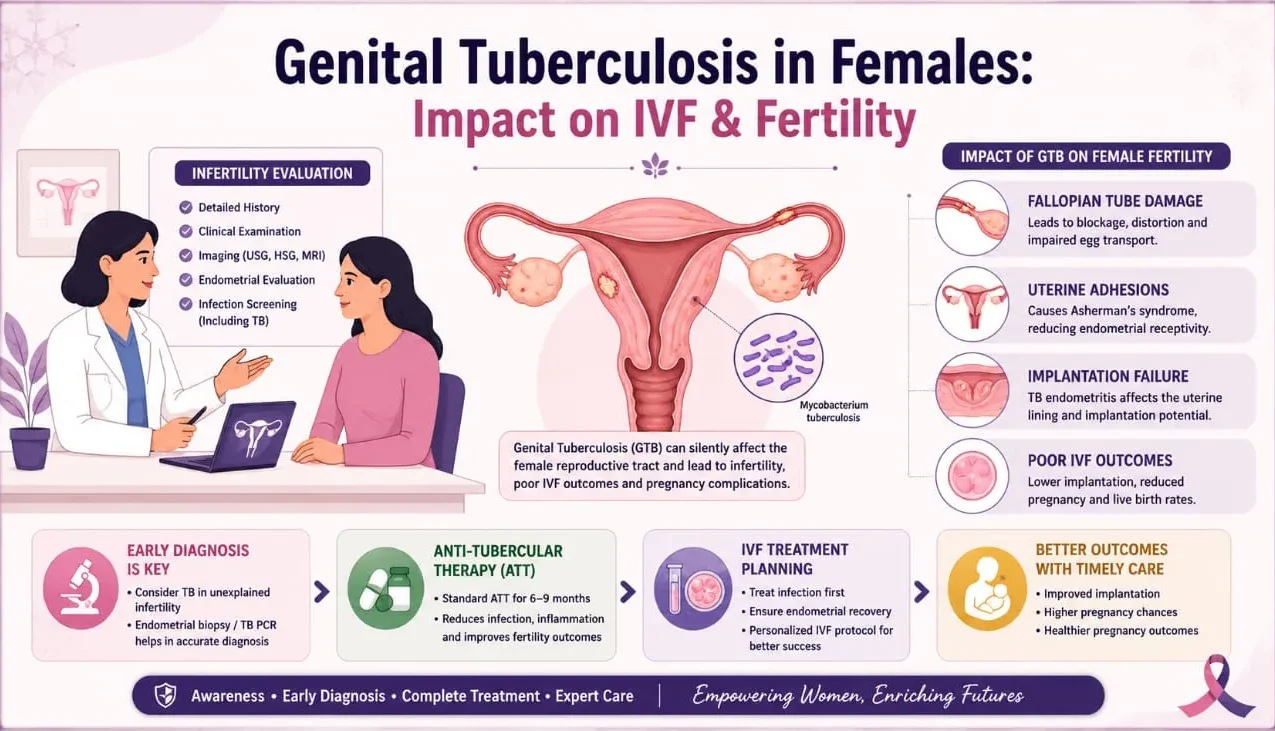
When most people hear the word tuberculosis (TB), they immediately think of a lung infection. However, tuberculosis can affect several organs in the body, including the reproductive system. One of the lesser-known forms of the disease is Genital Tuberculosis (GTB), which has emerged as an important but often overlooked cause of infertility.
What makes genital TB particularly challenging is that many women do not experience obvious symptoms. As a result, the condition may remain undiagnosed for years and may only be discovered during infertility investigations or after repeated fertility treatment failures.
Growing awareness among fertility specialists has highlighted the importance of identifying genital tuberculosis early, especially in couples struggling with unexplained infertility, recurrent implantation failure, or multiple unsuccessful IVF cycles. In cases where fertility is affected by tubal damage or uterine complications, advanced reproductive treatments may be recommended after appropriate evaluation. Couples exploring treatment options can learn more about consulting with the Best Doctors for IVF (In Vitro Fertilization) in Delhi to understand the most suitable fertility solutions for their situation.
What is Genital Tuberculosis?
Table of Contents
ToggleTuberculosis can affect different organs of the body, including:
- Lungs
- Intestines
- Lymph nodes
- Bones
- Reproductive organs
When tuberculosis affects the female reproductive organs, it is known as Genital Tuberculosis (GTB).
In most cases, the infection originates elsewhere in the body and reaches the reproductive organs through the bloodstream. Once it spreads to the reproductive tract, it can cause inflammation, scarring, and permanent damage if left untreated.
The condition most commonly affects women during their reproductive years and can significantly impact their ability to conceive naturally.
Why Genital TB Is Often Missed
Unlike pulmonary tuberculosis, genital tuberculosis frequently develops without classic symptoms such as persistent cough or fever.
Many women continue their daily lives without realizing that an infection is gradually affecting their reproductive organs.
As a result, the diagnosis often comes as a surprise during fertility investigations when doctors discover:
- Blocked fallopian tubes
- Fluid-filled tubes
- Pus-filled tubes
- Poor uterine lining development
- Reduced uterine blood flow
- Repeated IVF failures
- Implantation failure
- Unexplained infertility
This silent nature of the disease is one of the reasons genital TB remains underrecognized despite its significant impact on fertility.
How Does Genital Tuberculosis Affect Fertility?
Genital tuberculosis can interfere with fertility in several ways.
Fallopian Tube Damage
In approximately 90% of cases, genital TB affects the fallopian tubes.
The bacteria damage the inner lining of the tubes, causing inflammation and scarring. Over time, this can lead to:
- Tubal blockage
- Hydrosalpinx (fluid-filled tubes)
- Pyosalpinx (pus-filled tubes)
Since fertilization normally occurs within the fallopian tube, blockage can prevent the sperm and egg from meeting, making natural conception difficult.
Damage to the Uterus
The infection can also spread to the uterus and affect the endometrial lining.
As the disease progresses, chronic inflammation can cause:
- Scar tissue formation
- Reduced blood supply
- Poor endometrial growth
- Implantation difficulties
These changes can reduce the chances of achieving and maintaining a pregnancy.
Genital Tuberculosis and Unexplained Infertility
Many couples are diagnosed with unexplained infertility when standard fertility tests fail to identify a clear cause.
However, genital tuberculosis may sometimes be an underlying factor that remains undetected.
Because the disease can silently affect the fallopian tubes and uterine cavity, women may continue attempting conception or undergoing fertility treatments without addressing the actual problem.
For this reason, a detailed evaluation may be considered in women who have:
- Persistent infertility
- Tubal disease
- Recurrent implantation failure
- Multiple failed IVF cycles
- Poor endometrial development
Early investigation can help identify hidden reproductive tract infections before extensive damage occurs.
Signs That May Raise Suspicion of Genital TB
Although the condition often has no obvious symptoms, certain fertility-related findings may suggest the possibility of genital tuberculosis.
These include:
- Blocked fallopian tubes
- Hydrosalpinx
- Pyosalpinx
- Recurrent IVF failure
- Implantation failure
- Thin endometrium
- Poor uterine blood flow
- Long-standing infertility
When these findings are present, further evaluation may be recommended.
How is Genital Tuberculosis Diagnosed?
Diagnosing genital tuberculosis can be challenging because no single test provides complete certainty in every patient.
Doctors often combine multiple investigations to reach a diagnosis.
Endometrial Biopsy
One of the most commonly performed investigations is an endometrial biopsy.
This is generally a simple outpatient procedure in which a small sample of the uterine lining is collected and sent for laboratory testing.
The sample may be evaluated using:
- Histopathology
- GeneXpert TB-PCR
- AFB culture
Limitations of TB-PCR Testing
TB-PCR testing can occasionally produce misleading results.
In some cases, dead bacteria may still be detected, leading to false-positive reports.
Conversely, because the uterine lining sheds during menstruation, bacterial material may not always be present in the collected sample, resulting in false-negative reports.
Therefore, test results are interpreted together with clinical findings and other investigations.
Laparoscopy
Laparoscopy allows direct visualization of the reproductive organs.
Findings that may suggest genital TB include:
- Blocked tubes
- Beaded appearance of tubes
- Caseous necrosis
- Hydrosalpinx
- Pyosalpinx
- Tobacco-pouch appearance of ovaries
- Fluid accumulation in the pouch of Douglas
Hysteroscopy
Hysteroscopy is used to examine the uterine cavity.
It can help identify:
- Intrauterine adhesions
- Scar tissue formation
- Distortion of the uterine cavity
These findings can significantly influence fertility treatment planning.
What is Asherman Syndrome?
When scar tissue becomes extensive and fills a significant portion of the uterine cavity, the condition is known as Asherman Syndrome.
Long-standing genital tuberculosis can contribute to severe adhesions inside the uterus.
Potential consequences include:
- Reduced menstrual flow
- Complete absence of periods in severe cases
- Poor endometrial development
- Implantation failure
- Reduced IVF success rates
When the uterine cavity is extensively scarred, achieving pregnancy may become more challenging.
Can Genital Tuberculosis Affect IVF Success?
Yes.
Genital tuberculosis can negatively affect IVF outcomes, especially when it damages the uterine lining or causes severe adhesions.
Women with untreated or long-standing genital TB may experience:
Recurrent implantation failure
Thin endometrium
Poor uterine blood flow
Multiple unsuccessful IVF cycles
Difficulty maintaining pregnancy
Even when high-quality embryos are available, implantation may be compromised if the uterine environment has been affected by chronic infection.
This is why identifying and treating genital tuberculosis before proceeding with advanced fertility treatments is often important. It is also essential to evaluate other underlying causes of infertility, as conditions such as PCOD and PCOS can affect fertility differently and may not always require IVF treatment. Patients seeking a better understanding of their fertility options can explore this guide on Does PCOD/PCOS Require IVF? A Complete Fertility Treatment Guide to learn when IVF may or may not be necessary.
Treatment of Genital Tuberculosis
Once diagnosed, genital tuberculosis is typically treated with anti-tubercular therapy (ATT).
Treatment Duration
The treatment course generally lasts:
6 to 8 months
Patients should complete the full course exactly as prescribed to prevent the development of drug resistance.
Why Early Treatment Matters
One of the most important factors influencing fertility outcomes is the timely initiation of treatment.
When genital tuberculosis is diagnosed and treated before extensive reproductive damage occurs, fertility outcomes may improve significantly.
However, delayed diagnosis can lead to:
- Permanent tubal damage
- Severe uterine adhesions
- Reduced implantation potential
- Greater dependence on assisted reproductive techniques
Early intervention can therefore play an important role in preserving reproductive health and future fertility options.
Can Pregnancy Be Achieved After Genital TB?
The possibility of conception after treatment depends largely on the extent of reproductive damage caused by the infection.
Women with minimal tubal and uterine damage may have better chances of conceiving naturally or through fertility treatment.
For women who continue to face fertility challenges after treatment, assisted reproductive techniques such as IVF may still offer a path toward parenthood after appropriate evaluation and planning. Many patients considering IVF also have concerns about the physical experience of treatment and what to expect during different stages of the process. To learn more, read our detailed guide on Is IVF Painful? Understanding IVF Discomfort and Pain Relief Options.
How ConsultGrab Supports Fertility Patients
Infertility investigations can be complex, especially when underlying conditions such as genital tuberculosis are involved.
At ConsultGrab, we help patients connect with experienced fertility specialists and trusted hospitals for comprehensive evaluation and treatment guidance.
Our support includes:
- Fertility specialist consultation assistance
- Appointment coordination
- Guidance regarding fertility investigations
- Treatment planning support
- Hospital and doctor selection assistance
- Continued support throughout the treatment journey
Our goal is to help patients make informed healthcare decisions and access the right care at the right time.
Conclusion
Genital tuberculosis remains one of the most overlooked causes of female infertility. Because it often develops without obvious symptoms, many women are diagnosed only after experiencing tubal blockage, implantation failure, poor endometrial development, or repeated IVF failures.
Increasing awareness about the connection between tuberculosis and infertility is helping more couples seek timely evaluation and treatment. Early diagnosis, prompt anti-tubercular therapy, and appropriate fertility planning can significantly improve reproductive outcomes and reduce long-term complications.
For couples facing unexplained infertility or repeated fertility treatment failures, comprehensive evaluation and specialist guidance may help uncover hidden causes and create a clearer path toward achieving parenthood. In cases where IVF becomes part of the treatment plan, understanding the financial aspects of fertility care is equally important. Patients can refer to this detailed guide on IVF Cost in India: Complete Patient Guide to better understand treatment expenses and plan their fertility journey accordingly.
Frequently Asked Questions (FAQs)
Genital tuberculosis (GTB) is a form of tuberculosis that affects the female reproductive organs, particularly the fallopian tubes and uterus. It can cause inflammation, scarring, tubal blockage, and damage to the endometrium, making natural conception difficult and increasing the risk of infertility.
Yes, genital tuberculosis can contribute to repeated IVF failure by affecting the uterine lining, reducing blood flow to the uterus, and causing intrauterine adhesions. These changes may interfere with embryo implantation, reducing the chances of a successful IVF pregnancy even when good-quality embryos are transferred.
Many women can achieve pregnancy after completing treatment for genital tuberculosis, especially when the condition is diagnosed early. Fertility outcomes depend on the extent of damage to the fallopian tubes and uterus. In some cases, assisted reproductive techniques such as IVF may be recommended to improve pregnancy chances.
Many women can achieve pregnancy after completing treatment for genital tuberculosis, especially when the condition is diagnosed early. Fertility outcomes depend on the extent of damage to the fallopian tubes and uterus. In some cases, assisted reproductive techniques such as IVF may be recommended to improve pregnancy chances.
Treatment for genital tuberculosis usually involves anti-tubercular therapy (ATT) for approximately 6 to 8 months. Early diagnosis and timely treatment are important because untreated genital TB can cause permanent damage to the reproductive organs, reduce fertility potential, and negatively impact IVF success rates.