


Yes, you can live a normal life with a hernia if it is small, causes mild or no symptoms, and is monitored by a doctor. However, a hernia does not heal on its own and may become larger or lead to complications over time. While many people continue working, exercising lightly, and performing daily activities, treatment may eventually be needed depending on the type of hernia, its size, and your symptoms. If you’re considering surgery, visit our Hernia Treatment Cost in Delhi NCR guide to compare treatment costs, explore available treatment options, and make informed healthcare decisions. Getting a timely medical evaluation helps determine whether watchful waiting or surgery is the safest option.
What Is a Hernia?
Table of Contents
ToggleA hernia occurs when an organ or fatty tissue pushes through a weak spot in the surrounding muscle or connective tissue. It most commonly develops in the abdomen or groin, though it can also occur around a previous surgical incision or in the upper stomach (hiatal hernia).
The most common types include:
- Inguinal hernia
- Femoral hernia
- Umbilical hernia
- Incisional hernia
- Hiatal hernia
Each type varies in severity, making an accurate diagnosis important before deciding on treatment.

Can You Continue Your Daily Activities With a Hernia?
In many cases, yes. People with a small, uncomplicated hernia can often continue their usual routine, including walking, driving, office work, and light household chores. Some patients are advised to follow a watchful waiting approach, where the hernia is regularly monitored because it is not causing significant pain or limiting daily life.
However, it’s important to avoid activities that increase pressure inside the abdomen. Heavy lifting, intense exercise, and repeated straining can worsen the hernia and increase discomfort.
Can a Hernia Heal Without Surgery?
No. A hernia does not heal naturally because the weakened muscle wall cannot repair itself. Although lifestyle changes may help manage symptoms, they cannot close the opening in the muscle.
For most abdominal hernias, surgery is the only permanent treatment. Modern hernia repair techniques are highly effective and often allow patients to return to their normal activities within a few weeks, depending on the type of procedure and individual recovery.
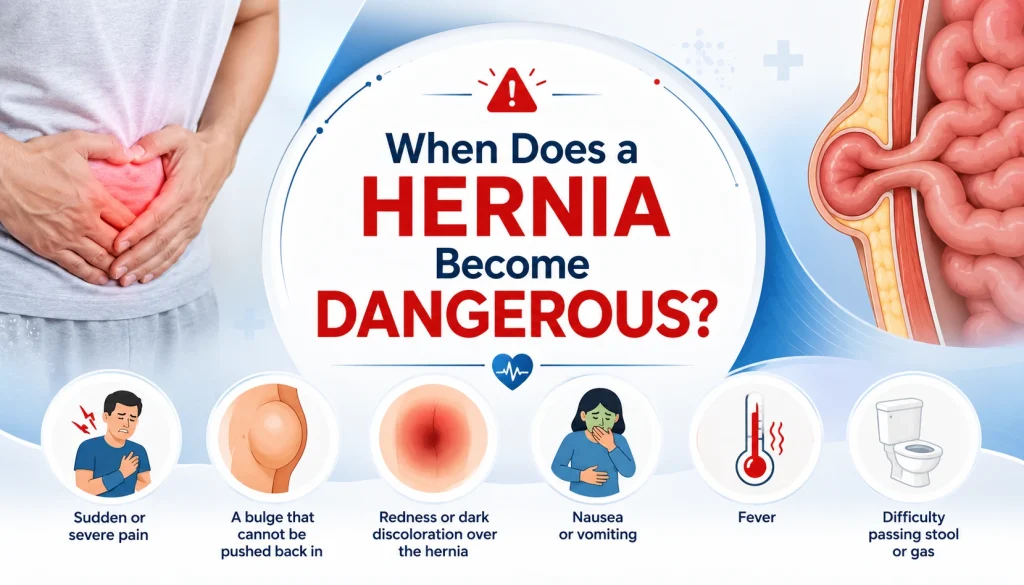
When Does a Hernia Become Dangerous?
Many hernias remain stable for months or even years, but some can develop serious complications without warning.
Seek immediate medical attention if you notice:
- Sudden or severe pain
- A bulge that cannot be pushed back in
- Redness or dark discoloration over the hernia
- Nausea or vomiting
- Fever
- Difficulty passing stool or gas
These symptoms may indicate an incarcerated or strangulated hernia, a medical emergency that requires urgent treatment.
Not every hernia symptom requires emergency treatment, but it’s important to know when professional medical care is needed. If you’re unsure whether your symptoms warrant a doctor’s visit, read our guide on When Should I See a Doctor for a Hernia? to better understand the warning signs, know when to consult a specialist, and learn when immediate medical attention is necessary.
How Can You Manage a Hernia Safely?
If your doctor recommends monitoring the hernia, adopting healthy habits may help reduce discomfort and slow symptom progression.
Some helpful measures include:
- Maintain a healthy body weight.
- Eat a high-fiber diet to prevent constipation.
- Avoid lifting heavy objects whenever possible.
- Treat chronic coughing if present.
- Stay active with low-impact exercises such as walking.
- Follow your doctor’s recommendations for regular follow-up visits.
These steps improve comfort but should not replace medical evaluation.
When Is Hernia Surgery Recommended?
Doctors commonly recommend surgery if:
- The hernia becomes larger.
- Pain becomes frequent or severe.
- Daily activities become difficult.
- There is a risk of complications.
- The hernia repeatedly protrudes or becomes trapped.
Planned surgery is usually safer than emergency surgery, which is why early assessment is important even when symptoms seem mild.
How ConsultGrab Can Help
If you’ve been diagnosed with a hernia or are experiencing symptoms, finding the right specialist shouldn’t be stressful. ConsultGrab acts as a trusted bridge between patients and experienced surgeons, helping you access the right diagnosis and treatment options through our verified hospital network.
Our care team provides free expert guidance, helps you book specialist appointments, explains available treatment options, and offers transparent information about expected treatment costs. We support you throughout the process so you can make informed healthcare decisions with confidence.
Conclusion
So, can you live a normal life with a hernia? In many cases, yes—but only if the condition is properly evaluated and monitored. While a small hernia may not immediately interfere with your daily routine, it should never be ignored because it can worsen over time. If you notice a new lump, increasing pain, or changes in your symptoms, consult a healthcare professional promptly. Early diagnosis and the right treatment plan can help you stay active, reduce the risk of complications, and maintain a better quality of life.
Yes, many people can live a normal life with a small, uncomplicated hernia if it causes mild or no symptoms and is monitored by a doctor. However, a hernia does not heal on its own and may enlarge over time. Regular medical evaluation helps determine whether watchful waiting or hernia surgery is the most appropriate treatment.
No. A hernia cannot heal naturally because the weakened muscle or tissue does not repair itself. While lifestyle changes, avoiding heavy lifting, and maintaining a healthy weight may reduce discomfort, surgery is the only permanent treatment for most abdominal and groin hernias.
If you have a hernia, avoid activities that increase pressure on the abdominal muscles, such as heavy lifting, intense weight training, and repeated straining during bowel movements. Low-impact activities like walking are usually safe, but you should always follow your doctor's advice based on the type and severity of your hernia.
Seek immediate medical attention if a hernia causes severe pain, becomes hard or cannot be pushed back in, changes color, or is accompanied by nausea, vomiting, fever, or difficulty passing stool or gas. These symptoms may indicate a strangulated or incarcerated hernia, which is a medical emergency.
Hernia surgery is typically recommended when the hernia becomes larger, causes persistent pain, interferes with daily activities, or has a high risk of complications. Early surgical treatment is often safer than emergency surgery and can help prevent serious problems while improving long-term quality of life.