

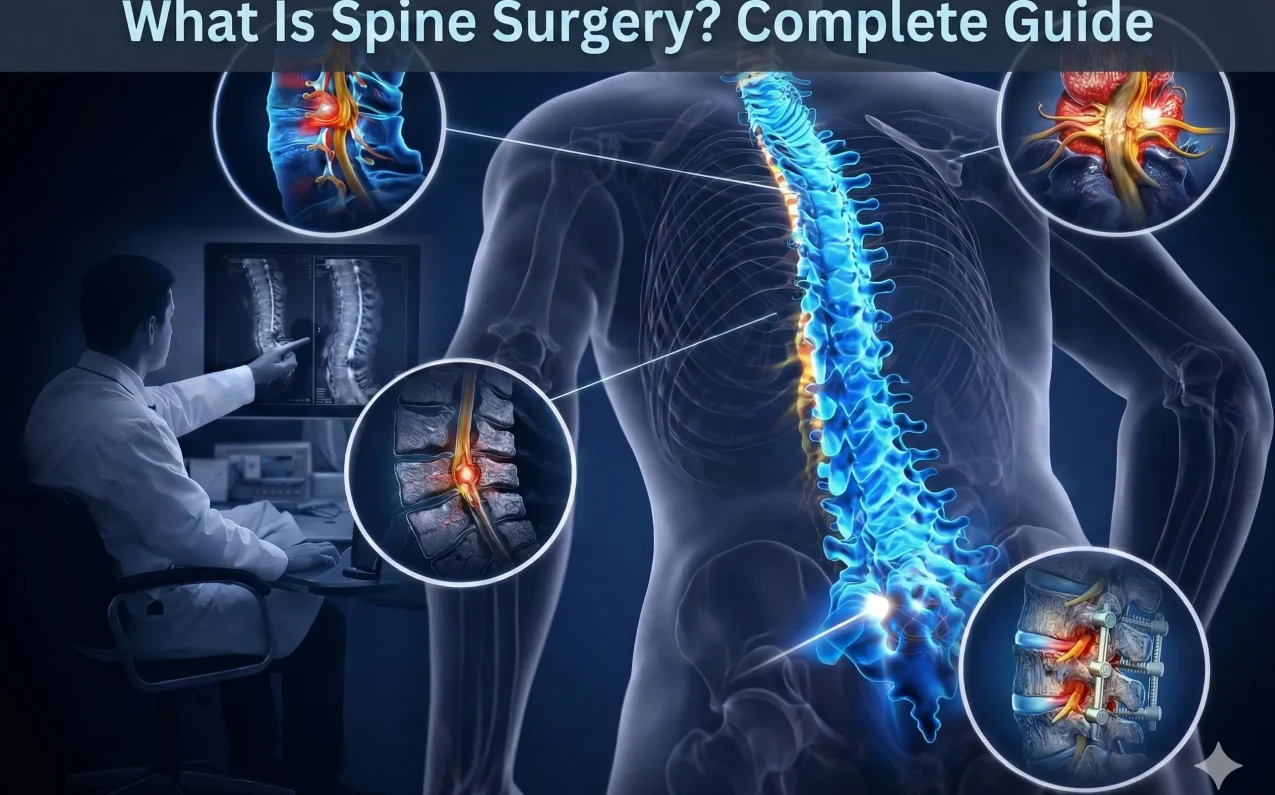
Introduction of Spine Surgery
Table of Contents
TogglePain in the spine, which includes back and neck pain, is considered to be one of the most common health issues that plague people around the world. It is safe to say that almost everyone is bound to experience spine pain at least once during their lifetime. While rest, medication, physiotherapy, and lifestyle changes may be able to help manage spine pain, there may be situations when spine surgery becomes necessary.
Spine surgery is considered to be a highly specialized medical intervention aimed at treating specific health conditions that impact the spine. It is safe to say that spine surgery is aimed at relieving pain, reducing pressure that is exerted on the nerves, stabilizing the spine, and improving the quality of life. With advancements being made in modern medicine, spine surgery is now considered to be safer and more precise.
In this comprehensive guide, readers will be able to learn more about what spine surgery is, when spine surgery is needed, types of spine surgery, risks of spine surgery, and so forth. If you are experiencing pain in your spine, you may be able to get expert advice and connect with experts by visiting Consult Grab.
Types of Spine Surgery
The type of spine surgery performed depends upon the patient’s condition and their health.
1. Discectomy
In this procedure, the damaged part of the herniated disc pressing on the nerve is surgically removed. It is usually performed for sciatic pain and other forms of leg pain.
Laminectomy
In this procedure, a part of the vertebrae bone, known as the lamina, is surgically removed. It is performed for spinal stenosis.
Spinal Fusion
In this procedure, two or more vertebrae are fused permanently. This procedure can be performed using a rod and screws. It is usually performed for instability and deformity.
Artificial Disc Replacement
In this procedure, a damaged disc in the spine is replaced with an artificial one. This procedure preserves spine flexibility.
Minimally Invasive Spine Surgery
In this procedure, a minimally invasive spine surgery technique is performed. It involves the use of specialized tools and cameras through a small incision.
Benefits of Spine Surgery
Spine surgery has a number of benefits for a patient. These benefits are as follows:
Pain relief
- Improved nerve function
- Improved spine flexibility and mobility
- Stabilization of the spine
Many are able to go back to work and normal daily activities after proper rehabilitation.
Risks and Complications
As with any other surgical intervention, spine surgery is associated with certain risks. These risks may include:
- Infection
- Bleeding
- Damage to nerves
- Blood clots
- Anesthesia complications
- Failure of bone fusion
Pain
However, complications are rarely encountered when performed by an experienced spine specialist.
Preparation Before Spine Surgery
Before spine surgery, the patient is evaluated with the following procedures:
- Physical examination
- MRI or CT scan
- X-rays
- Blood tests
- Medical fitness
- In addition, the patient may be advised to:
- Stop smoking
- Control diabetes or hypertension
- Avoid certain drugs
- Eat healthy
Recovery After Spine Surgery
The time taken for spine surgery varies depending upon the procedure.
Hospital Stay
The patient usually stays in the hospital for a period of 1 to 5 days.
- Pain Management
- Painkillers are prescribed for pain.
- Physical Therapy
Rehabilitation is an important part of spine surgery.
- Recovery Time Period
- Discectomy: 2-6 weeks
- Laminectomy: 4-8 weeks
Spinal Fusion: 3 months – 6 months – a year or more
Is Spine Surgery Always Necessary?
Most back pain cases do not require spine surgery. It is recommended in the following cases:
Conservative treatment fails
Long Term Outcomes of Spine Surgery
The long-term outcomes of spine surgery are influenced by several factors. These include the nature of the condition being treated, the mode of surgery used, as well as the patient’s overall health.
Some of the positive outcomes that are likely to occur after spine surgery include:
- Pain reduction
- Improved nerve function
- Improved posture
Ability to perform daily activities
It is essential to note that one’s overall health plays a crucial role in determining the success of spine surgery. Therefore, it is recommended that one continue with their exercises, maintain good posture, avoid smoking, and keep their body weight under control.
It is essential to note that spine surgery does not change one’s age. The segments of the spine that are not affected by the surgery are likely to degenerate with time. Therefore, it is essential that one consults a spine specialist from time to time.
Advancements in Spine Surgery Technology
The past decade has witnessed tremendous improvement in medical technology, which has improved spine surgery outcomes. Some of these advancements include:
Robotic-Assisted Spine Surgery
Robots are also used to place screws or implants accurately in the body. This reduces the chances of error and makes the surgery precise.
Endoscopic Spine Surgery
Endoscopic surgery uses a small camera that is inserted through a small cut in the body. This helps to treat a variety of spinal disorders with minimal damage to the body.
Motion-Preserving Technologies
Artificial disc replacement is a type of motion-preserving surgery, which does not fuse the vertebrae.
Biologic Bone Grafts
Bone grafting materials that encourage bone growth have been developed.
Spine surgery is now safer, less invasive, and more effective than it has ever been.
Minimally Invasive vs. Traditional Spine Surgery
The question that is often asked is, “Is minimally invasive spine surgery better than traditional spine surgery?”
- Minimally Invasive Surgery (MIS)
- Advantages.
Less invasive incisions
- Less blood loss
- Less muscle damage
- Shorter hospital stay
- Faster recovery
Limitations
May not be appropriate for certain conditions
Specialized skills required
Traditional Open Surgery
Advantages:
- More visualization for complex problems
- Severe deformities can be corrected
Limitations
Larger incision
Longer recovery time
More pain after surgery
Lifestyle Changes After Spine Surgery
The recovery process does not stop after the patient is discharged from the hospital. Lifestyle changes also play an important role in the success of the spine surgery.
Healthy Weight
Being overweight can put additional pressure on the spine. Keeping a healthy weight is important for the spine.
Exercise
Exercising regularly can help to strengthen the back muscles, thereby protecting the spine from further damage.
Postures
Poor posture can also damage the spine. Sitting in an upright posture, using an orthopedic chair, and avoiding sitting for long periods can help to maintain spine health.
Lifting Techniques
Poor posture can also damage the spine. Sitting in an upright posture, using an orthopedic chair, and avoiding sitting for long periods can help to maintain spine health.
Smoking
Smoking can slow down the healing process and also lead to fusion failure.
Psychological Aspects of Spine Surgery
Chronic back pain can have an impact on the mental state of the patient. Anxiety, depression, and even frustration can develop in the patient because of the lack of mobility and pain.
Spine surgery can also have psychological effects on the patient, such
Who Should Avoid Spine Surgery?
Spine surgery is not always recommended for the following individuals:
- Patients with minor back pain
- Patients who have not tried other forms of treatment
- Patients with uncontrolled medical conditions
- Patients with unrealistic expectations
How Consult Grab Helps You Choose the Best Spine Surgery in Delhi
Choosing the appropriate hospital and spine surgeon can be a daunting task, especially if you are facing extreme pain or a critical spinal condition. Consult Grab assists patients across Delhi and other regions by providing expert assistance and accurate medical information. With Consult Grab, patients can now confidently choose the appropriate spine surgery and expert for their spinal condition.
Connect with Top Spine Surgeons in Delhi:
Consult Grab assists patients in connecting with highly skilled spine surgeons and orthopedic experts across Delhi. These spine surgeons are well-trained to treat different spinal conditions such as a herniated disk, spinal stenosis, scoliosis, and degenerative disk disease. By connecting with an expert, patients can receive correct information about their spinal condition and appropriate treatment options.
Compare Spine Surgery Options:
There are different types of spine problems that need different types of treatment options. Consult Grab helps patients to know the differences between the available treatment options such as minimally invasive spine surgery, spinal fusion, discectomy, and non-surgical options such as physiotherapy and pain management.
Get Personalised Guidance and Support:
With the assistance of Consult Grab, patients can get the required support throughout the treatment process. It can also guide the patient in scheduling appointments with the doctor, understanding the MRI report, and preparing for spine surgery.
Easy Appointment and Treatment Coordination:
The entire process can be handled by Consult Grab in such a manner that the patient can get the appointment scheduled with the best spine surgeons in Delhi. The entire process can be handled in a smooth manner so that the patient can get the required treatment in the best possible manner.
With the proper assistance of Consult Grab, the patient can take the right decision to choose the best spine surgery options available in Delhi.
Disclaimer
The information contained in this article is for educational and information purposes only. Spine surgery is a complex medical procedure that requires proper diagnosis, evaluation, and treatment by qualified medical experts.
Grab Consult is not directly involved in providing medical care and treatment to patients. Instead, we help patients get connected with experienced spine surgeons, doctors, and reputed hospitals in India. The nature and severity of medical conditions differ from patient to patient. The outcome of spine surgery varies from person to person. Therefore, it is strongly recommended that patients consult a certified medical expert, such as a spine surgeon or orthopedic/neurosurgeon, before making any medical decisions.