
Recovering well after hernia surgery is not only about rest and wound care. Your diet plays a major role in how quickly and comfortably your body heals. While choosing the right foods is important, many patients also seek guidance from Best Doctors for Hernia Surgery in Delhi to understand recovery, activity restrictions, and nutritional requirements after surgery. A balanced post-operative diet can reduce digestive discomfort, support tissue repair, and help prevent complications such as constipation.
Whether you have undergone open or laparoscopic hernia repair, knowing which foods to avoid after surgery can make a significant difference in your recovery journey.
Why Diet Matters After Hernia Surgery
Table of Contents
ToggleAfter surgery, your body enters a healing phase that requires additional nutrients, adequate hydration, and proper digestion. Anesthesia, pain medications, and reduced physical activity can temporarily slow bowel movements, leading to constipation, bloating, and abdominal discomfort.
Eating the wrong foods during this period may increase pressure inside the abdomen, making recovery more uncomfortable. A carefully planned diet helps:
- Support wound healing and tissue repair
- Prevent constipation and straining
- Reduce bloating and gas
- Maintain energy levels
- Promote healthy digestion
What Happens to Digestion After Hernia Surgery?
Many patients experience temporary digestive changes after surgery. Anesthesia and pain medications can slow the digestive system, causing gas, bloating, and irregular bowel movements.
The abdominal area may also feel tender, making it uncomfortable to strain during bowel movements. This is why surgeons often recommend starting with liquids and soft foods before gradually returning to a regular diet.
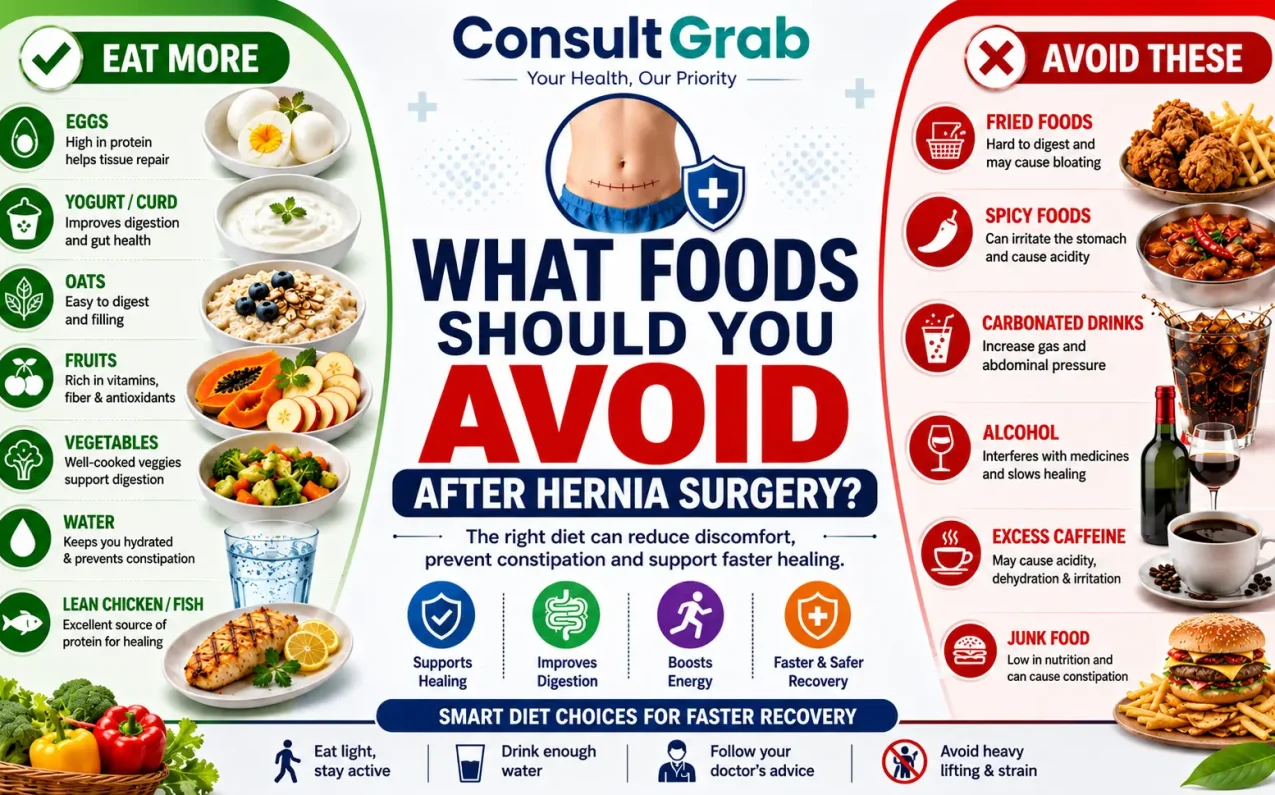
Foods to Avoid After Hernia Surgery
Certain foods can irritate the digestive system, increase abdominal pressure, or slow recovery. Avoiding them during the first few weeks can help minimize discomfort.
1. Fried and Oily Foods
Fried foods are difficult to digest and may increase acid reflux, nausea, and bloating after surgery.
Examples include:
- French fries
- Fried snacks
- Pakoras
- Fast food items
- Deep-fried chicken
These foods can also contribute to constipation and digestive discomfort.
2. Spicy Foods
Highly spicy meals may irritate the digestive tract and worsen acidity, especially when combined with post-operative medications.
Foods to limit include:
- Hot curries
- Pickles
- Green chilies
- Excessively spicy street food
A milder diet is generally easier on the stomach during the recovery period.
3. Carbonated Drinks
Soft drinks and carbonated beverages introduce excess gas into the digestive system, increasing abdominal pressure and bloating.
Avoid:
- Soda
- Soft drinks
- Sparkling water
- Energy drinks
Instead, focus on water, coconut water, and other hydrating fluids.
4. Processed and Packaged Foods
Highly processed foods often contain excess salt, unhealthy fats, and low amounts of fiber.
Examples include:
- Chips
- Packaged snacks
- Instant noodles
- Processed sweets
These foods may contribute to constipation and provide limited nutritional value for healing.
5. Excessive Caffeine
Large amounts of coffee, strong tea, and caffeinated beverages may worsen acidity and contribute to dehydration.
While moderate consumption may be acceptable later in recovery, many surgeons recommend limiting caffeine during the initial healing period.
6. Alcohol
Alcohol should generally be avoided until medications are discontinued and your surgeon confirms it is safe.
Alcohol can:
- Interfere with medications
- Increase dehydration
- Slow healing
- Irritate the digestive system
Most patients are advised to wait several weeks before resuming alcohol consumption.
7. Foods That Cause Excess Gas
Gas-producing foods can increase abdominal pressure and create discomfort around the surgical site.
Common examples include:
- Cabbage
- Cauliflower
- Broccoli
- Poorly cooked beans
- Carbonated beverages
Not everyone reacts the same way, so monitor your body’s response as you gradually reintroduce foods.
What Should You Eat Instead?
Rather than focusing only on restrictions, it is equally important to include foods that support healing.
Prioritize Protein
Protein is essential for repairing tissues and supporting recovery.
Good protein sources include:
- Eggs
- Fish
- Chicken
- Paneer
- Lentils and dals
- Tofu
- Greek yogurt
Many surgeons recommend ensuring adequate daily protein intake based on body weight and individual needs.
Increase Fiber Gradually
Fiber helps prevent constipation and reduces the need for straining.
Healthy fiber sources include:
- Oats
- Papaya
- Pears
- Soft fruits
- Well-cooked vegetables
- Whole grains
Patients interested in detailed nutritional guidance can also explore diet tips for hernia patients? to better understand recovery-focused meal planning.
Stay Hydrated
Water plays a critical role in digestion and bowel regularity.
Aim to:
- Drink water throughout the day
- Include clear soups and broths
- Consider coconut water if appropriate
- Limit dehydrating beverages
Proper hydration works together with fiber to reduce constipation risk.
How Long Should You Follow a Restricted Diet?
Most patients can gradually return to a normal diet within one to two weeks, depending on the type of surgery and individual recovery.
However, continuing healthy eating habits for several weeks may help reduce digestive discomfort and support long-term healing. If constipation, bloating, or abdominal pain persists, consult your surgeon for personalized advice.
Patients often wonder about long-term recovery and lifestyle considerations after surgery. Understanding Can a person live with a hernia? can provide additional insight into hernia management, treatment decisions, and post-operative outcomes.
Additional Recovery Tips
Diet works best when combined with healthy recovery habits.
Some practical recommendations include:
- Walk regularly as advised by your surgeon
- Avoid prolonged bed rest
- Follow medication instructions carefully
- Avoid heavy lifting during the healing phase
- Attend scheduled follow-up appointments
Gentle movement helps stimulate bowel activity and may reduce the risk of constipation.
How ConsultGrab Can Help
Recovering from hernia surgery often involves more than simply following dietary advice. Every patient has unique nutritional requirements, recovery timelines, and surgical considerations.
Through ConsultGrab, patients can connect with experienced surgeons, compare treatment options, access trusted healthcare information, and make informed decisions about hernia treatment and recovery. Whether you are preparing for surgery or navigating post-operative care, having access to expert guidance can make the recovery process smoother and more confident.
Conclusion
The foods you avoid after hernia surgery can have a significant impact on your comfort and recovery. Fried foods, spicy meals, alcohol, excessive caffeine, carbonated drinks, and highly processed foods may increase digestive discomfort and slow the healing process. Instead, focus on a balanced diet rich in protein, fiber, hydration, and nutrient-dense foods that support tissue repair and healthy digestion.
A thoughtful post-operative diet, combined with proper hydration, gentle activity, and medical guidance, can help reduce complications and promote a smoother recovery. By making smart dietary choices during the healing period, you give your body the best opportunity to recover safely and effectively.
Frequently Asked Questions
Fried foods, spicy meals, carbonated beverages, alcohol, highly processed snacks, and foods that commonly cause gas should be avoided during the early recovery period. These foods can increase bloating, digestive discomfort, and abdominal pressure, potentially making recovery less comfortable.
Moderate amounts may be allowed after surgery, but excessive caffeine can worsen acidity and contribute to dehydration. Many surgeons recommend limiting tea and coffee during the first few days of recovery and focusing on water and other hydrating fluids.
Constipation can lead to straining during bowel movements, which increases abdominal pressure. Excessive straining may cause discomfort around the surgical site and could negatively affect recovery. Adequate fiber, hydration, and gentle walking help reduce this risk.
Protein requirements vary based on body weight, age, and overall health. Generally, adequate protein intake from eggs, fish, chicken, lentils, paneer, tofu, and dairy products supports tissue repair and wound healing during recovery.
Most patients gradually resume their regular diet within one to two weeks. Recovery varies depending on the surgical approach, overall health, and individual healing progress. Always follow your surgeon's specific dietary recommendations.