

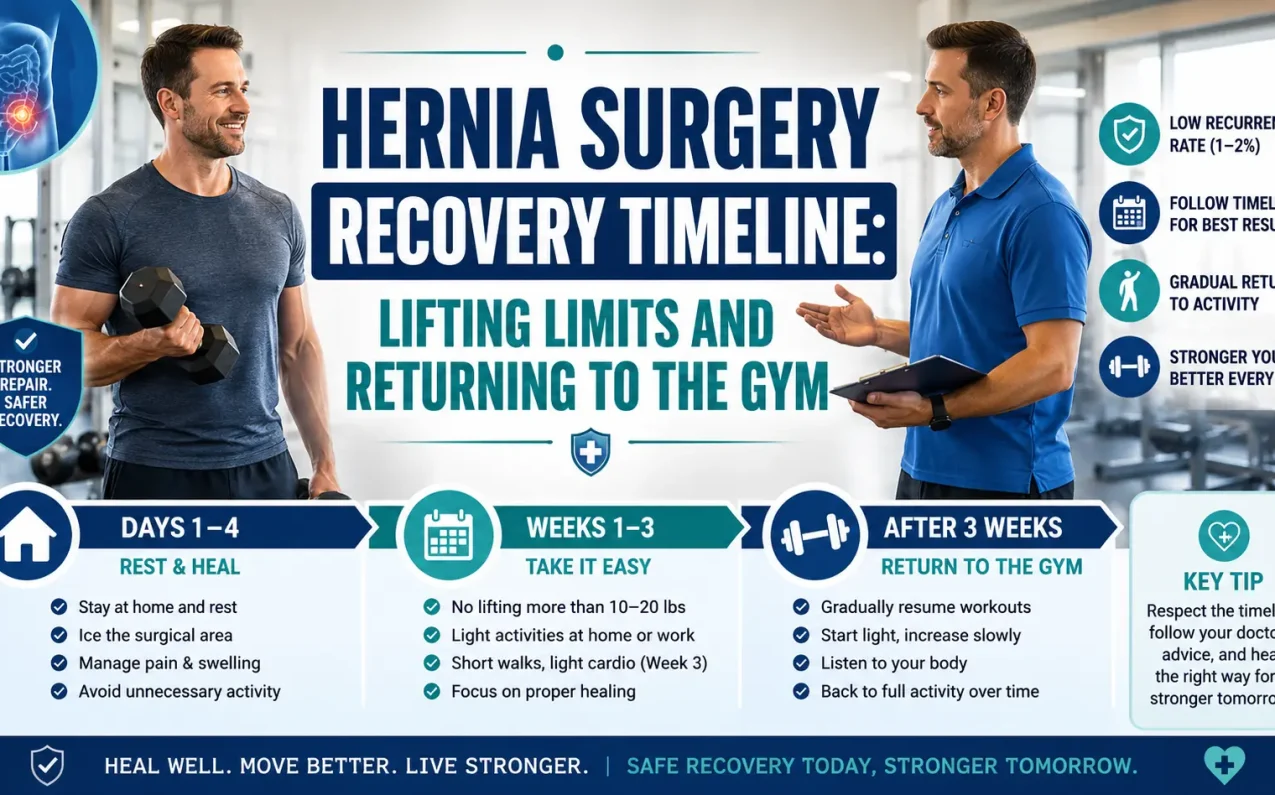
Hernia surgery is one of the most common procedures performed worldwide, and most patients want to know how soon they can return to normal life. Whether your goal is getting back to work, lifting household items, or resuming gym workouts, understanding the recovery timeline is essential. Patients searching for the Best Doctors for Hernia Surgery in Delhi often have concerns about pain, activity restrictions, and the risk of recurrence after surgery.
The good news is that modern hernia repair techniques offer excellent outcomes. Most patients experience significant symptom relief, and the recurrence rate remains relatively low when proper recovery guidelines are followed. However, the success of the procedure does not depend only on the surgery itself. The way you recover during the first few weeks plays a major role in healing and long-term results.
This guide explains what to expect after hernia surgery, when lifting becomes safe, and how to gradually return to exercise and gym activities without compromising your recovery
Understanding Hernia Surgery Recovery
Table of Contents
ToggleRecovery after hernia surgery occurs in stages. While the exact timeline varies depending on the type of hernia, surgical technique, age, and overall health, most patients follow a similar healing pattern.
The body’s natural healing process begins immediately after surgery. During the first few days, inflammation, mild discomfort, swelling, and bruising are normal. Over the following weeks, tissues strengthen and the surgical repair becomes more stable.
Many modern hernia repairs use surgical mesh to reinforce weakened muscles. The body gradually integrates this mesh into surrounding tissues, creating a stronger repair over time. This process requires patience and proper activity modification.
The majority of patients are surprised to learn that feeling better does not always mean the repair is fully healed. Internal healing continues even after pain and discomfort have improved.
The First 3–4 Days After Hernia Surgery
The first few days are considered the most important period for early recovery.
During this phase, the primary goal is rest and healing. Most surgeons recommend staying home and avoiding unnecessary activities. Excessive movement can increase swelling, discomfort, and fatigue.
Common symptoms during the first few days include:
- Mild to moderate pain
- Swelling around the surgical area
- Bruising
- Tightness or soreness
- Temporary fatigue
To support recovery:
- Rest as much as possible.
- Apply ice packs as recommended.
- Stay hydrated.
- Eat nutritious meals.
- Follow prescribed medications.
- Avoid strenuous activities.
Many patients feel tempted to resume daily routines quickly, especially if pain is manageable. However, pushing too hard during the initial recovery period may increase discomfort and delay healing.
Short walks around the house are generally encouraged to improve circulation and reduce the risk of blood clots, but long walks, intense activities, and social events should be avoided.
Week One: Returning to Light Daily Activities
After the first few days, many patients begin feeling more comfortable.
Basic household tasks can often be resumed, provided they do not involve heavy lifting or excessive bending. Office-based work may be possible for some individuals, depending on pain levels and job requirements.
At this stage, patients should focus on gradual movement rather than complete inactivity. Gentle mobility helps improve circulation and promotes recovery.
However, activities involving abdominal strain should still be avoided. This includes:
- Lifting heavy grocery bags
- Moving furniture
- Carrying children
- Intense cleaning activities
- Heavy yard work
The repair remains vulnerable during this period, even if symptoms appear to be improving.
Why Lifting Restrictions Matter
One of the most common questions patients ask is when they can start lifting again.
Lifting restrictions are designed to protect the surgical repair while tissues regain strength. Increased abdominal pressure generated during lifting can place stress on healing tissues.
In many cases, surgeons recommend avoiding lifting more than 10 to 20 pounds for approximately three weeks after surgery. Examples of objects within this range include:
- A laptop bag
- A gallon of milk
- Light groceries
- Small briefcases
The exact limit may vary depending on your procedure and surgeon’s recommendations.
Following lifting restrictions is particularly important because internal healing takes longer than external healing. Even if the incision appears healed, deeper tissues may still be strengthening.
Recovery During Weeks Two and Three
The second and third weeks often mark a noticeable improvement in comfort and mobility.
Most patients can return to many routine activities while continuing to avoid heavy lifting and strenuous exercise. Swelling and bruising generally begin to resolve, and energy levels improve.
During this stage, individuals frequently ask, Can a person live with a hernia? While some hernias may remain stable for a period of time, untreated hernias can enlarge, cause discomfort, and potentially lead to complications. Surgical repair remains the definitive treatment for many symptomatic hernias.
As healing progresses, patients may be able to:
- Walk longer distances
- Return to desk-based work
- Perform light household activities
- Drive if approved by their surgeon
- Resume normal daily routines with caution
The key principle remains avoiding activities that create significant abdominal pressure.
The second and third weeks often mark a noticeable improvement in comfort and mobility.
Most patients can return to many routine activities while continuing to avoid heavy lifting and strenuous exercise. Swelling and bruising generally begin to resolve, and energy levels improve.
During this stage, individuals frequently ask, Can a person live with a hernia? While some hernias may remain stable for a period of time, untreated hernias can enlarge, cause discomfort, and potentially lead to complications. Surgical repair remains the definitive treatment for many symptomatic hernias.
As healing progresses, patients may be able to:
- Walk longer distances
- Return to desk-based work
- Perform light household activities
- Drive if approved by their surgeon
- Resume normal daily routines with caution
The key principle remains avoiding activities that create significant abdominal pressure.
When Can You Start Cardio Again?
Cardiovascular exercise is an important concern for active individuals.
Most surgeons allow a gradual return to light cardio during the third week, provided recovery is progressing normally.
Suitable low-intensity activities may include:
- Easy walking
- Light stationary cycling
- Gentle treadmill sessions
- Slow-paced jogging
The goal is movement without excessive strain.
Patients should avoid:
- Sprinting
- High-intensity interval training
- Heavy rowing
- Intense stair climbing
- Competitive sports
Listening to your body is essential. Pain, pulling sensations, or increased swelling may indicate that activity levels should be reduced temporarily.
How Mesh Strengthens the Repair
Many hernia repairs utilize surgical mesh to reinforce weakened abdominal tissues.
After placement, the mesh becomes integrated into the body’s tissues through a process called tissue ingrowth. This gradual strengthening process helps create a durable repair.
Research and clinical experience suggest that significant strengthening occurs during the first three weeks following surgery. Because of this, lifting restrictions are commonly maintained during this critical period.
Allowing adequate time for tissue integration reduces stress on the repair and supports long-term success.
Patients who ignore activity restrictions too early may increase the risk of complications, discomfort, or recurrence.
Returning to the Gym Safely
For fitness enthusiasts, the biggest question is often when they can return to training.
The answer depends on several factors:
- Type of hernia repaired
- Surgical technique used
- Overall fitness level
- Presence of complications
- Individual healing response
For most uncomplicated recoveries, patients are gradually cleared for exercise after approximately three weeks.
However, returning to the gym does not mean resuming maximum effort immediately.
A safer approach includes
Week 3–4
Begin with:
- Light resistance training
- Bodyweight movements
- Easy cardio sessions
- Controlled mobility exercises
Avoid:
- Heavy squats
- Deadlifts
- Heavy bench presses
- Overhead lifting
- Explosive movements
Week 4–6
Gradually increase:
- Weight loads
- Workout duration
- Training frequency
Continue monitoring for:
- Pain
- Swelling
- Fatigue
- Discomfort near the surgical site
After Full Recovery
Most patients eventually return to:
- Weightlifting
- Running
- Sports
- Functional fitness
- High-intensity training
The progression should always be gradual rather than aggressive.
Warning Signs During Recovery
While most recoveries are uncomplicated, patients should be aware of symptoms that require medical attention.
Contact your healthcare provider if you experience:
- Severe or worsening pain
- Significant redness around the incision
- Fever
- Persistent nausea or vomiting
- Drainage from the wound
- Sudden swelling
- Difficulty urinating
- Signs of infection
Patients researching What are the 5 warning signs of a hernia? should understand that symptoms such as a visible bulge, discomfort during lifting, pressure sensations, pain, and worsening swelling often indicate a hernia that requires medical evaluation.
Prompt communication with your surgeon can help prevent complications and ensure appropriate treatment.
Tips for Faster Recovery
Although healing follows a natural timeline, several habits may support a smoother recovery
Prioritize Nutrition
A balanced diet provides nutrients needed for tissue repair. Focus on:
- Lean proteins
- Fruits
- Vegetables
- Whole grains
- Healthy fats
Adequate protein intake is particularly important during healing.
Stay Hydrated
Proper hydration supports circulation, digestion, and recovery.
Avoid Smoking
Smoking can impair wound healing and increase the risk of complications.
Prevent Constipation
Smoking can impair wound healing and increase the risk of complications.
Straining during bowel movements increases abdominal pressure.
Helpful strategies include:
- Fiber-rich foods
- Adequate fluids
- Physical activity as tolerated
- Following medical recommendations
Follow Medical Instructions
Every patient is unique. Personalized guidance from your surgeon should always take priority over general recovery timelines.
Factors That Affect Recovery Time
Not everyone heals at exactly the same pace.
Several factors influence recovery, including:
- Age
- Overall health
- Weight
- Smoking status
- Diabetes
- Hernia size
- Surgical technique
- Physical activity level
Patients who maintain healthy lifestyles often experience smoother recoveries and may return to normal activities more comfortably.
However, even highly fit individuals must respect lifting restrictions during the early healing phase.
Long-Term Outlook After Hernia Surgery
The long-term outlook following hernia surgery is generally excellent.
Most patients return to their normal lifestyles without limitations. Once fully healed, people can typically:
- Lift weights
- Participate in sports
- Perform physically demanding jobs
- Travel
- Engage in recreational activities
Recurrence rates remain relatively low, especially when patients follow post-operative instructions carefully.
Maintaining a healthy weight, exercising appropriately, and avoiding excessive abdominal strain may further support long-term results.
How ConsultGrab Can Help
Finding the right specialist can significantly influence your surgical experience and recovery journey. ConsultGrab helps patients connect with experienced healthcare professionals, compare treatment options, and access reliable information about hernia care.
Whether you are exploring diagnosis, treatment planning, surgery options, or post-operative guidance, the platform simplifies the process of finding qualified medical experts. Patients can make more informed healthcare decisions and receive support throughout their treatment journey.
Conclusion
Recovering from hernia surgery is a gradual process that requires patience, proper care, and adherence to medical advice. The first few days should focus on rest, icing, and minimizing physical strain. During the following weeks, light activities can be resumed while maintaining lifting restrictions to protect the repair.
Most patients can gradually return to cardio exercise around the third week and progressively work back toward full gym participation. Heavy lifting, intense workouts, and demanding physical activities should be reintroduced slowly rather than all at once.
By respecting recovery timelines, following professional guidance, and prioritizing overall health, patients can maximize healing, reduce complications, and confidently return to the activities they enjoy
Frequently Asked Questions (FAQs)
Most patients are advised to avoid lifting more than 10 to 20 pounds for approximately three weeks after surgery. This restriction allows tissues and surgical mesh to strengthen properly. Your surgeon may adjust recommendations based on your procedure, overall health, and recovery progress.
Many patients can begin light exercise around the third week if recovery is progressing normally. However, heavy lifting, squats, deadlifts, and intense workouts should be reintroduced gradually. Always follow your surgeon's specific recommendations before resuming gym training.
Yes. Mild swelling and bruising are common during the first few weeks after surgery. These symptoms usually improve as healing progresses. Persistent, severe, or rapidly worsening swelling should be evaluated by a healthcare professional.
Returning to strenuous exercise too early can place stress on healing tissues and may increase the risk of complications. Following lifting restrictions and gradually increasing activity levels helps protect the repair and supports successful long-term outcomes.
Recovery-friendly foods include lean proteins, fruits, vegetables, whole grains, and healthy fats. Adequate protein supports tissue repair, while fiber-rich foods help prevent constipation and reduce straining during bowel movements, which is important after surgery.