

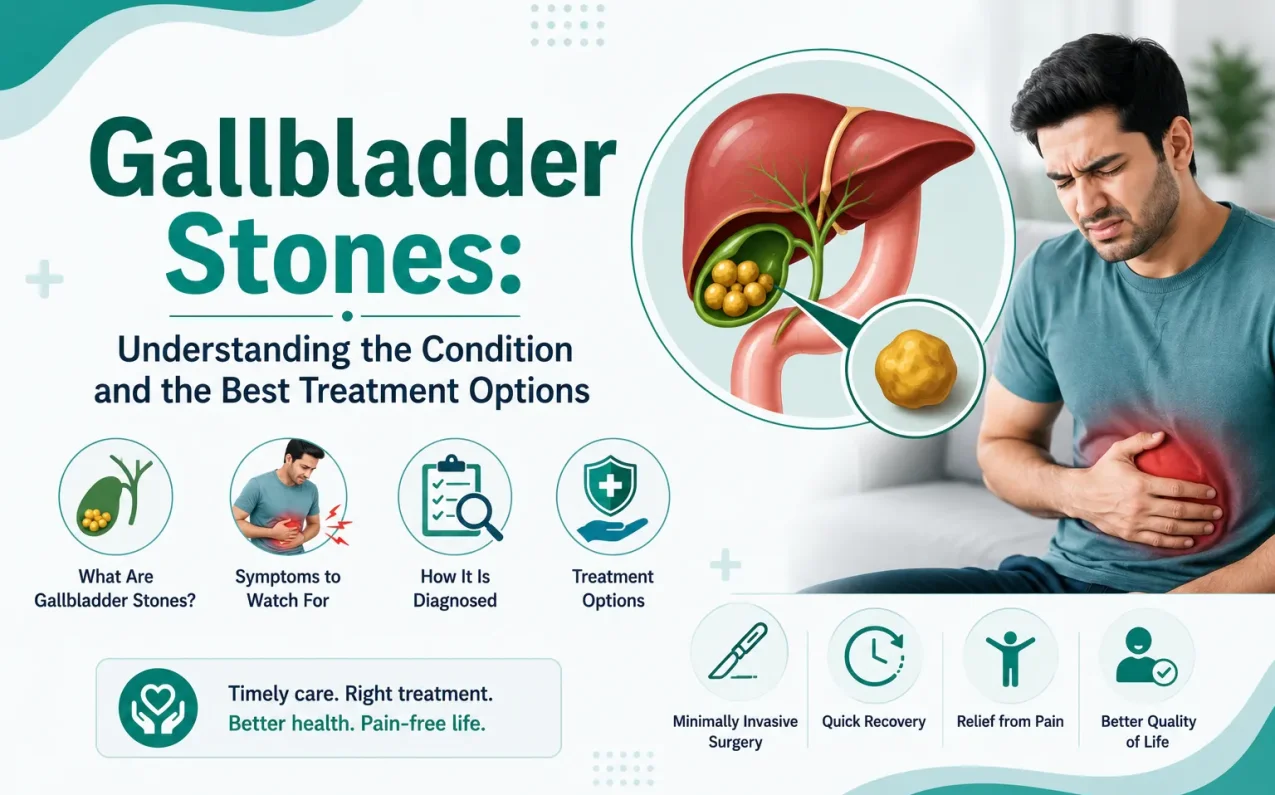
Gallbladder stones are a common digestive condition that can significantly affect comfort, daily routine, and overall well-being once they start causing problems. While some people live without symptoms, many eventually require medical treatment to prevent repeated discomfort and complications.
Understanding gallbladder stones and knowing the most effective treatment options available helps patients make confident healthcare decisions. With modern medical techniques and proper guidance, gallbladder treatment can be safe, effective, and reassuring. Patients should seek timely medical evaluation to avoid complications and ensure the most appropriate care for their condition.
What Are Gallbladder Stones?
Table of Contents
ToggleGallbladder stones are hardened deposits that form inside the gallbladder, a small organ located beneath the liver. The gallbladder stores bile, which helps digest fats. When bile components become imbalanced, solid particles can form and gradually grow into stones.
Gallbladder stones may remain small or increase in size over time. Once stones begin interfering with bile flow or gallbladder function, treatment becomes necessary.
Types of Gallbladder Stones
Gallbladder stones differ based on their composition. Understanding the type of stone helps in planning appropriate treatment.
Cholesterol Stones
These are the most common and form when bile contains excess cholesterol that does not dissolve properly.
Pigment Stones
These develop due to increased bilirubin levels and are usually darker in colour.
Mixed Stones
These contain both cholesterol and pigment components and may be harder in structure.
The size and number of stones play an important role in determining treatment approach.
When Is Treatment Necessary?
Treatment is recommended when gallbladder stones:
- Cause repeated discomfort or pain
- Interfere with normal digestion
- Lead to inflammation or blockage
- Affect daily quality of life
Once gallbladder stones become problematic, they rarely resolve on their own. Delaying treatment often increases the risk of repeated episodes and complications.
Best Treatment for Gallbladder Stones
For gallbladder stones that require treatment, surgery is considered the most effective and permanent solution.
Many patients ask whether gallstones can go away without surgery or whether only the stones can be removed while preserving the gallbladder. Medical experience shows that this approach is not effective, as stones tend to reform quickly if the gallbladder remains. For long-term relief, complete gallbladder removal is recommended.
Types of Gallbladder Stone Surgery
Several surgical approaches are available, depending on the patient’s condition and complexity of the case.
1. Laparoscopic Gallbladder Removal (Keyhole Surgery)
This is the most commonly performed and preferred procedure.
How it is done:
- Small incisions are made in the abdomen
- A camera and specialised instruments are inserted
- The gallbladder is carefully removed
Benefits include:
- Less postoperative pain
- Faster recovery
- Short hospital stay
- Minimal scarring
- Early return to daily activities
For most patients, laparoscopic surgery provides the safest and most reliable outcome.
2. Open Gallbladder Surgery
Open surgery is recommended only in complex or rare cases, such as:
- Severe inflammation
- Extensive scarring
- Anatomical challenges
This procedure involves a larger incision and longer recovery but is sometimes necessary for patient safety.
3. Advanced Minimally Invasive Gallbladder Surgery
Modern surgical advancements allow high-precision minimally invasive techniques in selected cases. These methods offer:
- Greater surgical control
- Reduced discomfort
- Faster healing
- Lower risk of complications
Life After Gallbladder Surgery
The gallbladder is not essential for digestion. After removal:
- Bile flows directly from the liver into the intestine
- Most patients digest food normally
- Temporary dietary changes may be advised
With proper guidance, patients can resume normal activities and enjoy a healthy lifestyle. Understanding how many days of bed rest are needed after gallbladder removal can help set realistic recovery expectations and support a smoother return to daily routines.
Why Expert Guidance Matters
Gallbladder stone treatment should always be guided by proper evaluation and clear understanding. Each case is unique, and choosing the right surgical approach is crucial for safe recovery.
Expert guidance helps patients:
- Understand surgical options clearly
- Avoid unnecessary delays
- Prepare confidently for treatment
- Experience smoother recovery
How ConsultGrab Supports Patients
ConsultGrab acts as a trusted bridge between patients and experienced medical specialists. We focus on making healthcare decisions simpler, clearer, and stress-free.
We help patients by:
- Understanding each case in detail
- Connecting them with verified specialists and hospitals
- Explaining treatment options clearly
- Supporting appointment scheduling and coordination
- Guiding patients throughout the treatment journey
Our mission is to ensure patients feel informed, confident, and supported at every step.
Conclusion
Gallbladder stones can become a long-term problem if left untreated. Understanding the condition and choosing the right treatment approach at the right time is key to long-lasting relief.
For patients who require intervention, gallbladder surgery offers the most reliable and permanent solution. With modern techniques and expert guidance, treatment can be smooth, safe, and effective.
If you need trusted guidance for gallbladder stone treatment, ConsultGrab is here to support you every step of the way.
Frequently Asked Questions (FAQs)
For gallbladder stones that require treatment, surgery is the most effective and permanent solution. Complete removal of the gallbladder prevents stone recurrence and eliminates repeated discomfort. Non-surgical methods may offer temporary relief but do not address the root cause once stones become problematic.
Non-surgical treatments may be considered in very limited situations, but they are generally not reliable for long-term relief. Stones often return if the gallbladder is not removed. When treatment is needed, surgical removal of the gallbladder provides the most dependable and lasting outcome.
Gallbladder stones are treated using laparoscopic gallbladder removal, open gallbladder surgery, or advanced minimally invasive techniques. Laparoscopic surgery is the most common option due to faster recovery and minimal scarring. The choice depends on the patient’s condition and surgical complexity.
Yes, most people live a normal and healthy life after gallbladder removal. The liver continues to produce bile, which flows directly into the intestine. Some temporary dietary adjustments may be advised, but digestion usually adapts well over time with proper medical guidance.
Patients can receive structured medical guidance through platforms like ConsultGrab, which connect individuals with verified specialists and hospitals. Such guidance helps patients understand treatment options clearly, plan surgery confidently, and experience a smoother treatment journey.