

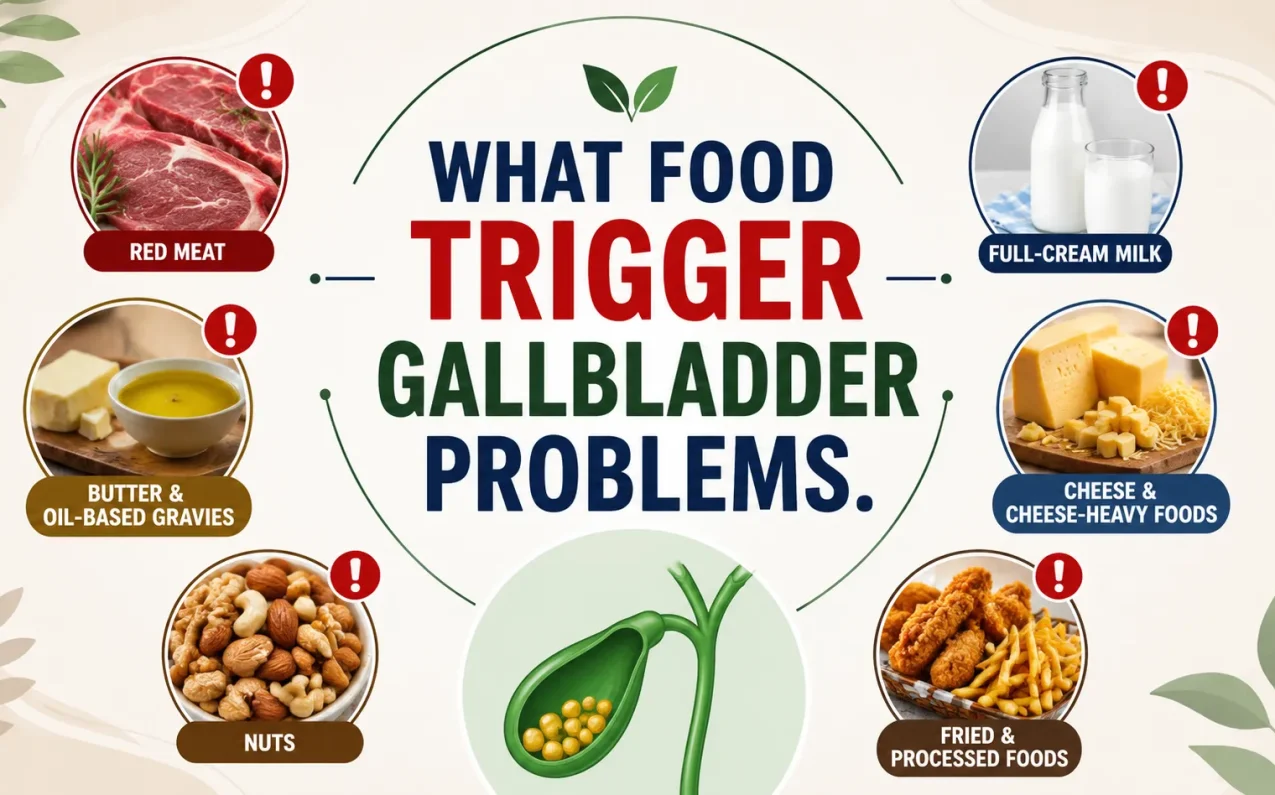
Gallbladder problems, especially gallstones, often become noticeable through daily discomfort after meals. Many people are surprised to learn that what they eat can directly influence how severe their symptoms feel. While gallstones form over time, certain foods can trigger pain, bloating, or discomfort and make existing gallstones more troublesome.
Understanding which foods may worsen gallbladder symptoms can help you make better dietary choices and avoid unnecessary pain.
How Food Affects the Gallbladder
Table of Contents
ToggleThe gallbladder plays an important role in digesting fats. When you consume fatty or heavy foods, the gallbladder contracts to release bile. If gallstones are present, this contraction can lead to pain, pressure, or digestive discomfort. Foods that are high in fat, cholesterol, or heavily processed are more likely to trigger symptoms.
However, gallbladder reactions vary from person to person. Some foods may cause issues for one individual but not for another, which is why personal observation and medical guidance are important.
Foods That Commonly Trigger Gallbladder Discomfort
1. Red Meat and Fatty Meats
Red meats are typically high in fat and cholesterol. These properties can make gallstones more problematic and may intensify pain. Frequent consumption can increase digestive stress and worsen gallbladder discomfort.
2. Butter and Oil-Based Gravies
Foods cooked with excess butter or oil can be difficult for the gallbladder to handle. Rich gravies and heavy cooking methods increase fat intake, which may trigger symptoms. Measuring oil carefully during cooking can make a noticeable difference
3. Nuts
Although nuts are often considered healthy, they contain high amounts of fat. For people with gallstones, this fat content may worsen symptoms rather than help. Moderation is key, and in some cases, avoidance may be necessary.
4. Full-Cream Milk
Full-cream dairy products can significantly increase fat intake. Choosing lighter options, such as double-toned milk for tea or coffee, may help reduce discomfort while still allowing dairy in your diet.
5. Cheese and Cheese-Heavy Foods
Cheese-rich meals such as pizzas or creamy pastas can be hard on the gallbladder. Reducing cheese quantity or choosing plant-based alternatives like tofu can help manage symptoms without completely avoiding these meals.
Since gallbladder discomfort is often confused with gas or acidity, knowing Where Is Gallbladder Pain Located? can help you identify symptoms correctly and seek timely treatment.
Vegetables That May Worsen Gallbladder Symptoms
While vegetables are generally healthy, some can cause gas and bloating, which may increase pressure around the gallbladder.
Vegetables that may trigger discomfort include:
- Cabbage
- Cauliflower
- Broccoli
- Onions
Gas buildup can strain the digestive system and aggravate existing gallbladder symptoms.
Drinks That Can Trigger Gallbladder Issues
Certain beverages can stimulate gallbladder contractions or increase inflammation, making symptoms worse.
It is best to limit or avoid:
- Alcohol, especially beer and wine
- Sugary carbonated drinks
- Strong coffee or energy drinks
- Milkshakes and high-fat dairy drinks
Other Foods Known to Cause Gallbladder Pain
Beyond fats and gas-producing foods, some additional items are commonly linked to gallbladder discomfort:
- Spicy foods
- Chocolate, particularly milk chocolate
- Ice cream
- Processed or frozen meals
Avoiding these foods can be especially helpful for people experiencing frequent symptoms or planning further medical evaluation.
Everyone’s Experience Is Different
Gallbladder problems do not affect everyone in the same way. A food that triggers discomfort in one person may not cause any issues for another. Tracking symptoms after meals can help identify personal trigger foods.
Medical guidance remains essential to determine which foods should be avoided and which ones can be safely included in your diet.
When to Seek Medical Guidance
Persistent gallbladder discomfort should not be ignored. While dietary changes can reduce symptoms, they may not address the underlying cause. Professional evaluation helps determine whether lifestyle adjustments are sufficient or if further treatment is required.What Can You Not Do After Gallbladder Removal Surgery?explains the important lifestyle restrictions, food habits, and activities patients should avoid after surgery to ensure smooth recovery.
How ConsultGrab Supports Your Treatment Journey
Managing gallbladder-related concerns often involves multiple decisions, including dietary changes, diagnostic tests, and treatment planning. ConsultGrab acts as a strong bridge between patients and experienced medical specialists.
Our care team focuses on understanding your condition, explaining treatment options clearly, and connecting you with the right specialists through a verified hospital network in Delhi. With transparent guidance and appointment support, ConsultGrab ensures you never feel alone in your healthcare journey.
Key Takeaway
Certain foods—especially those high in fat, cholesterol, or heavily processed—can trigger gallbladder discomfort and worsen gallstone symptoms. Being mindful of your diet, observing how your body reacts, and seeking expert guidance can help you manage symptoms effectively.
If gallbladder issues are affecting your quality of life, timely professional support can make the path to treatment clearer and more manageable.
META TITLE :- Foods That Trigger Gallbladder Problems & Gallstones
META DESCRIPTION:- Learn which foods can trigger gallbladder problems and pain.
Understand how fats dairy and processed foods affect digestion.
Discover diet tips to reduce discomfort and support gallbladder health.
Get clear guidance and treatment support with ConsultGrab
Frequently Asked Question
Foods high in fat and cholesterol commonly trigger gallbladder problems. These include red meat, butter, oil-based gravies, full-cream dairy, cheese-heavy meals, fried foods, and processed foods. Such items force the gallbladder to work harder, which can worsen pain, bloating, and gallstone-related discomfort.
Fatty foods stimulate the gallbladder to release bile for digestion. If gallstones or inflammation are present, this contraction can cause pain or pressure. High-fat meals increase digestive strain, making symptoms like abdominal pain, nausea, and bloating more noticeable after eating.
Yes, high-fat dairy products such as full-cream milk, cheese, ice cream, and milkshakes can worsen gallbladder symptoms. These foods increase fat intake and bile demand. Choosing lighter alternatives like toned milk or reducing cheese quantity may help lower discomfort.
Some nuts and vegetables can trigger symptoms depending on individual tolerance. Nuts are high in fat and may worsen gallstone discomfort if consumed in excess. Gas-producing vegetables such as cabbage, cauliflower, broccoli, and onions may cause bloating and increase pressure around the gallbladder.
Medical guidance is recommended if gallbladder pain, bloating, or indigestion persists despite dietary changes. Ongoing symptoms may indicate gallstones or functional issues requiring evaluation. Platforms like ConsultGrab help patients access specialist guidance, diagnosis support, and treatment planning.