
An inguinal hernia is one of the most common types of hernia. It occurs when tissue, often part of the intestine, pushes through a weak area in the lower abdominal wall near the groin. Many people first notice a small bulge in the groin area and immediately wonder whether surgery is the only solution.
The good news is that not every inguinal hernia requires immediate surgery. In certain situations, symptoms can be managed through lifestyle changes, supportive devices, and medical monitoring. However, patients experiencing persistent discomfort, a growing bulge, or worsening symptoms may benefit from consulting Best Doctors for Hernia Surgery in Delhi to understand whether surgical treatment is the most appropriate option for their condition. It is important to understand what non-surgical treatment can and cannot do.
This guide explains inguinal hernia treatment without surgery, available management options, warning signs, and when professional medical evaluation becomes necessary.
What Is an Inguinal Hernia?
Table of Contents
ToggleAn inguinal hernia develops in the groin region due to a natural weakness in the abdominal wall. In many individuals, this weakness exists from birth and may remain unnoticed for years.
Over time, factors such as aging, physically demanding work, chronic strain, or increased pressure inside the abdomen can cause tissue to push through this weak area, creating a visible bulge.
Inguinal hernias are more common in men, but they can also occur in women.
Early Signs and Symptoms of an Inguinal Hernia
The symptoms often begin gradually and may become more noticeable over time.
Common signs include:
- Burning or stinging sensation in the groin
- Mild discomfort or aching in the lower abdomen
- Pain or heaviness around the groin area
- A visible or noticeable bulge in the groin
- Discomfort during prolonged standing or driving
- Feeling of pressure while coughing, lifting, or straining
In some cases, the hernia may extend into the scrotum, causing enlargement on one side.
Can an Inguinal Hernia Heal Without Surgery?
A true inguinal hernia does not naturally close or disappear on its own.
The weakness in the abdominal wall remains present, and once tissue begins protruding through that opening, exercise, physiotherapy, or home remedies cannot permanently repair the defect.
However, non-surgical approaches may help:
- Reduce discomfort
- Minimize pressure on the hernia
- Slow symptom progression
- Improve daily comfort
- Support patients who are not immediate surgical candidates
Therefore, non-surgical treatment is generally focused on symptom management rather than curing the hernia.
Inguinal Hernia Treatment Without Surgery
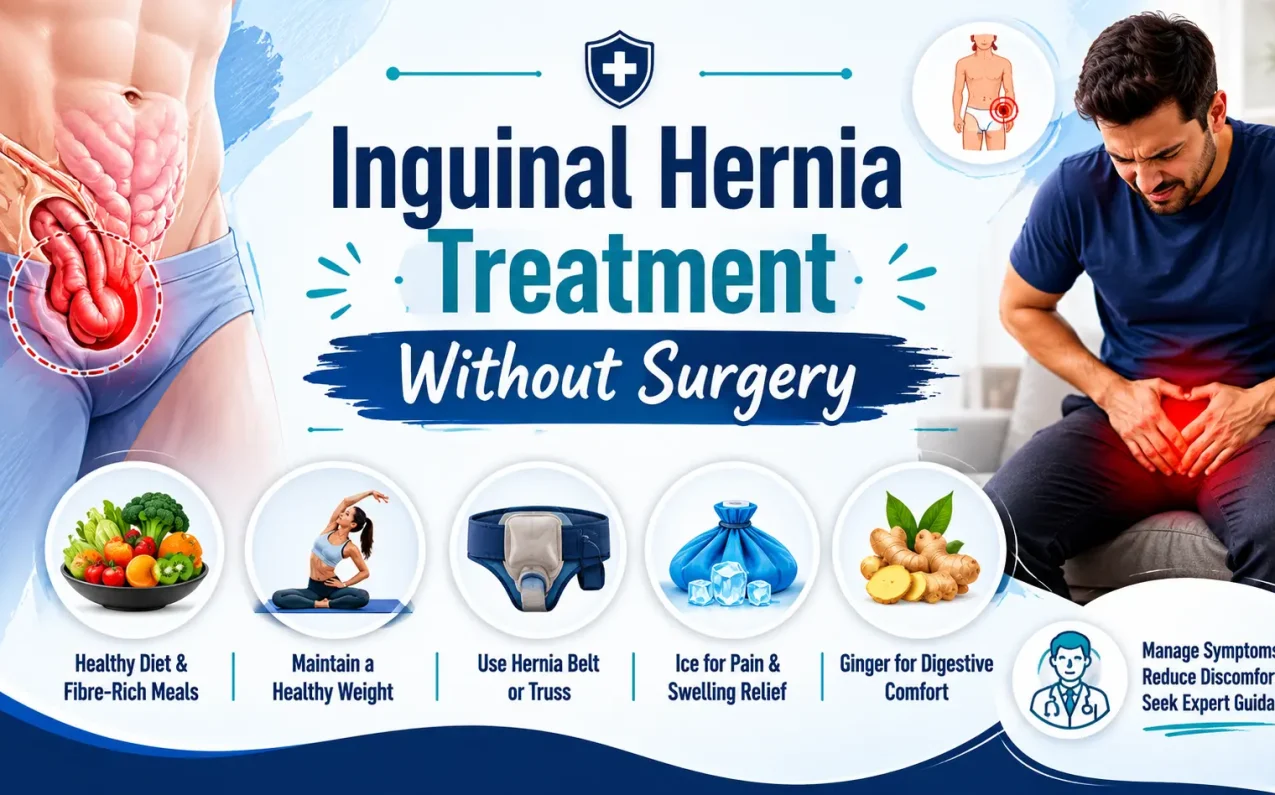
1. Maintain a Healthy Weight
Excess body weight increases pressure inside the abdomen and may worsen hernia symptoms.
Weight management through appropriate physical activity and a balanced diet can help reduce strain on the abdominal wall. Individuals exploring conservative management options may also find our guide on Treating Hernia Without Surgery helpful for understanding lifestyle adjustments, symptom management strategies, and when medical evaluation may be necessary.
Gentle exercises and carefully selected yoga practices may support overall core strength and flexibility. However, heavy lifting and high-intensity abdominal workouts should generally be avoided because they can aggravate symptoms.
Benefits
- Reduces abdominal pressure
- Improves mobility
- May decrease discomfort
- Supports overall digestive health
2. Eat a Fibre-Rich Diet
Constipation is a common factor that increases abdominal pressure. Repeated straining during bowel movements can worsen hernia symptoms.
A fibre-rich diet may help maintain regular bowel habits and reduce unnecessary strain. For a more detailed nutrition plan, explore these Diet Tips for Hernia Patients to learn which foods may support digestion and help manage hernia-related discomfort.
Recommended foods include:
- Vegetables
- Whole grains
- Nuts and seeds
- Non-citrus fruits
- Legumes
Adequate hydration is equally important.
Benefits
- Reduces constipation
- Minimizes straining
- Supports digestive function
- Helps manage abdominal pressure
3. Apply Ice for Symptom Relief
When swelling or discomfort occurs, applying a cold pack may provide temporary relief.
Ice can help reduce:
- Inflammation
- Swelling
- Pain
- Local discomfort
How to Use
- Wrap the ice pack in a cloth
- Apply for 10–15 minutes
- Avoid direct contact with skin
- Repeat as needed
4. Use a Hernia Belt or Truss
A hernia truss or support belt is designed to keep the protruding tissue in place temporarily.
These supportive garments apply gentle pressure over the affected area and may reduce the sensation of bulging during daily activities.
Important Considerations
- Provides temporary symptom control
- Does not repair the abdominal wall
- Should be used under medical guidance
- Not considered a permanent solution
5. Ginger for Digestive Comfort
Some individuals use ginger as part of their digestive health routine.
Ginger may help reduce:
- Indigestion
- Gastric discomfort
- Mild bloating
- Acid reflux symptoms
It can be consumed as:
- Ginger tea
- Warm ginger water
- Fresh ginger preparations
While ginger may improve digestive comfort, it cannot reverse or repair an inguinal hernia.
Activities to Avoid
Certain activities can increase pressure on the abdominal wall and potentially worsen symptoms.
Consider limiting:
- Heavy weightlifting
- Intense abdominal exercises
- Straining during bowel movements
- Repeated heavy pushing or pulling
- Activities that cause severe groin pain
Making these adjustments may help reduce symptom flare-ups.
When Is Surgery Usually Recommended?
Although symptom management can be helpful, surgery remains the definitive treatment for a true inguinal hernia.
Medical evaluation becomes especially important if you experience:
- Increasing pain
- Rapidly enlarging bulge
- Persistent discomfort affecting daily life
- Hernia extending into the scrotum
- Difficulty pushing the bulge back in
- Nausea or vomiting along with severe pain
Delaying treatment in such situations may increase the risk of complications.
Surgical Treatment Options
When surgery becomes necessary, two commonly used approaches are:
Open Hernia Repair
A small incision is made in the groin area. The hernia is returned to its proper position, and the weakened area is reinforced using surgical mesh.
Laparoscopic (Keyhole) Hernia Repair
Small instruments are inserted through tiny incisions, allowing the surgeon to repair the hernia from inside the abdominal wall.
Many patients experience a quicker recovery with laparoscopic surgery, although the most suitable option depends on individual circumstances.
How ConsultGrab Can Help
Understanding whether an inguinal hernia can be managed conservatively or requires surgical treatment often requires specialist evaluation.
At ConsultGrab, we help patients connect with experienced surgeons and healthcare specialists through a trusted medical network. Our care team assists with:
- Specialist consultation guidance
- Appointment booking support
- Treatment option discussions
- Hospital comparisons
- Transparent treatment information
Frequently Asked Questions (FAQs)
An inguinal hernia cannot permanently heal without surgery because the weakness in the abdominal wall does not close on its own. However, non-surgical measures such as maintaining a healthy weight, eating a high-fibre diet, using a hernia belt, and avoiding heavy lifting may help manage symptoms and improve daily comfort.
Early symptoms of an inguinal hernia may include a burning or stinging sensation in the groin, mild pain or aching, a feeling of heaviness, and discomfort during activities such as standing, driving, or lifting. As the condition progresses, a visible bulge in the groin may develop.
Exercise cannot cure a true inguinal hernia because it cannot repair the defect in the abdominal wall. However, gentle physical activity and weight management may help reduce strain on the abdomen and support overall health. Heavy lifting and intense abdominal exercises should generally be avoided.
Hernia belts and trusses can provide temporary relief by applying pressure to keep the hernia from protruding. While they may reduce discomfort during daily activities, they do not repair the hernia or replace medical treatment. They are typically used as a short-term management option under medical guidance.
You should seek medical evaluation if an inguinal hernia causes increasing pain, a growing bulge, difficulty pushing the hernia back in, or symptoms that interfere with daily life. Early assessment helps determine whether monitoring, supportive management, or surgical treatment is the most appropriate option.